Night tours at the Colosseum are back – every Tuesday and Thursday from 8 to 11 PM
Starting Tuesday, July 14, the “A Night at the Colosseum” initiative returns — a guided tour that offers the rare opportunity to visit the Flavian Amphitheater after dark, including areas usually closed to the public.
The 60-minute tour once again includes the first level of the monument, the arena floor, and the underground tunnels — a truly unmissable chance to uncover the secrets of Rome’s most iconic landmark.
Special evening openings are scheduled every Tuesday and Thursday from 8:00 PM to 11:00 PM, with last entry at 9:50 PM. Tours are conducted in small groups of up to 25 people per slot.
The visit unfolds like a story, told from the perspective of the spectators who once filled the Colosseum, as well as that of the protagonists of the spectacles held throughout the day, from wild animal hunts (known as venationes) to the munera, the gladiator combats – fighters who were admired and cheered like today’s football stars.
The night tour begins at the northern entrance arch, once the main access point for emperors. From the arena floor, visitors enjoy a striking view of the cavea while learning about the grand spectacles once offered to the Roman public.
The tour then leads into the underground area, featuring the permanent exhibition “Spectacles in the Colosseum Arena: The Protagonists”, which highlights the lives of gladiators and wild animals involved in the shows, with dramatic elements like:
A holographic projection of gladiators emerging from the darkness
A 2nd-century AD mosaic depicting a hunting scene
Ancient graffiti, oil lamps, and lift mechanisms used to bring fighters and beasts to the arena
Full-scale replicas of gladiator armor, from the retiarius to the murmillo
Are you ready to enjoy an unforgettable show? All you have to do is book your visit on the official website of the Colosseum Archaeological Park, just remember that tickets are available ONLY on the official website, starting 7 days before the scheduled visit date.
From July 14, 2026 Flavian Amphitheater – Piazza del Colosseo, 1
Guided tour times (in Italian, Spanish and English): From 8:00 PM to 11:00 PM
Tickets:
€50.00 full price (includes Full Experience ticket €24.00 + guided tour €26.00)
The sweltering heat isn’t the only thing rising in Rome this summer. As of July 2026, the standard Pantheon entry ticket has officially gone up from €5.00 to €7.00. It’s not going to break the bank: an extra €2.00 to preserve 2,000 years of history is a small price to pay to stand inside the ancient world’s greatest architectural marvel. Even with the price hike, the Pantheon remains the cheapest major monument to visit in the entire city.
How Much Does It Cost to Visit the Pantheon in 2026?
The standard Pantheon ticket price is now €7.00. Reduced tickets and free entry categories (under 18s, Rome residents, worshippers attending mass) remain in place. For full visitor information, opening hours and history, read our complete guide to visiting the Pantheon.
When Is the Pantheon Free to Visit?
If you happen to be strolling past the coffee-scented streets of Piazza della Rotonda on a Sunday, you may be in luck: like the Colosseum and the Roman Forum, the Pantheon is completely free on the first Sunday of every month. Keep in mind you’ll have to queue for a physical ticket, as online booking isn’t available on free days.
On any other day, our advice is to book your Pantheon tickets online and in advance, when the piazza gets crowded, nobody wants to melt in line under the midday sun.
Absolutely. The dome of the Pantheon is still the world’s largest unreinforced concrete dome, rebuilt by Emperor Hadrian nearly two millennia ago. Born as a pagan temple dedicated to all the Roman gods, in 609 AD it was gifted to the Pope and consecrated as a Christian church, Santa Maria ad Martyres. The hole at the top of the dome, the famous oculus, is the building’s only source of light. And for those wondering what happens when the heavens pour: yes, it rains inside! Rain, hail, storms or religious upheaval, the most fascinating thing about the Pantheon is its survival story.
Want to Get More Out of Your Visit?
A guided visit brings the Pantheon’s 2,000 years of history to life. Here are two experiences we recommend:
Rome’s hidden treasures: a guide to unforgettable adventures for every age and interest.
Rome is one of those cities that never runs out of surprises. Whether you’re planning your first visit or your tenth, there are always new fun things to do in Rome that go beyond the obvious, and that’s exactly what this guide is about.
From offbeat food discoveries and secret viewpoints to Vespa rides through cobblestone streets and rooftop cocktails at sunset, we’ve put together a selection of experiences that capture what makes Rome so endlessly exciting. Perfect for couples, families, and solo travellers alike. Whatever your pace, the Eternal City has something for you.
Discover Rome’s Unusual Foods
Carciofi alla Giudia
Alright, buckle up for a culinary rollercoaster ’cause we’re about to dive into Rome’s most unusual food tour! First stop, get your taste buds ready for some ‘Jewish artichokes‘ in the Jewish Ghetto – crispy, golden, and addictive. Next, scoot over to Testaccio, a regular stomping ground for foodies, and snag a bite of the quinto quarto (offal) if you dare.
Feeling adventurous? Try the pajata (intestines of an unweaned calf) – it’s a Roman delicacy that’ll have your palate doing somersaults. Don’t miss out on the trapizzino, a pizza-pocket filled with drool-worthy classics like oxtail stew.
Wrap it up with a gelato but go for quirky flavors like black sesame or blue cheese. Remember, when in Rome, eat as the Romans do – maybe with a side of fearless fun!
Rome Food Market Tour
Explore Rome’s foodie Trionfale district near the Vatican: start with a fresh cannolo and cappuccino, enjoy iconic slices at Pizzarium, then sample cheeses, cured meats, truffles, aged balsamic, and olive oils. Finish at the lively Trionfale Market, rich in colors, sounds, and local characters.
Looking for something spooky? Try a visit to the Capuchin Crypt on Via Veneto – a macabre masterpiece lined with monk bones. It is several small chapels located under the church of Santa Maria della Concezione that’s walls are lined with the remains of about 3,700 skulls. The arrangement of the skulls and other bones are equally captivating and creepy. It’s not your average art gallery, but it’s a definite must-see for the morbidly curious.
Seeking some Roman art that is different from the standard classical era artworks in the museums? Hit the Ostiense District and get your fill of incredible street art. This place is a canvas for renowned artists who’ve turned these streets into a feast for the eyes. Snap some pics of these vibrant and edgy murals!
Stroll around, grab an espresso, orhop on vespa tourand watch as the walls tell you tales of modern-day Rome. Ostiense is where ancient history shakes hands with urban cool, and let me tell you, they get along just fine. Dive into this colorful world, and who knows, you might just bump into an artist creating their next masterpiece. Fun, artsy, and a little rebellious – Ostiense’s street art scene is an undefined must-see for your Roman holiday.
Ready to channel your inner chef in the Eternal City? Sign up for a cooking class with a local Roman chef! You’ll craft perfect pasta, and prepare a classic Italian tiramisu. It’s hands-on, it’s delicious, and hey, it’s a skill you can flaunt at your next dinner party.
Do not miss your chance to spice up your trip and your culinary game. Plus, you’ll get to eat your homework—talk about a tasty lesson! Whether you’re a young adult looking for an epic foodie experience or hunting for a family-friendly activity that’ll keep the kids entertained, this is a must-do.
Get ready to don that apron and cook up a storm, Roman style!
Fettuccine, Ravioli and Tiramisù Cooking Class
Discover the secrets of traditional Italian cuisine during this hands-on cooking class in Rome.
With the guidance of an English-speaking chef, you will learn how to prepare fresh fettuccine from scratch, ricotta-filled ravioli inspired by a traditional grandmother’s recipe, and one of Italy’s most iconic desserts: tiramisù.
Discover the Secret Keyhole View of St. Peter’s Basilica
Oh, you’re in for a treat with this one! Make your way to the Aventine Hill, where a nondescript door hides a mind-blowing peek at St. Peter’s Basilica. This secret keyhole view is tucked inside the Priory of the Knights of Malta, and it’s not just a quirky hole in the wall – it frames the basilica perfectly through a lush garden avenue.
It’s a magical experience, and the best part? It’s free! So go ahead, play a little game of “I spy” with the grand St. Peter’s Basilica. It’s a view you are guaranteed to remember for a lifetime!
Monks and Knights *slow* tour on Aventine hill
Discover Aventine Hill at a leisurely pace: medieval monasteries, historic basilicas, and the Knights’ sanctuary. Stroll through gardens with sweeping views—including a famed hidden vantage of Rome—hear legends of monks and knights, and finish with gelato overlooking the Circus Maximus. A compact, culture-rich walk.
Gelato is a must-taste while you are in Rome! So, if you were looking for an excuse to go for a sweet treat, here it is! Roman gelato shops feature a vast array of flavors, so be sure to branch out and try something new while you are here.
If you would like to learn the secret to tasty gelato you can try this hands-on gelato making class. It is perfect for adults and kids to experience the process of gelato making in the laboratory of an authentic Roman gelateria.
Learn To Make Gelato in Rome
Learn to make gelato with our hands-on gelato-making class in Rome. It’s fun for adults and it’s fun for kids too!
Cruising around Rome on a Vespa is the epitome of cool – it’s like starring in your own Italian movie! Imagine zipping through the bustling streets, wind in your hair, as you dart from one iconic landmark to another.
It’s not just a ride; it’s your ticket to feeling like a local, and truly experiencing the vibrant Roman atmosphere. Plus, it’s a nifty way to dodge the slower pace of tourist traffic. For young adults seeking a dash of adventure, it’s one of the most exhilarating fun things to do in Rome.
There are tons of different options for touring around Rome. You can enjoy a vespa sidecar tour, a vintage vespa tour, or a vintage car tour of Rome. Choose which mode of transportation best fits your style and have fun! Just remember to wear your helmet and live the dolce vita responsibly.
Visit a Rooftop
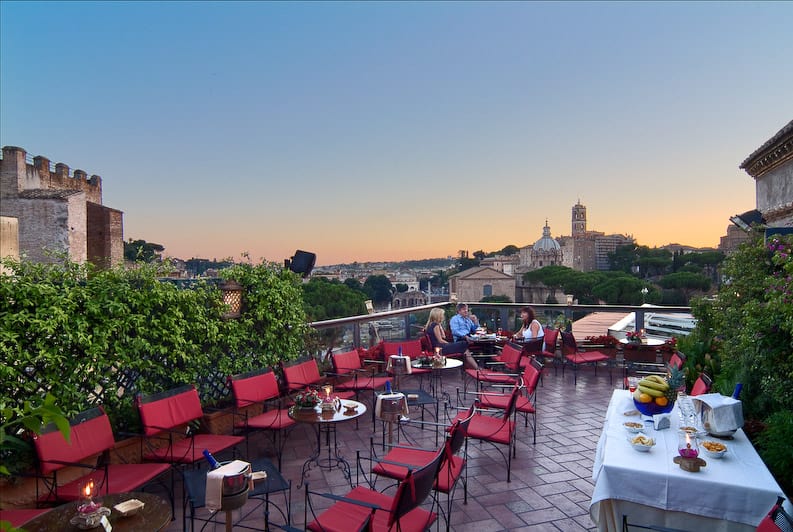
Rooftops in Rome are like pizza with the perfect crust – simply a must! Imagine sipping on a Spritz while catching a golden sunset with the silhouette of St. Peter’s Basilica in the skyline. It’s not just a drink; it’s a scene straight out of a chic Italian film.
Rooftop bars are a playground for young adults, offering not just killer views but also a vibe that’s buzzing even more than a Vespa on cobblestones. And when the stars come out, these high-rise hotspots turn into a nocturnal festa – think live DJs, swanky cocktails, and a crowd that’s dressed to impress. Ascend to one of Rome’s sky-high oases for a night or twilight to remember!
Looking to spend a balmy evening doing aperitivo or dinner with a panoramic view over the city? Rome is one of Europe’s best cities for rooftop bars and panoramic terraces, perfect for a sunset aperitivo or a romantic dinner under the stars, but finding complete and up-to-date information online isn’t easy.
That’s why we have selected, visited and verified 35 rooftop bars in Rome: from the most iconic panoramic terraces in the historic centre to the best bars with views of St. Peter’s Basilica, the Colosseum and the Spanish Steps, right up to the newest openings of summer 2026. A real-time updated guide, with addresses, opening hours and direct contacts, designed for those who don’t want to waste time searching through scattered, often outdated information.
Here are our favourite rooftop bars with a view in Rome, from sunset aperitivo to drinks under the stars.
Les Etoiles offers a truly spectacular 360° panoramic view of Rome, stretching across terracotta rooftops and the city’s most iconic monuments. The view takes in the best view we’ve ever seen of the facade and dome of St. Peter’s Basilica.
Spread across the top floors of the Atlante Star Hotel, Les Etoiles is composed of three distinct spaces: a refined indoor restaurant, a charming roof garden, and a panoramic rooftop bar. At aperitivo time, a fixed-price formula is available for €45, which includes a drink (cocktail or glass of wine) accompanied by a selection of finger foods.
Cielo Bar @ Hotel de la Ville
Via Sistina, 69 (Centro Storico) Bar: 12pm – 12am Restaurant:12.30pm – 2.30pm; 7.30pm – 10.30pm
Cielo is a glamorous rooftop bar at the very top of the Spanish Steps. Come to enjoy an aperitivo and bar menu, with live music from 7pm to 10pm. The rooftop is lined with red and white striped umbrellas so you might think you were in Positano if it wasn’t for the spectacular city views.
Gigi Rigolatto @ Hotel Orient Express La Minerva
Piazza della Minerva, 69 (Pantheon) Restaurant: 12pm – 2.30pm, 5pm – 7pm, 7pm – 10.30pm Bellini Bar: 12pm – 11.30pm
Gigi Rigolatto has recently made his debut in Rome, bringing his “La Vita alla Grande” philosophy to the exclusive rooftop of Orient Express La Minerva. One of the most stunning rooftops in the city, it offers an unparalleled view of the Pantheon and the timeless beauty of Rome. The design blends retro glamour with modern elegance, perfectly capturing the spirit of La Dolce Vita.
Masa Rooftop
Via di S.Maria Maggiore, 143 (Monti) Opening Times: 6pm – 1am
Hotel Major’s rooftop restaurant reimagines the classic Italian aperitivo experience with a Middle Eastern infusion. Masa embraces conviviality as its principle: customers embark on a culinary adventure, savoring the chef’s selection of small bites. If you’re seeking a romantic spot to dazzle your date or craving an evening of refined Oriental finger food, Masa awaits you for a memorable night!
Adèle Mixology Lounge
Via di Porta Pinciana, 14 (Veneto) Opening Times: daily from 5pm to 1am; Sunday brunch from 12pm to 3pm
Rome may feel immense, but from Adèle Mixology Lounge on the 8th floor of Hotel Splendide Royal, the city opens up in a sweeping panorama. From Villa Borghese’s greenery to Rome’s domes and the Vittoriano, the skyline feels close enough to trace with your eyes.
Set on Pincio Hill, just steps from Villa Medici and Piazza di Spagna, Adèle balances grandeur with intimacy: warm lighting, thoughtful design, and a refined atmosphere that never feels crowded or dispersive. A retractable window system makes the space enjoyable year-round, with both indoor and outdoor seating depending on the season and your mood.
Come for a Sunday buffet brunch (12:00–15:00), settle in for afternoon tea, or stop by for an aperitivo and after-dinner drinks. As daylight fades and the city lights come on, every moment here turns into a rooftop experience worth lingering over.
Singer Palace Hotel
Via Alessandro Specchi, 10 (centro storico) Jim’s Bar: 12pm – 12am Le TerrazzeRestaurant: Lunch 12.30pm – 2.45pm; Dinner 7pm – 10.45pm
The Singer rooftop is an oasis with an unbelievable view, allowing its guests to enjoy a bird’s eye view of the Roman rooftops and Via del Corso just a stone’s throw away from the Trevi Fountain. Whether you choose to visit the rooftop for lunch, cocktail hour, dinner, or drinks, Singer staff will pamper you all the way through.
Discover our selection of the best Rome’s Tours & Local Experiences
ThRoof is an elegant rooftop terrace above boutique hotel Triviho, between Barberini and Piazza della Repubblica, offering 360° views over Rome as far as St. Peter’s and the Vittoriano. Open year-round with both outdoor space and a heated indoor area, it’s ideal for lunch or aperitivo with simple, well-crafted dishes (tartare, salads, pinsa, couscous) and classic or signature cocktails. Flexible corners of the terrace can be reserved for private events, while themed evenings with food, music and live entertainment create a contemporary, convivial atmosphere.
Ruby Giulia Hotel Rooftop
Via Agostino Depretis, 45 (Monti/Teatro dell’Opera) Bar: 24/7 Rooftop: 6pm – 11pm
Ruby Giulia Hotel brings to Rome a retro rooftop inspired by the 1970s and spy-story atmospheres. From the seventh-floor panoramic terrace, guests can watch the sunset over the rooftops of the historic center while enjoying classic and creative Spritzes, small plates and music. Just steps from Via Nazionale and the Monti district, it is a new central destination for an aperitivo with a view in Rome.
Paparazzo Bar & Rooftop @ Le Meridien Visconti Rome
Via Federico Cesi, 37 (Prati) Opening times: 6pm-1am
Paparazzo Bar & Rooftop at Le Meridien Visconti Rome, takes us back to 1960s Rome, and at the same time, hurls us into the future. The venue, a lounge nestled under the Roman sky, lulls us into a dolce vita, where drinking a cocktail becomes an irresistible social practice, where chatter, laughter and relaxation go hand in hand and give a concrete meaning to the concept of “happy hour”, making it the most anticipated moment of the day.
The Roof @ The Rome EDITION
Salita di San Nicola da Tolentino, 14 (Veneto) Opening times: 11am – 12am
The Roof at The Rome EDITION is one of the city’s most exclusive terraces, suspended above the rooftops of Rome with views of iconic landmarks such as the Pantheon, the Janiculum Hill and Sant’Andrea della Valle. The elegant, light-filled space unfolds around a travertine pool, with a bar and restaurant area.
The culinary offer takes guests from lunch to evening, with Mediterranean dishes, freshly prepared cuisine, grilled specialties, signature cocktails and an atmosphere that brings a touch of the Riviera to the heart of Rome. Ideal for a panoramic aperitif, a sunset dinner or a refined break above the city.
La Griffe Hotel – Rooftop Bar & Restaurant
Via Nazionale, 13 (Repubblica) Bar: 5pm – 11.30pm Restaurant: 7pm – 12am
In the heart of Rome, suspended between the sky and the rooftops of the Eternal City, Rooftop La Griffe offers an experience that goes far beyond a simple panoramic view. Located on the ninth floor of Hotel La Griffe, it is an exclusive rooftop restaurant and cocktail bar where spectacular sunsets, refined cuisine, and signature cocktails come together in a truly unique atmosphere. The perfect setting for a sunset aperitivo, a romantic dinner, or a special event, it offers breathtaking views that make every moment unforgettable.
Tiziano Terrace Rooftop & Cocktail Bar @ Monti Palace Hotel
Located in the Monti neighbourhood, and up on the 5th floor of the Monti Palace Hotel, this terrace boasts tall windows, a cosy outside area, an impressive bar, and a lovely seating area where customers can enjoy their meals in the sun. It’s the perfect place for the summer (and winter) months!
Via dell’Umiltà, 36 (Trevi) Opening Times: 5pm to 1am
Terrazza Flores, part of the renowned family of Argentine restaurants El Porteño, is located on the stunning panoramic terrace of Hotel Umiltà36, in the vibrant heart of Rome. Considered one of the most captivating rooftops in the city, it offers a breathtaking view of Rome’s rooftops and the Vittoriano—a postcard-perfect panorama.
Spacious and elegant, this rooftop features diverse and welcoming environments, complemented by impeccable service and meticulous attention to detail. The drink list is extraordinary, featuring original cocktails inspired by South American flavors and creative reinterpretations of classic recipes.
The food menu, specifically designed for aperitivo, features must-try dishes like the Wagyu Trio and the Asado Tacos Tasting, perfect to enhance your experience in this exclusive location.
Notos Rooftop @ Six Sense Rome
Piazza di San Marcello (Via del Corso) Opening Times: 6pm to midnight
Notos is the rooftop bar and restaurant of the beautiful Six Senses Hotel Rome. The terrace is a ‘secret garden’, rich with plants, terracotta ceramics, and comfortable loungers. The atmosphere is relaxing and the unparalleled view extends beyond the church of San Marcello al Corso and the bell tower of Montecitorio to other famous monuments and Roman terraces.
Mùn – Rooftop Cocktail Bar @ DoubleTree by Hilton Rome Monti
When daylight falls, Mùn – Rooftop Cocktail Bar is ready to welcome aperitifs, parties and events with its panoramic view over the rooftops of the city and the Basilica of Santa Maria Maggiore, one step closer to the moon. An elegant setting with warm, natural tones is enhanced by the chef’s refined culinary creations, perfectly paired with signature cocktails crafted by expert mixologists.
The Terrazza is Bulgari Hotel Roma’s breathtaking rooftop terrace, offering panoramic views of Rome, stretching from Villa Medici and Trinità dei Monti to the Tiber and the Janiculum Hill. As the day goes on, the ambiance transforms: it’s a place to bask in the sun during the day, enjoy a sophisticated aperitif at sunset, or revel in the enchanting starry sky at night. An intimate and exclusive retreat, it offers the same menu as the Bulgari Bar.
47 Circus Roof Garden @ Fortyseven Hotel
Via Luigi Petroselli, 47 (Circo Massimo) Opening Times: 12pm – 12.30am
From the Jewish Quarter to Circo Massimo, 47 Circus Roof Garden offers sensational views of Rome. Enjoy an aperitivo or dinner, take in the unparalleled views of Forum Boario and Piazza della Bocca della Verità, and watch the city illuminate during the evening.
The Organics Sky Garden @ Aleph Rome Hotel
Via di San Basilio, 15 (Via Veneto) Opening Times: 10am-12am
Head to the 6th floor of the Aleph Hotel near the Trevi Fountain for scenic views over the city. Alongside its restaurant, lounge bar and pool, the rooftop has relaunched as the new Organics Sky Garden, with a food menu inspired by Rome’s hills, signature cocktails dedicated to the city’s rioni, and a fresh entertainment format: Liquid Sessions every Wednesday and Sunset Panorama every Friday from 6.30 pm. Enjoy a beautiful Roman sunset or stay for an evening filled with music, food and drinks, and good company.
The Social Hub Rooftop
Viale dello Scalo S. Lorenzo, 10 (San Lorenzo) Opening Hours: 6pm – 11pm
Discover the rooftop bar at The Social Hub Rome. Located on the 7th floor, this panoramic terrace with pool is open daily to hotel guests and members from 9am to 6pm. After 6pm, the space opens to the public for sunset aperitivos and late-night drinks.
With an unexpected and edgy view over Rome’s Termini Station, the rooftop offers a unique perspective of the city, surrounded by cozy loungers, oversized cushions, and bar-facing seating.
Enjoy a bespoke cocktail experience curated by Bar Manager, Damiano Di Benedetto, featuring a rooftop-exclusive mixology menu inspired by the soul of Rome.
Seu Pizza con Vista @ W Hotel Roma
Via Liguria, 26-36 (Veneto) Opening times: 6.30pm – 12am
Enjoy the view from Seu Pizza con Vista, perched on the rooftop of the W Hotel Rome. Surrounded by lemon trees and accompanied by a live DJ set, you can sip a cocktail while tasting fresh seafood and the signature pizza by Pierdaniele Seu — an award-winning pizzaiolo considered one of the rising stars of Italian pizza.
I Sofà Roof Terrace @ Hotel Indigo Rome – St. George
Via Giulia, 62 (Centro Storico) Opening time: 12pm – 12am
Nestled along the iconic Via Giulia, inside the elegant Hotel Indigo Rome – St. George, I Sofà Bar Restaurant & Roof Terrace is where contemporary style meets timeless Roman charm. In the warmer months, the I Sofà Bar moves to the roof terrace, open daily from noon until midnight. Here, guests sip handcrafted cocktails and fine Italian wines while sharing tapas-style dishes, all set against a breathtaking 360° panorama of domes, rooftops, and ancient monuments. From sunset spritzes to starlit toasts, it’s the ultimate Roman aperitivo spot.
Mama Shelter Rooftop
Via Luigi Rizzo, 20 (Prati/Trionfale) Opening Hours: 5pm – 1am
Enjoy panoramic views overlooking Rome, the Vatican and St. Peter’s Basilica at Mama Shelter Rooftop while you eat, drink, and mingle in the cool open air featuring the same live music from their downstairs bar and restaurant. Much like the rest of the Mama Shelter Hotel, the atmosphere at Mama’s Rooftop is delightful and welcoming yet sophisticated and glamorous. And the crowd is a good mix from business and young professionals to local singles and international tourists visiting.
Terrazza Hey Güey @ Chapter Roma
Via di S. Maria de’ Calderari, 47 (Jewish Quarter) Opening time – Three shifts: 6pm – 8.30pm | 8.45pm – 11.30pm | 11.45pm – 1am
Hotel Chapter’s terrace Hey Guey is revolutionizing the Roman landscape with accessible and contemporary luxury dedicated to Mexico. Uniting street art, healthy food, mixology and gastronomic excellence in an old building in Rione Regola, the terrace feels like taking a mini vacation to South America. Expect signature empanadas and mezcal drinks in a subtropical oasis among classic Roman rooftops. The menu is Mexican, prepared by the Chef in an open kitchen and displayed on a blue Ape Piaggio food truck.
Oro Bistrot @ NH Collection Roma Fori Imperiali
Via di Santa Eufemia, 19 (Colosseo) Bar: Sun-Thu 1pm – 11pm, Fri-Sat 1pm-12am Restaurant: Mon-Sun 1pm-3pm (lunch); Tue-Sat 7pm-11pm with tasting menu (dinner)
Head up to the terrace of the NH Collection Roma Fori Imperiali to enjoy one of the best views of the city. The Roman Forum, Imperial Forums, and the Vittoriano will be right in front of you! Taste the local specialties at the Oro Bistrot restaurant by Natale Giunta or sip a glass of wine with a snack at the bar.
Alto Ristorante & Cocktail Bar @ Hotel The First Musica
Lungotevere Dei Mellini, 27 (Prati) Bar: 6pm – 1am Restaurant: 12.30pm – 3pm; 7.30pm – 11pm
Located on the sixth and seventh floors of the boutique hotel The First Musica, Alto is a stunning rooftop restaurant and cocktail bar offering an exclusive experience. Expect five-star service, excellent signature cocktails, and a refined seafood menu. On the seventh floor, you’ll find a terrace featuring a centuries-old olive tree and an incredible, unexpected view over the Tiber River.
Terrazza Borromini
Via Santa Maria dell’Anima, 30 (Navona) “La Grande Bellezza” Rooftop: 12pm – 12.30am Ristorante: lunch from 12.30pm, dinner from 7.30pm
On the fourth floor of Eitch Borromini – Palazzo Pamphilj, you’ll find the charming view from Terrazza Borromini, a restaurant offering a menu inspired by Roman culinary tradition. Head up to the fifth floor to discover the rooftop Grande Bellezza, a true gem nestled between the bell tower and the dome of Sant’Agnese in Agone. Here, you can sip a cocktail or a glass of wine while enjoying Piazza Navona as you’ve never seen it before.
Settimo Roman Cuisine & Terrace @ Sofitel Rome Villa Borghese
Pair one of the most beautiful views of Rome with amazing contemporary Roman cuisine with a French twist. This rooftop restaurant and bar is the perfect place to soak under the sun and enjoy la dolce vita.
For an aperitivo or an after dinner drink during the summer months, La Terrazza del Cesàri should definitely be on your list. Not just because it’s located in the oldest hotel in Rome – founded in 1787 – but because it’s a hidden retreat from which you can admire the hustle and bustle of the city tucked away in an exclusive setting.
Il Giardino @ Hotel Eden
Via Ludovisi, 49 (Via Veneto) Restaurant: 11am – 10.30pm Bar: 7am – 12.30am
l Giardino is the elegant rooftop restaurant and bar of Hotel Eden, offering Mediterranean flavours, creative cocktails and sweeping views over Rome’s rooftops and historic landmarks. For the ultimate romantic dinner, head to La Terrazza, the hotel’s Michelin-starred restaurant, also set on the top floor and offering an equally spectacular view of the Eternal City.
Terrazza dei Papi @ Mecenate Palace Hotel
Via Carlo Alberto, 3 (Termini) Roof Garden Restaurant: 7.30pm – 11pm Sky Bar: 3pm – 12am
Get a taste of Rome’s skyline at the wonderful rooftop of the Terrazza dei Papi. With 360° views of Rome paired with a candlelit dinner with regional and Mediterranean dishes, you’re in for a special experience.
Acquaroof Terrazza Molinari @ The First Hotel
Via del Vantaggio, 14 (Popolo) Acquaroof Bar: 6pm – 8pm, 10.30pm – 1am Acquaroof Restaurant: 12pm – 2.30pm; 7pm – 10pm
Linger over lunch, enjoy a perfectly-mixed cocktail for aperitivo, and stay on for dinner at Acquaroof while taking in the breathtaking views of Rome. Located on the rooftop of The First Hotel, this restaurant offers stunning panoramic views of the Eternal City, paired with a sweeping menu.
Hotel Forum Rooftop
Via Tor de’ Conti, 25-30 (Monti) Roof Garden Restaurant: weekend lunch 12.30pm–3.30pm e Mon–Sat dinner 7pm–11.30pm American Bar: 4pm – 12am | Weekend 1pm – 12am
With arguably the best view of the Roman Forum, the old-fashioned Roof Garden is a must on the list of any rooftop lover. Whether you are just grabbing lunch between tours or settling down for the day with a nice meal, this is a great stop.
Zuma Bar, Lounge & Terrace
Via della Fontanella Borghese, 48 (Spagna) Opening Time: 6pm-1am (Sun-Thu); 6pm-2am (Fri-Sat)
Located in Palazzo Fendi, this high-end Japanese fusion chain from London landed in Rome in 2016 and it’s an ‘in’ crowd hangout. Carefully mixed cocktails, views that stretch out over Trinità dei Monti and with at least half of what’s on the full Zuma restaurant menu, it’s great for an aperitivo or dinner.
The Bramante Terrace @ Hotel Raphael
Largo Febo, 2 (Piazza Navona) Bar: 11am-11pm Mater Terrae Restaurant: 12.30am-3pm, 7pm-10.30pm
Enjoy one of the most evocative panoramic views of the Eternal City at La Terrazza del Bramante. The views stretch from the Roman rooftops to St. Peter’s and Castel Sant’Angelo, beyond the Quirinal Palace and the Spanish Steps. As you take in the views, enjoy lunch or dinner with seasonal and organic food at Mater Terrae Restaurant.
Maio Restaurant & Rooftop @ La Rinascente
Via del Tritone, 61 (Barberini) Opening time: Mon – Sun 10am-11pm
The Maio Restaurant & Rooftop presents itself as a magnificent garden among the rooftops of Rome, located on the sixth and seventh floors of Rinascente on Via del Tritone. It is a balcony overlooking the Eternal City, welcoming lovers of unique gastronomic experiences with the creations of chef Umberto Vezzoli, paired with the prestigious selection of labels from Cantina Maio.
Where to Go to the Beach From Rome (in order of distance)
Looking for the best beaches near Rome? Summer in the Eternal City can be hot and intense, but luckily there are plenty of seaside escapes within easy reach of the capital. From Ostia, the closest beach to Rome, to Santa Marinella, Santa Severa, Anzio, Sabaudia and Sperlonga, many beaches can be reached by train or public transportation, making them perfect for a day trip from Rome.
Whether you’re looking for beach clubs, clear waters, family-friendly shores or a quick swim outside the city, here are the best beaches near Rome to beat the summer heat.
@romeing_magazine When you visit Rome in summer you’ll quickly realize something: it’s unbelievably hot! But here’s what most people don’t know: you can reach beautiful beaches and sea near Rome in under an hour just by train. Whether it's Anzio, Santa Marinella, Ladispoli, Santa Severa or Ostia all of them are perfect for a quick escape from the city heat Save this for your next summer day trip from Rome Tap the link in bio to read more about the beaches near Rome #rome#italy#traveltips#romeguide#summerinitaly#beachesnearrome#thingstodoinrome♬ suono originale – Romeing Magazine
How to get to Ostia Beach: take the Metro to the station “Piramide” (line B), go to Roma Porta San Paolo train station and take a train to Ostia Lido (half hour train journey, Rome-Lido railway)
On summer weekends, Rome empties out as locals head to Ostia, the closest beach to the city, for a day by the sea. The central stretch is lined with beach clubs where you can rent sunbeds and umbrellas, while the area known as I Cancelli feels wilder and more natural, with dunes, open beaches and generally cleaner water. At night, bars and beach clubs along the lungomare come alive with aperitivi, music and DJ sets, making Ostia one of the easiest seaside escapes from Rome.
Fregene
How to get to Fregene Beach: Take the Metro A to the Cornelia stop (direction Battistini), then take the Cotral bus to Fregene.
During the ‘dolce vita’ days, the seaside town Fregene, famous for its grandeur villas, was once the hot spot for Rome’s fashionable Via Veneto crowd like Federico Fellini & Pier Paolo Pasolini. Although over the years Fregene has lost a little bit of its glitz and glamour, it still attracts the likes of Italian celebrities, footballers and hipsters looking for a cooler alternative to Ostia.
By night, much like Ostia, Fregene turns into a lively seaside playground for partygoers. Popular spots include Gilda on the Beach (Lungomare di Ponente, 11), Blu Fregene (Lungomare di Ponente) and Singita (Villaggio dei Pescatori), known for its chic sunset aperitivo.
How to get to Santa Severa Beach: 1 hour train journey from Termini or Roma San Pietro Station. The beach is a 20 minute walk from the station.
Another popular beach near Rome is Santa Severa. While hipsters head off to Ostia and Fregene for a little fun in the sun, local families and couples looking for a quieter spot to soak in some rays head over to the seaside town Santa Severa. You can get to Santa Severa from either Termini train station and it’ll take you an hour or from San Pietro train station in just 40 minutes. Here, the beach is a golden brown and the water tends to be a lot cleaner. You’ll find windsurfers and plenty of families riding their bikes along the lungomare where a beautiful castle dating back to Etruscan times dominates the panorama.
Anzio
How to get to Anzio: Anzio can be easily reached by train from Termini (1.10 hour). A 15-minute walk down hill and you are at the beach.
Anzio, birthplace of Emperor Nero, is not only famous for its blue flag beaches but also for having been the landing spot for the Allies in the Second World War. It is the perfect place to explore some history and top up your tan. It offers a mix of private and free beaches, golden sands and a quite big coastline. There are many restaurants by the sea where you can enjoy fresh seafood, as well as a cute port from which you can catch ferries to the Ponza and Ventotene islands. Besides the bay, also the imperial Villa of Nerone, the War Cemetery and the Tor Caldara nature reserve are worth a visit. If you want to stop by for a delicious seafood lunch, head to Da Alceste al Buon Gusto or Da Romolo al Porto, you won’t be disappointed!
Santa Marinella
How to get to Santa Marinella Beach: Train from Termini or Roma San Pietro Station (1 hour). The beach is just ten minute walk from the station.
Photo by Luca Conti
If you’re looking for more of a relaxing day the beach far away from all of the hubbub and crowds, then the seaside town of Santa Marinella is definitely your spot. Just after you’ve hopped off the train (which takes about 40 minutes from San Pietro Station), the beach is only a five-minute walk from the station. Like Santa Severa, the beaches are golden brown and the water is great for swimming. Santa Marinella also has its own castle, Castello Odescalchi located near the touristic port where a nice passeggiata at sunset is definitely a must! For those looking for a little music and dancing, Bar Maiorca is the place to be.
Sabaudia (Circeo)
How to get to Sabaudia: From Termini take the train to Priverno-Fossanova and then a Cotral bus to Sabaudia. All in all the journey will take around 1 hour 15 minutes.
Famously a blue flag area, this spacious and stunning coastline is predominantly made up of free beaches at which you simply pay for beach chairs and umbrellas. Despite having the odd restaurant here and there, the shores rarely gets crowded thanks to its vast stretches of sand. Also a keen spot for history buffs, the beach of Sabaudia offers views of a grand defensive tower, the Torre Paola. A lake at the centre of the town sees many rowing teams from around the world flock to the area for training.
Sperlonga
How to get to Sperlonga: Train from Termini to the Fondi-Sperlonga station and then a bus to Sperlonga (around 2 hours).
Sperlonga is a dream seaside town south of Rome, with a sea as tranquil and blue as you will find in the Lazio area, a long stretch of white sandy beach and a picturesque whitewash hilltop town. With many fish restaurants and little antiquarian shops and unforgettable views of the cliff edged bay, it is a favourite I return to again and again.
Argentario
How to get to Argentario: We suggest to rent a car (around 2 hours car journey) or to take a train from Roma Termini to Orbetello and then a bus
Monte Argentario is a peninsula with gleaming turquoise waters, outstanding natural beauty and a mix of sandy beaches and secluded rocky coves, an idyllic retreat on the Tuscan coast. It is connected to the mainland by three sand spits 6km in length creating two lagoons and miles of enchanting beaches. The two main fortified port villages are Porto Santo Stefano and Porto Ercole (death place of Caravaggio). A panoramic coastal road links these two towns and winds along the coast with fantastic views of the Tuscan Archipelago chain of islands.
Ponza
How to get to Ponza: From Termini take a train to Anzio, Terracina or Formia and then a ferry to Ponza.
For a little island fun and emerald blue-green waters, it’s worth taking the trip down to Ponza. It’s the largest of six islands in the Pontine Archipelago, just 23 miles off the coast of Lazio. To get there, you’ll need to take a train from Termini or Formia to Anzio and then a hydrofoil to Ponza, making the total trip a little over three hours. Once on the island, rent a little boat or hook on with a boat tour to uncover the hidden coves with excellent swimming spots. Watch the sun set over an aperitivo at Le Terrazze (Via Chiaia di Luna) and then kick off your sandals and dance the night away at Mamafè (Via Campo Inglese).
Discover Roman cuisine and enjoy a delicious meal of your own creation in Rome
It’s always wonderful to be able to bring back souvenirs after a vacation. And perhaps the best souvenirs of all are intangible: the new things you have learned while away. Go home with a souvenir to last a lifetime as you spend your time in Rome learning to cook fine Italian cuisine in one of these unique cooking classes, or embark on a food tour to savor unique Roman foods.
1. Private Campo de’ Fiori Market Tour & Cooking Class in Rome
€115
Explore Campo de’ Fiori market with a private English-speaking chef, then learn to make fresh pasta, ravioli and tiramisù. Finish the experience with a full meal, wine and limoncello in an exclusive cellar setting.
Learn how to make authentic Italian pizza and traditional tiramisù in a hands-on cooking class in the heart of Rome. Prepare your own dough, choose your toppings, and enjoy your creations with bruschetta and drinks.
3. Fettuccine, Ravioli and Tiramisù Cooking Class in Rome
€70
Discover the secrets of Italian cooking as you prepare fresh fettuccine, ricotta-filled ravioli and homemade tiramisù from scratch. At the end, sit down and enjoy your meal with wine, limoncello or espresso.
This food tour takes place in the foodie neighborhood of Rome close to Vatican City. Your introduction to Italian cuisine begins with a freshly made cannolo while sipping on a cappuccino. Next enjoy the best pizza in Rome at the legendary Pizzarium, try cheeses and cured meats, truffles, aged balsamic vinegars, olive oils and other treats and visit the Trionfale market, with its captivating characters, colors and sounds. Daily toppings are impossible to predict, but expect to find the highest quality, in season produce. Following the market, savor two types of homemade pasta from a locally loved family owned restaurant. D.O.C.G Vermentino wine is offered. The tour ends at an artisanal gelateria called Fatamorgana.
5. Pasta and Tiramisu Making Class in a Family Owned Roman restaurant
€90
This experience incorporates both a cooking class in Rome, to learn the secrets of authentic Italian cuisine in a locally loved Roman restaurant, as well as a visit to one of the cities most popular gourmet food shops for delicious tastings. Learn the art of crafting traditional dishes like handmade pasta and creamy tiramisu, and culminate your experience by savoring your creations in the dining area
Join a fun and hands-on cooking experience in the heart of Italy and learn how to make one of its most iconic dishes: pasta! Guided by our professional chefs, you’ll prepare a rich egg-based pasta dough and use it to create two traditional pasta shapes, each paired with a fresh, seasonal sauce. Along the way, you’ll pick up expert tips and techniques to easily recreate everything at home.
While the pasta dough rests, dive into the sweet side of Italian cuisine with a gelato-making demonstration. Discover the history, authentic ingredients, and methods behind this beloved dessert, plus insider advice on how to spot the best gelaterie during your travels in Italy.
With Rome’s Trastevere Food Tour you will visit 4 locally loved venues for over 20 delicious tastings, while admiring the beautiful architecture, cobblestone streets and ivy-coated buildings. Tastings include 30 year aged balsamic vinegar, truffles, cheese, hams, D.O.C.G wine, pizza, homemade pasta, gelato and more.
Why Booking a Guided Colosseum Tour Is the Smartest Choice
With around 25,000 visitors each day, the Colosseum Archaeological Park is a must-see when you’re in Rome. But how do you make the most of it? Let’s break down the best tips and tricks to avoid wasting your time, explore hidden gems, and experience the Colosseum like a pro.
How to get your Colosseum tickets
When planning a visit to the Colosseum, it’s important to know that tickets can sell out quickly, especially during the busy summer months. Tickets are released 30 days in advance, and new slots are available daily. For example, tickets for June 16 will be released on May 17. The time slot you book for the Colosseum is the only time you’ll be granted access to the monument, so it’s important to arrive on time!
Every Colosseum ticket includes access to the Roman Forum and Palatine Hill. You’ll have 24/48 hours (depending on your ticket) to explore these sites (but you can only access them once), giving you plenty of time to immerse yourself in ancient Roman history. Don’t forget to bring a government-issued ID that matches your ticket; without it, you won’t be allowed entry.
The ticketing system for the Colosseum has improved a lot recently, but with so many different ticket options, it can still be a bit tricky to navigate. To make your visit as smooth as possible, it’s important to choose the right ticket. Here’s a quick breakdown of your options.
1. 24h Colosseum, Roman Forum, Palatine Hill Ticket
As the standard ticket, you’ll get access to the first and second tier of the Colosseum, getting incredible views of the underground areas and the arena floor. However, this one doesn’t include access to them. It is perfect for seeing the most iconic parts of the Colosseum.
What’s included:
Admission to the Colosseum at the booked time
Admission to the Roman Forum-Palatine archaeological area and Imperial Forum
Entry to any exhibitions in progress at the Colosseum and in the Roman Forum-Palatine archaeological area
2. 24h Only Arena Ticket
If you are short on time, this one is for you. You’ll enter through the Sperone Stern side, stepping onto the stage of ancient history, but don’t get access to the top tiers. This is ideal for people on a tight schedule or those who’ve already done a full tour.
What’s included:
One admission to the Arena floor only at the booked time for a duration of 20 minutes
One admission to the Roman Forum-Palatine archaeological area and Imperial Fora
Entry to any exhibitions that may be in progress in the Roman Forum-Palatine archaeological area
3. Full Experience – With Entry to the Arena of the Colosseum Ticket
Different to the standard ticket, this full experience includes access to the arena floor. Step into history and experience the heart of the Colosseum.
What’s included:
Admission to the Colosseum at the booked time
Entry to the Colosseum Arena
Admission to the Roman Forum-Palatine archaeological area and Imperial Fora
Entry to any exhibitions in progress at the Colosseum and in the Roman Forum-Palatine archaeological area
4. Full Experience – Underground Levels and Arena Ticket
For a truly 360-degree unique experience, this ticket lets you explore the hypogeum (the underground chambers where gladiators and animals waited before battle), and the arena as well!
What’s included:
Admission to the Colosseum with a permanence period of max 90 minutes
Entry to the Colosseum Arena
Entry to the Colosseum Underground levels at the booked time
Admission to the Roman Forum-Palatine archaeological area and Imperial Fora
Entry to any exhibitions in progress at the Colosseum and in the Roman Forum-Palatine archaeological area
5. Full Experience – With Entry to the Attic of the Colosseum Ticket
For stunning views of Rome, the Attico Ticket is your go-to. It gives you access to the Attic area with panoramic lift and upper-level views. From here, you’ll enjoy a bird’s-eye view of the entire arena.
What’s included:
Admission to the Colosseum
Entry to the Attic of the Colosseum at the booked time
Admission to the Roman Forum-Palatine archaeological area and Imperial Fora
Entry to any exhibitions in progress at the Roman Forum-Palatine archaeological area
7. Night Tour Ticket
If you’re looking for a magical experience, the Night Tour Ticket is usually available from May to November. It’s a unique way to explore the Colosseum under the moonlight.
Ticket prices vary depending on the experience you choose and where you buy them. To book your tickets, visit the official Colosseum website (ticketing.colosseo.it) or verified tour agencies. Getting a ticket can be challenging, especially during high-demand months. But here’s an easy solution: consider booking a guided tour.
Why Booking a Guided Tour of the Colosseum is a No-Brainer
Imagine stepping in the same footsteps as ancient Romans, gladiators, and emperors. A once-in-a-lifetime chance to immerse yourself in history. But all you see are old ruins, missing a storyteller to bring them to life.
The expertise that comes in handy with a professionally guided tour allows you to dive deep into the hidden gems that are mostly overlooked. Palatine Hill and the Roman Forum are the home of some of the most astonishing wonders of the archaeological park: the Roman Senate, the Santa Maria Antiqua Church, and the House of Livia (yes, Augustus wife). You do not want to miss out hearing the rich history of these timeless marvels.
A professional guide will point out the gems, making you see beyond the Colosseum, further exploring the heart of ancient Rome. Plus, your guide is there to offer tips on where to eat, drink, and rest, ensuring that your entire experience is smooth and memorable.
Also, let’s face it: buying tickets on your own can be a headache. From long lines to ticket availability, booking a guided tour takes the stress out of the equation. With a professional guide, you don’t have to worry about tickets, as they are taken care of for you.
Super Sites
Colosseum SUPER sites are 8 exclusive, carefully curated areas within the Roman Forum and Palatine Hill that offer enhanced, immersive experiences. Using features like lightmapping and video projections, these sites bring history to life. Some highlights include the House of Augustus, Santa Maria Antiqua, and the Domus Tiberiana.
Recently, I had the chance to visit the Colosseum Archaeological Park with a tour guide (shout out to them!), and I can honestly say it was one of the most enriching experiences of my life. I’ve been living in Rome for four years and have visited the Colosseum a few times before. But this time, for the first time, I left with a deep sense of accomplishment, having learned so much about the cobblestones, columns, and frescoes I had been walking through.
Roman Forum
We began our tour of the Roman Forum at Trajan’s Column, a legendary Roman monument built in 113 AD, topped with a statue of St. Peter, the patron saint of the city. As we walked through this ancient site, we learned about how the city was once 20 meters lower than it is today due to centuries of flooding. Everything we see in the park is the result of the work of dedicated archaeologists, who have dug deep into the earth to uncover the hidden history beneath the modern Roman cobblestones. These pieces of the past are carefully unearthed and brought back to life, allowing us to connect with ancient Rome in ways we never thought possible.
As we made our way to Via Sacra, we heard the legendary stories of the Temple of Saturn and the House of the Vestal Virgins, the sacred residence where six young virgins were entrusted with maintaining the eternal fire of the Roman Empire.
Palatine Hill
At the foot of Palatine Hill, we entered the Church of Santa Maria Antica, home to some of the most beautiful frescoes that offer a glimpse into early Christianity in ancient Rome. The walls of the sanctuary are adorned with vibrant depictions of the Virgin Mary and infant Jesus, as well as saints and martyrs.
Continuing through, we reached a luxurious Roman domus (house) and then ascended to the Palatine Hill. This spot offers the most breathtaking panoramic view in Rome, overlooking the Roman Forum, the Colosseum, and the Vittoriano Monument. Palatine Hill is not only a place of beauty but also of romance. One of its most famous features is the Farnese Gardens, a stunning historical garden with a rich past that’s definitely worth visiting. The tranquil beauty and significance of this garden make it a must-see, offering a unique escape from the hustle and bustle of the city.
Colosseum
We wrapped up our tour at the Colosseum, where we had arena tickets, allowing us to access the heart of the structure first. Walking through the arena felt like stepping into a scene from a gladiator movie. Entering this majestic monument, one of the new 7 Wonders of the World, was an awe-inspiring moment. The entrance was smooth and quick, and our guide gave us a detailed explanation of the fascinating history of the animals, heroes, anti-heroes, slaves, and gladiators who once took center stage here. We learned about the Romans who filled the stands to watch these spectacular and brutal events, and even more intriguing to me, what happened to the Colosseum after the Roman Empire was gone. We then made our way to the second tier for a better view, where our guide continued to share the rich and sometimes tragic history of this mystical place
The tour concluded with a sense of awe, ready to unwind with a well-deserved Aperol Spritz.
Here are some extra essential tips to make your experience smoother, more enjoyable, and stress-free!
1. Beat the Heat: The park is vast, so wear comfortable shoes, a hat, and don’t forget sunscreen. Avoid Midday Sun. Summer midday heat can be brutal. It’s best to visit early in the morning or later in the afternoon. There are 8 water fountains around the park, so bring your bottle and stay hydrated. No need to buy overpriced water!
2. Skip the Crowds (But Not the Lines!): First Sundays of the month, entrance is free, but it’s chaotic. The Colosseum gets packed, and it’s tough to explore peacefully. Colosseum tickets have a specific time slot for entry. Once you’re in, you can stay max 75 to 90 min. So be mindful of your time! You can visit the Roman Forum and Palatine Hill at your leisure, but you can only enter once. Groups and individuals have separate entrances, but there’s no “skip the line” except for buying tickets on-site.
3. Bathroom Breaks: There are only 5 bathrooms in the entire park: one at the Colosseum, one at Palatine Hill, and the rest spread through the Forum. Plan ahead!
4. Get the Best Path: Guides offer the best routes to navigate the Forum and Colosseum. For maximum flexibility, consider booking a private tour.
5. Accessibility: The Roman Forum is tough to navigate for wheelchair users. However, inside the Colosseum and at some points of the Roman Forum, there’s an elevator for easier access. Visiting can be physically demanding, so it may not be the best experience for pregnant women. We recommend booking a private tour to enhance comfort and make your visit more enjoyable.
6. Snacks and Drinks: There are vending machines at Palatine Hill and the Colosseum, so you can grab a quick snack or drink during your tour.
Where to Go Once You’ve Conquered the Colosseum
Wondering where to go after exploring the heart of ancient Rome? Let us guide you to Monti, the charming neighborhood just steps from the Colosseum. Here, you’ll find the perfect spots to unwind with a bite or a drink, wrapping up your Colosseum adventure in the best way possible!
Rome is more than museums, monuments and postcard views. From hands-on workshops and food experiences to bike rides, river adventures and creative tours, the city offers countless ways to go beyond the classic itinerary. Whether you’re visiting for the first time or returning to see a different side of the Eternal City, these unique Rome experiences will help you discover the city like a local.
Exploring the city center is essential when in Rome, but for a truly unique experience, you need to get off the beaten path. This bike tour takes you beyond the usual itinerary, through ancient roads, archaeological sites and quiet corners of the Roman countryside. Along the way, you’ll discover landmarks such as the Baths of Caracalla, the Circus of Maxentius, the Aurelian Walls and the Aqueducts Park, experiencing a side of Rome that many visitors never get to see.
And no worries if you’re not an active cyclist: the tour includes high-quality electric-assist bikes.
Gelato in Rome is everywhere in Rome, from busy streets to hidden alleyways, but it can be hard to tell which spots are authentic and which are tourist traps. That’s why we recommend learning how to make your own in a beautiful gelato lab in the heart of Rome. Perfect for families, this hands-on class guides you through all the steps needed to create this classic Italian dessert, from selecting ingredients to achieving gelato’s signature creamy texture. At the end, you’ll get to taste your own creation and enjoy some delicious gelato for yourself.
Although Rome is primarily known for its ancient frescos and statues, modern Italy is booming with edgy street art, but you have to know where to find it. If art is your thing, we recommend that you take this exclusive vespa street art tour. In this experience, you will get to see how Rome is able to seamlessly blend ancient beauty with the best of modern art. This tour is about as unconventional as it gets so be ready for a truly once-in-a-lifetime experience.
Hop on and turn the key on this authentic experience to discover the eternal beauty and secrets found in the streets of Rome. You will be transported in iconic style on a unique two-wheeled Vespa Sidecar, accompanied by an official guide for an up close and personal view of all that Rome has to offer.
This 4 hour experience incorporates both a cooking class in Rome, to learn the secrets of authentic Italian cuisine in a locally loved Roman restaurant, as well as a visit to one of the cities most popular gourmet food shops for delicious tastings. The cooking class, led by Head Chef Angela or Luciano and Sous Chef Francesca, unfolds in a modern, spacious kitchen, praised by local and international food critics. As the class concludes, take home the recipes and newfound skills.
Indulge in an authentic wine tasting in a charming wine bar in the historic center, footsteps from Campo de’ Fiori. Step inside the boutique enoteca with wines stacked on every shelf where you will be greeted by your host Patrizia and her sommelier son, Giampaolo. Once you’re seated, let the games begin. Listen as the sommelier takes you on a journey around Italy and its wine production through the tastings of 6 different wines paired with cured meats, cheeses, bread and olives.
Make Your Own Piece of Roman Creativity: join this jewelry workshop in Monteverde Vecchio, where traditional goldsmith techniques meet modern design. Guided by artists Caterina and Sara, you’ll create a unique piece of jewelry inspired by the Art Nouveau stained glass windows of Roman villas. Using fast-setting resin and brass, you’ll explore colors, textures, and creative techniques. At the end of the workshop, you’ll take home a one-of-a-kind jewel as a special souvenir of your time in Rome.
Step into an authentic shoemaker’s artisan workshop in Rome and make a pair of leather sandals that is truly yours. In just 1.5 hours, go beyond watching and actually create your sandal from start to finish, working hands-on at the workbench with real tools like a hammer, glue, and professional shoemaking equipment, all provided. Guided step by step by an expert artisan, shape, assemble, and finish your sandal with the same techniques used in traditional Italian footwear making. The experience is designed for beginners and creative travelers, with a small group of up to 6 people to keep it personal and relaxed, so you’ll always have support when you need it.
Experience Rome like never before by rafting along the Tiber River! Get away from the hustle and bustle and see the Eternal City from the river. The route starts near Piazza del Popolo, then goes down the river, playing on some white water rapids. From Castel Sant’Angelo to the Tiberina Island, get ready to see Rome from a different perspective, away from the noise and traffic.
Lake Albano is one of the hidden gems of the Parco dei Castelli Romani. Travel back in time, kayaking from the “Villaggio delle Macine,” the oldest village dating back to the XX-XIX centuries BC, past the villa of the Emperor Domitian and the submerged stilt houses of the Village of the Mills. Relaxing kayaking experience paired with one of a kind informative tour around the ancient historical sites not so far away from the tourist crowds of the Eternal City. The tour is beginner friendly, experienced guides will give you all the necessary paddling instructions and as a bonus will take you to the beach that can only be reached by kayak for a refreshing swim.
Glistening sun, crystal-clear turquoise waters, and a peaceful island, now that’s an ideal vacation! Take a break from the animated streets of the city and escape to beautiful Ponza Island on this day trip. Ponza Island is Rome’s secret Capri, where the tourists never go, and the beauty is kept intact. On this tour, you will get to explore the island, enjoy lunch on a boat, and indulge in the stunning seas of the Mediterranean.
Rome’s Appian Way (Appia Antica) is home to some of the city’s most fascinating Roman ruins, but many of the archeological sites are too far to walk to from the city. This 3-hour tour ensures an easy ride aboard an electric golf cart, stopping to take in highlights such as the Quintili’s Villa, the Tomb of Cecilia Metella, and the Circus and Villa of Maxentius and combines the allure of the Appian Way and the mysterious depths of the Roman catacombs hidden in our stunning protected area..
Turn a long walking tour into an adventure with one of our private tours by golf cart! Your own guide will meet you at your hotel (city center) so you can explore Rome at ease and comfort and class. Discover the legendary heroes and architectural innovations that made Rome the capital of the greatest empire the world had ever seen. The past will come to life as you retrace history from ruins and palaces, to temples and the Colosseum.
Enjoy your mixology experience in Rome’s historic centre and learn how to prepare the most famous Italian cocktails: Spritz and Negroni. Next to that, our bartender will explain how to pair these drinks with food. Want to learn more? Get your answers in a cool atmosphere at Il Marchese while sipping on your own handmade Negroni and enjoy an italian aperitivo.
Get hands-on and spend two to three hours in this mosaic-making workshop in a beautiful studio in Trastevere. Learn the techniques behind mosaic-making and create your own mosaic to take home with you. A professional artist will be with you every step of the way. If you’re travelling, not to worry–your mosaic will be placed in a box that you can carry anywhere!
One of the many Italian excellences is the art of ceramics, known and exported all over the world. Although this art is not central to Rome, as it is to other cities in Tuscany or Emilia Romagna for example, the Italian capital is certainly not lacking in artists, craftsmen, handmade products, attention to detail and creativity. This workshop offers the opportunity to learn the fine art of pottery directly from local master potters in the beautiful Monteverde area. Get your hands dirty with clay, learn how to use the wheel and make whatever you like to take home your own ‘made in Italy’ pieces with you.
Are you travelling to Rome or Italy anytime soon? Better yet, is this your first time? Don’t worry about a thing, sit back relax and let us organize your dream trip to Italy. With years of experience, we can tailor to your ever need, preference and budget! Head on to our Custom Travel Planning page to send us your requests.
A Local’s Guide to Prati, the Vatican’s Under-the-Radar Neighbor
Known for its wide, sweeping avenues, elegant buildings, and modern European charm, Prati has a distinct personality and a style reminiscent more of a quartier in Paris than a former marshland in Rome. Its convenient location (above the Vatican and across the Tiber), high-end shopping street and cool restaurants make it the Roman’s best-kept secret.
Often referred to as the “white-collar” neighborhood, Prati also serves as a residential zone for upper class Romans. Its organized grid layout and elegant “Art Nouveau” and “Umbertino” style give it a unique personality. During the weekdays, Prati serves as Rome’s corporate hub, the fast-paced stomping ground for business-oriented professionals.
In addition to the enormous Palazzo di Giustizia, in Piazza Cavour, which houses the Supreme Court, Prati’s two tribunal courts make it the hot spot for lawyers. When the sun goes down and the workweek comes to a close, businesses pump the breaks and the social scene comes alive. Wine bars, live music venues, and international and classic Roman restaurants spread throughout the neighborhood, being mostly frequented by locals.
However, the neighborhood’s major attraction is the extensive shopping street, devoid of tourists called Via Cola di Rienzo, named after a Roman senator and nobleman. A less-crowded version of via del Corso, Cola di Rienzo is lined with many high-end and affordable International and Italian brands. The long stretch of shops has its fair share of major labels, alongside Italian boutiques, cafés and restaurants.
Unlike the cramped center and its dreaded “Varco Attivo”, Prati’s spacious streets offer more options for groups of friends to hang out on the weekend.
Remarkably, it is one of the few neighborhoods that has not yet been overrun by tourists. Whether it’s because the Vatican steals its thunder, or because it doesn’t look like the typical “Rome” pictured on postcards, we can’t say for sure. What we can do is give you the inside scoop on where to eat, shop and what to see when you venture to the other side of the Tiber.
What to See in Prati, Rome: The Best Places to Visit
Prati is often associated with elegant streets, shopping, and its proximity to the Vatican, but the neighborhood offers much more than its polished first impression suggests. With its wide avenues, Art Nouveau details, local markets, monumental squares and riverside views, this district is one of Rome’s most pleasant areas to explore on foot.
The best way to discover Prati is to start around Piazza Cavour and the riverside, continue along Via Cola di Rienzo, then move toward the Vatican side for Mercato Trionfale and the Passeggiata del Gelsomino. Along the way, make sure to leave time for a coffee, aperitivo or lunch, as this is one of the best neighbourhoods in Rome for experiencing the city at a slower, more local pace.
From hidden churches and historic markets to panoramic walks and postcard-perfect bridges, here are the must-sees around Prati.
Via Cola di Rienzo
Via Cola di Rienzo is Prati’s main shopping street and one of the best alternatives to the busier Via del Corso. Wide, elegant and easy to walk, it is lined with well-known fashion and lifestyle brands, Italian boutiques, cafés and restaurants. It is also one of the best places to understand the neighbourhood’s everyday rhythm: refined, local, and less chaotic than the historic centre.
Mercato Trionfale
Via Andrea Doria, 41
A short walk north from the Vatican Museums, Mercato Trionfale is one of Rome’s largest and most authentic food markets. With hundreds of stalls selling fruit, vegetables, cheese, meat, fish, fresh pasta and Roman specialties, it is the perfect place to see local life in action. Go in the morning, when the market is at its liveliest, and take your time wandering between the stalls.
Facing the Tiber, the Chiesa del Sacro Cuore del Suffragio is one of Prati’s most curious landmarks. With its white, neo-Gothic façade, it bears striking resemblance to the Duomo di Milano, giving it the nickname of Rome’s “little Milan Cathedral”. In addition to its grand columns and vast chapel, inside the church is also home to the small Museum of the Souls of Purgatory, a peculiar and little-known collection that adds to the church’s mysterious charm.
Technically just outside Prati, Castel Sant’Angelo is impossible to leave out. Originally built as Emperor Hadrian’s mausoleum, it later became a fortress, papal residence and prison. Today, it is one of Rome’s most fascinating monuments, with panoramic terraces offering beautiful views over the Tiber, St. Peter’s Basilica and the rooftops of the city. Go early in the morning to skip the crowds, or go an hour and a half before closing at 18:00 to see the sun begin to set over the city.
Leading directly to Castel Sant’Angelo, Ponte Sant’Angelo is one of the most scenic bridges in Rome. Lined with angel statues designed by Bernini and his workshop, it is especially beautiful at sunset, when the light falls over the river and the dome of St. Peter’s appears in the background. It is one of the best photo spots between Prati and the historic centre.
Piazza Cavour
At the heart of Prati’s institutional side, near Sant’Angelo, Piazza Cavour is dominated by the monumental Palazzo di Giustizia, known by Romans as the “Palazzaccio”. The square itself is spacious and elegant, with gardens, cafés and a more local atmosphere than many of Rome’s central piazzas. It is a good starting point for exploring both Prati and the riverside.
Chiesa di San Gioacchino in Prati
Via Pompeo Magno, 25
Often overlooked, the Chiesa di San Gioacchino in Prati is one of the neighbourhood’s most distinctive churches. Built at the end of the 19th century, it stands out for its large dome and richly decorated interior. It is worth stepping inside if you are nearby, especially for those interested in lesser-known religious architecture in Rome.
Passeggiata del Gelsomino
St. Peter’s Station / Via della Stazione Vaticana
One of the area’s most surprising walks, the Passeggiata del Gelsomino follows a former railway path near the Vatican. Quiet and scenic, it offers unique views of St. Peter’s dome from a different perspective. It is a short but memorable detour, especially if you want to escape the crowds and discover a more hidden corner of the city.
Set in Tivoli, this immersive retreat blends language practice, wine, food, and local life into a meaningful cultural experience.
Some experiences teach you a language. Others let you live it.
Set in the countryside of Tivoli, just outside Rome, Language & Wine Retreats Italy is designed for those who want to experience Italy beyond the usual itinerary. Here, learning happens naturally: over a glass of wine, around a shared table, during a cooking class, or while discovering the rhythm of Italian life in one of the country’s most inspiring settings.
Hosted at Tenuta i Tufari, the retreat combines language sessions with wine tastings, authentic Italian cuisine, cultural experiences and guided activities. Guests can choose to learn or improve either Italian or English, in a relaxed and welcoming environment where all levels are welcome.
The idea is simple but deeply appealing: to create a space where travellers, Italy lovers and language enthusiasts can slow down, connect with others and immerse themselves in the culture through real experiences, not just lessons. A cooking class becomes a moment of conversation. A wine tasting becomes a way to discover vocabulary, traditions and stories. A meal becomes part of the learning.
The retreat is available in both day retreat and 4-day retreat formats, making it easy to join whether you are visiting Rome for a short stay or looking for a more complete escape.
Dates
Day Retreat: 20 June
4-Day Retreat: 19 to 22 June
4-Day Retreat: 3 to 6 September
Day Retreat: 4 September
Perfect for solo travellers, couples, expats, curious locals and anyone dreaming of a more meaningful Italian experience, Language & Wine Retreats Italy offers a different way to discover the country: through its words, flavours, people and pleasures.
Because sometimes the best way to learn a language is not in a classroom, but at the table, with a glass in hand and Italy all around you.
Most travellers miss the chance to see Rome from a different perspective, where you can truly appreciate the scale of the Eternal City. This walking itinerary offers the ultimate scenic ascent through Rome.
It begins in the tangerine hued alleys of Trastevere, then guides you up the quiet slopes of Gianicolo Hill. As you climb, you will have a chance to point out many historical monuments from above, including the dome of the Pantheon and St. Peters Basilica to the walls of the Colosseum. If you are looking to find a peaceful path away from the crowds, this route leads you straight to one of Rome’s most spectacular, yet frequently missed, lookouts.
start
The Heart of Trastevere: Piazza di Santa Maria in Trastevere
Our journey begins in Piazza di Santa Maria in Trastevere, where you will find a constant flow of spritz and gelato indulgers on the steps of one of the city’s oldest fountains. The real treasure is the Basilica itself, founded in the 300’s and snug in the corner amongst pink facades. Your breath is taken away as you step inside; the golden mosaics masterfully crafted by Pietro Cavalinno on the ceiling emit a golden sheer that encompasses the entire church.
Piazza Santa Maria in Trastevere
start
8 min walk (700 m) along Via della Paglia
The Ascent: Via Garibaldi
Leaving the Piazza, we head toward the slopes leading to Gianicolo on Via Garibaldi. This is where the city begins to quiet down, the winding road offering the tranquillity of ivy-draped walls and hidden amongst Rome’s residential elegance. You will pass the Spanish Academy and the Tempietto del Bramante, a small Renaissance structure inside of Chiesa di San Pietro in Montorio. But the great beauty of the city itself starts to unfold on your left as you continue to walk higher.
Via Garibaldi
8 min walk (700 m) along Via della Paglia
9 min walk (600 m)
Wash Away the Noise: Fontana dell’Acqua Paola
While everyone crowds around the Trevi, Fontana dell’Acqua Paola offers a much more peaceful grandeur. Known to locals as ‘Il Fontanone’ (The Big Fountain), this monumental fountain was built in 1612 to celebrate the restoration of the Acqua Traiana aqueduct. The fountain itself was built using white marble stripped from the Temple of Minerva in the Roman Forum. Standing on the cobblestones across from the fountain, you get your first real lookout over Rome’s terracotta rooftops. It is spectacular, but don’t stop yet… the best is yet to come!
Via Garibaldi
9 min walk (600 m)
9 min walk (600 m) along Passeggiata del Gianicolo
The Peak: Statue of Garibaldi
Finally, you reach Piazzale Garibaldi, the highest point of the hill. The spot is rich in history, from once having a spiritual association with Saint Peter, to the site of a bloody battle under Garibaldi himself, and now being a public park in commemoration. In the centre stands the massive bronze equestrian statue of Giuseppe Garibaldi, gazing out over the capital city of the nation he helped unite. The monument features ‘la lupa’ (the she-wolf), the eternal symbol of the city’s origins, suckling the twins Romulus and Remus. It also boasts Garibaldi’s famous vow of “Roma o Morte” (Rome or Death), a conviction that defined the Risorgimento and the birth of modern Italy in 1861.
Piazzale Giuseppe Garibaldi
9 min walk (600 m) along Passeggiata del Gianicolo
From this lookout, Rome becomes splayed before you like an open-air museum. You can spot the Pantheon’s dome, the angel on top of Castel Sant’Angelo and the oval magnificence of the Colosseum. If you are there at midday, you’ll hear the traditional fire of a cannon that has taken place daily since 1847. Up here, where the hustle and hum of the city sit below, you truly feel like you are standing in the clouds above the Eternal City.
Whether it is a scorching summer day or a rainy afternoon, Explora, the Children’s Museum of Rome, just a short walk from Villa Borghese and Piazza del Popolo, is an ideal destination for families looking for an educational and fun experience. Managed by a predominantly female non-profit cooperative, the museum is housed in a large exhibition pavilion created from a former ATAC depot, now transformed into a safe and stimulating space for children, parents and educators.
For twenty-five years, Explora has been welcoming schools and families to a 2,000-square-metre space designed to entertain and inform. Its interactive installations, dedicated to science, technology, environmental sustainability and gender equality, offer an engaging journey that encourages curiosity, creativity and a spirit of discovery.
Encouraging awareness and equality
The museum is designed around the learning rhythms and needs of children, following international educational models that allow young visitors to observe, touch and discover independently.
The ground floor is dedicated to major sensory and emotional explorations: the Market, where children learn how to shop sustainably; the H2Ohh! installation, with water games that explore science, physics and the properties of this precious element; the digital installation A Sea of Creativity, designed to spark imagination; the Circular Economy Team Game; the vegetable garden; and the Explora18 area, made up of five installations on colour, architecture and history. There is also Mission Me, the area dedicated to the human body, and Quanti Mesi, focused on the reproduction of viviparous, oviparous and ovoviviparous animals.
On the first floor, visitors will find the section dedicated to PARI, a play-based journey made up of 11 interactive installationsexploring equal opportunities, as well as Economiamo, where children can earn and save, donate and invest, making economics fun and accessible.
Piccole Esplorazioni is a small area designed for children aged 0 to 3, with games suited to this specific age group and its developmental needs.
Much more than a museum
Explora is also a place for meeting and sharing. In addition to the exhibition pavilion, it includes a free and inclusive green area, a bookshop with a store, a café, a restaurant and parking. The equipped garden, designed for free play and social interaction, creates a valuable connection between the museum and the city.
The bookshop, accessible from the main hall, offers a carefully selected range of books and educational games and regularly hosts free events, including animated readings, workshops and presentations, creating further opportunities for learning and discovery.
Accessibility and inclusion
Explora is not only an educational space, but an environment designed to be fully accessible and inclusive. From the outdoor area, equipped with anti-trauma flooring, inclusive games, sensory panels, tactile maps and reserved parking spaces, to the indoor areas, every detail is designed to welcome all visitors. The museum features child-friendly restrooms, a renovated information desk and a ticket office with an accessible-height counter, designed for people with disabilities and families.
The visit is supported by innovative tools such as maps in Braille and Augmentative and Alternative Communication, videos in Italian Sign Language and accessible content that allows visitors to fully enjoy more than 60 installations.
Inclusivity also extends to the museum’s official website, which is fully accessible. Completing the experience is a trained and attentive staff, ready to welcome every visitor with sensitivity and professionalism.
Information
Please note that visits to Explora’s exhibition pavilion have limited capacity and are organised in 1-hour-and-45-minute time slots. Visits are available from Tuesday to Sunday, including holidays, at 10am, 12pm, 3pm and 5pm. It is recommended to purchase tickets online in advance through the museum’s website.
Tickets cost €11 for adults and children aged 3 and over, €7 for children under 36 months, while admission is free for children under 12 months.
Piazzas have always been one of the great delights of the European city. Their layout – replacing the English high street concept – is an enchanting leisure and third space for conversation to flow. Traditionally among the barren square would be a church, as seen in Rome’s famous Piazza di Spagna, Piazza Navona, and Piazza del Popolo.
Yet Campo de’ Fiori has remained churchless, historically known for trade and commerce. In her center stands Giordano Bruno to make up for her religiouslessness. Giordano Bruno, known for his “anti-clerical” ideals in the 17th century, was burned at the stake for heresy where his bronze statue now resides.
Where once was a sight of heretical burnings now stands a picturesque and characteristic food market in the daytime, adorned with tourists and locals alike. In the evenings, she opens up again for international crowds to gather under the night sky, surrounded by the unique charm of old-century buildings, and an energy of music, laughter and connection.
Don’t fancy a piazza, not to worry; medieval streets spider out from the Campo, where artisan shops and bars stand. Some streets are still named for their original trades performed in the area – including: Via dei Cappellari (hat makers), Via dei Chiavari (key makers), and Via dei Giubbonari (coat makers).
From Campo de’ Fiori, it is well worth taking a stroll along Via Giulia, elegant and full of historic charm, Via di Monserrato, lined with refined boutiques and distinctive storefronts, and Via del Pellegrino, one of the liveliest and most characteristic streets in the neighbourhood, before reaching Piazza Farnese, dominated by the imposing Palazzo Farnese, one of Rome’s most extraordinary Renaissance buildings.
While the area lacks a metro station, there are a plethora of bus stops to bring you to and from Campo de’ Fiori. But given the area’s history, a long stroll is the best way to go.
The comprehensive guide has been curated to give you the best of shopping, eating, drinking, and frolicking within and around Campo de’ Fiori.
RECOMMENDED ACTIVITIES AROUND CAMPO DE’ FIORI
Explore Rome & Campo de’ Fiori by bike
Via Labicana, 49 Duration: 4 hours
Easily cycle between ancient monuments and elegant shopping streets, Baroque squares and Renaissance palaces, and beautiful fountains and churches housing innumerable masterpieces. This guided bike tour provides the perfect introduction to your stay in Rome. The itinerary touches on Rome’s main attractions without omitting its smaller, local features.
Indulge in the ultimate wine tasting experience in a boutique wine bar footsteps from Campo de’ Fiori. Step inside the boutique enoteca where you will be greeted by your host Patrizia and her sommelier son, Giampaolo. Listen as the sommelier takes you on a journey around Italy and its wine production through the tastings of 6 premium Italian wines, salami, cured meats, cheeses, bread and olives.
Rome’s vast variety of ancient architecture convinces tourists to trot around the city hoping to capture it all. Here are 7 lesser known sites to visit in Rome.
Sunrise Cycle Itinerary in Rome: From Trastevere to the Colosseum
You might not conquer all seven of Rome’s legendary hills before breakfast, but you can ride through its magic in the most scenic way possible, with the whole city waking up around you.
Maybe you’ve just touched down and want your first taste of the Eternal City, or perhaps you’re looking to work off last night’s tiramisu. Either way, cycling through Rome offers a sense of freedom you won’t find on foot or underground: move at your own pace, and soak in picture-perfect views at every turn.
With its ancient architecture, pastel streets of Trastevere, and tree-lined paths hugging the Tiber, Rome might just be the most enchanting city you’ll ever explore on two wheels.
The Path
A Moderate bike ride
A mix of paved roads & cobblestone streets
A decent level of athleticism required
Ideal for a competent skill level
Every Good Day of Cycling Starts at the Crack of Dawn
Sunlight begins to creep over misty hills, morning birds chirp in the still morning air, while the rest of the city sleeps. Roads are blissfully empty.
Venture out in the cool morning air by sunrise (7am in winter Nov-Dec). This should give you enough time to track down your bike for the day.
Known for their signature green charm and their propensity to end up in rivers, our trusty companion for this picturesque day shall, of course be – the Lime Bike.
Budget Tips for Cycling Rome
A few insider tips to keep your morning ride cheap and cheerful:
Lime Day & Minute Passes Rome’s Lime app offers hourly minute packages instead of per-minute billing. For €9 you get 60 minutes, for €5 you get 30 minutes – usable across multiple rides and multiple cities, with expiration ranging from 3 to 30 days. So if you use 20 minutes in Rome and then journey to Florence two days later, the remaining minutes can be used there!
Compairing the costs A single metro/bus ticket in Rome costs €1.50 for 100 minutes. A day pass is €7. A 48-hour pass is €12.50. Depending on how much hopping around you’re doing, cycling can end up cheaper – especially with package minute passes.
Traditional Bike Rentals vs. Lime Bike shops usually charge €14-€30 per full day. If you’re only using the bike for short hops between landmarks, Lime can be significantly more economical.
Morning Advantage Before 8 a.m., Lime bikes are easier to find, usually fully charged (assisted peddling), and streets are clearer, making it the perfect time for a peaceful ride.
Lungotevere Aventino: Tree-lined warmup along the Tiber river
Porta Portese Gate → Trastevere: Pastel alleys, bakeries, vine-covered streets
Trastevere → Temple of Hercules Victor: Cross the river and hit hidden ruins
Temple → Monument to Victor Emmanuel II: Big roads, big landmarks
Monument → Roman Forum: Ancients and open space
Roman Forum → Colosseum Loop → optional Domus Aurea detour
Colosseum → Monti for a snack: Cobblestones, Vines, Treats
Monti → Trevi Fountain + Chiesa di San Silvestro in Capite: Fresco corridors of the Galleria Sciarra & hidden church gems
step 1
Lungotevere Aventino Road / Porta Portese Gates
Our journey begins across the road from the Porta Portese gates, on Lungotevere Aventino Road. With practically no incline, wonderfully paved roads and a designated bike lane separate from traffic, it’s the perfect spot to start your cycle. Enjoy riding through towering, tree-lined streets, past the slow gurgling water of the Tiber River, to Trastevere.
As an added bonus, on Sunday, this route can be easily enjoyed after some much needed shopping at Porta Portese Market.
However, Cyclist beware! The designated cycle paths in Rome do not connect, so they will abruptly end, spitting you out into the centre of busy roads. Lungotevere Aventino into Trastevere is no different. But no matter! If you cycle with confidence, stick to the right and mostly always give way to buses, you will be totally fine. Hang right and follow the river’s curve to continue cycling until you reach the inside of Trastevere.
step 1
step 2
Trastevere
This is your taste of Rome’s famous alleyways. Pastel pink and yellow buildings overflowing with vines and whimsy, shadows over narrow cobblestone walkways. Cycle through streets filled with artistic storefronts, local patisseries, and beautiful architecture (being mindful of cars and pedestrians!), and get lost in the abundant beauty. As an added bonus, for a challenge, cycle up some steep hills (the ones the city is known for) and visit the gorgeous Basilica of Santa Maria in Trastevere.
step 2
step 3
Temple of Hercules Victor
When you’ve had your fill of Trastevere, cycle slowly back toward the river’s edge. You’re now headed for the Colosseum. Cross Rome’s dividing river via one of the many bridges from Trastevere to the Temple of Hercules Victor. If you have time, do go in. Tucked away in a small green park next to the main road, the Roman ruins stand out against modern architecture and greenery. Take a peek inside for a hit of history, or simply enjoy cycling past this beautiful relic.
step 3
step 4
Monument to Victor Emmanuel II
Pedal with the flow of traffic through wide paved roads, past more ruins, until you find the curve of this jaw-dropping site. If you lingered in Trastevere (I don’t blame you), traffic might have gotten quite intense here by mid-morning. Should you be a less confident rider, hop off and walk your bike around the right of the monument, where things will quiet down again.
step 4
step 5
The Colosseum
Had enough of Rome’s jaw-dropping sites? Not a chance. Follow the road right around the Monument to Victor Emmanuel and you’ll be pulled into the sprawling expanse of the Roman Forum, or the Via dei Fori Imperiali. Ruins, ruins, ruins! Sculptures of Julius Caesar line the streets, ancient obelisks to your left, imperial structures to your right – and ahead, the Colosseum. Better still: almost no cars and relatively even cobblestones. For a lush break, cycle left around the Colosseum toward the Domus Aurea, tucked inside a picturesque green park.
step 5
step 6
Lunch in Monti
Hungry? Me too. After cycling past the Colosseum, you’ll have earned a treat. Though slightly uphill (and yes, the uneven cobblestones can be a tad harsh on the joints), you will find yourself amongst the beautiful pastel-washed, tourist-light streets of Monti. It truly is worth every pedal. Park your bike far from any doors (respect the locals!) and waltz into dreamy antique stores, more delicious eateries and many, many jewellery boutiques. As an added bonus, if you ignored my earlier suggestion of leaving early in the morning, or perhaps just spent an incredibly long time exploring Trasverre, you should head over to Al 42 by Pasta Chef for lunch. Known for their carbonara, the little lunch spot packs a punch – creamy cheese sauce, fresh yellow egg pasta, and excellent vegetarian options.
step 6
step 7
Trevi fountain
It’s now time to find a new Lime Bike using the app – simple enough. You’ll want to head towards the Trevi Fountain by weaving through charming streets, hoping off and walking through fresco-filled corridors (the Galleria Sciarra), and winding lanes. Pop into the gorgeous church a bit further down the road, as long as there is no active service taking place (a sign will indicate if it is, you must respect this). The church, Chiesa di San Silvestro inCapite, is breathtaking. Dark greens and golds, curving slanted walls, tortured and beautiful sculptures of Christ, and dramatic chiaroscuro lighting paintings. The most beautiful church I saw in all of Rome.
Campo de’ Fiori may be one of Rome’s most famous squares, but there’s much more to discover just beyond its market stalls and lively cafés. The surrounding streets are filled with elegant palaces, quiet churches, Renaissance architecture, artisan boutiques, and hidden courtyards that reveal the true character of this historic neighborhood. Here are some of the best things to see around Campo de’ Fiori.
Arco degli Acetari
Via del Pellegrino, 19
Within this tiny courtyard steps away from the bustling Campo, time seems to stand still. Arco degli Acetari is a peek into the medieval period of Rome, where external staircases and warm ochres fill the senses of a time long forgotten. Underneath laundry on clotheslines and blooming trees, the arco is a quiet place of refuge for those who seek it (but beware, residents still live within the buildings!)
Set in the former Chiesa di Santa Maria di Grotta Pinta, the Cappella Orsini is a cultural production center that supports independent creative projects through exhibitions, installations, and more. The aim of the Living Museum is to foster cross-cultural exchange and create a space where new ideas can blossom freely.
Chiesa Santa Barbara dei Librai
Largo dei Librari, 85 Open daily, 9am-12pm, 4pm-6pm
Nestled at the back of a small piazza off Via dei Giubbonari lies this little gem of a chiesa. Though it was consecrated in the 14th century, some believe the church may have been built centuries earlier. Once part of the ruins of the ancient Teatro Pompeo, Chiesa Santa Barbara is home to a 15th century triptych by Leonardo da Roma.
A staple since 1869, the iconic Campo market opens its canopies every morning to welcome visitors in search of local produce – think puntarelle, scarole and broccoletti –, meats and cheeses, and fresh flowers. Set in one of Rome’s most recognizable piazzas, the mercato offers a colorful snapshot of everyday Roman life; it is just as much about the spectacle as it is the shopping, with vendors calling out and locals haggling over prices.
The Palazzo Farnese, now the French Embassy in Rome, is an example of high Renaissance architecture. Alessandro Farnese – the Cardinal at the time – commissioned its construction in 1514, with later expansion upon his papacy as Pope Paul III. The inside, with frescoed ceilings by Carracci and Zuccari, can be visited by guided tourpurchased exclusively through their website.
Piazza Capo di Ferro, 13 Mon-Sun 8.30am-7.30pm; Tues Closed Entry fee €6
The palazzo, purchased by Cardinal Bernardino Spada (1594-1661) in 1632 is perhaps best known for Francesco Borromini’s infamous trompe l’oeil (forced perspective) near the courtyard’s entrance. The artistic collection houses 16th and 17th century pieces by artists such as Reni, Gentileschi, Baccicio, and the Caravaggisti.
Commissioned by Pope Julius II and executed by Bramante, this long street runs from Ponte Sisto to the church of San Giovanni dei Fiorentini. Built during the reorganization of Rome’s older medieval plan. Via Giulia today is lined with artisan shops and vintage boutiques. Quiet and shadowy, it is the perfect place for a romantic stroll, no matter the season.
Via Giulia, 262 Open by appointment only For the visits please contact the Amici del Tevere association
Santa Maria dell’Orazione e Morte is one of Via Giulia’s most unusual churches, a Baroque monument to mortality once linked to a confraternity that buried Rome’s abandoned dead. Its skull-decorated façade and haunting underground ossuary make it one of the city’s most fascinating hidden sights.
Over a thousand roses from around the world in one of the most enchanting spots in the Capital
Starting April 11th, the Municipal Rose Garden reopens to the public.
Just a short walk from the Colosseum and perched above the Circus Maximus, this beautiful garden is home to more than 1,100 varieties of roses, offering a spectacular view over the ruins of the Palatine Hill and the city of Rome.
And the garden isn’t just beautiful, it’s also one of the most prestigious collections in the world, which retraces the history and evolution of the rose from the ancient Romans to today. There are roses from New Zealand, Europe, the Americas, and South Africa, just to name a few. Some are 40 million years old, and among them are some of the most curious and unique species in the world—like the Rosa Chinensis Viridiflora, with its green petals; the Rosa Chinensis Mutabilis, which changes color over several days; and the Rosa Foetida, a rose known for its strong, unpleasant scent.
The Garden was first set up in the year 1931 according to the wish of the nobleman Francesco Boncompagni Ludovisi, on top of a former Jewish cemetery. To commemorate the former site the garden still bears the two tables of the laws of Moses at its entrance and was given the shape of a menorah with its seven arms.
The garden is split into three sections, showcasing ancient, botanical and modern roses. It is both centrally located yet also a tranquil, romantic spot to escape the chaos of the city. Definitely worth a visit for lovers of roses, lovers of a great panorama or just lovers in general!
Broaden your linguistic and cultural horizons without leaving Rome.
Discover the foreign academies and institutes in Rome, unique cultural spaces where art, history, architecture, and international heritage come together. Set in historic villas and elegant palazzos across the city, these institutions host exhibitions, concerts, talks, and research activities, offering visitors the chance to explore different cultures without leaving Rome.
Click on the images below to discover the history, events and programs.
Day trip from Rome to the enchanting Garden of Ninfa
If the gods created anything purely to see how symbiotically colorful and peaceful they could make it, then surely the Garden of Ninfa is that something. The garden is home to plants and flowers of every shape, size and shade which have been carefully integrated around ruins of the lost medieval town of Ninfa. Ninfa is located about 80 km south-east of Rome, near Sermoneta, at the foot of the Lepini mountains.
The garden is fed by various sources of water, one of the reasons why plants and trees grow three times as fast as normal. Often referred to as the most “romantic” garden in the world, the atmosphere is made all the more charming by a number of stone bridges delicately arched over crystalline streams. The Garden of Ninfa feels like a technicolor refuge for nature – like a fairytale land where you could come stumble upon a secret portal to another world.
Inside the 8-hectare garden you can admire over 1300 species of plants including 19 varieties of magnolia, birch trees, aquatic irises and Japanese maples. In spring, ornamental cherry trees bloom creating a fairytale atmosphere.
The Garden was created in the early 1920s by the Caetani family and is currently maintained by the Fondazione Roffredo Caetani di Sermoneta. The Giardino di Ninfa is only open on a limited number of weekends each year to protect the delicate ecosystem – try to go in late spring when the garden is in its full bloom and glory!
The ticket comes at a price of €15.75. If you’re planning a visit to Rome and have time for a day trip or weekend getaway, definitely put the Garden of Ninfa on your list of to-dos!
It will be also possible to visit the Castello Caetani at Sermoneta, located 7 km from the garden: tickets for this site (€8.25) are available on the official website of the Giardino di Ninfa.
How To Get To Giardino di Ninfa
The easiest way to get there, by far, is by car. If that isn’t an option, take the train to the Latina Scalo station. From there, there is a taxi service that will take you the remaining ten or so minutes, reachable at 0773632292.
The Giardino di Ninfa is open every Saturday and Sunday from 21 March until 8 November (special openings also on 25 April, 1 May, and 15 August).
From July 3 to August 30, enjoy a special sunset visit with two tour options: “The Garden of Ninfa and its Flora” or “The Garden of Ninfa and its Ruins.” The tour has a cost of €20.
Opening hours:
March – April 9.00 am – 6.00 pm
May – June 9.00 am – 6.30 pm
July – September 9.00 am – 7.30 pm
October – November 9.00 am – 3.30 pm
The tours last one hour and always need to be booked in advance. For tickets visit: giardinodininfa.eu
Where To Eat
There aren’t places to eat near the garden, you should check out our guide to where to eat in Sermoneta, another enchanting little town.

 Connexion