After its presentation at the Rijksmuseum in Amsterdam, the Galleria Borghese in Rome presents METAMORPHOSIS. Ovid and the Arts, on view until 20 September. Curated by Francesca Cappelletti and Frits Scholten, the exhibition is held in collaboration with the Dutch museum.
The imaginative power of Ovid’s Metamorphoses comes to life through more than 80 masterpieces on loan from major international institutions. Works by Correggio, Michelangelo, Titian, Rubens, Poussin, Gérôme, Rodin and Brancusi engage with the vision of one of antiquity’s greatest poets, in gallery rooms that were themselves inspired by his text.
Starting from Ovid’s Metamorphoses, the exhibition explores change and transformation as a key to reading the cosmos, matter and the human condition, in a vision built on the fluid boundaries between the human, the natural and the divine.
At its heart lies the idea of metamorphosis as a generative principle, one that runs through and redefines the cosmos, matter and the body. Through famous myths and often tragic tales, the Metamorphoses gave artists an inexhaustible repertoire of images and conflicts for centuries, giving visual form to passion, desire, cunning, violence, deception and the possibility of redemption.
Inside the exhibition
Through its many masterpieces, among them Apollo and Daphne and The Rape of Proserpina by Gian Lorenzo Bernini, the exhibition reaffirms the enduring relevance of myth and its central role in shaping the European imagination, highlighting the visual and conceptual force of Ovid’s stories.
It opens with the section Chaos and Creation, where metamorphosis is tied to the passage from formless matter to ordered space, seen through the work of artists such as Louis Finson, Herri met de Bles, Auguste Rodin and Constantin Brâncuși. The same theme, in a different key, returns in the section devoted to the myth of Pygmalion, where it is the artist’s creative power that gives shape to the invisible, as in the works of Jean-Léon Gérôme and Auguste Rodin.
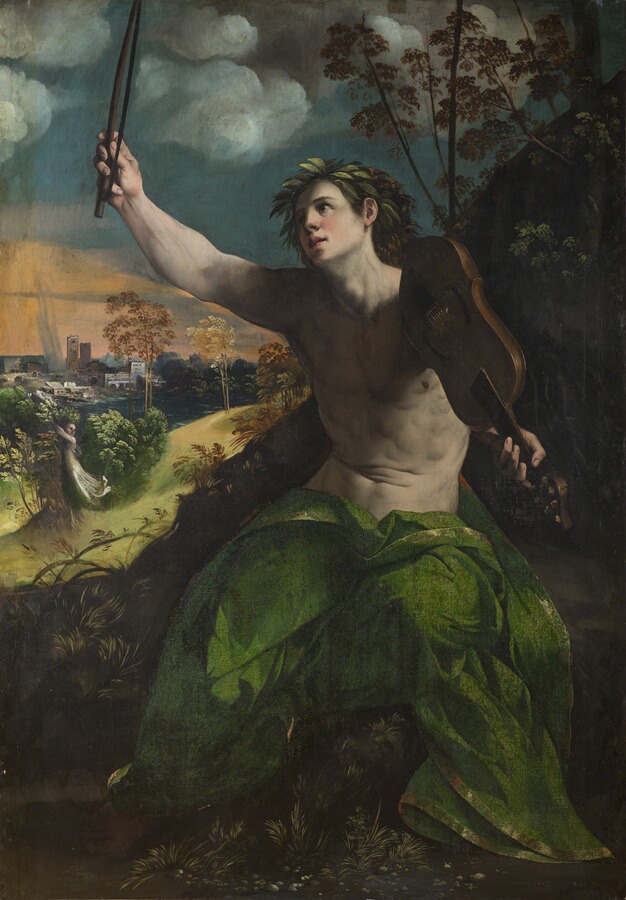
From birth to death: the theme of the underworld and the return from darkness takes shape around the symbolic pivot of Bernini’s Rape of Proserpina, with works such as Orpheus and Eurydice recounting the experience of those who crossed the realm of the dead while still alive.
Still, the central thread remains transformation itself: from woman to spider, as with Arachne, the starting point for a display of paintings, tapestries and textiles; from human being to stone, as in the tale of Perseus and Medusa, seen through works by Rubens, Sebastiano Ricci and Antonio Tempesta.
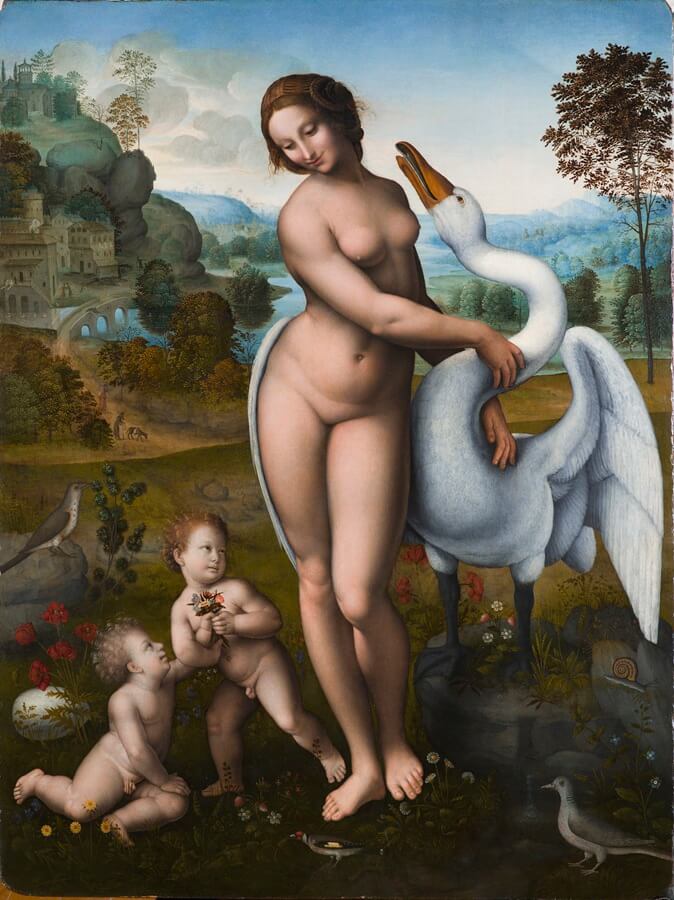
A final section is given over to the loves of Jupiter, with works dedicated to Leda and the Swan and to Danaë. Here it is the force of love, desire and passion that sets transformation in motion, at times almost spectacular, as in the shower of gold falling into Danaë’s lap, magnificently rendered in the work by Correggio on display.
The result is a symbolic and sensory reading of change, evoking the tension between order and transformation, the fluidity of identity and the dynamic relationship between body and nature. In this dialogue between myth and art, metamorphosis emerges not only as physical transformation but as an aesthetic and philosophical category, one that questions the relationships between time, space, matter and form.
Now those same halls host a monumental exhibition: After – Steps Through Work. Fendi / Karl Lagerfeld 1985, on view from 10 July to 25 October 2026.
The Greatest Fashion Partnership
What’s on display retraces the longest creative partnership in fashion history, between Karl Lagerfeld and the Fendi family. Hired in 1965 by the five Fendi sisters to reinvent the family’s traditional fur and leather house, Lagerfeld revolutionised the very idea of luxury outerwear, a collaboration that lasted until his death in 2019.
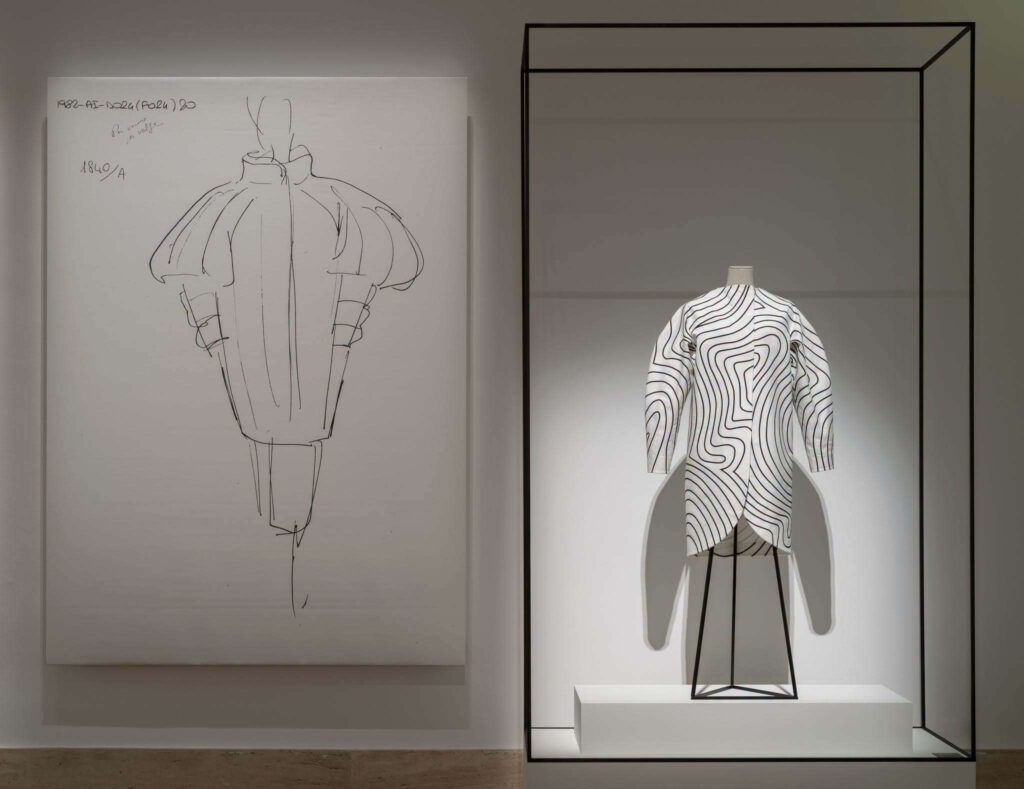
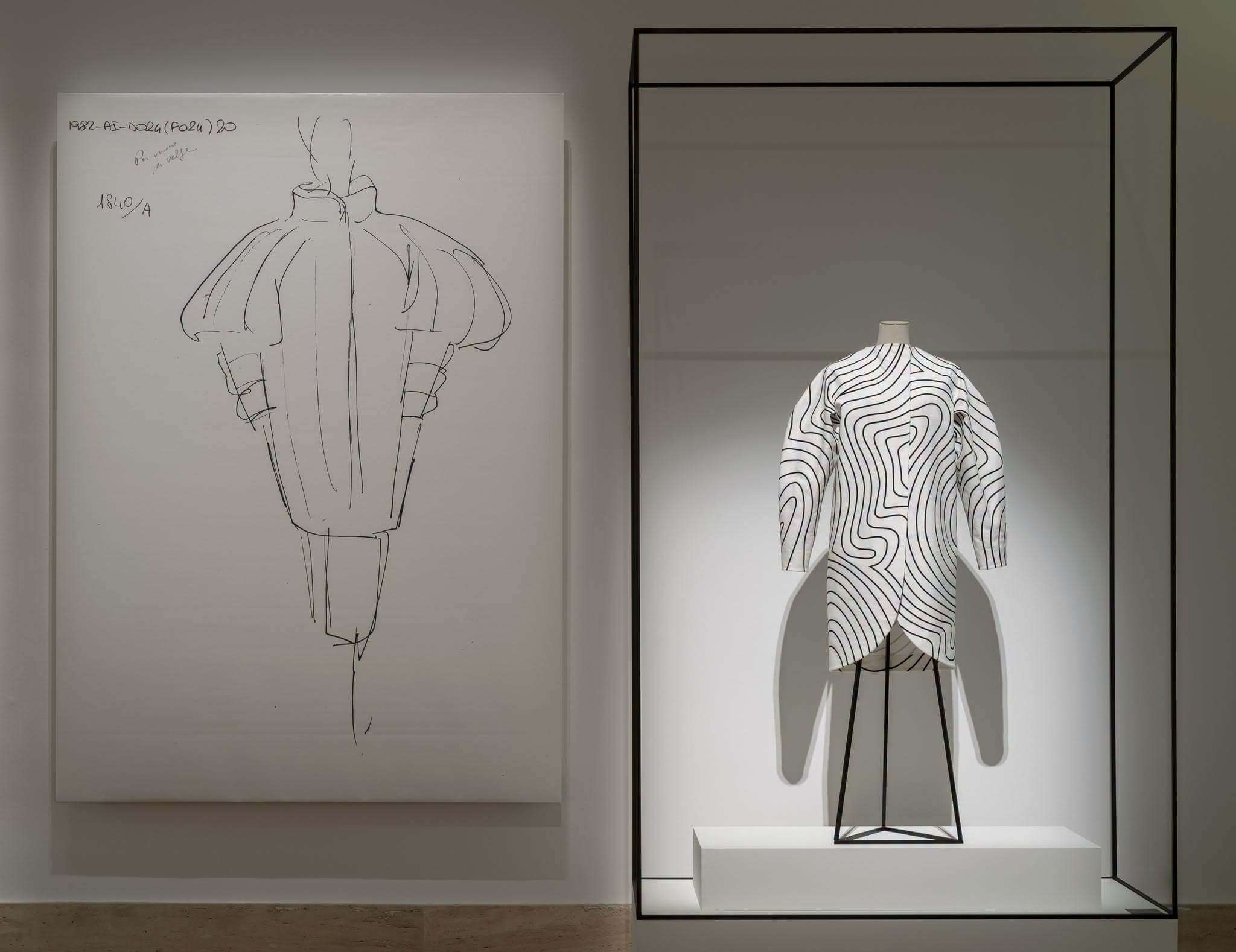
This is not a typical parade of red-carpet gowns. Instead, it faithfully rebuilds the pioneering 1985 show, originally curated by Ida Panicelli with an installation conceived by Lagerfeld himself, one of the first times fashion entered an Italian museum. It subverts expectations of the “finished product,” offering an intimate look at how Lagerfeld actually worked: how his raw sketches and the iconic double-F motif stepped off the page and came to life in the hands of master artisans.
Inside the Creative Process
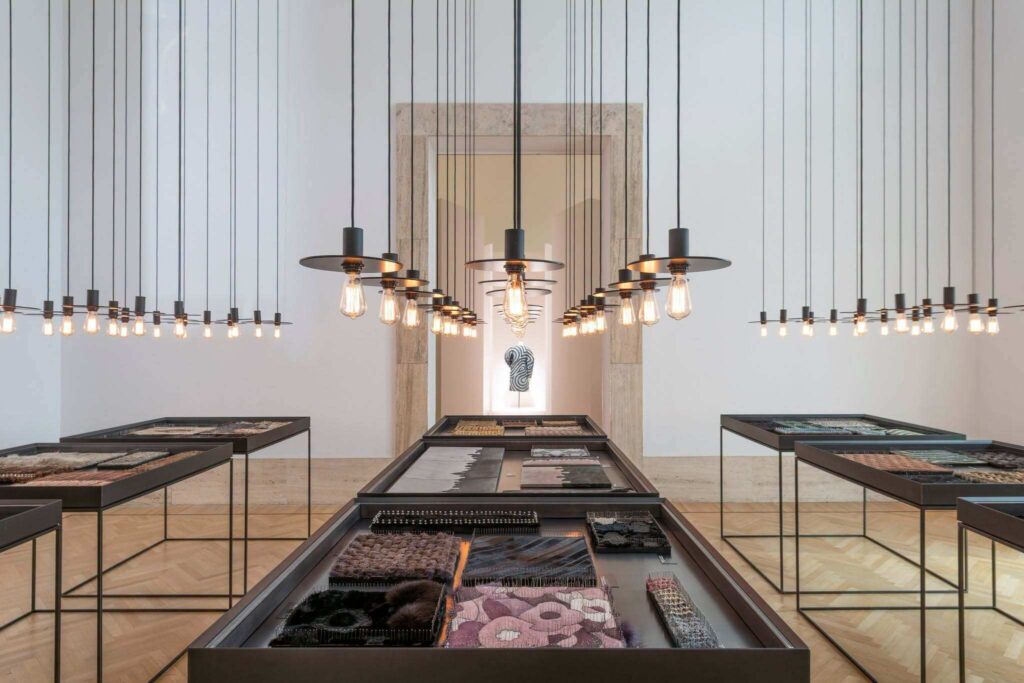
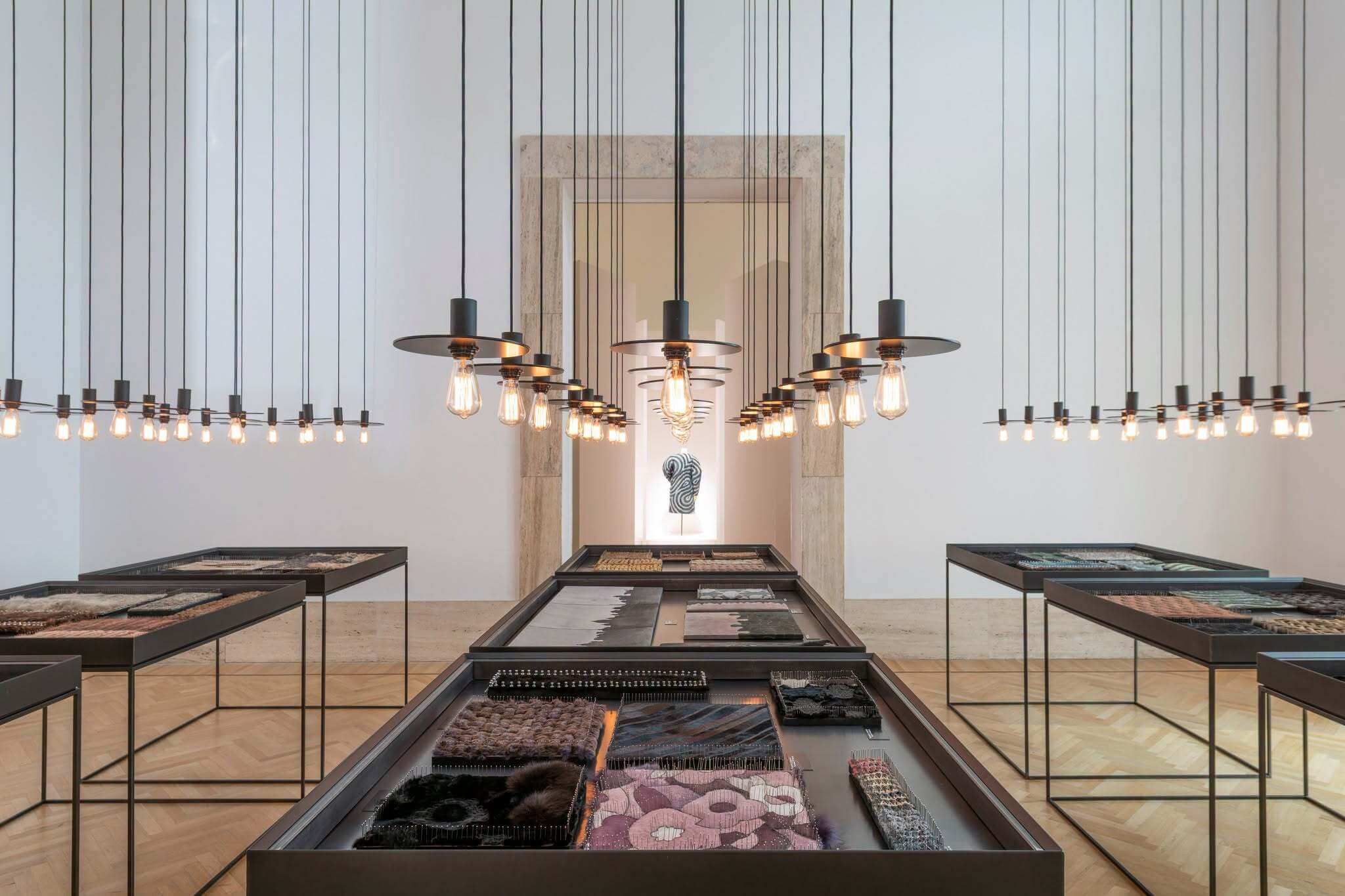
Drawing on the Fendi and GNAMC archives, the exhibition brings together around 180 original drawings, 22 paper patterns, 50 sample boards, preparatory canvases and 25 furs, tracing every stage from idea to finished garment. The sketches reveal how Lagerfeld’s hand evolved over time, from soft, naturalistic female forms to bold, expressive marker lines. Look closely at the margins and you’ll find handwritten notes, references and even French words transcribed into Italian, a quiet reminder of the bilingual, real-time dialogue with a Roman atelier.
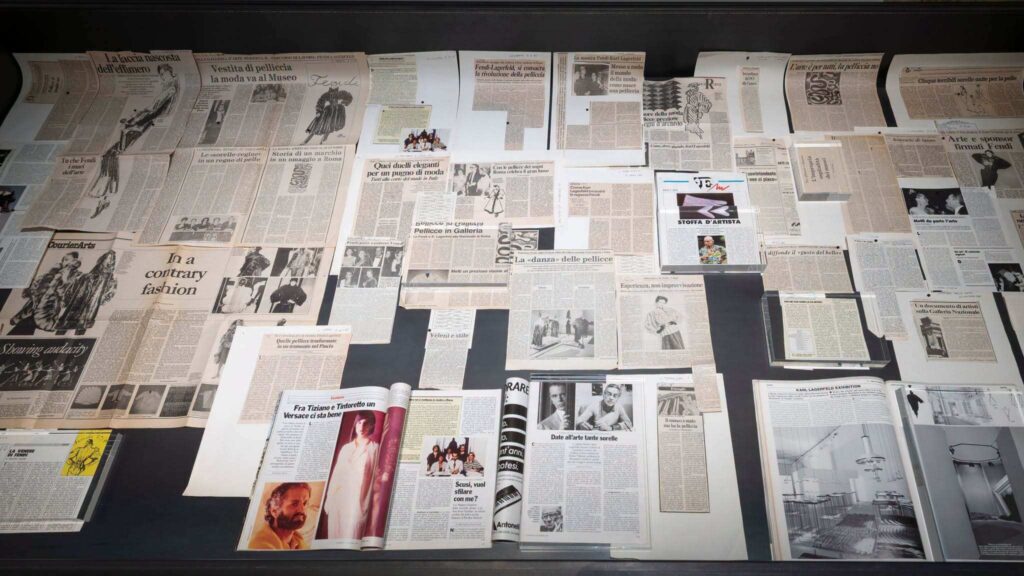
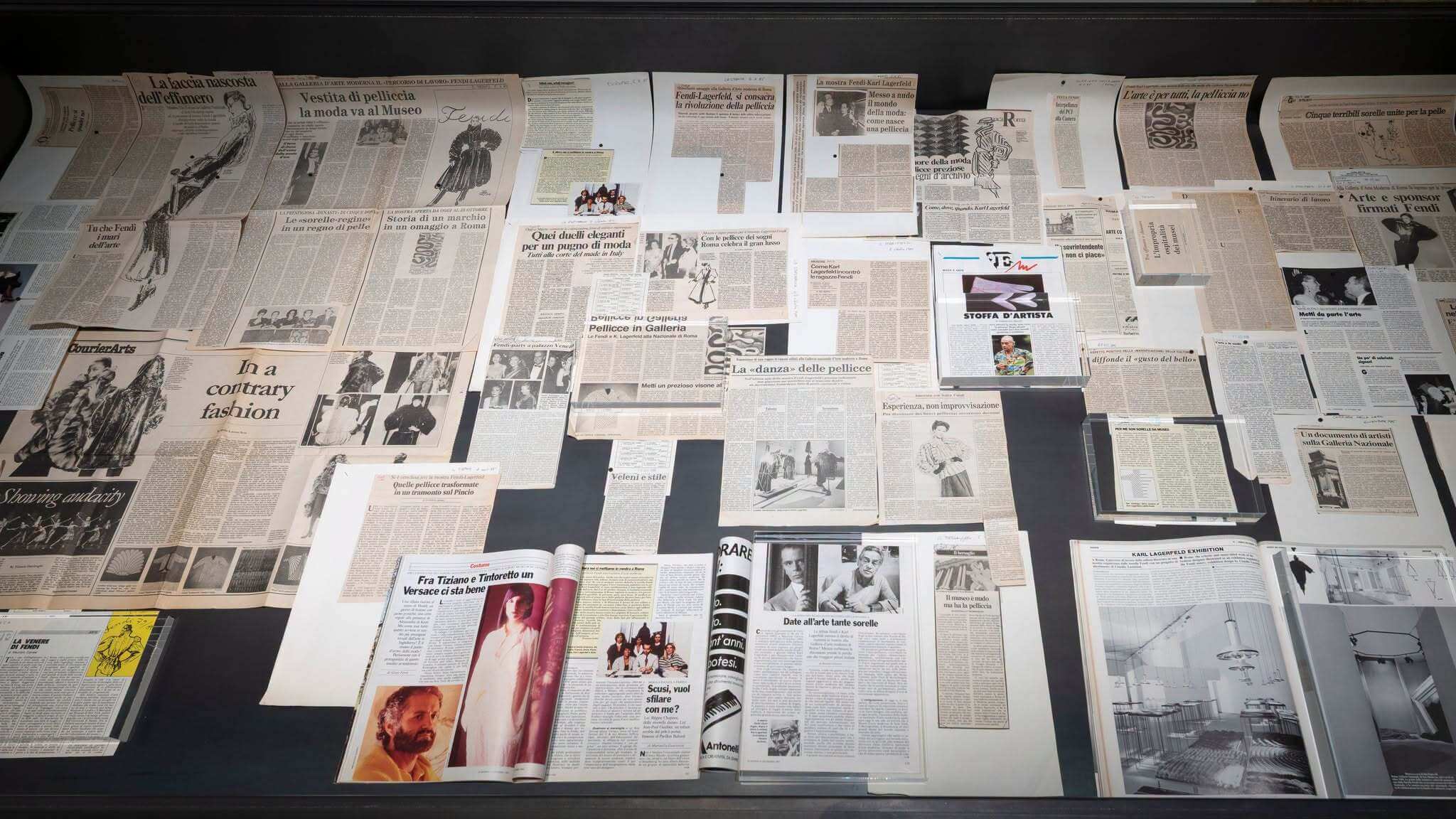
The show guides visitors through the architecture of couture, from paper patterns and canvas prototypes (toiles) to archival footage of Fendi’s deep Roman roots, including Jacques de Bascher’s 1977 film Histoire d’Eau. At its centre, a cluster of coats suspended in mid-air recreates Lagerfeld’s 1985 “Theatre” installation, once famously called the “dance of the furs.” The exhibition closes with a selection of the vast 1985 press coverage, a rare chance to trace how fashion found its place inside the museum.
For anyone drawn to the enduring legacy of Lagerfeld’s genius inside one of Italy’s most storied fashion houses, this is a must-see. Set on Viale delle Belle Arti, a short walk from the Borghese Gallery, it’s one of several major shows in the city this summer. Planning your visit between now and October? See our guide to Rome in August for more to pair with it.
Celebrate a special occasion on a historic riverboat
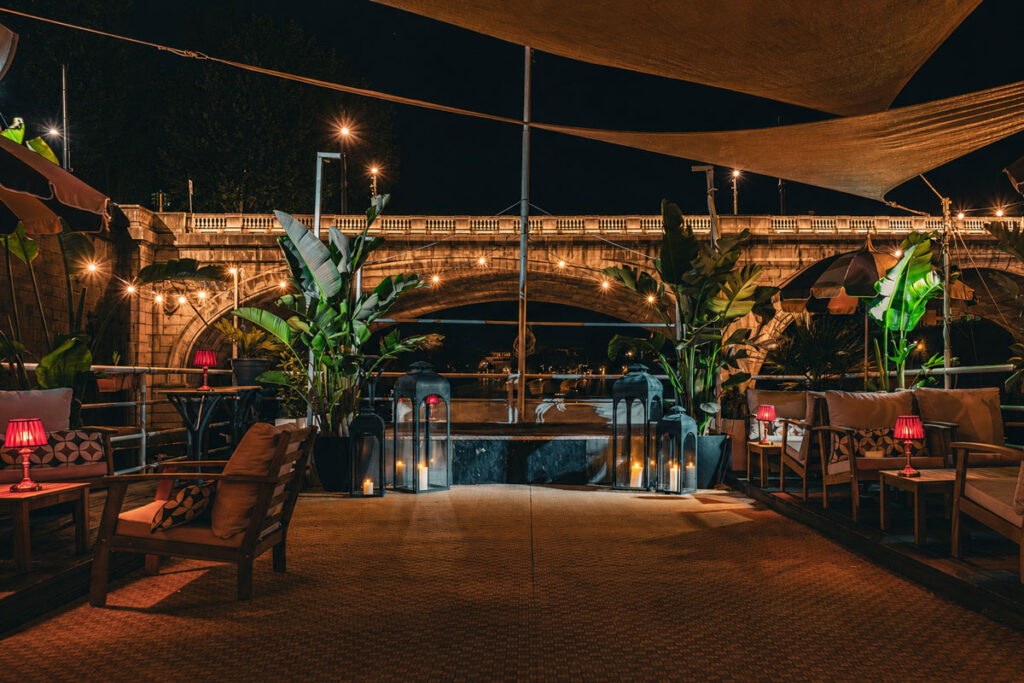
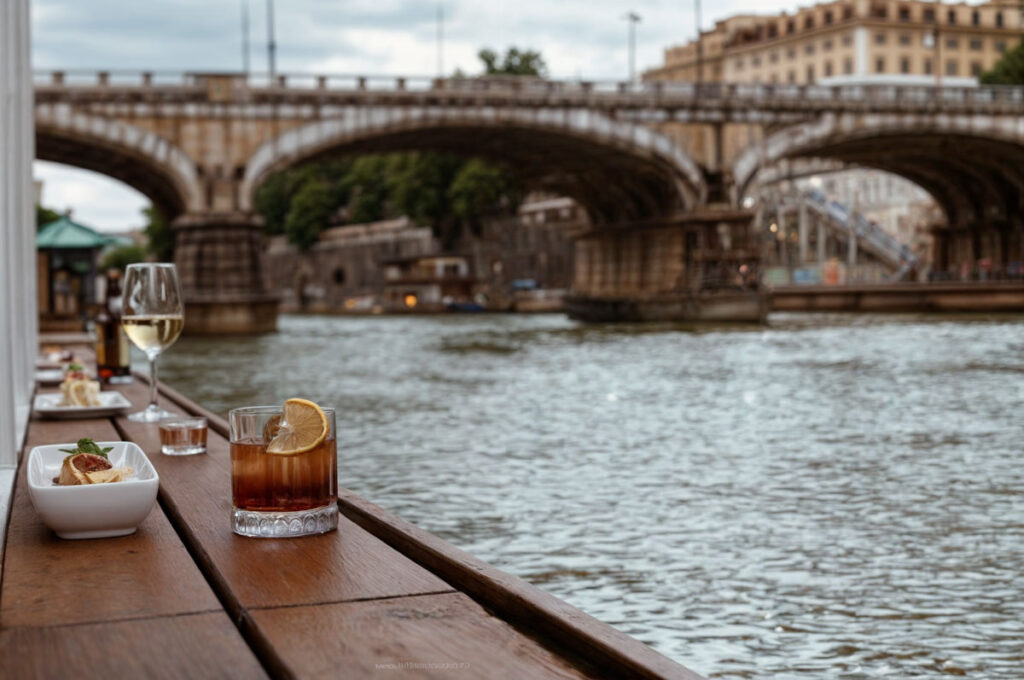
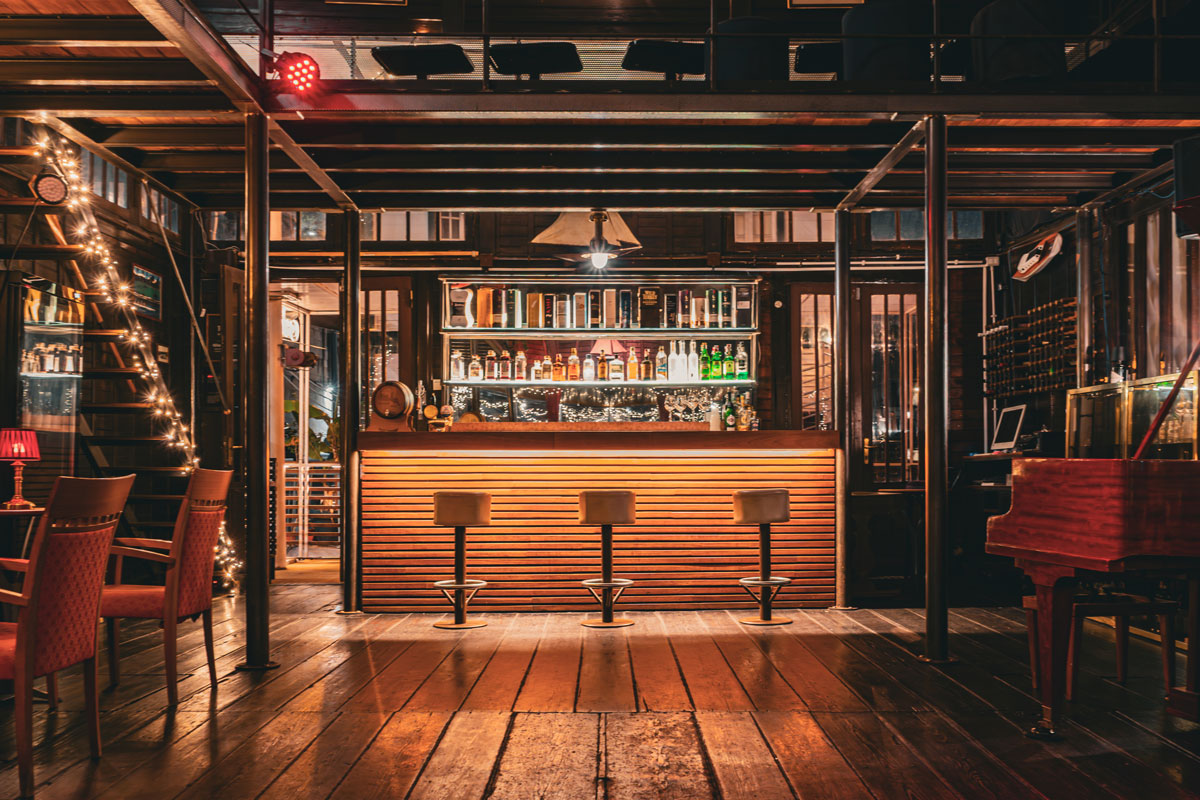
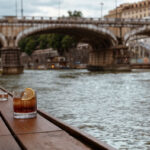
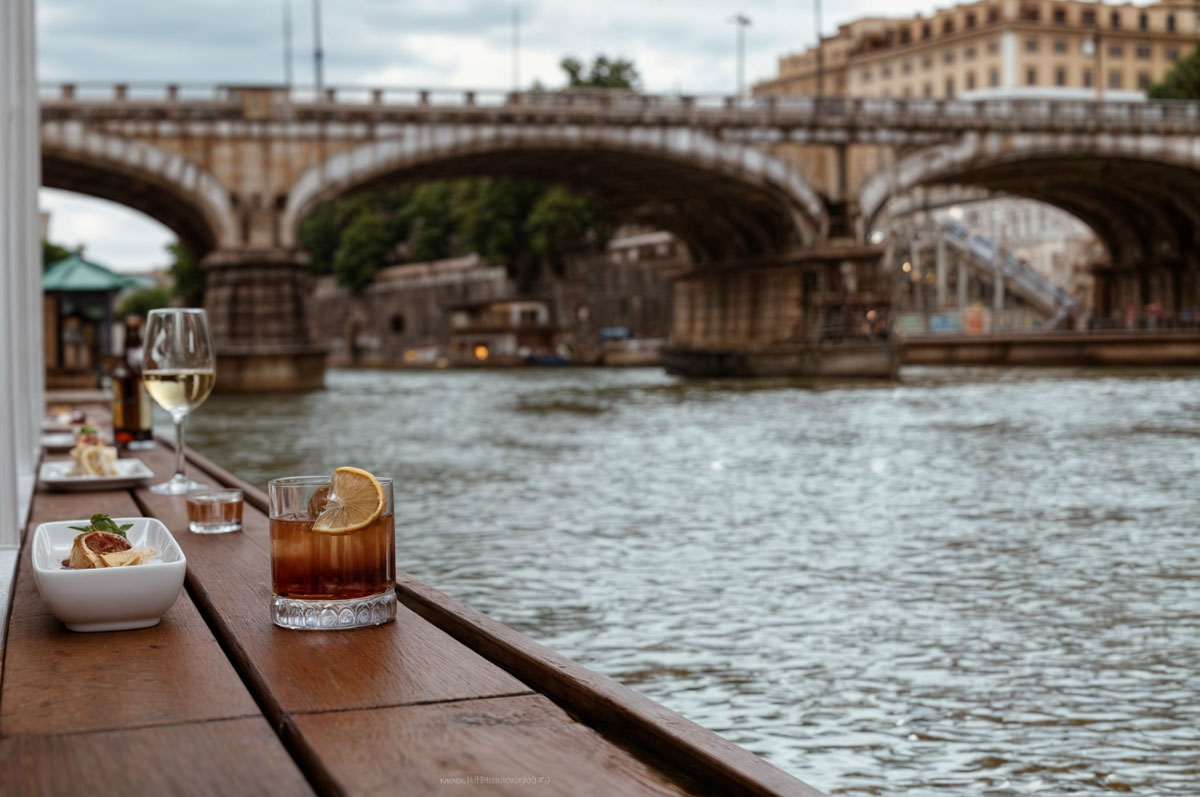
Toasting and dancing on the banks of the Tiber is no longer a dream but a real possibility, thanks to The Boat by Gregory’s, a historic Roman riverboat that transforms into the perfect setting for celebrating a special occasion. If you’re looking for a private event venue in Rome that breaks the mold, this is something no villa or rooftop can offer: a party on the water, in the heart of the city.
The Boat by Gregory’s is not open to the public, but can be booked exclusively for private events of all kinds, becoming an authentic floating lounge and ballroom on Lungotevere Arnaldo da Brescia, just steps from Piazza del Popolo and the city center. The venue hosts a wide range of occasions: birthdays, graduation parties, anniversaries, marriage proposals and wedding receptions, as well as corporate events such as company dinners, brand presentations, networking and incentive events for both Italian and international companies.
A venue steeped in history and culture
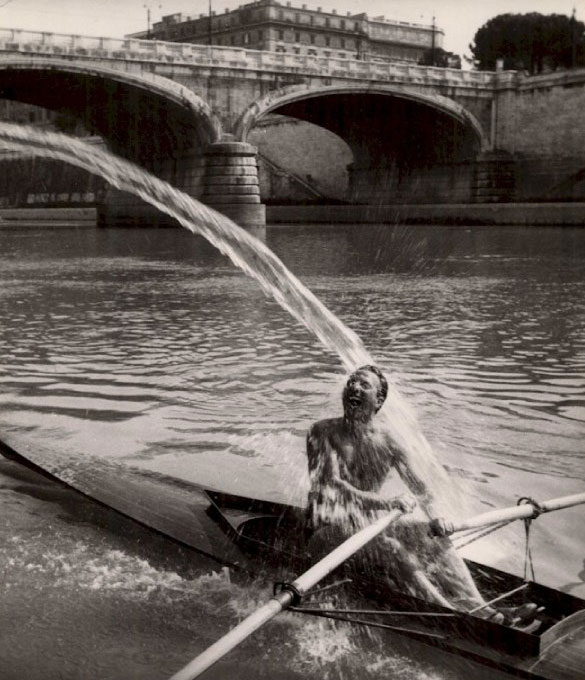
The riverboat that today hosts The Boat by Gregory’s is the oldest on the Tiber: the structure dates back to 1890, when it was built as the home of a swimming society, the Rari Nantes. In 1920 it was inaugurated as the headquarters of the Dopolavoro Ferroviario, the railway workers’ recreational club, a role it still holds today: not just a mooring point on the river, but a true floating gym dedicated to swimming, diving, rowing and social gatherings. In those years, the bond between Romans and the Tiber was far closer and more part of everyday life than it is today: the riverbanks were a place to meet and unwind, not just a backdrop to be admired from the bridges and photographed for Instagram.
Over the decades, the structure has lived several lives without ever losing its connection to the water where it was born. The latest is The Boat by Gregory’s, born about ten years ago, which has added a new vocation for hospitality and private events to its sporting and social dimension. The riverboat also remains tied to cultural activities, first and foremost jazz, with an occasional program of concerts that every now and then brings the riverside evenings to life.
This musical connection stems from its link to the famous Gregory’s Jazz Club on Via Gregoriana, one of the historic venues of the Roman music scene, which gives the location a distinctive sound identity: piano bar, DJ sets, saxophone and live performances can all be woven into the evening’s program, always tailored to the tastes and needs of the event, without ever turning the space into a themed venue.
The spaces: indoor rooms and a panoramic terrace over the Tiber
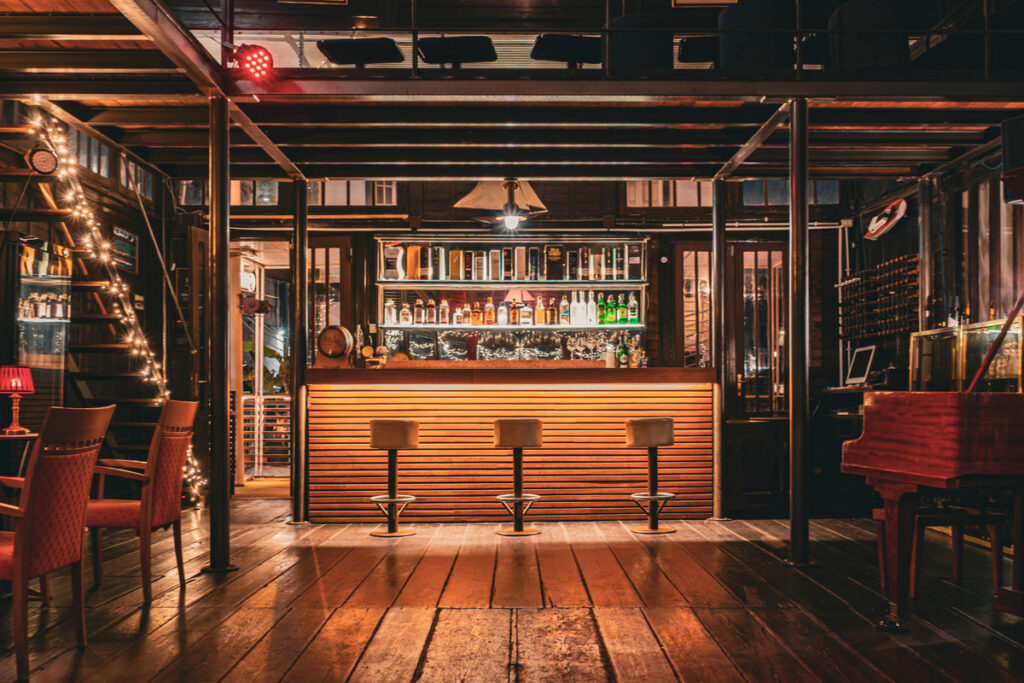
The boat is divided into distinct spaces, each with its own function and atmosphere, designed to suit very different occasions. The Jazz Room is the most intimate and welcoming soul of the venue, perfect for dinners, cocktails, presentations or small private events where a cozier indoor atmosphere is preferred. The Marina Room, on the other hand, lends itself to more convivial moments such as buffets, aperitivos and corporate events, while maintaining a constant visual dialogue with the river even under cover.
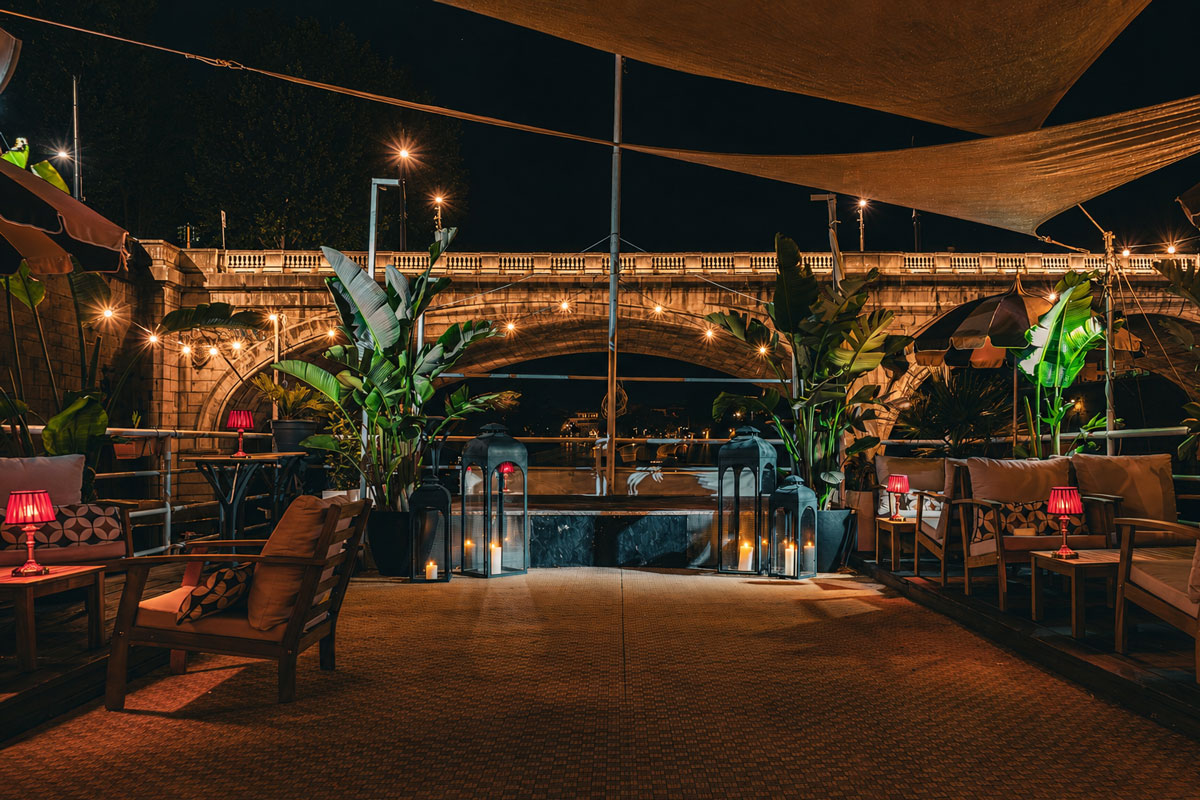
The true standout feature, however, is the panoramic Terrace, overlooking the Tiber directly, offering an unusual perspective on the city and the adjacent bridge. It’s the ideal spot for sunset aperitivos, toasts, cake cuttings or small moments of entertainment with a view of the water. The combination of indoor and outdoor spaces makes it possible to plan events all year round, always guaranteeing a sheltered alternative in case of bad weather or cooler temperatures, without sacrificing the charm of the location.
Private parties, but corporate events too
For the business world, The Boat by Gregory’s offers an unconventional alternative to the usual meeting rooms: a central, easily accessible position with plenty of parking nearby, combined with a secluded and distinctive atmosphere. Over the course of a single evening, different moments can follow one another, from the welcome drink to dinner and on to the DJ set, making it the ideal format for company dinners, product launches and networking events.
On the wedding front, it stands as an alternative to villas, rooftops and traditional reception halls, ideal for intimate receptions, welcome dinners or post-ceremony parties, where the Tiber becomes an integral part of the story rather than a simple backdrop. The offer is further enhanced by the possibility of adding private cruises and mini tours on the river, turning the venue not just into a place to host events, but into a true starting point for discovering Rome from an unusual perspective: that of its river history.
One final detail worth mentioning: the boat remains moored at all times, so there’s no risk of finding yourself stuck on the river with nosy colleagues or relatives. You can always step off and head back into the city whenever you like.
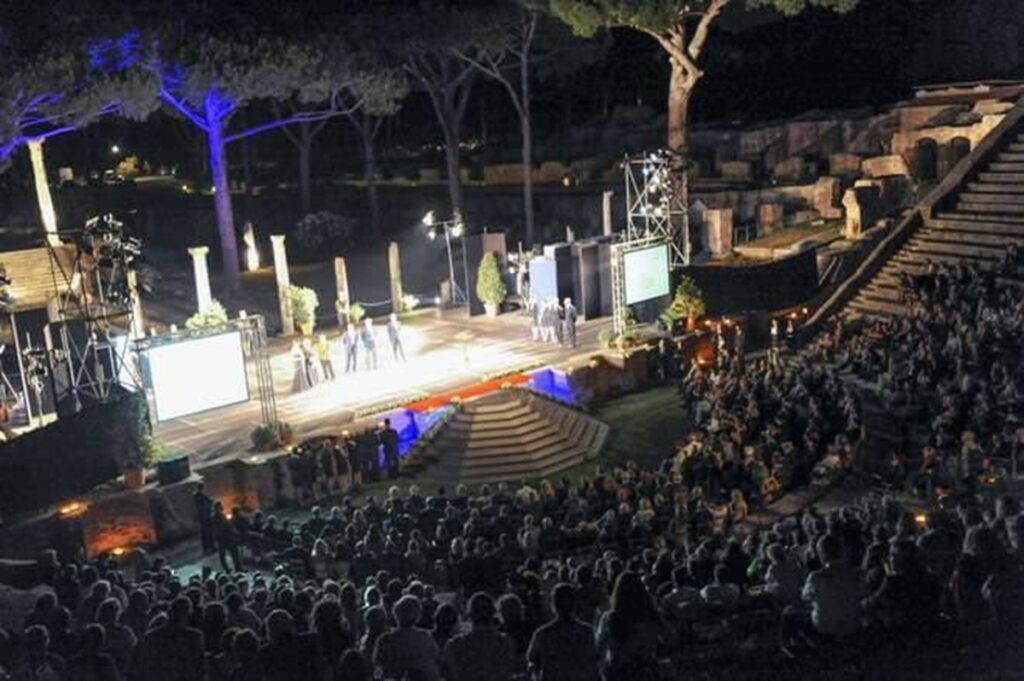
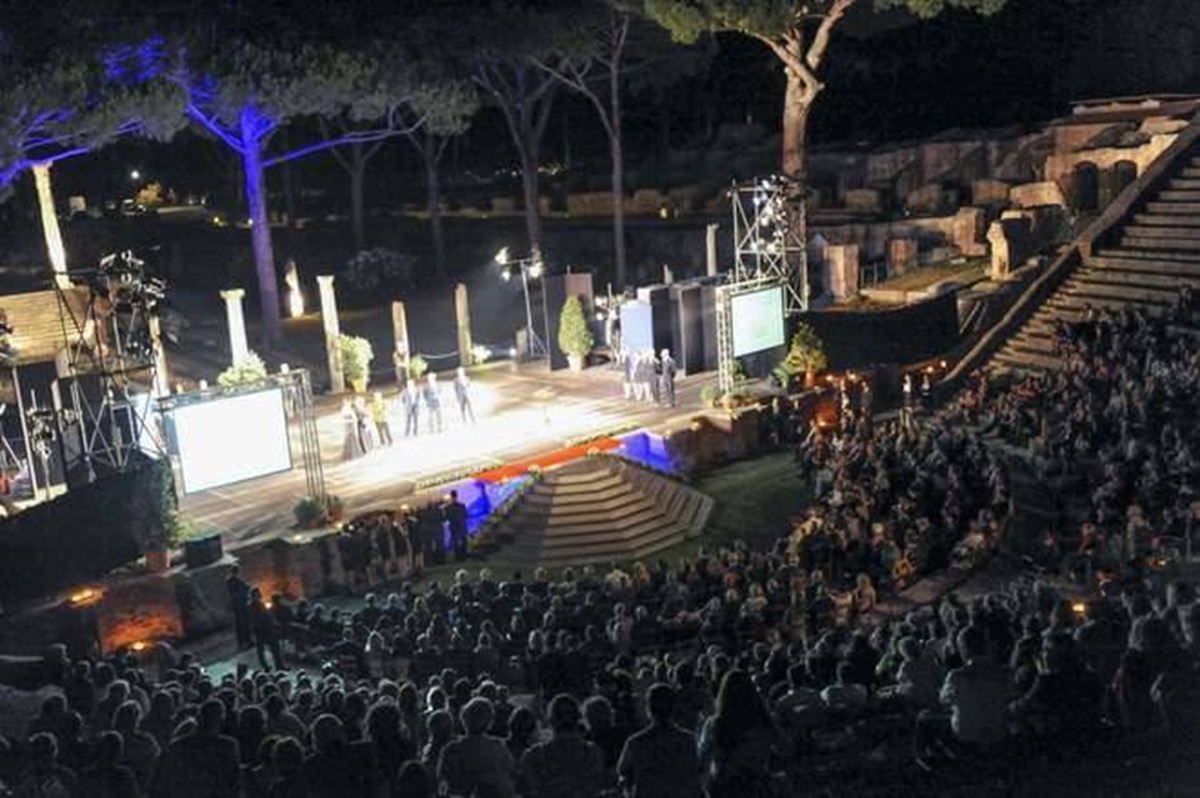
In the evocative setting of the Roman Theatre of Ostia, a series of performances interweaving classical myth with contemporary language
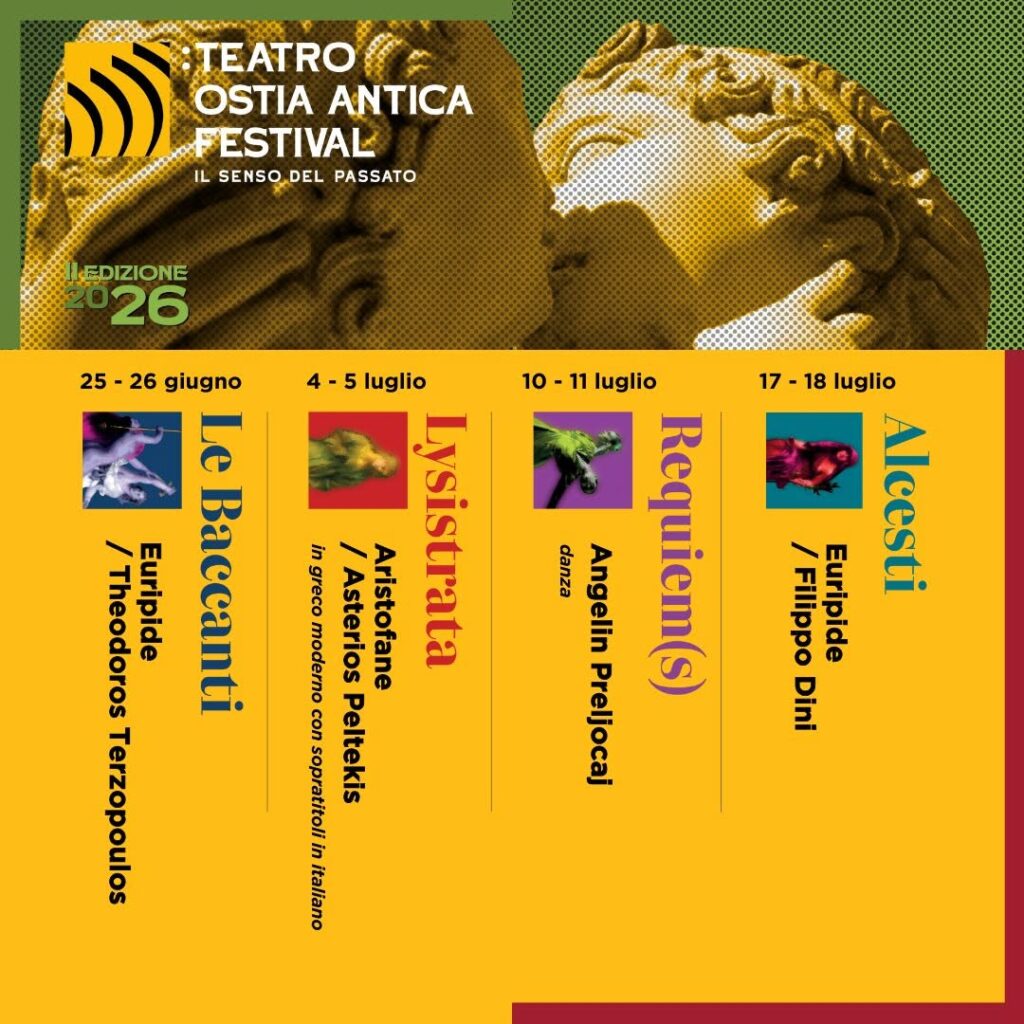
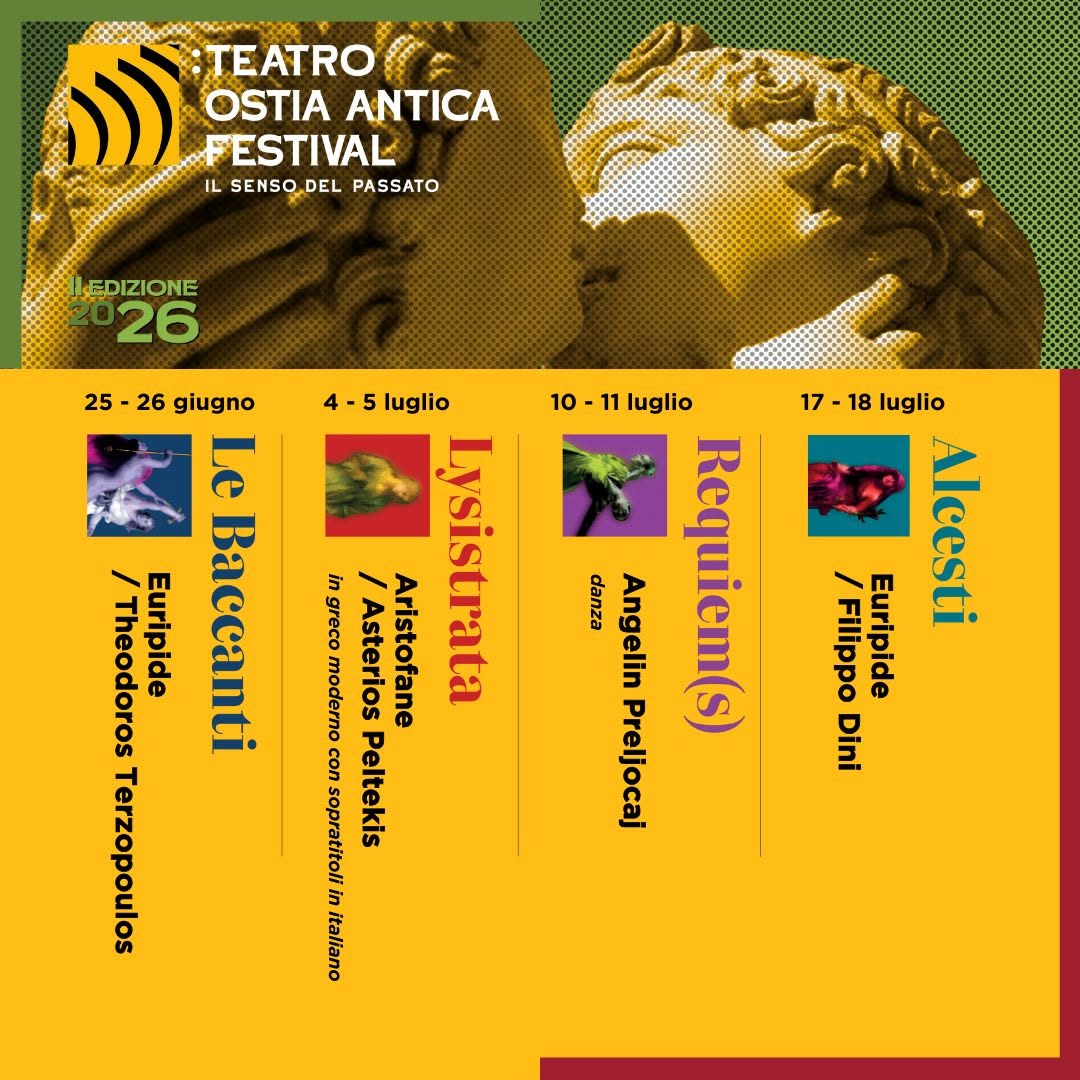
From June 25 to July 18, 2026, the second edition of the Teatro Ostia Antica Festival 2026, entitled The Sense of the Past, will take place. In the extraordinary setting of the Roman Theatre of Ostia, the festival presents an international programme that intertwines the power of classical myth with the languages of the contemporary world, offering a reflection on the challenges of the present.
From Greek tragedy to avant-garde dance, the Festival stands out for the encounter between tradition and the innovation of the contemporary scene, through the creations of four masters of the national and international stage: Theodoros Terzopoulos, Asterios Peltekis, Angelin Preljocaj and Filippo Dini.
For all Festival performances, a shuttle service is available from the Roman Theatre of Ostia to Rome Piramide, in collaboration with Come Back Home, at a cost of €15.
The Festival opens on June 25 and 26 with The Bacchae by Euripides, directed for the seventh time by the great Greek master Theodoros Terzopoulos, who comments on the tragedy as follows:
“The Bacchae is an emblematic tragedy for my theatrical vision. It is extremely important to present it at this moment, where Dionysus embodies the archetype of the refugee: having set out from Tmolos three thousand years ago, he travelled through the war zones of the Middle East and ends up today in the Mediterranean Sea, on the shores of Crete or Lampedusa. He returns to us as a stranger and invites us to sacrifice our body on the altar of the Unknown and the Transcendent.”
Theodoros Terzopoulos
On July 4 and 5, Lysistrata by Aristophanes will take the stage: a deeply political and human work centred on the moment when a society, exhausted by suffering, urgently seeks a new way of organising itself. The archetypal figure of the heroine does not propose reforms, nor does she introduce new institutional arrangements. On the contrary, Lysistrata proposes something entirely different: the restoration of the body, desire, care and collective responsibility as political action.
On July 10 and 11, the spotlight turns to dance with Requiem(s), directed by Angelin Preljocaj: an intense reflection on memory, loss and the profound relationship between life and death. A series of choreographies brings to the stage a procession of bodies, seeking to place into perspective the mosaic of emotions experienced after a loss.
The programme closes on July 18 with Alcestis by Euripides, directed by Filippo Dini, which tells the story of an unacceptable death, that of a sacrificial victim.
“Alcestis is frightening because it is the story of a woman who, driven only by the blessed fury of her love for her husband, chooses to die in his place. And it is frightening because she returns from Hades. Four centuries before Christ, an extraordinary woman sacrifices herself for love and returns from death. The woman who comes back from down there is not the same one who left: this Alcestis has now seen and experienced horror and despair beyond all limits. It makes me think of the journey of women through history, from the beginning of time to the present day, of their evolution, their tragic daily deaths, and their possibility of returning from horror to finally confront the object of their infinite love.”
Summer 2026: Rome’s piazzas are once again transformed into movie theaters thanks to the Ragazzi del Cinema America
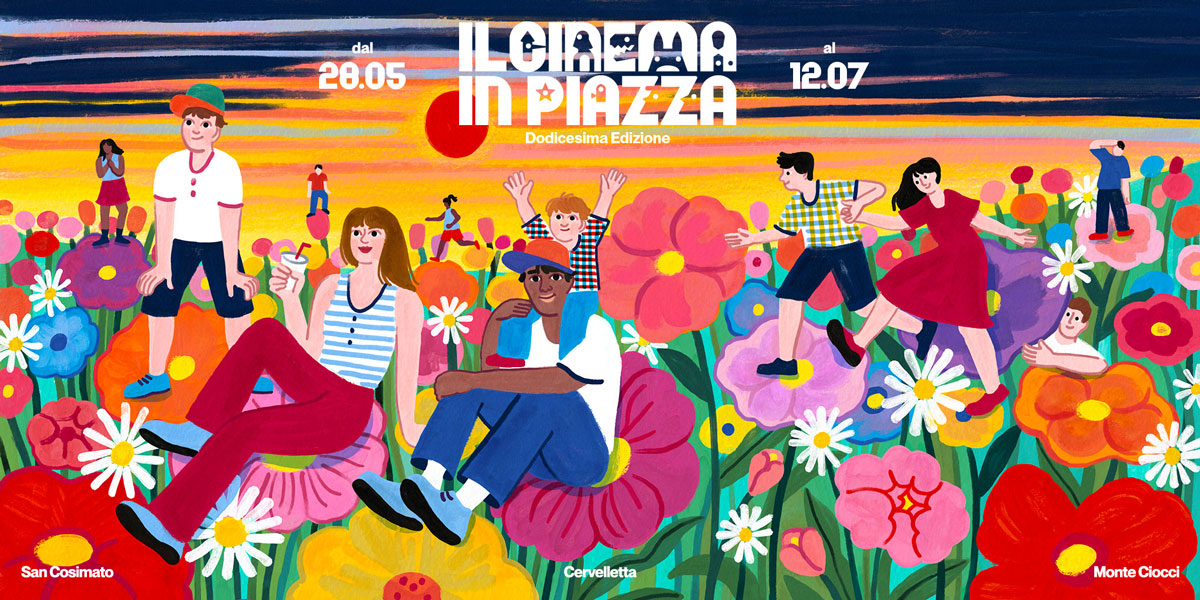
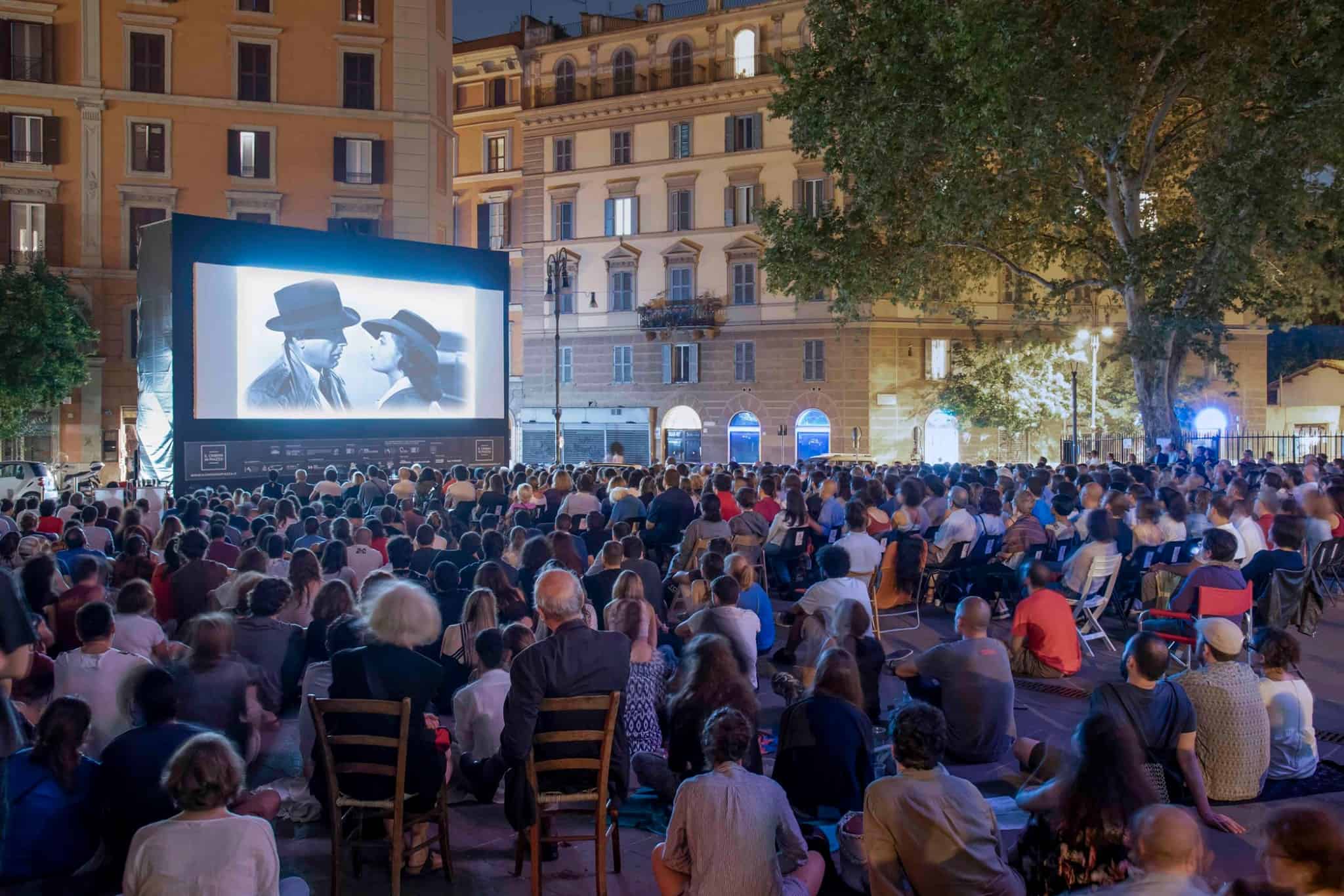
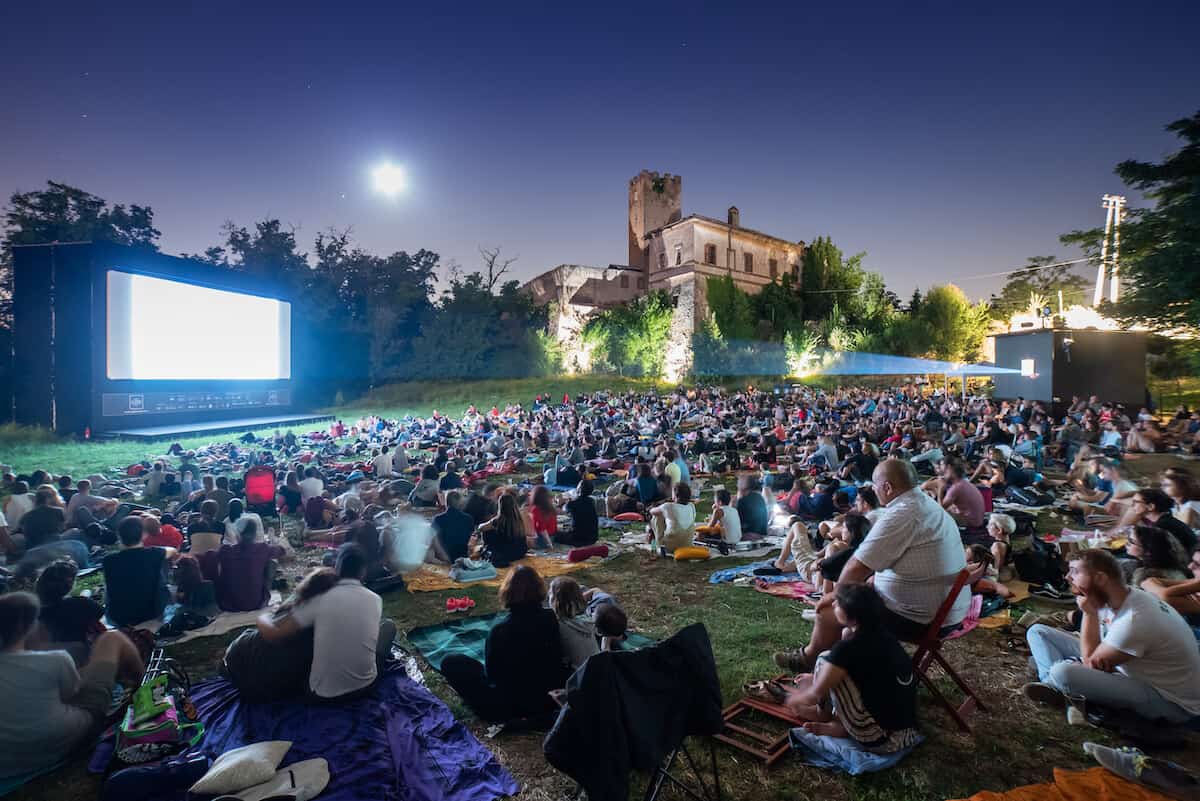
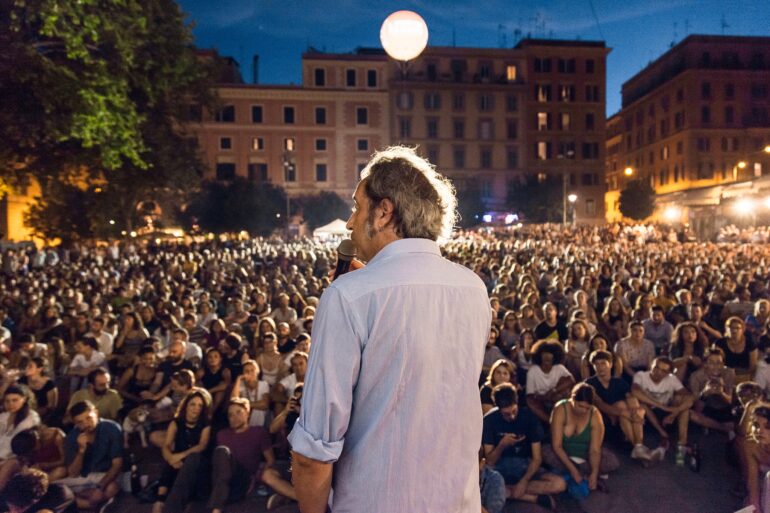
The outdoor film festival Il Cinema in Piazza returns this summer, transforming some of Rome’s most beautiful squares and parks into open-air cinemas from May 28 to July 12.
From Wednesday to Sunday, every evening at 9.15pm, Il Cinema in Piazza presents free screenings in original language with subtitles, as well as Italian classics with English subtitles, making the programme accessible to Rome’s international audience. This year’s edition features 95 screenings, 34 special encounters and several retrospectives across three locations: Piazza San Cosimato in Trastevere, Parco della Cervelletta in Tor Sapienza and Parco di Monte Ciocci in Valle Aurelia.
After the success of last year’s edition, which welcomed over 120,000 attendees, the event, organized by Fondazione Piccolo America, celebrates its twelfth anniversary with a programme that revisits great cinema from the past while also showcasing new independent works from Italy and around the world.
The 2026 edition also welcomes a rich line-up of national and international guests, including Marco Bellocchio, Stefano Nazzi, M¥SS KETA, Fabrizio Gifuni, Barbora Bobulova, Carlotta Gamba, Romana Maggiora Vergano, Bruce LaBruce, Paweł Pawlikowski, David Lowery, Isabella Rossellini, Elettra Rossellini Wiedemann, Ben Russell, Josh O’Connor, Gabriele Muccino, Ian McKellen, Saverio Costanzo, Oliver Stone, Jacques Audiard, Jane Campion, Pablo Larraín, Carlo Verdone, Léa Seydoux, Thom Yorke, Bruce Goldstein, Matteo Garrone, Nicolas Winding Refn, Olivier Assayas, Luca Marinelli and many more.
The programme brings together a rich series of retrospectives dedicated to some of the most influential voices in Italian and international cinema. At Piazza San Cosimato, the focus is on Elio Petri, Josh and Benny Safdie, Hayao Miyazaki and Studio Ghibli, and Gabriele Muccino.
At Parco della Cervelletta, the programme shifts to Alice Rohrwacher, Kenneth Anger, David Lynch’s Twin Peaks and Steven Spielberg, with screenings for both cinephiles and younger audiences.
At Monte Ciocci, the festival explores New York and Rome through Film Forum, alongside retrospectives on Takashi Miike and Edgar Wright, plus a family-friendly selection of DreamWorks Animation classics.
The 2026 program of “Il Cinema in Piazza”
SAN COSIMATO PROGRAMME (28 May – 12 July)
May 28 – Marco Bellocchio and Stefano Nazzi present Portobello episodes 1-2-3, moderated by M¥SS KETA. With a reading by Fabrizio Gifuni.
May 29 – Barbora Bobulova, Carlotta Gamba and Romana Maggiora Vergano present Portobello episodes 4-5-6, moderated by Lisa Ginzburg.
May 30 – Laputa – Castello nel cielo by Hayao Miyazaki
May 31 – Ecco fatto by Gabriele Muccino
June 3 – La decima vittima by Elio Petri
June 4 – The Pleasure of Being Robbed by Josh Safdie
June 5 – Paweł Pawlikowski presents My Summer of Love, moderated by Martina Barone
June 6 – Il mio vicino Totoro by Hayao Miyazaki
June 7 – Come te nessuno mai by Gabriele Muccino
June 10 – A ciascuno il suo by Elio Petri
June 11 – Lenny Cooke by Josh and Benny Safdie
June 12 – FR*CINEMA Gran Finale: Karma B, Porpora Marcasciano, La Tarantina and Loredana Rossi present Ballata Femmenella
June 13 – La città incantata by Hayao Miyazaki
June 14 – Gabriele Muccino presents L’ultimo bacio, moderated by Mariella Lazzarin
June 17 – Indagine su un cittadino al di sopra di ogni sospetto by Elio Petri
June 18 – Jacques Audiard presents Emilia Pérez, moderated by Enrico Maria Artale
June 19 – La classe operaia va in paradiso by Elio Petri
June 20 – Ponyo sulla scogliera by Hayao Miyazaki
June 21 – Ricordati di me by Gabriele Muccino
June 24 – Saverio Costanzo presents Private
June 25 – Heaven Knows What by Josh and Benny Safdie
June 26 – Pablo Larraín presents Jackie
June 27 – I giorni contati by Elio Petri
June 28 – Léa Seydoux presents a surprise carte blanche
July 1 – La proprietà non è più un furto by Elio Petri
July 2 – Good Time by Josh and Benny Safdie
July 3 – Matteo Garrone presents Io Capitano
July 4 – La storia della Principessa Splendente by Isao Takahata
July 5 – A casa tutti bene by Gabriele Muccino
July 8 – Olivier Assayas presents Irma Vep
July 9 – Uncut Gems / Diamanti grezzi by Josh and Benny Safdie
July 10 – Il ragazzo e l’airone by Hayao Miyazaki
July 11 – Gregorio Sassoli and Alejandro Cifuentes present San Damiano
July 12 – Gli anni più belli by Gabriele Muccino
CERVELLETTA PROGRAMME (4 June – 12 July)
June 4 – Blue Velvet / Velluto blu by David Lynch
June 5 – Bruce LaBruce presents short films by Kenneth Anger
June 6 – Corpo celeste by Alice Rohrwacher
June 7 – Isabella Rossellini and Elettra Rossellini Wiedemann present Casablanca
June 10 – Kenneth Anger programme: Lucifer Rising, Don’t Smoke That Cigarette!, Mouse Heaven, Foreplay and The Spells of Kenneth Anger
June 11 – Alice and Alba Rohrwacher present Le meraviglie
June 12 – Twin Peaks – Northwest Passage by David Lynch and Mark Frost
June 13 – Josh O’Connor presents Accattone
June 14 – Hook – Capitan Uncino by Steven Spielberg
June 17 – Oliver Stone presents Any Given Sunday / Ogni maledetta domenica
June 18 – Incontri ravvicinati del terzo tipo by Steven Spielberg
June 19 – Twin Peaks episodes 2-3
June 20 – Lazzaro felice by Alice Rohrwacher
June 21 – L’impero del sole by Steven Spielberg
June 24 – Kenneth Anger programme: Inauguration of the Pleasure Dome, Kustom Kar Kommandos, Invocation of My Demon Brother, The Man We Want to Hang and Elliott’s Suicide
June 25 – Eterobasiche and Tahir Hussain present Twilight
June 26 – Twin Peaks episodes 4-5
June 27 – Futura by Alice Rohrwacher, Pietro Marcello and Francesco Munzi
June 28 – E.T. l’extra-terrestre by Steven Spielberg
July 1 – A Philological Quandary, Kenneth Anger’s ¡Que Viva Mexico! by Bruce Posner and The Loveless by Kathryn Bigelow and Monty Montgomery
July 2 – Thom Yorke presents Children of Men / I figli degli uomini
July 3 – Twin Peaks episodes 6-7
July 4 – La chimera by Alice Rohrwacher
July 5 – Nicolas Winding Refn presents The Hunger / Miriam si sveglia a mezzanotte
July 8 – Jurassic Park by Steven Spielberg
July 9 – Camilla Salvatore presents Il Capitone
July 10 – Twin Peaks episode 8 and Fire Walk with Me / Fuoco cammina con me + Missing Pieces
July 11 – Alice Rohrwacher shorts and works, including Un piccolo spettacolo, Una canzone, Quattro strade, Ad una mela, Le pupille, Omelia contadina and Allégorie Citadine
July 12 – Il GGG by Steven Spielberg
MONTE CIOCCI PROGRAMME (6 June – 12 July)
June 6 – David Lowery presents A Ghost Story
June 7 – Audition by Takashi Miike
June 10 – Shaun of the Dead / L’alba dei morti dementi by Edgar Wright
June 11 – Speedy / A rotta di collo by Ted Wilde
June 12 – Spirit – Cavallo selvaggio by Kelly Asbury and Lorna Cook
June 13 – Visitor Q by Takashi Miike
June 14 – Ian McKellen presents Les Vacances de M. Hulot / Le vacanze del signor Hulot
June 17 – Hot Fuzz by Edgar Wright
June 18 – Risate di gioia by Mario Monicelli
June 19 – Jane Campion presents Il giardino dei Finzi Contini by Vittorio De Sica
June 20 – Laura Samani and Celeste Cescutti present Piccolo corpo
June 21 – Sukiyaki Western Django by Takashi Miike
June 24 – The World’s End / La fine del mondo by Edgar Wright
June 25 – The Naked City / La città nuda by Jules Dassin
June 26 – Kung Fu Panda by Mark Osborne and John Stevenson
June 27 – Carlo Verdone presents Una giornata particolare by Ettore Scola
June 28 – Il robot selvaggio by Chris Sanders
July 1 – 13 Assassins / 13 assassini by Takashi Miike
July 2 – Bruce Goldstein presents The Taking of Pelham One Two Three / Il colpo della metropolitana
July 3 – Baby Boss by Tom McGrath
July 4 – Cine-concert: Häxan / La stregoneria attraverso i secoli
July 5 – Over Your Dead Body by Takashi Miike
July 8 – Cine-concert: Stachka / Sciopero!
July 9 – Lo sceicco bianco by Federico Fellini
July 10 – Alissa Jung, Luca Marinelli, Juli Grabenhenrich and Cristina Bartoletti present Paternal Leave
July 11 – Last Night in Soho / Ultima notte a Soho by Edgar Wright + Àcanto by Collettivo MMMH
July 12 – First Love / L’ultimo yakuza by Takashi Miike
CINEMA TROISI PROGRAMME
June 3, 9.30pm – Bruce LaBruce presents The Visitor by Bruce LaBruce, moderated by Mariella Lazzarin
June 10, 9.30pm – Ben Russell presents A Spell to Ward Off the Darkness by Ben Rivers and Ben Russell, moderated by Pier Giovanni Adamo
June 13, 5pm – Rosario Dawson and Gabriele Muccino present Seven Pounds / Sette Anime by Gabriele Muccino
June 28, 9.30pm – Scott Pilgrim vs. The World by Edgar Wright
July 5, 5.30pm – Nicolas Winding Refn presents Her Private Hell
July 5, 9.30pm – The Running Man by Edgar Wright
July 10, 9.30pm – The Smashing Machine by Benny Safdie
July 11, 9.30pm – Marty Supreme by Josh Safdie
All films will be shown in the original languagewith Italian subtitles.
Cinema in Piazza is organized by “Fondazione Piccolo America,” a group dedicated to promoting culture and film. They say the goal of “Il Cinema in Piazza” is in “the contemporary involvement of the center and the suburbs” which seeks to uniquely “rebuild a sense of community, promoting a knowledge accessible to all with free and shared projections.” Additionally, Cinema In Piazza promotes the cultural importance of the event, saying “the projection does not end in the mere vision of the show, but becomes an experience of intense civil and social value.”
The event had previously been held in Piazza San Cosimato under the name “Festival Trastevere Rione del Cinema,” but faced a dispute with Rome’s deputy mayor and culture councilor, Luca Bergamo. Instead of limiting the hours, like Bergamo wanted, the event grew after being supported by well-known figures in film, such as Martin Scorsese and “Pif” Pierfrancesco Diliberto.
Now, Cinema In Piazza’s project is continuing in an even more concrete direction, seeking to unite all of Rome through film by “connecting three nerve centers [in the city] through the construction of three contemporary arenas.”
FROM 28 MAY TO 12 JULY 2026
Locations:
Piazza San Cosimato – Trastevere
Monte Ciocci – Via Domizia Lucilla, 76
Casale della Cervelletta – Parco della Cervelletta in Tor Sapienza
There is a before and after in the Flaminio neighborhood, and Mostò stands right in the middle.
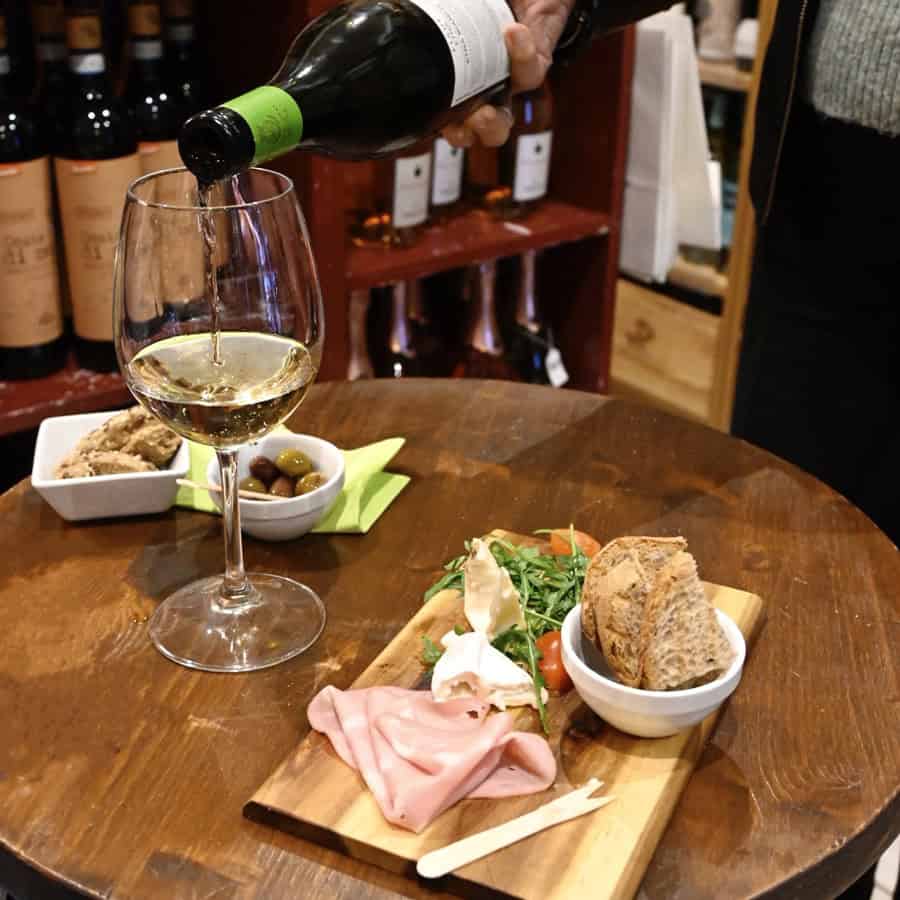
When it first opened, natural wine was not yet a trend. In fact, in Rome, few people were really talking about it. Mostò was one of the first wine bars in the city to truly believe in it, focusing on small producers, short supply chains, and a more authentic way of drinking. At the time, Flaminio was still a fairly quiet neighborhood, with only a handful of interesting addresses. Mostò quickly became a point of reference: a place that attracted people, brought them together, and helped change the face of the area.
Behind the project are three partners: Ciro, Alessia, and Valerio. Their idea was to create a place that could be a wine bar, a neighborhood shop, and a convivial space all at once. Somewhere to drop by, stop for a chat, enjoy a glass of wine, have an aperitivo, or stay for a proper dinner.
Wine is at the heart of everything. The list features around 350 to 400 labels, with a strong focus on Italian wines but also interesting selections from France, Spain, and other European countries. Ciro personally knows many of the producers and suppliers, and the selection has been built over time through direct relationships and thoughtful choices. By the glass, there are around 15 options, perfect for exploring.
The same attention goes into the ingredients. The cured meats come from quality producers such as Re Norcino, with the coppa and mortadella not to be missed, while the cheeses are selected from small local producers, including Ammano.
In the kitchen is the third partner, Valerio Romani, a chef and pastry chef with over 25 years of experience and an impressive background that includes time at Troiani and Terrinoni. The menu changes often, following the seasons and the chef’s inspiration, but always keeps a clear identity: generous, satisfying dishes that are never predictable.
Among the current dishes are flavorful panelle with creamed salt cod, as well as green falafel with fava beans, served with pecorino sauce. One of the signature dishes is the Daje de Taco, daje de punta, a taco filled with veal brisket, broccoli guacamole, and lentil chili. Also very tempting is the hot dog with Re Norcino würstel, friarielli, and potatoes.
Desserts are part of the experience too, such as the sesame cream with mango and sesame brittle, a balanced way to end the meal.
Mostò is a neighborhood wine bar in the truest sense of the term: a lively, informal yet carefully curated place, the kind of place you want to return to. Not just to drink well, but to feel part of something.
Mostò is open Monday to Saturday from 5:30pm to 11:30pm, and on Sunday from 12:00pm to 6:00pm.
In a changing Rome, Mostò remains a point of reference. Not because it follows trends, but because it anticipated them.
The exhibition Bernini and the Barberini, curated by Andrea Bacchi and Maurizia Cicconi, opened its doors just a few days ago, coinciding with the 400th anniversary of the consecration of the new St Peter’s Basilica, one of the places where Bernini’s genius had the chance to develop projects and ideas, commissioned by Maffeo Barberini, better known as Pope Urban VIII.
The exhibition focuses precisely on these two key figures of the Roman Baroque and on the patron-artist relationship that grew between them. It was the so-called mirabil congiuntura, mentioned in ancient sources, that gave rise to one of the most fascinating artistic and intellectual partnerships in art history.
It was Pope Barberini who immediately recognised the young artist’s incredible potential, taking him under his protective wing and entrusting him with numerous commissions.
Bernini and the Barberini is arranged in six sections tracing Gian Lorenzo Bernini’s journey from his early years in his father’s workshop to full artistic maturity, while highlighting the decisive role of Maffeo Barberini (later Pope Urban VIII) in shaping a visual language that would become a model for the European Baroque.
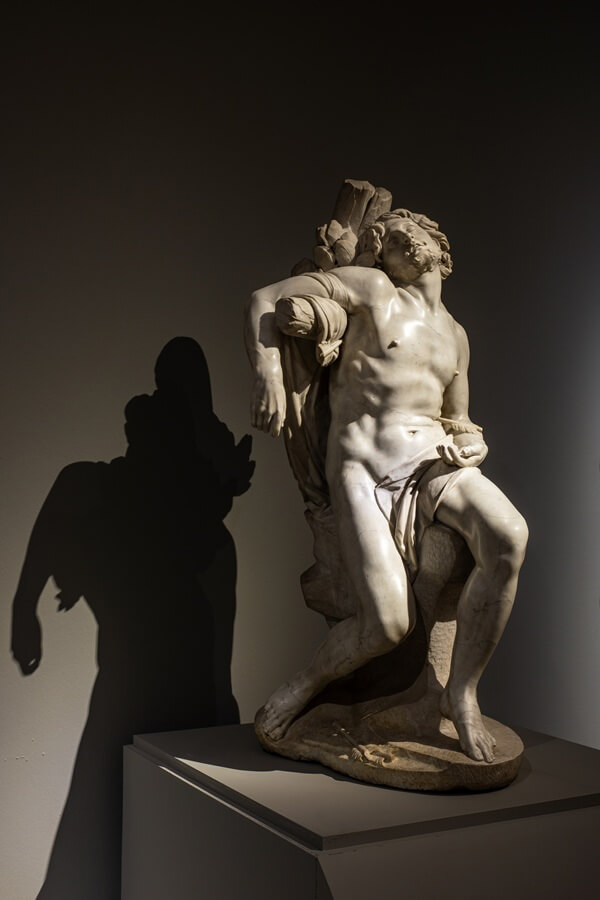
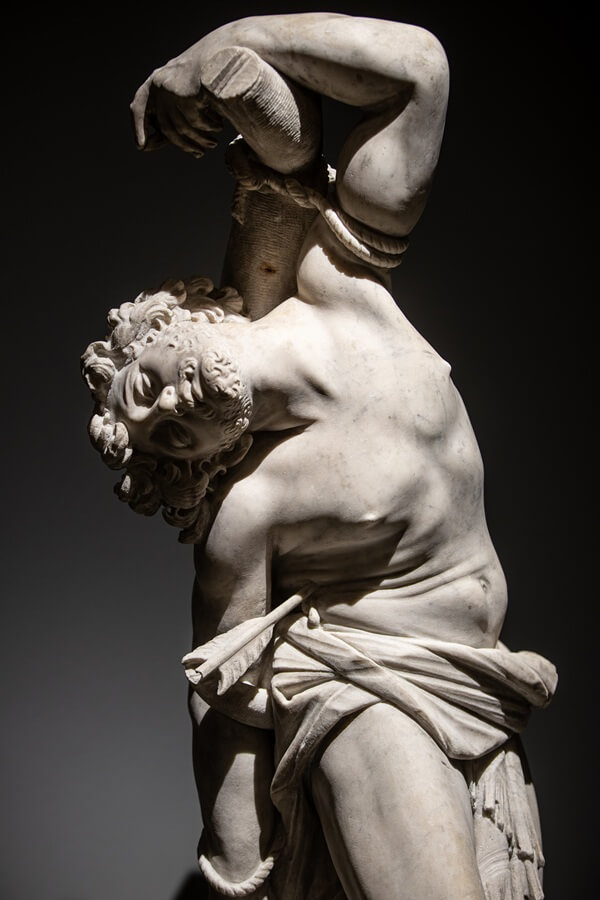
Gian Lorenzo Bernini, San Sebastiano, 1617, Marmo, Collezione privata
Gian Lorenzo Bernini (attribuito). San Sebastiano, 1617 -1618, Marmo, Jouy en Josas (Yvelines), chiesa di San Martino
1) Claiming Him as His Own: Maffeo “discovers” Bernini The opening section reconstructs the moment Barberini recognises the young prodigy and helps him step out from Pietro Bernini’s shadow. Works by father and son appear alongside key early masterpieces by Gian Lorenzo, already marked by lifelike movement, sensuous surfaces and direct emotional impact, foreshadowing the Baroque.
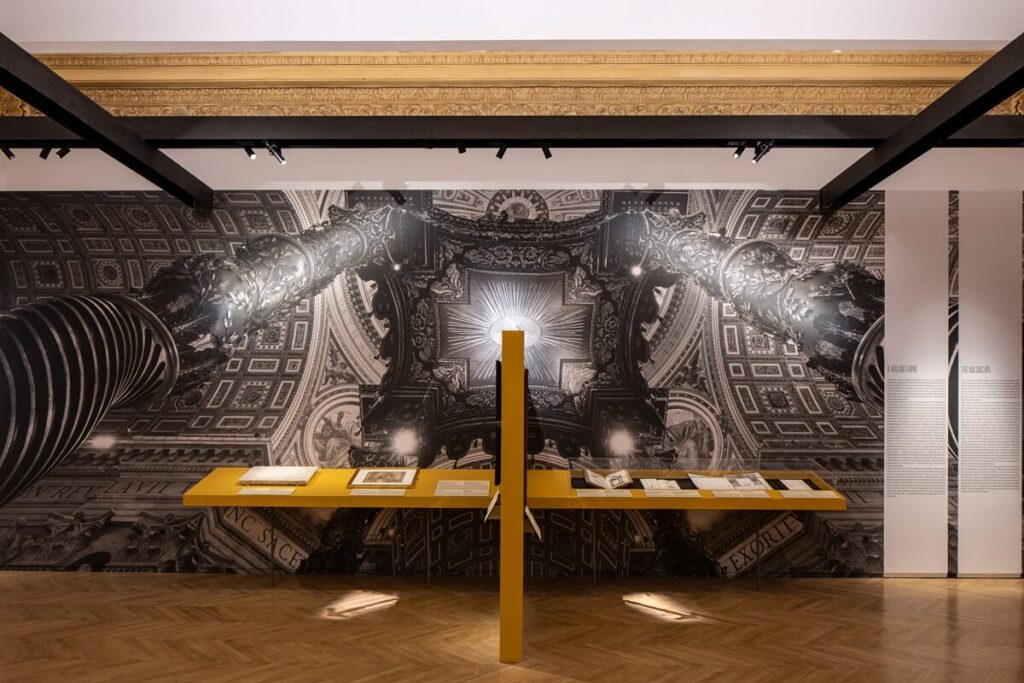
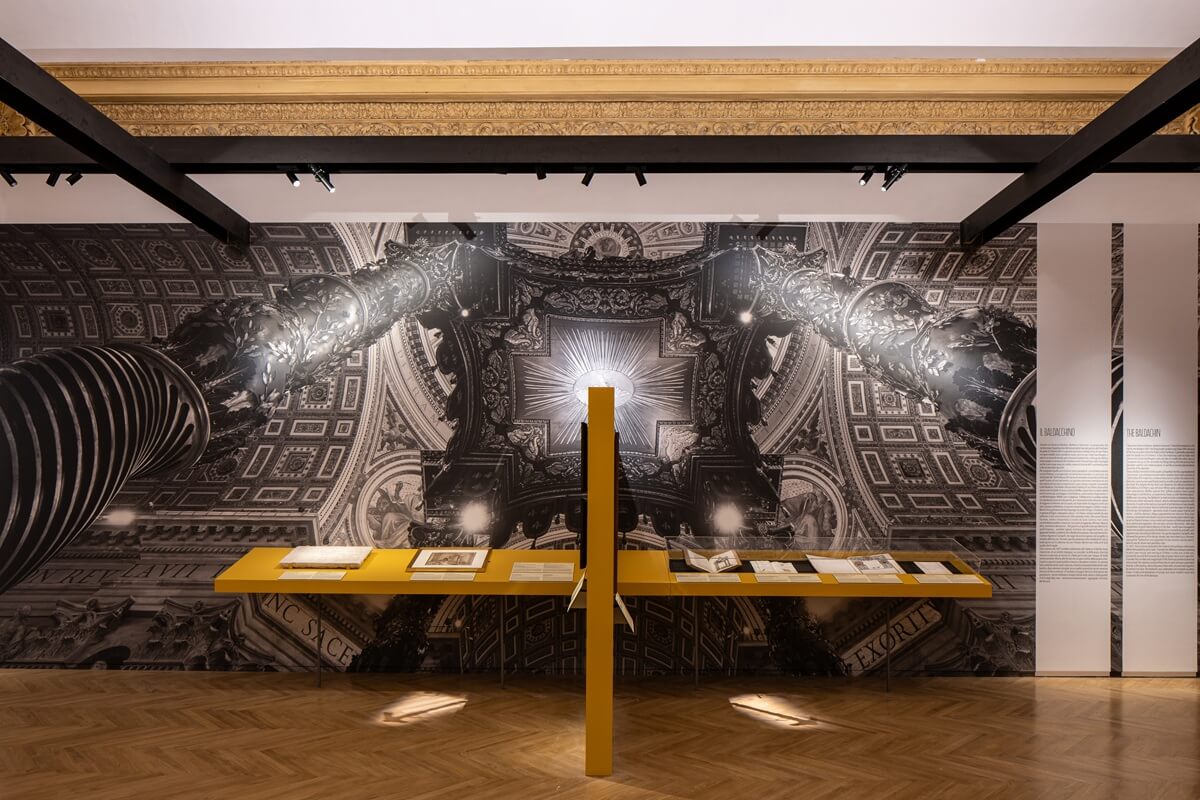
2) Ne plus ultra: The New Saint Peter’s Dedicated to Bernini’s work in St Peter’s Basilica after its consecration in 1626, this section centres on the Baldacchino, commissioned when he was just over twenty-five. Drawings and models reveal how Bernini fused architecture, sculpture and decoration into a single theatrical statement, conceived in dialogue with the basilica’s surrounding elements.
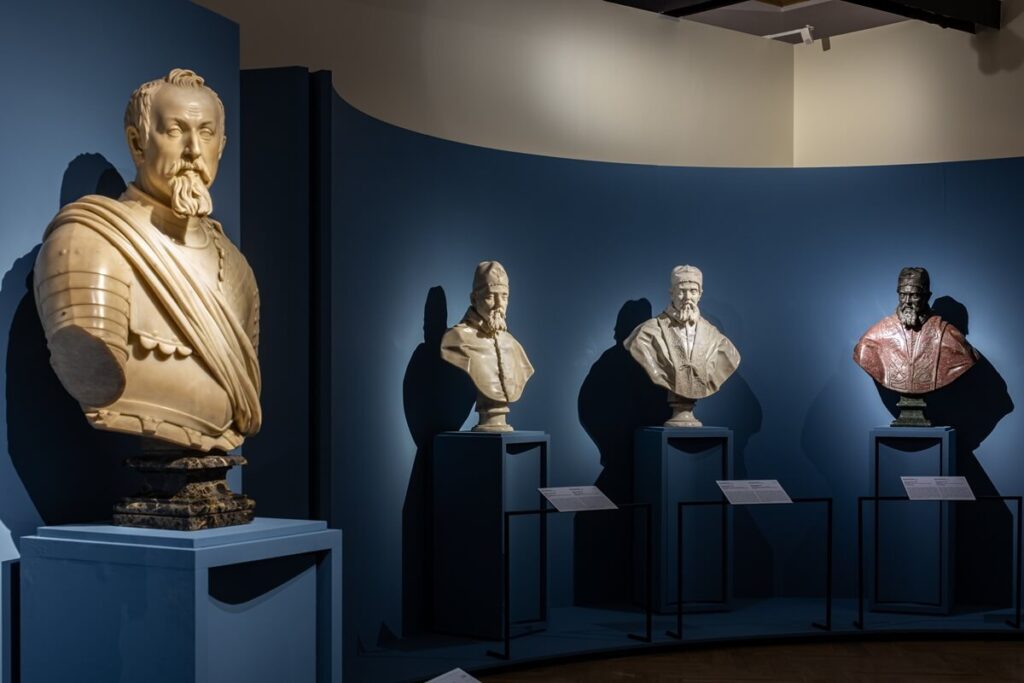
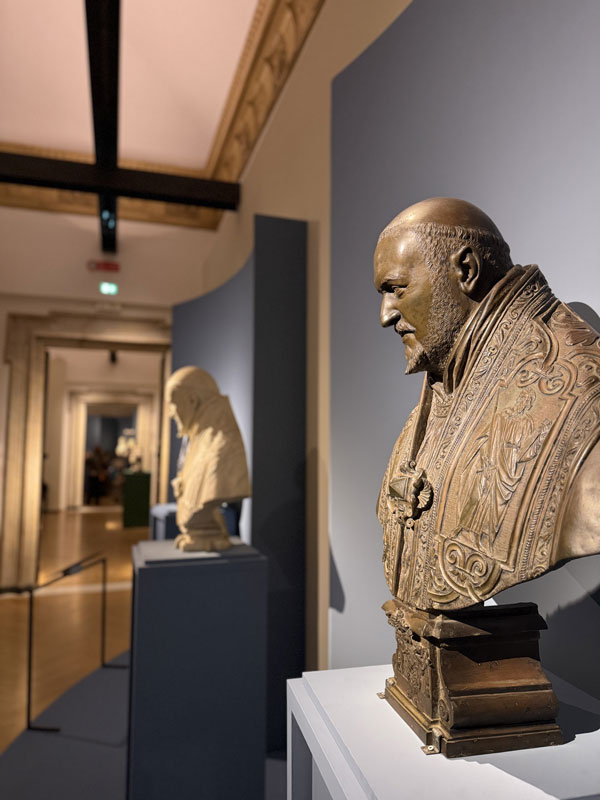
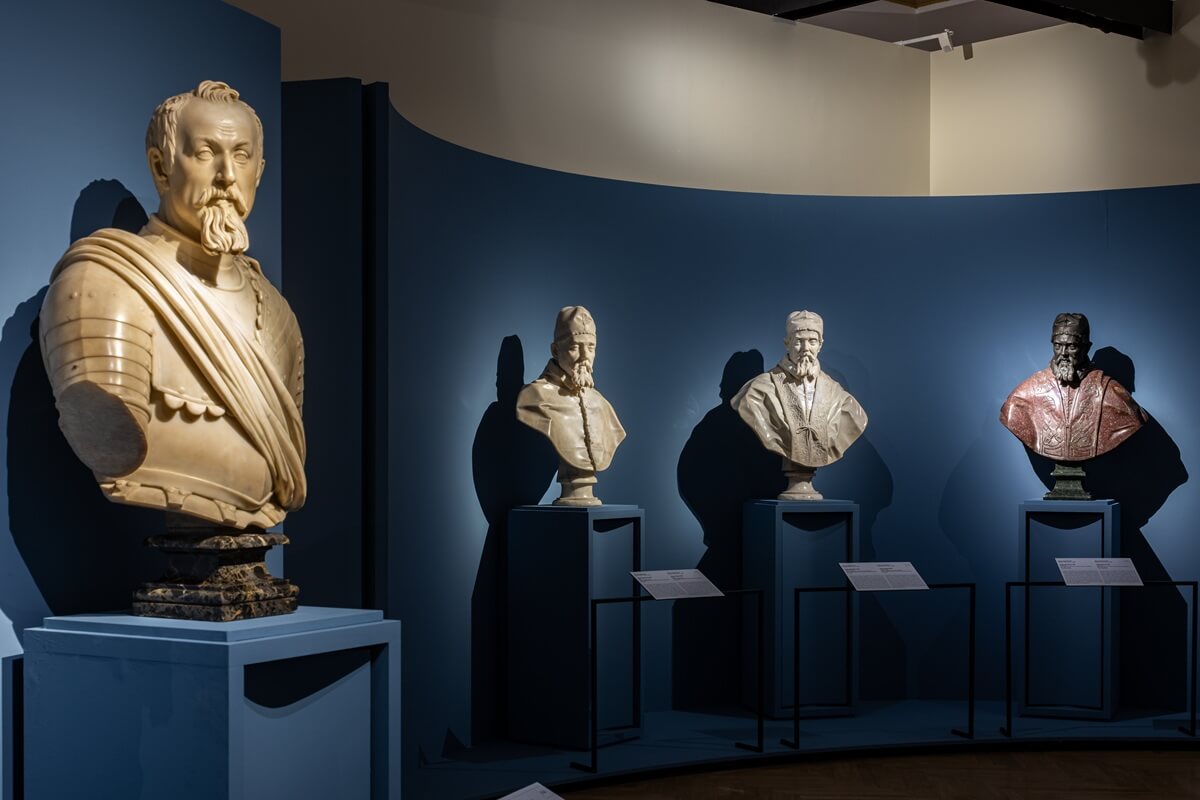
3) The Pope’s Image: Bernini as Portraitist Here the focus shifts to Bernini’s papal portraiture, from his early busts of Paolo V and Gregorio XV to the extraordinary series of portraits of Urban VIII. Shown together, these busts chart the evolution of a portrait formula that combines psychological intensity with a powerful image of spiritual and temporal authority.
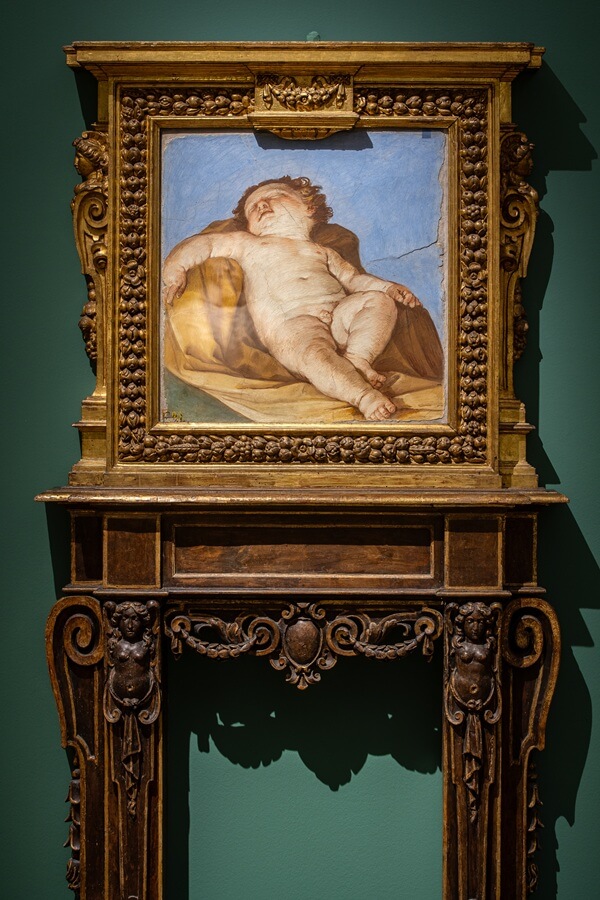
Guido Reni, Putto dormiente, 1627 Affresco strappato, Roma, Galleria Nazionale di Arte Antica, Palazzo Barberini
4) Palazzo Barberini: A Choral Masterpiece This section highlights the exhibition’s setting, Palazzo Barberini, presented as a collaborative Baroque achievement shaped by Bernini, Borromini and Pietro da Cortona. Drawings, models and artworks reveal Bernini’s role beyond sculpture, from architectural ideas to furnishings and decorative design, alongside masterpieces from the Barberini collection, including works by Guido Reni.
5) Apes Urbana: The Faces of Barberini Rome An anthology of portraits from Urban VIII’s Rome brings together cardinals, intellectuals, courtesans and eccentric figures orbiting the court. Bernini’s busts are shown alongside Algardi, Duquesnoy and Finelli, in a lively comparison of styles. Standouts include Finelli’s razor-sharp Bust of Michelangelo Buonarroti the Younger and Duquesnoy’s striking portrait of Michel Magnan, capturing the court’s complexity beyond official stereotypes.
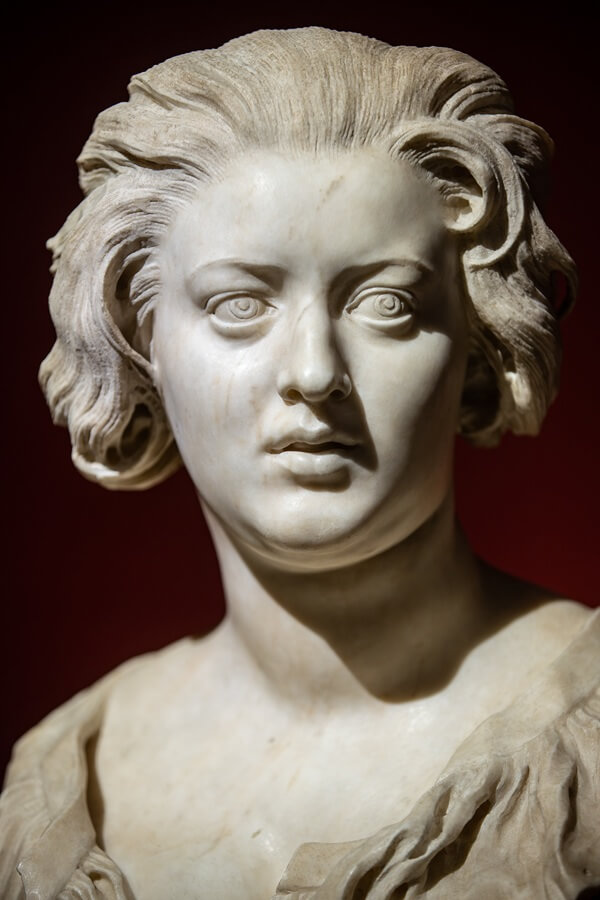
Gian Lorenzo Bernini (Napoli, 1598 – Roma, 1680) Busto di Costanza Piccolomini Bonarelli, 1636 -1637 circa, Marmo, Firenze, Museo Nazionale del Bargello
6) Bernini’s Freedom, Urban VIII’s Power The final section explores the more intimate and tension-filled side of their bond, focusing on artistic freedom, protection and control. It includes rarely displayed works and paintings attributed to Bernini, created outside major public commissions. At its heart is the celebrated, uncommissioned Bust of Costanza Bonarelli (Bargello, Florence), one of the peaks of Baroque portraiture. The section closes with a more private portrait of Urban VIII attributed to Bernini, hinting at a relationship shaped by complicity, power and human emotion.
A hands-on shoemaking experience with Francesca, in a real Roman atelier, where you craft a pair you can actually wear
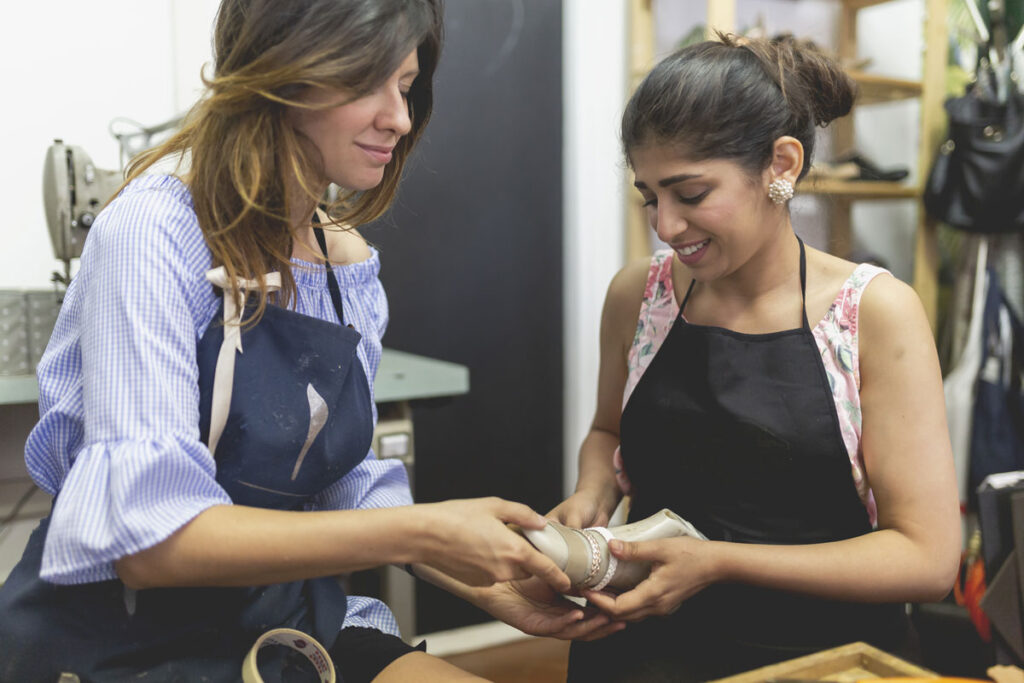
Rome is a city shaped by craftsmanship. Beyond its monuments and museums, the city lives through the hands of artisans who continue traditions passed down for generations. One of these traditions is shoemaking – and now, visitors can experience it firsthand thanks to a sandal-making workshop by Le Mastro.
Located in a working artisan atelier, this experience invites participants to slow down, step away from sightseeing, and spend a few hours learning how something personal is made: a pair of handmade leather sandals.
@romeing_magazine Ever thought about making your own leather sandals in Rome? In this hands-on sandal-making workshop, you’ll step inside a real artisan studio and create your own pair of 100% Made in Italy leather sandals, from start to finish. You’ll choose the style, colors, and details, then sit around the workbench using professional shoemaking tools while being guided step by step through traditional techniques. The workshop is led by a master artisan who previously worked for the Rome Opera House, bringing years of craftsmanship into every detail. You’ll leave not only with a unique pair of sandals, but with the experience of having made them yourself. Tap the link in bio to discover more #visitrome#italiancraftmanship#sandals♬ audio originale – Romeing Magazine
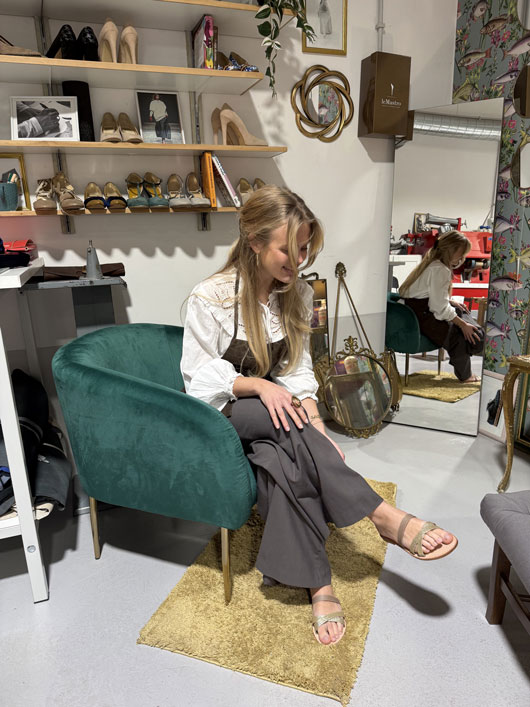
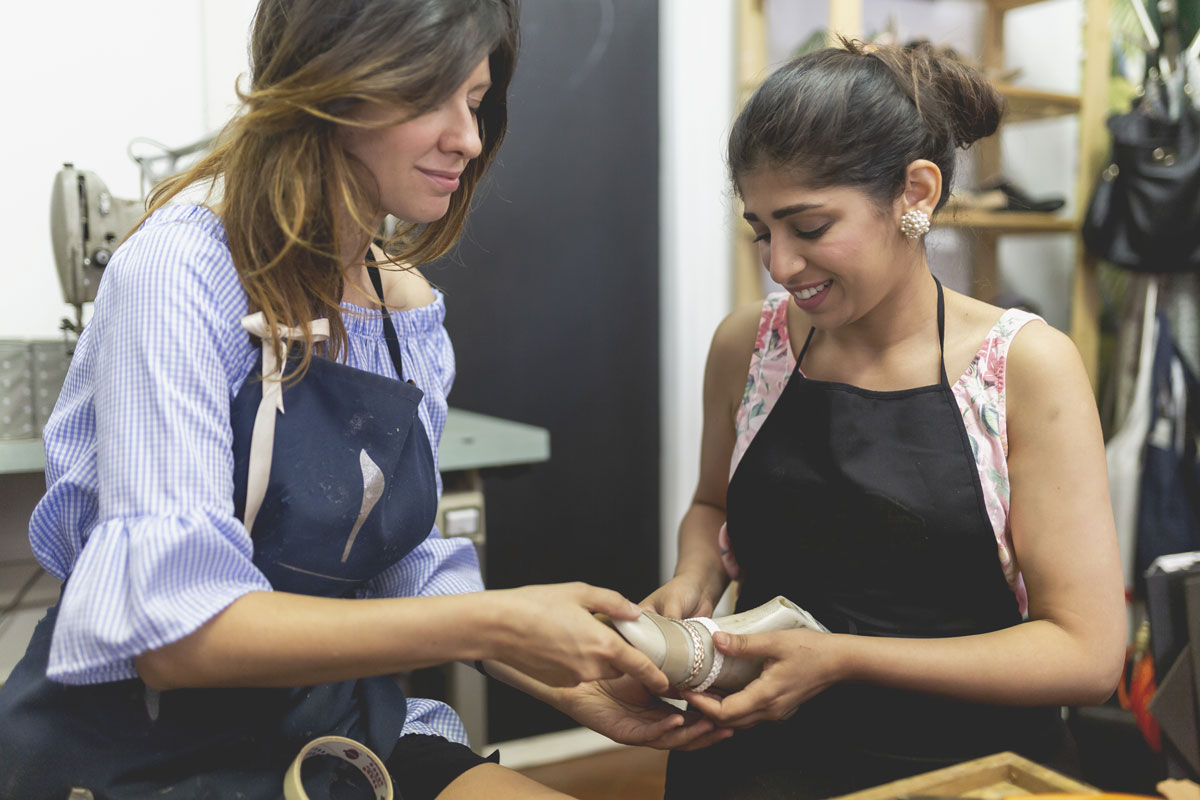
Behind Le Mastro is Francesca, a professional shoemaker. Her journey began at the Teatro dell’Opera di Roma, where she worked in the costume department designing shoes for dancers.
The name Le Mastro itself reflects her position in the craft: mastro traditionally refers to a male master artisan. Adding the feminine article is a quiet statement — one that acknowledges both tradition and change.
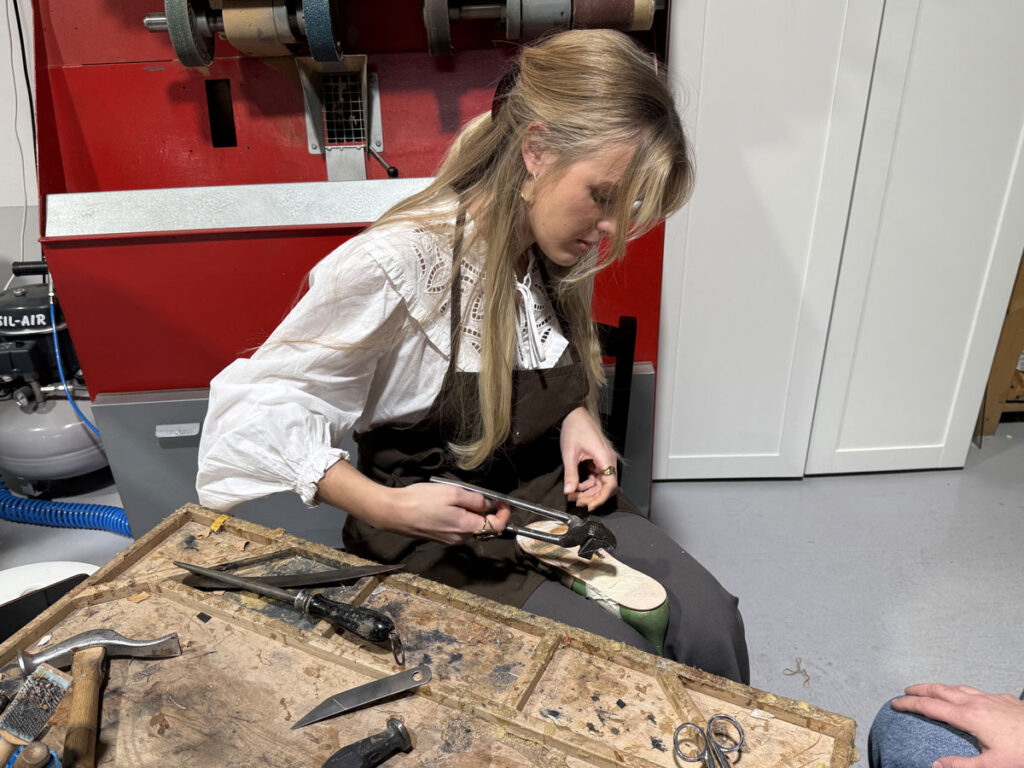
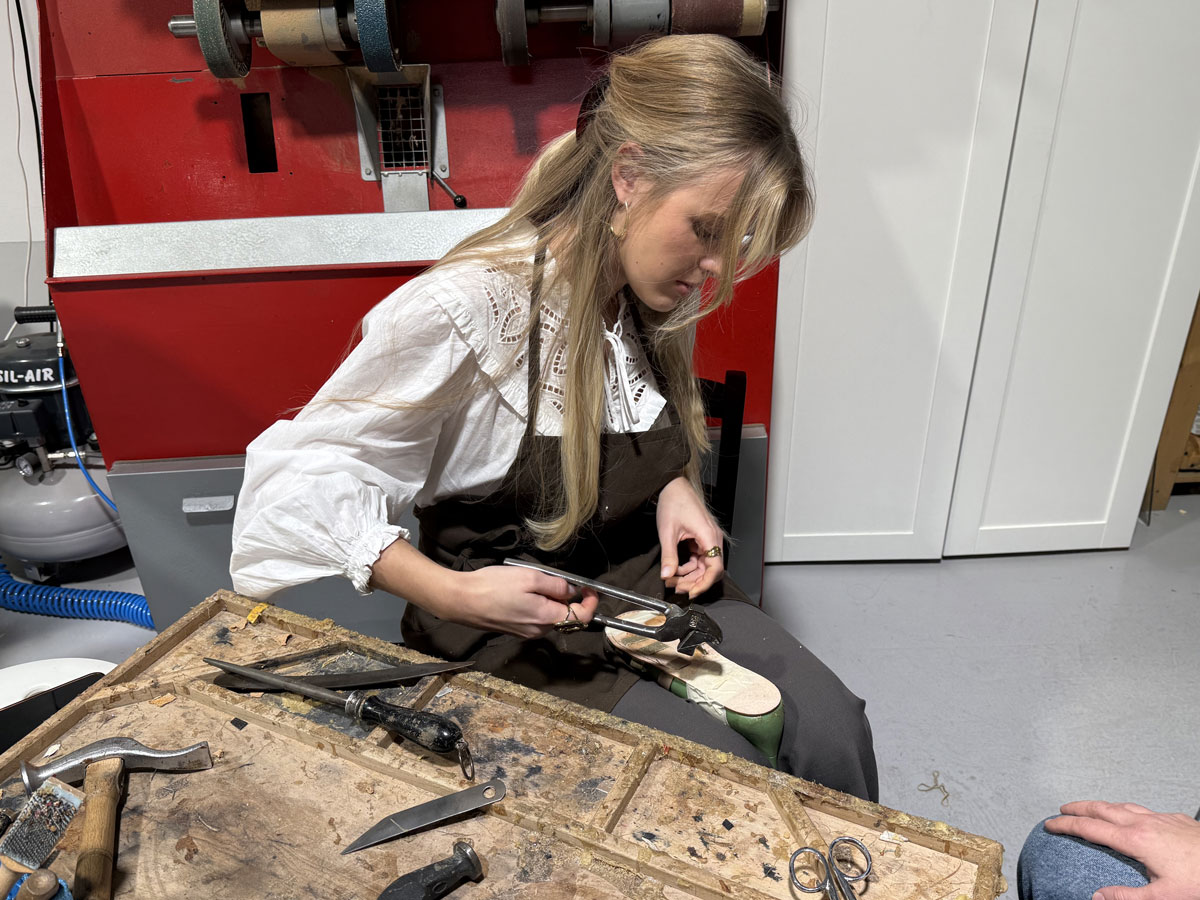
The sandal-making workshop translates this philosophy directly to participants. Rather than customising an item made by someone else, visitors sit at the artisan’s bench and actively take part in the process
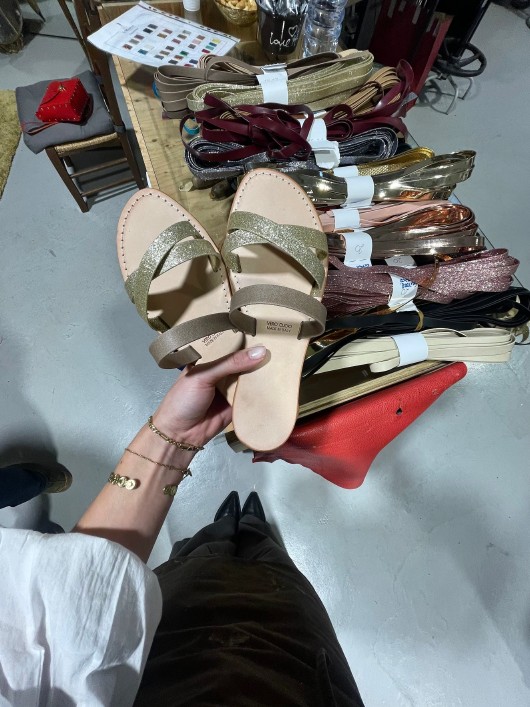
Over the course of about two hours, participants choose from three sandal model options and a range of leather colours. With guidance from the Francesca, they work with real tools — cutting, assembling, and finishing their sandals step by step. No previous experience is required, and the small group size (maximum five people) ensures a calm, personal atmosphere.
What makes this workshop stand out is its simplicity and authenticity: it takes place in a real working studio, using the same materials and techniques employed for professional commissions. The result is not just a souvenir, but a wearable object shaped by your own hands. Now bookable via Romeing, the Sandal Making Workshop offers a rare opportunity to experience Rome through making rather than observing.
Discover the new Trevi Fountain access rules, and which museums are now free for Rome residents
From 1 February 2026, Rome will introduce a €2 ticket for tourists and non-residents who want to step into the Trevi Fountain’s inner perimeter (“catino”) – basically the close-up area by the water and steps where everyone lines up for the classic coin toss and selfie.
The key point: the Trevi Fountain remains free to see from the piazza. The new fee only applies if you want the front-row, right-by-the-water spot.
Online via the official site listed as fontanaditrevi.roma.it (not yet active)
Via Sistema Musei ticket offices
At Tourist Infopoints
Through affiliated/partner sales points
Planning tips (so you don’t waste time)
If you just want the iconic view: skip the ticket and enjoy the piazza.
If you want the “coin-toss spot” photo: go early (right after 9:00) or aim for later in the evening.
Expect the inner area to operate with regulated flows/capacity, meaning you may queue even with the €2 fee.
What’s changing for Rome’s civic museums
The Trevi ticket is part of a broader reform affecting museums and monuments managed by Roma Capitale.
Big change for locals
From 1 February 2026, residents of the Metropolitan City of Rome will get free admission to the city-run museums and archaeological areas (including major ones like the Capitoline Museums, Ara Pacis, Trajan’s Markets, Centrale Montemartini, and more).
The Ducal Palace, now Palazzo Salvador Allende, is located at Corso Giuseppe Garibaldi, 55-59, in Reggio Emilia.
Historical Notes
The Palazzo Ducale overlooks the heart of Reggio Emilia’s historic center, along the elegant Corso Garibaldi. The building stands opposite the monumental Basilica of the Blessed Virgin of Ghiara, in an area once characterized by the Convent of San Pietro Martire and a cluster of medieval buildings.
Read more
The palace is one of the urban elements that best illustrates the city transition from a medieval and religious structure to the modern form of the Renaissance and late-18th-century city. The palace assumed its current form at the end of the 18th century: in 1783, by decree of Duke Francesco III d’Este, it was decided to demolish the monastery of San Pietro Martire and build a new Palazzo di Governo for the city. The project was entrusted to architect Pietro Armani. By 1786, the building was substantially complete and soon after began its institutional function. Subsequently, in 1814, the city offered it to Duke Francesco IV of Habsburg-Este as his residence in Reggio. During the 19th and 20th centuries, the building was used as public offices (Prefecture, Province) and underwent various external and internal renovations, eventually incorporating pre-existing structures such as the Oratory of Santa Liberata
Read less
Architecture
The building features a sober and imposing neoclassical facade that extends along Corso Garibaldi. The large volume was conceived as a palace of representation and government: three internal courtyards, a complex series of rooms spanning multiple floors, and a layout that emphasizes solemnity but also clarity of architectural axes
Read more
In 1911, work was carried out that modified the interior and exterior layout, including the incorporation of the Oratory of Santa Liberata into the main body of the palace. The facade, the rhythm of the windows, and the regularity of the decorative elements reflect the style and proportion of public buildings in the late 18th century, when neoclassical taste was also taking hold in ducal residences
Read less
Interior
After crossing the entrance and past the courtyards, the interior of the Palace features state rooms with impressive painted and tempera decorations. Of particular note are the decorations by Vincenzo Carnevali and Prospero Minghetti, who worked on some rooms on the main floor.
Leggi tutto
Inside the Palace, the state apartment features four allegorical scenes: Venus and Cupid, Music, Spring, and Psyche, created by Domenico Marchelli (1763-1832). Other rooms retain Carnevali’s decorations.
These spaces are not simply rooms: they are stages for the ducal representation, intended for ceremonies, audiences, and meetings with the city and administrators. The pictorial, allegorical, and mythological decorations emphasize the symbolic function of power: beauty serves to confer authority and communicate an ideal of enlightened governance.
Interiorly, the spatial distribution favors a succession of rooms with passages leading from the state staircase to the halls, connected to the offices and command rooms. The three internal courtyards also act as a filter between the external city spaces and the centrality of the residence
Il Palazzo Ducale, oggi Palazzo Salvador Allende, si trova in Corso Giuseppe Garibaldi, 55-59, a Reggio Emilia.
Note storiche
Nel cuore del centro storico di Reggio Emilia, lungo l’elegante viale di Corso Garibaldi, si affaccia il Palazzo Ducale. L’edificio sorge di fronte alla monumentale Basilica della Beata Vergine della Ghiara, collocandosi in una zona che un tempo era caratterizzata dal convento di San Pietro Martire e da un insieme di edifici medievali.
Read more
Il palazzo è uno degli elementi urbani che meglio raccontano il passaggio della città da assetti medievali e religiosi verso la forma moderna della città-rinascimentale e tardo-settecentesca. Il Palazzo assume la sua forma attuale proprio alla fine del Settecento: nel 1783, per decreto del duca Francesco III d’Este, venne deciso l’abbattimento del monastero di San Pietro Martire e l’edificazione di un nuovo “Palazzo di Governo” della città. Il progetto fu affidato all’architetto Pietro Armani. Nel 1786, l’edificio era sostanzialmente completo e poco dopo iniziò la sua funzione istituzionale. Successivamente, nel 1814, fu offerto dalla città al duca Francesco IV d’Asburgo‑Este come sua residenza a Reggio. Nel corso dell’Ottocento e del Novecento l’edificio viene destinato a sedi pubbliche (Prefettura, Provincia) e subisce diverse sistemazioni sia esterne che interne, arrivando a inglobare strutture preesistenti come l’oratorio di S. Liberata.
Read less
Architettura
L’edificio si presenta con una facciata neoclassica, sobria ed imponente, che si estende lungo Corso Garibaldi. Il grande volume fu concepito come palazzo di rappresentanza e governo: tre corti interne, una serie articolata di ambienti che si sviluppano su più piani e un’impostazione che privilegia la solennità ma anche la chiarezza degli assi architettonici.
Read more
Nel 1911, vennero compiuti lavori che modificarono sistemazioni interne ed esterne, tra cui l’incorporazione dell’oratorio di S. Liberata nel corpo del palazzo. La facciata, il ritmo delle finestre, la regolarità degli elementi decorativi riflettono lo stile e la misura degli edifici pubblici nei tardi decenni del Settecento, in cui si afferma il gusto neoclassico anche nelle residenze ducali.
Read less
Interni
Varcata l’entrata e oltre i cortili, l’interno del Palazzo riserva ambienti di rappresentanza che conservano decorazioni pittoriche e a tempera di rilievo. In particolare, si segnalano i decori di Vincenzo Carnevali e Prospero Minghetti, che lavorarono in alcuni ambienti del piano nobile.
Leggi tutto
All’interno del Palazzo, si trova l’appartamento di rappresentanza dove si trovano quattro scene allegoriche: Venere e Cupido, La Musica, La Primavera, La Psiche, realizzate da Domenico Marchelli (1763-1832). Altri ambienti conservano le decorazioni di Carnevali.
Questi ambienti non sono semplici stanze: sono “palcoscenici” della rappresentanza ducale, destinati a cerimonie, udienze, incontri con la città e gli amministratori. Le decorazioni pittoriche, allegoriche e mitologiche, sottolineano la funzione simbolica del potere: la bellezza serve a dare autorità, a comunicare un ideale di governo illuminato.
All’interno la distribuzione spaziale privilegia la successione di ambienti con passaggi che conducono dalla scala di rappresentanza ai saloni, connessi agli uffici e alle stanze del comando. Le tre corti interne operano anche come filtro tra gli spazi esterni cittadini e la centralità della residenza.
Palazzo Fontanelli Sacrati si trova in Via Emilia San Pietro, 27, a Reggio Emilia.
Note storiche
Le origini di Palazzo Fontanelli Sacrati risalgono alla fine del Quattrocento, in un periodo di grande trasformazione urbana per Reggio Emilia. Nel 1492 i fratelli Giovanni, Andrea e Jacopo Fontanelli, appartenenti a una delle famiglie più in vista della città, decisero di unificare e riorganizzare le proprietà che possedevano lungo Via Emilia San Pietro, inglobando edifici preesistenti acquistati nel 1451 dai Da Correggio. L’operazione rispondeva al gusto e al costume del tempo, quando le famiglie nobili cercavano di dare forma monumentale al proprio prestigio attraverso la creazione di dimore coerenti e scenografiche, capaci di affermare un’identità dinastica e sociale.
Read more
La casa dei Fontanelli, che nel corso dei secoli cambiò più volte destinazione e proprietari, è entrata anche nella tradizione leggendaria reggiana. Secondo una memoria locale, nel palazzo avrebbe soggiornato Lucrezia Borgia durante alcuni dei suoi viaggi a Reggio, un episodio che ha contribuito a circondare l’edificio di un’aura di fascino rinascimentale e che viene tuttora ricordato sul sito ufficiale del palazzo.
Nel corso del tempo l’edificio subì modifiche e ampliamenti, fino a quando, tra il 1928 e il 1929, venne sottoposto a un ampio intervento di restauro e “ripristino”. Tale intervento, condotto secondo i criteri estetici del tempo, mirava a recuperare l’immagine rinascimentale originaria, ma finì per alterare in parte l’aspetto autentico della fabbrica. La facciata e il cortile centrale furono ridisegnati, mentre gli ornati originali delle finestre vennero rimossi e collocati nel portico, dove ancora oggi sono visibili come testimonianza delle fasi più antiche dell’edificio.
Il palazzo, pur attraversando epoche e funzioni diverse, conserva ancora l’impianto originario e la memoria delle sue stratificazioni storiche, rappresentando un significativo esempio di dimora signorile emiliana tra tardo gotico e Rinascimento.
Read less
Architettura
La facciata attuale è il risultato dei lavori novecenteschi; nel cortile interno si trovano colonne rinascimentali riaddossate sul lato sinistro e una parete merlata dipinta con stemmi di famiglie reggiane consorziate ai Fontanelli.
Read more
L’edificio presenta una commistione di elementi tardo gotici e rinascimentali. Il portico si distingue per le colonne con capitelli fogliati e per i peducci di gusto gotico, mentre il piano nobile mostra finestre bifore e un portale più classicista, decorato con motivi allusivi alle celebrazioni d’armi antiche.
Read less
Interni
Il complesso originariamente si sviluppava attorno a tre cortili e inglobava l’attuale Casa Borzagni-Cremonesi, riconoscibile per i capitelli ionici cinquecenteschi.
Palazzo Fontanelli Anceschi, cortile interno.
Leggi tutto
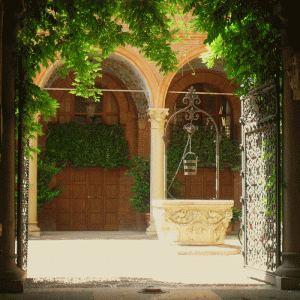
Nel cortile principale spiccano l’antica vera da pozzo in marmo di Verona; la lanterna e il cancello in ferro battuto dell’artista reggiano Giuseppe Bagni; una loggia cassettonata con modulo superiore dimezzato.
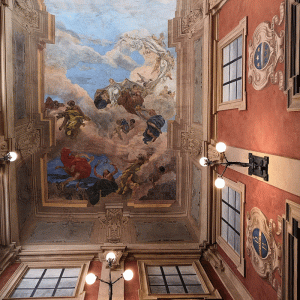
All’interno, lo scalone principale presenta un soffitto decorato da un dipinto ottocentesco raffigurante l’“Aurora sul cocchio”, con putti e volute vegetali. Sotto il portico sono oggi esposti gli ornati lapidei originali della facciata, a testimonianza delle fasi storiche dell’edificio e come elementi di fruizione pubblica.
Palazzo Ancini si trova nel cuore di Reggio Emilia, in via Farini 1.
Note storiche
Palazzo Ancini sorge nel cuore di Reggio Emilia, in via Farini, e rappresenta una delle più eleganti dimore nobiliari del centro storico. Le sue origini risalgono al Cinquecento, quando l’edificio apparteneva alla famiglia Ruggieri. Nei secoli successivi passò di mano più volte: ai Pegoletti nel 1659, ai Conti Sormani nel 1766 e, infine, ai Conti Ancini nel 1821, dai quali prese il nome attuale. Alla morte del conte Giovanni Ancini, nel 1887, il palazzo fu donato alla Congregazione di Carità, segnando il passaggio dall’uso privato a una funzione pubblica che ancora oggi ne caratterizza la storia.
Read more
Tra il 1924 e il 1930 l’edificio fu oggetto di un importante intervento di restauro e ridefinizione estetica ad opera del professore e architetto Luigi Bertolini. In un periodo in cui il gusto storico eclettico si intrecciava alle esigenze civiche della città moderna, Bertolini reinterpretò la facciata in chiave manierista e barocca, dando al palazzo l’aspetto solenne e decorativo che ancora oggi lo distingue. L’edificio divenne così un simbolo della continuità tra la memoria aristocratica reggiana e la nuova identità borghese e istituzionale del Novecento.
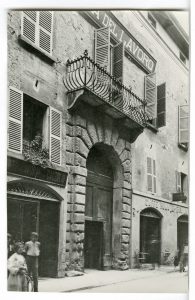
Palazzo Ancini, 1920 ca. Fototeca Biblioteca Panizzi,
Read less
L’architettura
La facciata principale, affacciata su via Farini, esprime la misura e l’eleganza di una composizione rinascimentale arricchita da interventi novecenteschi.
Read more
La parte inferiore del palazzo conserva l’uso originario di spazi commerciali, mentre i piani superiori mantengono la partitura nobile con un ritmo equilibrato di aperture e cornici. Sul retro e sul lato di via Don Minzoni, la ristrutturazione novecentesca riprende motivi architettonici analoghi, fondendo in un insieme coerente le diverse fasi costruttive.
Superato il portale, si accede a due cortili interni, separati da un doppio colonnato ionico che richiama la purezza classica del tardo Rinascimento. Il primo cortile, detto d’Onore, è impreziosito da arcate cieche, decorazioni a trompe-l’œil e finestre tamponate che simulano aperture e rilievi, in un raffinato gioco illusionistico di pieni e vuoti.
Read less
Interni
Lo scalone principale introduce al piano nobile, dove si dispiega la dimensione più rappresentativa del palazzo. La scala, di impianto settecentesco, conserva decorazioni pittoriche successive: nel 1920 l’artista reggiano Anselmo Govi vi dipinse un grande soffitto affrescato dedicato alla Carità, in omaggio alla nuova destinazione dell’edificio a sede della Congregazione benefica.
Palazzo Ancini, dettaglio del soffitto
Leggi tutto
Nelle sale superiori sopravvivono testimonianze della ricca decorazione settecentesca: nicchie sovrapporta con sculture allegoriche, stucchi e cornici ornamentali che dialogano con elementi di gusto più moderno. In alcune stanze a sud-est sono visibili travi lignee policrome e decorazioni a motivi geometrici, databili al XVI secolo, che rivelano la stratificazione secolare della dimora.
Nel complesso, Palazzo Ancini unisce la compostezza del palazzo rinascimentale al gusto ornamentale barocco e neomanierista, restituendo un’immagine coerente e viva della storia architettonica reggiana. Oggi ospita uffici del Comune e funzioni pubbliche, ma continua a essere percepito come un luogo simbolico della città: un palinsesto di memorie, arte e civiltà che racconta, attraverso le sue pietre, la continuità della vita urbana tra passato e presente.
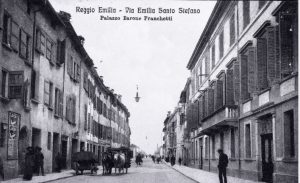
Palazzo Franchetti overlooks Via Emilia S. Stefano, at number 33, with a secondary entrance on Via Raimondo Franchetti.
Historical notes
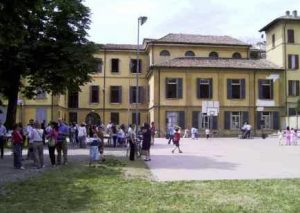
Palazzo Franchetti is an elegant noble residence along Via Emilia, in a refined urban setting, it today houses the “A. Manzoni” Middle School. The building reflects the late 19th-century taste, with a sober yet dignified façade.
Read more
The palace was purchased in 1885 by Baron Raimondo Franchetti, a member of one of the most influential families of the 19th-century Italian Jewish bourgeoisie. After his death, the building passed to his nephews Raimondo and Guido, sons of Alberto Franchetti. In 1921, the palace was sold to the Municipality of Reggio Emilia, which divided up the surrounding park and converted the building into a school, now home to the “A. Manzoni” Lower Secondary School.
Palazzo Franchetti, today, “A. Manzoni” School
Read less
The Architecture
The palace, spread over four floors and composed of fifty-nine rooms, is an example of late Baroque architecture with neoclassical influences. During the renovation, approximately 200 workers were employed, many of whom were artisans from Venice, who contributed to the creation of valuable interior decorations.
Palazzo Barone Franchetti, Emilia Santo Stefano Street, photo from the 20th century.
The Palace interior
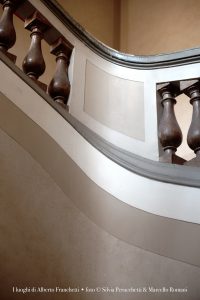
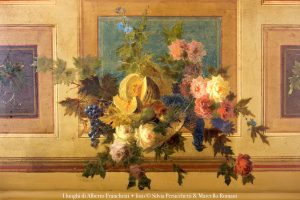
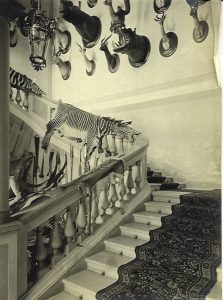
Inside, the palace retains original decorative elements, including frescoes, gilded stucco, carved wood paneling, and marble floors. The monumental staircase, with a wrought-iron balustrade, connects the main floors and is one of the most significant architectural elements of the building.
Leggi tutto
Guido Tirelli created the Grand Hall in an eclectic style, with stucco, molding, and paintings in Art Nouveau style by the artist Giuseppe Tirelli.
Palazzo Franchetti, detail of the staircasePalazzo Franchetti, detail of the staircase
In 1925, the new owner, Eugenio Terrachini, called Guido Tirelli back to complete the project that had been interrupted by the outbreak of the First World War.
Riduci
The collection
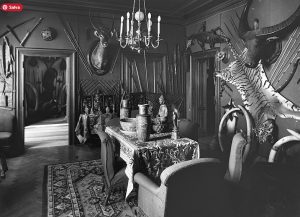
Baron Raimondo Franchetti Jr. (1889–1935), a well-known explorer and collector, enriched the palace with numerous objects collected during his travels in Africa and Asia.
Palazzo Franchetti, interior with collections
Leggi tutto
Among the collections were hunting trophies, ethnographic objects, weapons, clothing and musical instruments from regions such as Malaysia, Vietnam, Java, Borneo, Celebes and New Guinea. In 1911, returning from an adventurous journey, he donated a significant part of these finds to the Chierici Museum in Reggio Emilia. Many of these objects are currently preserved at the Civic Museums of Reggio Emilia, particularly in the ethnography and zoology sections.
Palazzo Franchetti, interior with collections.
Many of these objects are currently preserved at the Civic Museums of Reggio Emilia, particularly in the ethnography and zoology sections.
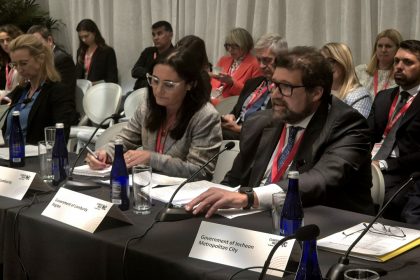
Presentata a New York, in occasione dell’edizione 2025 della Climate Week, la legge regionale per il clima della Regione Lombardia. E’ la prima del genere approvata in Italia e ha ricevuto il via libera dal Consiglio regionale lo scorso 8 luglio. Durante i lavori della manifestazione, che riunisce istituzioni, leader politici, imprenditori e rappresentanti della società civile per promuovere azioni contro il cambiamento climatico, l’assessore regionale all’Ambiente e Clima, Giorgio Maione ha illustrato il modello lombardo e il lavoro che la Regione sta portando avanti con le sue politiche ambientali.
Presentata a New York legge sul clima, Maione: Lombardia modello internazionale
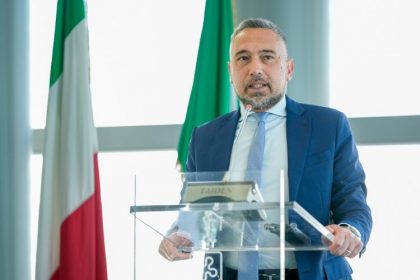
“Siamo fieri di essere i primi in Italia ad aver adottato una legge sul clima – ha detto Maione durante la cerimonia d’apertura dell’evento – è una norma che affronta concretamente le sfide poste dai cambiamenti climatici, garantendo un modello di sviluppo sempre più sostenibile e amico dell’ambiente. Puntiamo su adattamento, mitigazione e nuove tecnologie, tracciando la rotta per la Lombardia del futuro.”
Importanti risorse per sviluppo sostenibile
L’assessore si è anche soffermato sull’abbattimento delle emissioni e il miglioramento della qualità dell’aria: “La Lombardia – ha spiegato – affronta una sfida unica nel suo genere proprio per la conformazione del suo territorio, una sorta di ‘bacino chiuso’, attraverso investimenti senza precedenti. Parliamo di 19 miliardi di euro, ovvero 10 milioni al giorno in cinque anni per infrastrutture, innovazione e agricoltura. Per i prossimi anni sono previsti altri finanziamenti che abbatteranno ulteriormente le emissioni”.
Lombardia e reti internazionali per la sostenibilità: gli incontri
Ricca l’agenda di appuntamenti a cui ha preso parte l’assessore Maione, tra cui eventi di rilievo organizzati dalle reti internazionali di cui fa parte Regione Lombardia. Tra questi il vertice ‘Under2 Coalition’ e l’incontro con i membri di ‘Regions4’, una rete globale di governi regionali che lavorano per promuovere la sostenibilità ambientale.
Il progetto ‘Next Generation Budgets’
In questo contesto, l’assessore ha illustrato il contributo della Lombardia al progetto ‘Next Generation Budgets’, iniziativa per orientare il bilancio agli obiettivi di emissioni nette zero, e la proposta di creazione di un nuovo programma di lavoro dell’UNFCCC (United Nations Framework Convention on Climate Change) dell‘Onu per rendere protagoniste le regioni. All’evento hanno partecipato più di 35 delegazioni, tra le quali ci sono quelle di California, Catalogna, Rio de Janeiro, Ontario e Scozia.
Nel corso dell’incontro con i membri di Regions4, invece, si è parlato delle strategie più efficaci per rafforzare la leadership dei governi subnazionali, l’accesso a nuovi finanziamenti internazionali e la partecipazione delle regioni alla COP30 di Belém.
Lombardia, modello vincente
“La Lombardia – ha concluso Maione – è un modello vincente in materia di sviluppo sostenibile, mitigazione e adattamento al cambiamento climatico. La nostra capacità di primeggiare nell’economia circolare, nell’ utilizzo di tecnologie al servizio dell’ambiente e della decarbonizzazione è riconosciuta a livello europeo e internazionale”.
“Voglio ringraziare i tecnici, gli operai e tutto il personale di Ferrovie Nord che sono intervenuti prontamente per mettere in sicurezza e ripristinare la linea ferroviaria all’interno della galleria di Castellanza. In poco più di 36 ore, lavorando ininterrottamente, hanno saputo risolvere una criticità particolarmente complessa, dimostrando grande efficienza”.
Così Franco Lucente, assessore ai Trasporti e Mobilità sostenibile di Regione Lombardia, in seguito alla ripresa del servizio ferroviario sulla linea ferroviaria da e per l’aeroporto di Milano Malpensa. Lunedì 15 settembre la circolazione tra Castellanza e Rescaldina era stata interrotta a causa di un incidente, dovuto ai lavori di un cantiere autostradale, che aveva perforato la galleria ferroviaria sottostante.
Circolazione Milano-Malpensa, Lucente: ottimo lavoro di Trenord
“Si tratta di un tratto ferroviario particolarmente importante e trafficato – ha aggiunto l’assessore – utilizzato da migliaia di viaggiatori che da Milano raggiungono Malpensa e viceversa, e dai pendolari che utilizzano la linea, che serve anche l’Ovest della Lombardia sino ad arrivare a Novara. Comprendo i disagi dei viaggiatori, che hanno dovuto subire alcuni disagi non dipendenti tra l’altro dalla nostra volontà, ma in questo caso voglio sottolineare l’ottimo lavoro svolto da Ferrovie Nord, dimostrando un alto livello di reattività e restituendo un servizio alla clientela completo in poche ore”.
LNews-SANITÀ, REGIONE LOMBARDIA AMPLIA OFFERTA DI VACCINAZIONI NELLE FARMACIE: INCLUSI PNEUMOCOCCO, DIFTERITE, TETANO PERTOSSE E HPV
ASSESSORE BERTOLASO: PROTEGGERE LE FASCE DI POPOLAZIONE PIÙ FRAGILI
(LNews – Milano, 15 set) Ampliata l’offerta di vaccinazioni disponibili nelle farmacie lombarde con l’obiettivo è rendere la prevenzione più capillare e accessibile per i cittadini. La delibera, approvata dalla Giunta regionale su proposta dall’assessore al Welfare, Guido Bertolaso, espande l’offerta del vaccino antipneumococcico a tutte le Aziende di Tutela della Salute (ATS) attraverso un accordo accordo con Federfarma Lombardia e Assofarm/Confservizi Lombardia. Inoltre, introduce la possibilità per le farmacie di somministrare anche i vaccini per la difterite-tetano-pertosse e l’HPV (Papilloma virus).
La somministrazione dei vaccini in farmacia può avvenire in tre modalità: ‘in regime SSN’ senza costi per i cittadini che rientrano nelle fasce d’età o categorie a rischio definite dalla Regione; ‘in compartecipazione’ con una parziale spesa a carico del cittadino, secondo procedure da definire. Infine ‘in totale solvenza’ a totale carico del cittadino. In questo caso, la farmacia è comunque obbligata a informare il cittadino della possibilità di vaccinarsi gratuitamente o in compartecipazione se ne ha i requisiti. La partecipazione delle farmacie è volontaria. Vengono ribadite le procedure operative, come la verifica delle pregresse vaccinazioni sulla piattaforma regionale , la registrazione della vaccinazione e l’obbligo di comunicare all’ATS l’avvenuta formazione del personale sanitario addetto. L’accordo ha validità fino al 31 marzo 2028.
Questo ampliamento dell’offerta vaccinale segue i risultati positivi di una fase di sperimentazione condotta nelle ATS della Brianza e della Val Padana.
La spesa annuale stimata è di 600.000 euro, con una platea stimata di circa 40.000 persone.
BERTOLASO “Con questa delibera – ha dichiarato l’assessore Guido Bertolaso vogliamo rendere la prevenzione una priorità e un servizio sempre più vicino ai cittadini. Le farmacie si sono dimostrate un anello fondamentale del nostro Sistema Sanitario, un vero e proprio ‘front-office’ in grado di raggiungere ogni angolo del territorio. I risultati della sperimentazione nelle ATS della Brianza e della Val Padana sono stati estremamente incoraggianti, dimostrando che questo modello funziona e non ha riportato problemi organizzativi. L’obiettivo è chiaro: aumentare significativamente le coperture vaccinali per proteggere le fasce di popolazione più fragili”. (LNews)
(LNews – Roma, 15 set) “Possiamo finalmente constatare che oggi c’é stato un passo in avanti; bene, adesso é possibile ragionare seriamente”. Lo ha detto l’assessore allo Sviluppo economico di Regione Lombardia, Guido Guidesi, al termine del Tavolo plenario convocato dal ministro Adolfo Urso con la presenza anche del ministro Giancarlo Giorgetti per valutare la situazione di StMicroelectronics. L’incontro si è svolto questo pomeriggio a Roma nella sede del Ministero delle Imprese e del Made in Italy.
“È necessario – ha continuato – lavorare da subito al piano a medio termine ed é doveroso farlo insieme all’azienda, ai sindacati e al Governo che è anche l’azionista. Il sito lombardo di Agrate Brianza (MB) deve diventare strutturalmente strategico con investimenti in nuova tecnologia, ricerca e adeguati livelli produttivi. Agrate deve anche essere al centro del ‘Chips act 2.0’ utilizzando tutto l’ecosistema lombardo. Noi, come Regione, continueremo a essere propositivi e di sostegno perché siamo convinti di poter vincere la sfida del mercato globale nei semiconduttori anche grazie al sito di Agrate”.
“Chiediamo all’azienda – ha concluso Guidesi – di crederci, come ci crediamo noi, e come ci credono i lavoratori”. (LNews)
LNews- VALLE BREMBANA/2, A DOSSENA E RONCOBELLO OLTRE 3,5 MILIONI DI EURO PER SICUREZZA DEL TERRITORIO E CONTRASTO DISSESTO IDROGEOLOGICO
ASSESSORE COMAZZI: REGIONE LOMBRDIA SOSTIENE CHI VIVE E LAVORA IN QUOTA
(LNews – Roncobello/Bg, 11 set) Regione Lombardia, negli ultimi cinque anni ha investito ingenti risorse per la sicurezza del territorio e la valorizzazione delle nostre montagne. In particolare a Dossena e Roncobello, gli interventi concreti coniugano rigenerazione urbana, tutela ambientale e prevenzione del dissesto idrogeologico. L’assessore al Territorio e Sistemi verdi della Regione Lombardia Gianluca Comazzi in visita a Dossena e Roncobello, ha fatto il punto sui lavori messi in campo in questi territori della Val Brembana.
“Nel solo comune di Dossena – ha spiegato Comazzi – abbiamo stanziato oltre 3,35 milioni di euro per opere fondamentali: sistemazione di dissesti nelle località Fratelli Gamba, Termine e Costa Villa Lavaggio; mitigazione del rischio caduta massi lungo la SP 26 e nell’area dell’ex tiro a volo; interventi di difesa idrogeologica in località Lago e Pradaccio, per citare gli interventi principali.
Alcuni cantieri sono già conclusi; altri in corso, ma il risultato è chiaro: proteggiamo i cittadini e restituiamo sicurezza alle aree più fragili.
“Regione Lombardia – ha aggiunto – è intervenuta anche a Roncobello con 200.000 euro per il ripristino di aree attrezzate e la mitigazione del rischio idrogeologico. È un tassello di un impegno più ampio, che punta a garantire la resilienza delle nostre valli e a sostenere i Comuni nella gestione del territorio”.
“Questi risultati – ha sottolineato – dimostrano l’impegno di Regione Lombardia per la sicurezza dei cittadini, la salvaguardia del paesaggio e la valorizzazione dei borghi montani. Diamo così un segnale forte e tangibile a chi vive e lavora in quota: le nostre montagne sono infatti il cuore pulsante della Lombardia, tanto da un punto di vista naturalistico e ambientale quanto in ambito economico e produttivo”.
Nella sua visita istituzionale l’assessore Comazzi ha visitato i comuni di Dossena e Roncobello per toccare con mano i risultati del progetto NA.TUR.ARTE e degli interventi finanziati da Regione Lombardia.
“La riqualificazione dell’ex Roccolo a Dossena, il recupero del borgo di Costa e la trasformazione delle ex scuole di Bordogna a Roncobello – ha concluso – sono esempi concreti di come investimenti mirati possano restituire nuova vita agli spazi pubblici, rafforzando l’identità delle comunità locali e valorizzando il patrimonio paesaggistico delle nostre valli”, ha spiegato l’assessore.
Questo l’elenco degli stanziamenti effettuati da Regione Lombardia negli ultimi cinque anni in materia di prevenzione e contrasto del dissesto idrogeologico. (LNews)

 Connexion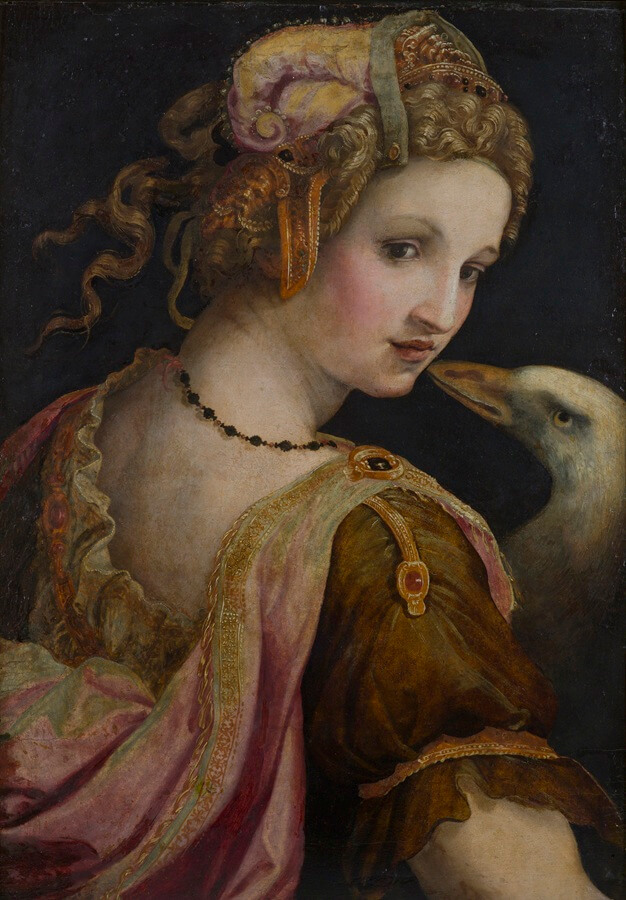







 In this hands-on sandal-making workshop, you’ll step inside a real artisan studio and create your own pair of 100% Made in Italy leather sandals, from start to finish. You’ll choose the style, colors, and details, then sit around the workbench using professional shoemaking tools while being guided step by step through traditional techniques. The workshop is led by a master artisan who previously worked for the Rome Opera House, bringing years of craftsmanship into every detail. You’ll leave not only with a unique pair of sandals, but with the experience of having made them yourself.
  Tap the link in bio to discover more