Vue lecture

Il y a de nouveaux articles disponibles, cliquez pour rafraîchir la page.

Rome Fashion Path 2026: Six Days of Fashion Events Across Rome

From 12 to 17 May, Rome becomes a free, open-air fashion stage as Rome Fashion Path returns with its citywide celebration of fashion, creativity, and contemporary Italian design.

For those looking to deepen their Italian fashion knowledge, or simply enjoy the unadulterated freedom creativity brings, Rome Fashion Path, now in its third edition, provides an abundance of opportunities to do so.

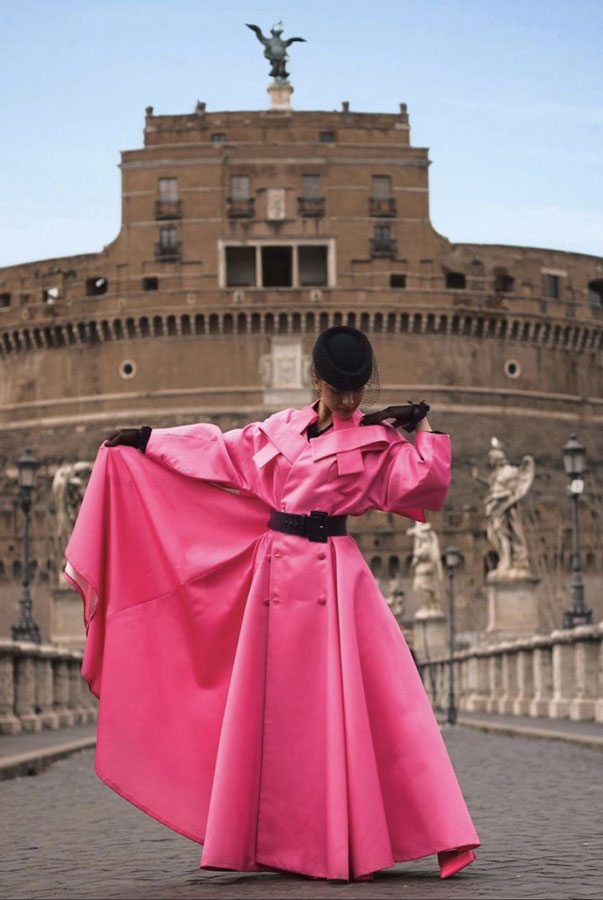
The event — running from 12 to 17 May across multiple venues in Rome — is entirely dedicated to the fields of fashion, beauty, and trends. For six days, a packed program of free events will bring to life many of Rome’s most charming neighborhoods, with more than 100 names spanning ateliers, designers, artisans, vintage stores, academies, and independent spaces.

Under the patronage of the Assessorato ai Grandi Eventi, Sport, Turismo e Moda di Roma Capitale, the festival has quickly established itself as a platform that connects fashion production, craftsmanship, and experimentation across the Roman fashion scene.

Massimiliano Padovan Di Benedetto, creator of RFP, describes it as “an ecosystem where tradition and modernity meet, giving rise to a shared, open, and inclusive narrative.”

Four core categories are set to invite visitors into the spirit of Rome — and the best of Italian fashion: Showcase, Creator, Tracker, and Maker.
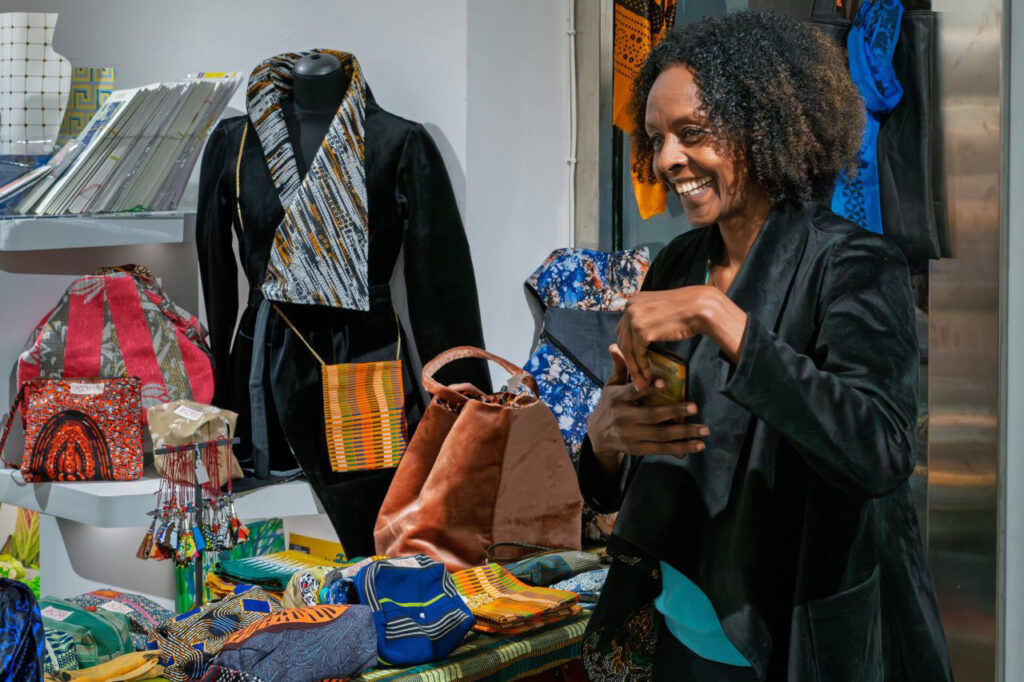
BeKora
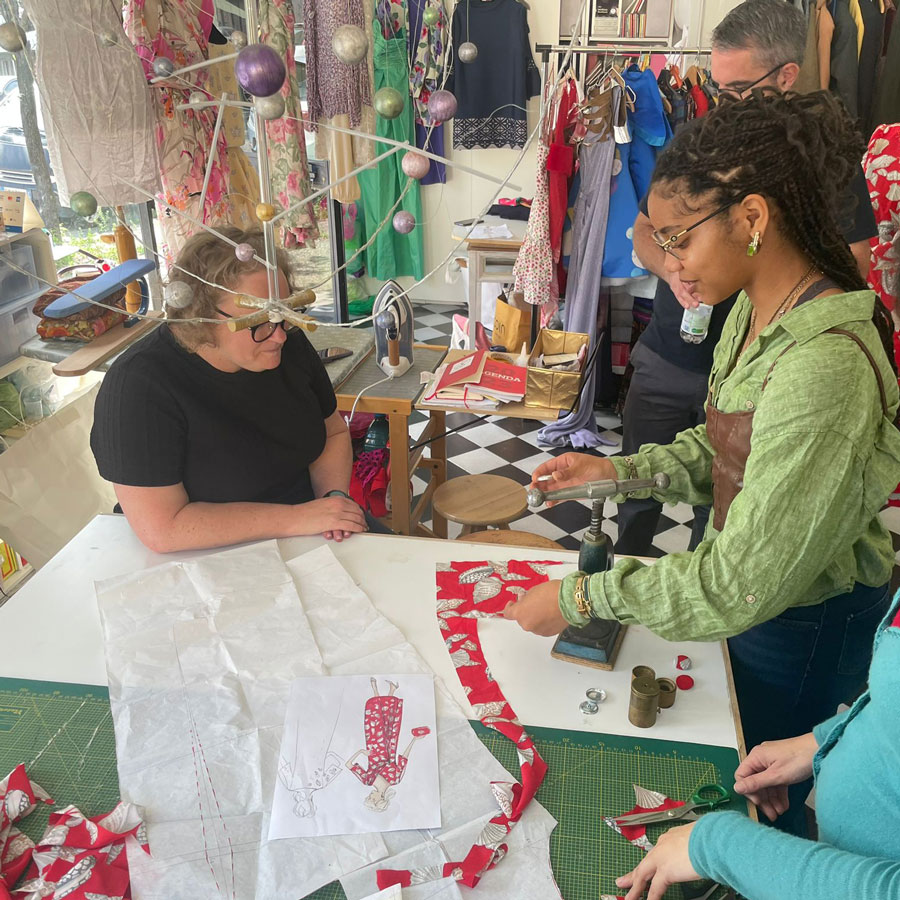
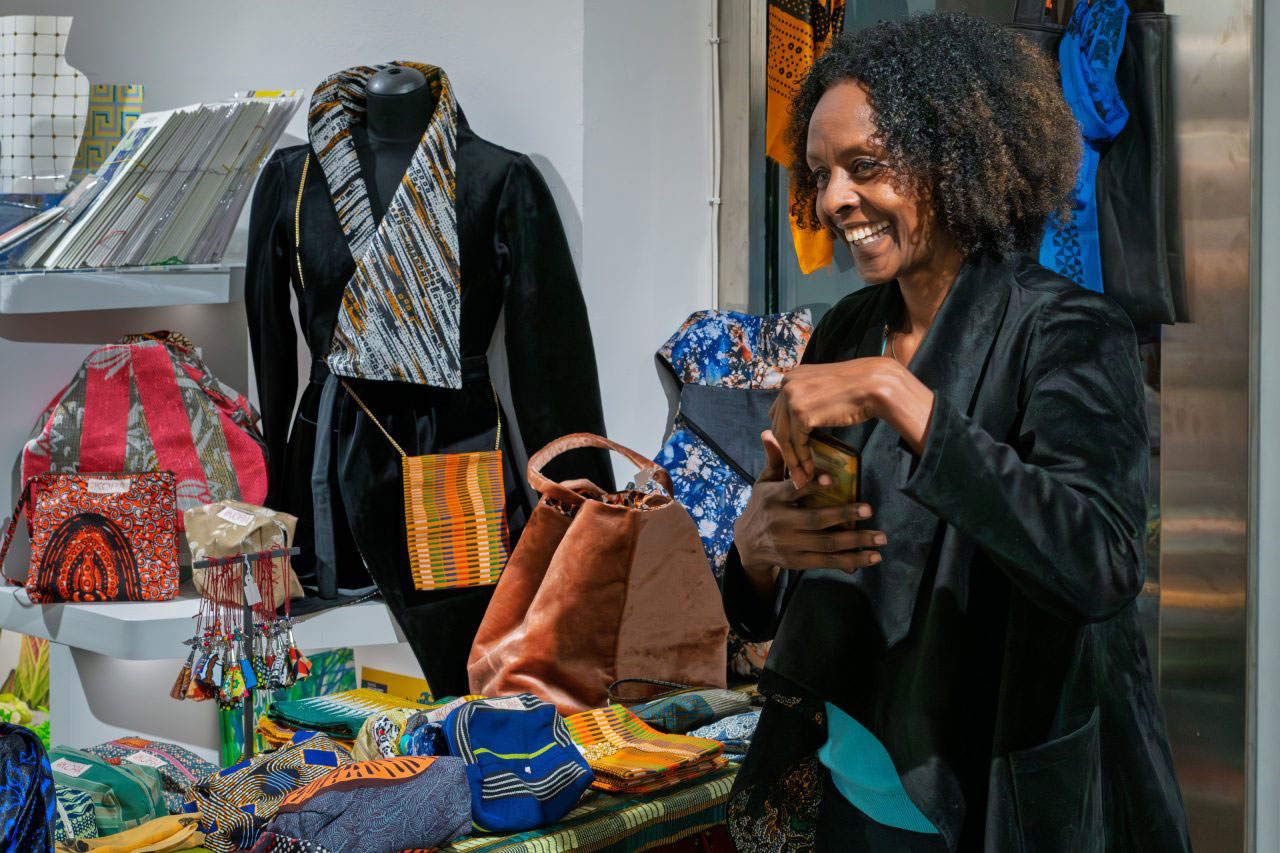
  • Showcase features installations, presentations, and performances of the best fashion in Rome, spanning emerging talent, capsule, and vintage collections. This year’s participants include Ateliered.Isagio, Groovin, and Cavalli e Nastri. The Rome University of Fine Arts (RUFA) will host an immersive experience on 15 May, honouring the unique heritage of textiles, while the MAXXI – National Museum of 21st Century Arts bookshop will welcome the BeKora Summer 2026 Showcase, presenting garments created through social tailoring workshops bridging Italian and African textiles. Sustainability and ethical fashion remain central themes throughout the program.
Masterclass-di-Moulage_Hachiadri
  • Creator invites guests into designer ateliers and workshops, to be present at the creation of fashion — all set to the rhythm of DJ sets and aperitivo. Here, visitors can discover capsule collections, meet independent designers, and experience the creative process up close. Featured names include Francesco Arduini, whose ready-to-wear label focuses on no-waste production, and Maison Luigi Borbone, which offers contemporary interpretations of traditional Italian tailoring.
  • Tracker transforms the city into a fashion map; stylists, influencers, and personal shoppers guide visitors through themed routes, revealing hidden boutiques, standout showcases, and the coolest corners of Rome’s fashion scene. Expect insider recommendations and discoveries curated by names such as Roberto Romeo, Mary D’Angelo, and Gaia Bartolucci, uncovering Rome’s evolving fashion landscape.
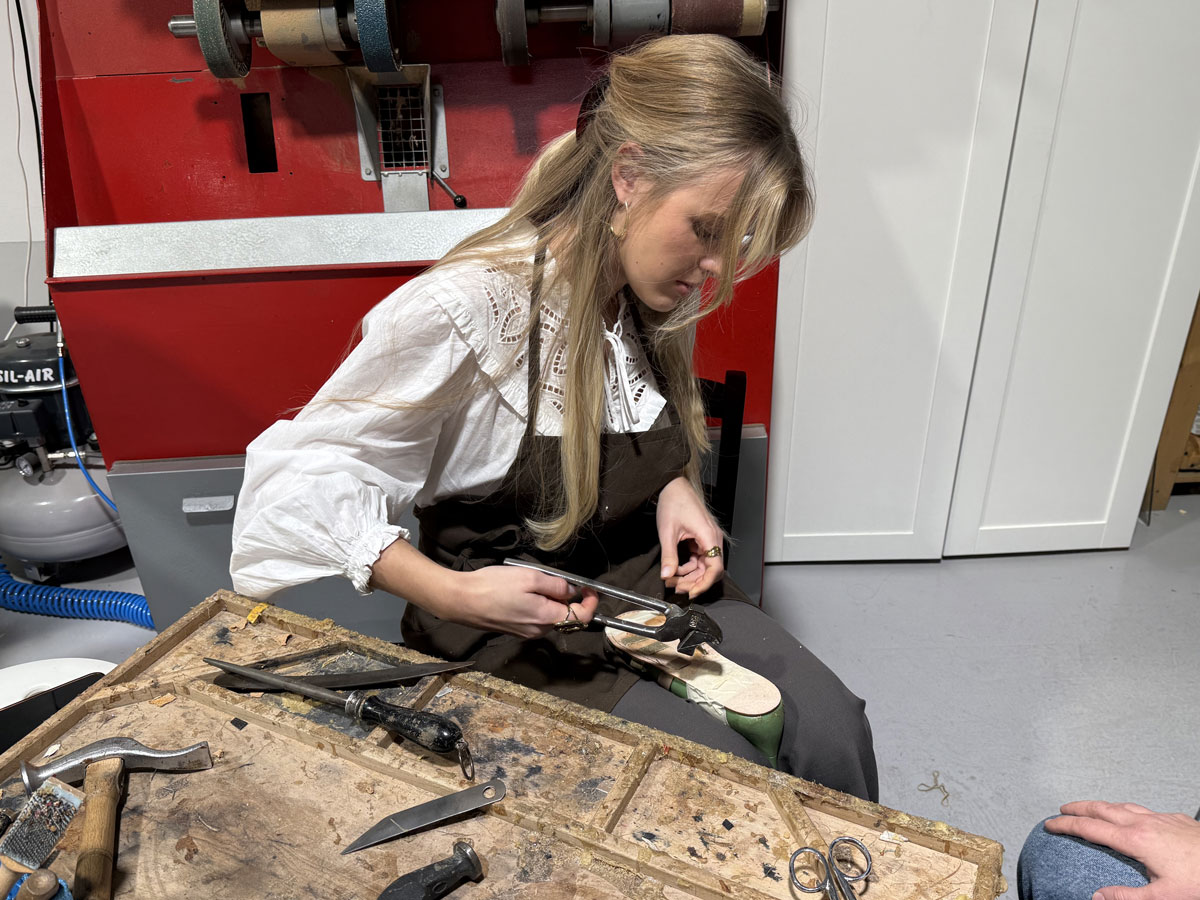
  • Maker highlights the creatives who define every runway moment behind the scenes. Here, the spotlight is on photographers, make-up artists, hair stylists, and agencies — with live demonstrations, talks, and interactive events bringing their work to the forefront. The category also highlights initiatives such as “Modelli Si Nasce” and WheelGlam, socially conscious projects dedicated to making fashion a more inclusive space for authentic self-expression.
Highlights from the 2026 Programme

This year, visitors can also expect collaborations and presentations from Giada Curreri and Andrea Antonelli, offering a glimpse into the artistry that forms the backbone of the industry. On 13 May, Fashion Unlocked at Jo&Joe Roma will feature models from Modelli si Nasce alongside creations by Alessandra Saroli, beKora, Frange Couture, Mela Wedding, and Sertorian.

This year also sees the return of RFPU30, a special project dedicated to designers under 30, who will showcase their exceptional craft in locations such as galleries and hotels connected to Rome Art Week. The initiative reinforces RFP’s commitment to supporting the next generation of fashion talent.

Events will take place across historic palazzi, ateliers, galleries, creative studios, and independent spaces — all with free entry. Visitors will be able to explore style-focused experiences across neighborhoods such as Centro Storico, Prati, Monti, Garbatella, and Piazza Bologna, where luxury knitwear label Mela Wedding will stage a runway show inside the historic Via Catania market.
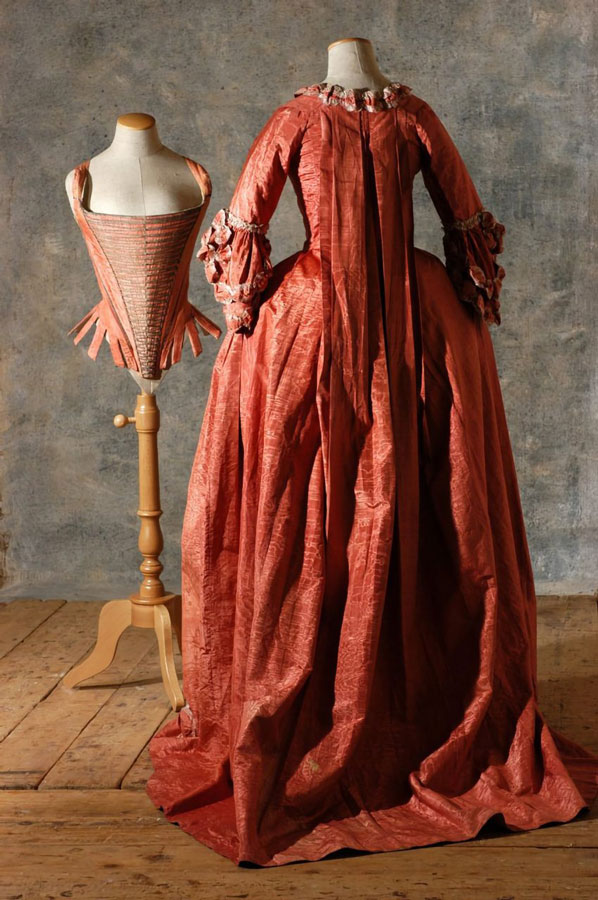
RFP26_Farani-Sartoria-Teatrale_Sartoria

Among the most anticipated moments of the week is the public opening of Sartoria Farani on 17 May, inviting visitors through iconic cinema and theatre pieces – from Fellini’s I Clowns to Barbarella’s prototype corset. The festival will close with Io Sono, Noi Siamo, a collective runway curated by Isa Giovannozzi, and will be accompanied by a vocal and piano performance by Flavia Zanasi — bringing designers, photographers, make-up artists and hairstylists together in one final collaborative showcase.

More than just a fashion event, Rome Fashion Path celebrates all facets of what makes the industry thrive — from craftsmanship and education to emerging talent and behind-the-scenes artistry — establishing Rome as one of the most creatively abundant and diverse fashion capitals.

For the full calendar of events, participating venues and registration details, visit the official Rome Fashion Path website.

INSPIRATION
Rome Shopping Guide: Uncover the Best Boutiques and Shops

The post Rome Fashion Path 2026: Six Days of Fashion Events Across Rome appeared first on Romeing.

UnArchive Found Footage Fest

From 26 to 31 May in Rome, the festival dedicated to the creative reuse of images.

After the success of last year, the UnArchive Found Footage Fest returns for its fourth edition in Rome from 26 to 31 May. The festival explores the cinematic possibilities of creative reuse of archival materials aiming to forge new and diverse forms of expression, with cinema, video art, animation, and live performance meeting at a crossroads.

Cinema Intrastevere, Alcazar Live, Chiesa di Santa Dorotea, Zalib Circolo Arci, Casa Borelli, and the Botanical Garden will serve as this year’s venues.

UnArchive Found Footage Fest 2026

Festival Highlights: Performances & Screenings

The festival opens on Tuesday 26 May at 8 PM in Cinema Intrastevere with the screening of In cerca del sessantotto – Tracce e indizi (1996). The film – which documents the social, cultural, and political upheaval of the year 1968 in Italy – is one of three being screened for Oggetti Smarriti: In cerca di Giuseppe Bertolucci, a retrospective on the illusive brother of Bernardo Bertolucci. The films La rabbia di Pasolini and In cerca della poesia – Tracce e indizi will be screened on 27 and 28 May, respectively. 

The international competition features 20 films—nine features and eleven shorts—from countries including the United States, the United Kingdom, Italy, Canada, Romania, and Poland. All titles compete for the UnArchive Award, alongside prizes for Best Feature and Best Short Film. Highlights include Do You Love Me?, a portrait of Beirut assembled from decades of archival footage, and Je n’avais que le néant – Shoah par Lanzmann, which revisits the making of Claude Lanzmann’s landmark documentary through previously unseen materials.

Returning once more are the Frontiers and Italian Panorama sections. Frontiers brings together titles that explore symbolic dimensions of borders, geopolitics, and aesthetics while Italian Panoramas explores the phenomenon of found footage in Italy, with films dissecting subject matter such as propaganda images, migration, and hidden family narratives. 

In addition, special screenings include Roberto Rossellini – Più di una vita, which analyzes the personal and professional crises that afflicted his illustrious career and Caja de Resistencia, a film dedicated to director Fernando Ruiz Vergara, addresses the tension between censorship and creative freedom. 

Philippe-Alain Michaud returns with a carte blanche screening and masterclass, this time dedicated to Cécile Fontaine, a pioneer of reuse cinema. His techniques of deconstructing images with “wet” and “dry” techniques are a reflection of history as ruin and the image as preservation of destruction. 

A major new addition is the UnArchive Forum – The Image Reuse Ecosystem, taking place from 27 to 29 May in the Botanical garden. Bringing together archives, filmmakers, and industry professionals, the Forum will host panels and pitching sessions aimed to foster collaboration and dialogue between all sectors of the image reuse community. It is a way to rethink and understand the consequences of the industry during the pervasiveness of Ai technology. 

The festival will close with a performance of Postcards from Italy – a multidisciplinary project merging memory, archive, and transformation. Inspired by a train journey in 2023, the Bottasso brothers – Nicolo and Simone – have curated a performance that merges scenes of the past with sounds of the present. 

UnArchive continues to stand out as a unique platform that gives artists a platform to reimagine, reexamine, and reawaken the past, and reflect on the role images and collective memory have in contemporary culture.


26 May – 31 May 2026

Locations

Proiezioni, masterclass & accreditation desk:
Cinema Intrastevere – Vicolo Moroni, 3


Live performance:
Live Alcazar – Via Cardinale Merry del Val, 14
Zalib Circolo Arci – Via della Penitenza, 35


UnArchive Forum:
Orto Botanico – Largo Cristina di Svezia, 23 A – 24


UnArchive // Expanded:
Casa Borelli – Vicolo Moroni, 17/a
Chiesa di Santa Dorotea – Via di Santa Dorotea, 23


Guest corner:
Casa Internazionale delle Donne – Via della Lungara, 19 – Ingresso
da Via di S. Francesco di Sales, 1a

unarchivefest.it

The post UnArchive Found Footage Fest appeared first on Romeing.

Bars around Campo de’ Fiori

Where to drink near Campo de’ Fiori

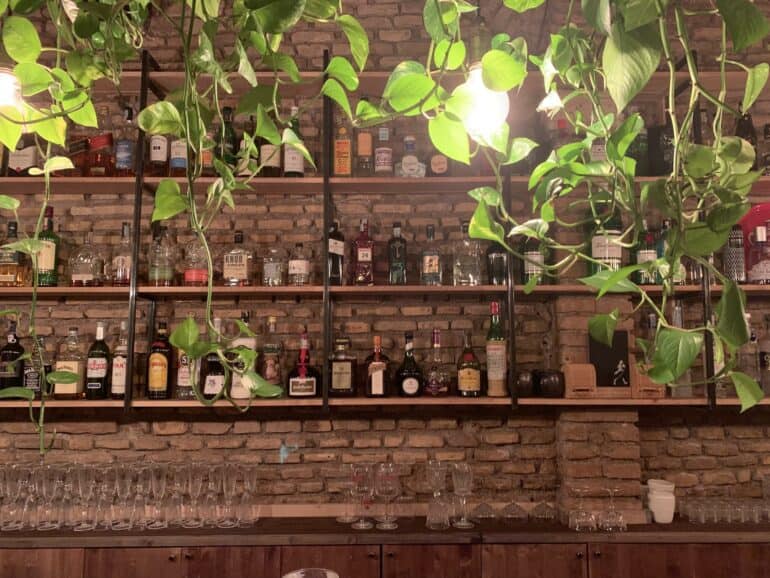
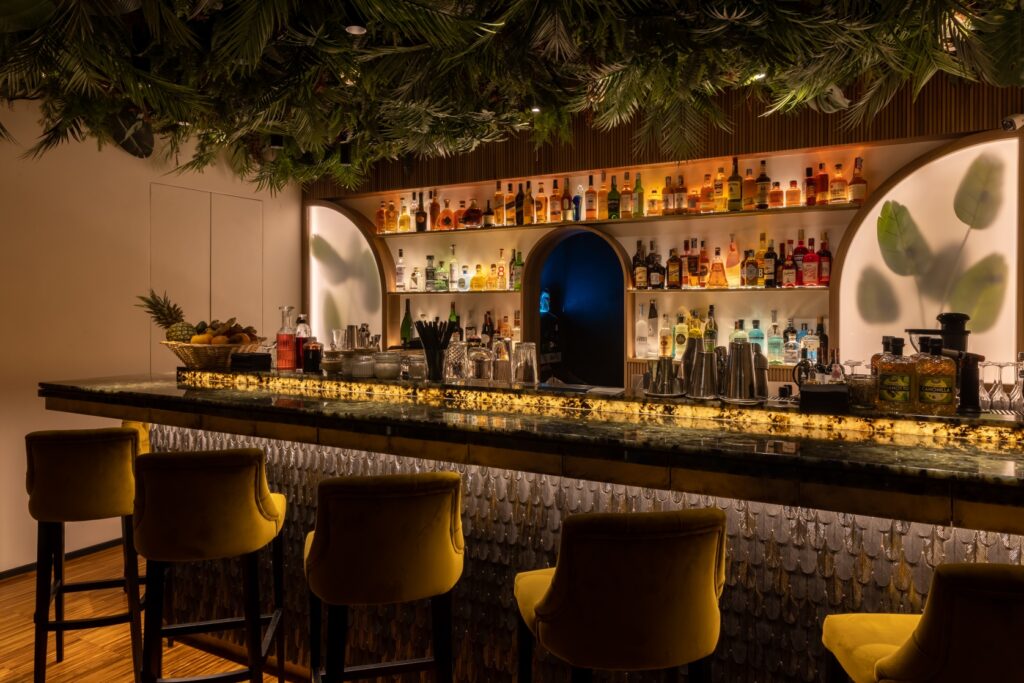
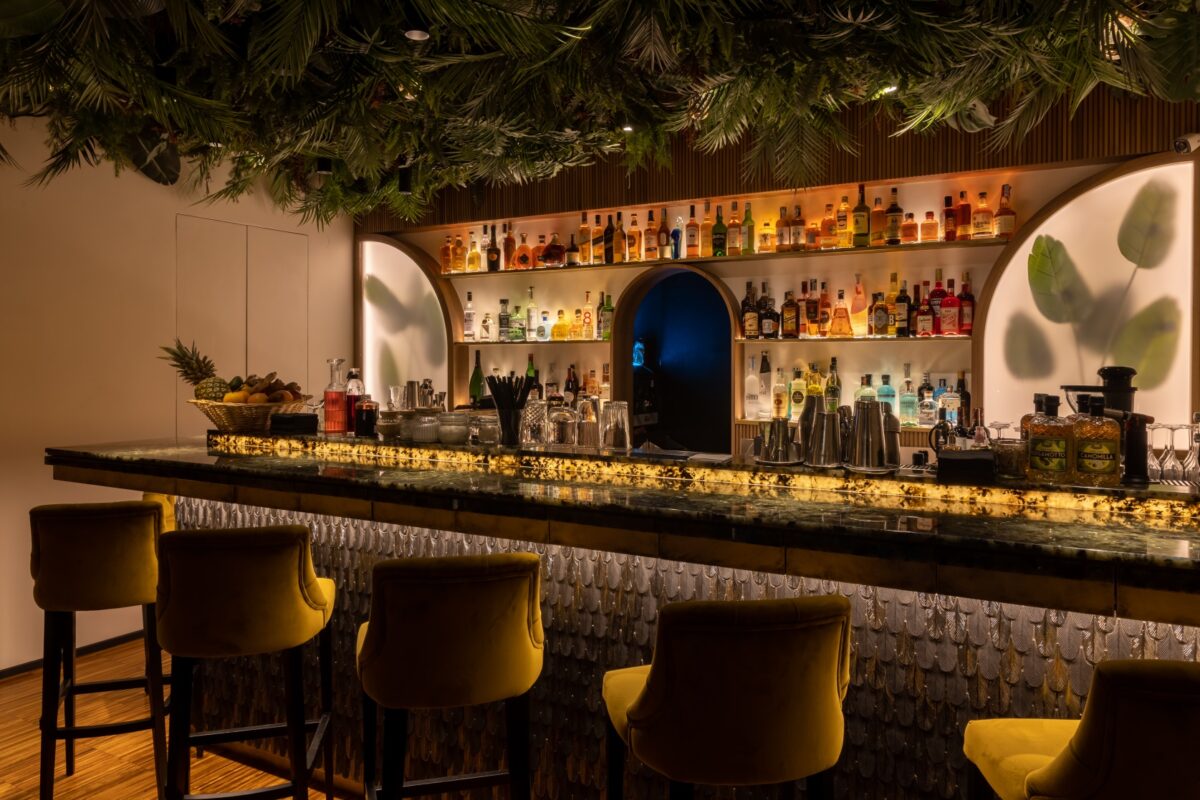
In Rome, the word ‘bar’ takes on a different meaning come sunset – think less cornetto and more spritz. Whether for an aperitivo or an after dinner drink, Campo de’ Fiori is not lacking in this department. Below are our recommendations for the best of the best.  

Antica Latteria

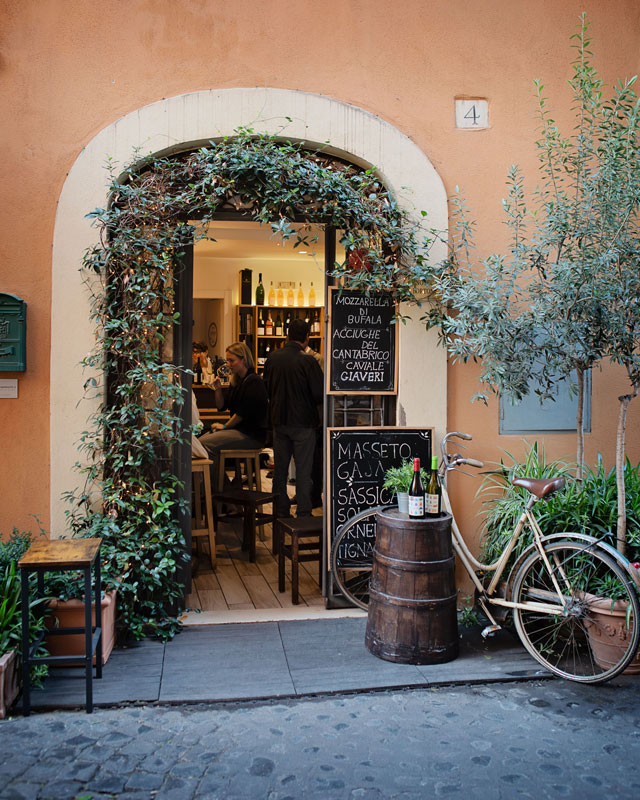
Vicolo del Gallo, 4
Sun, Tues-Sat 12pm-12am; Mon Closed
anticalatteriaroma.it

antica latteria roma

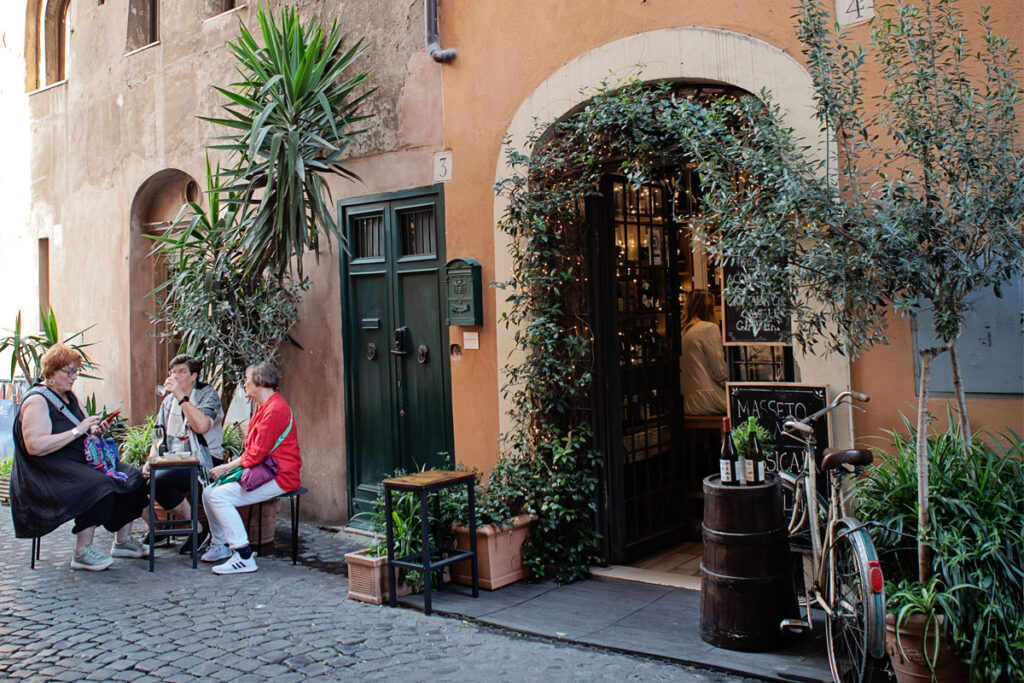
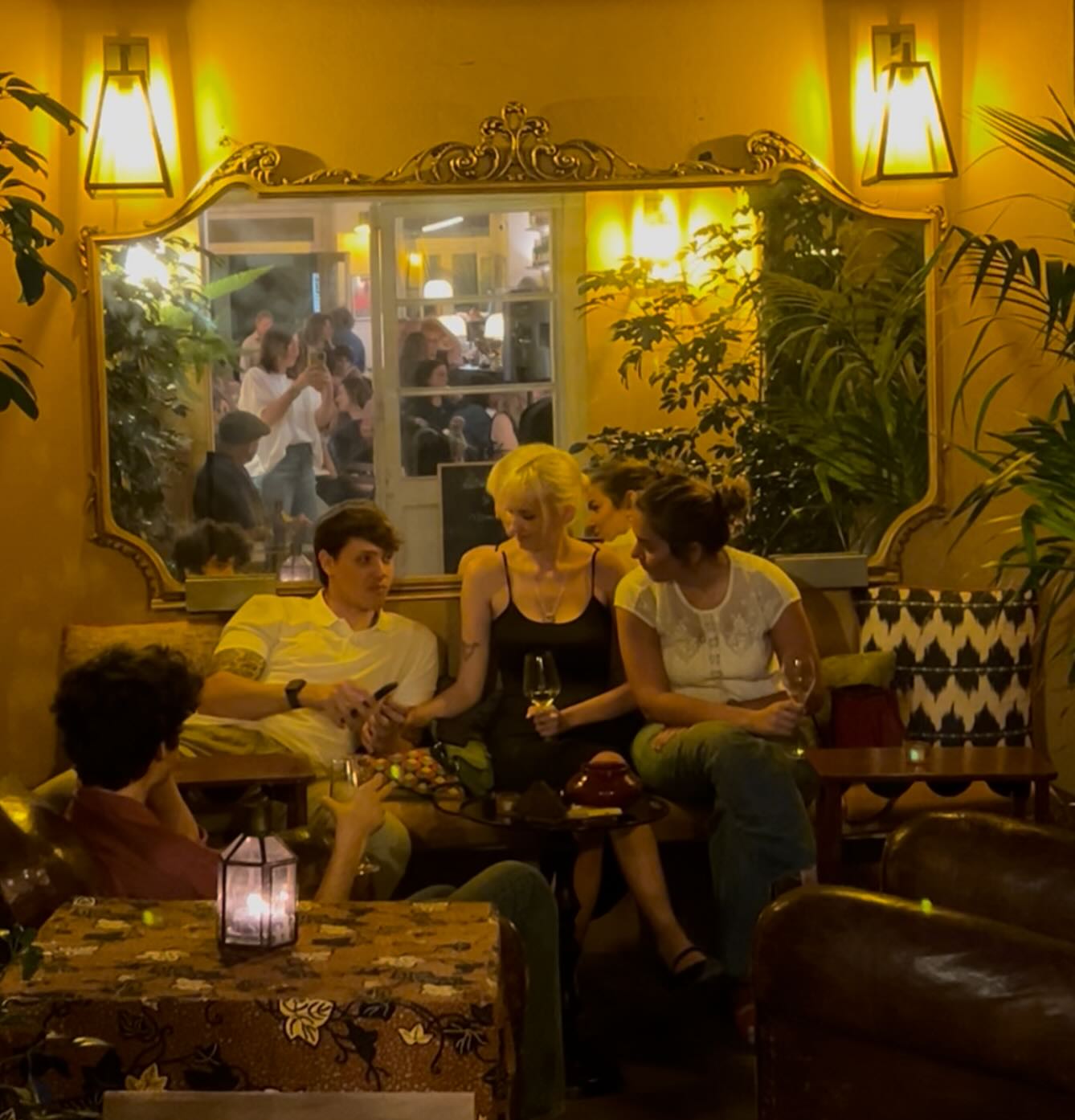
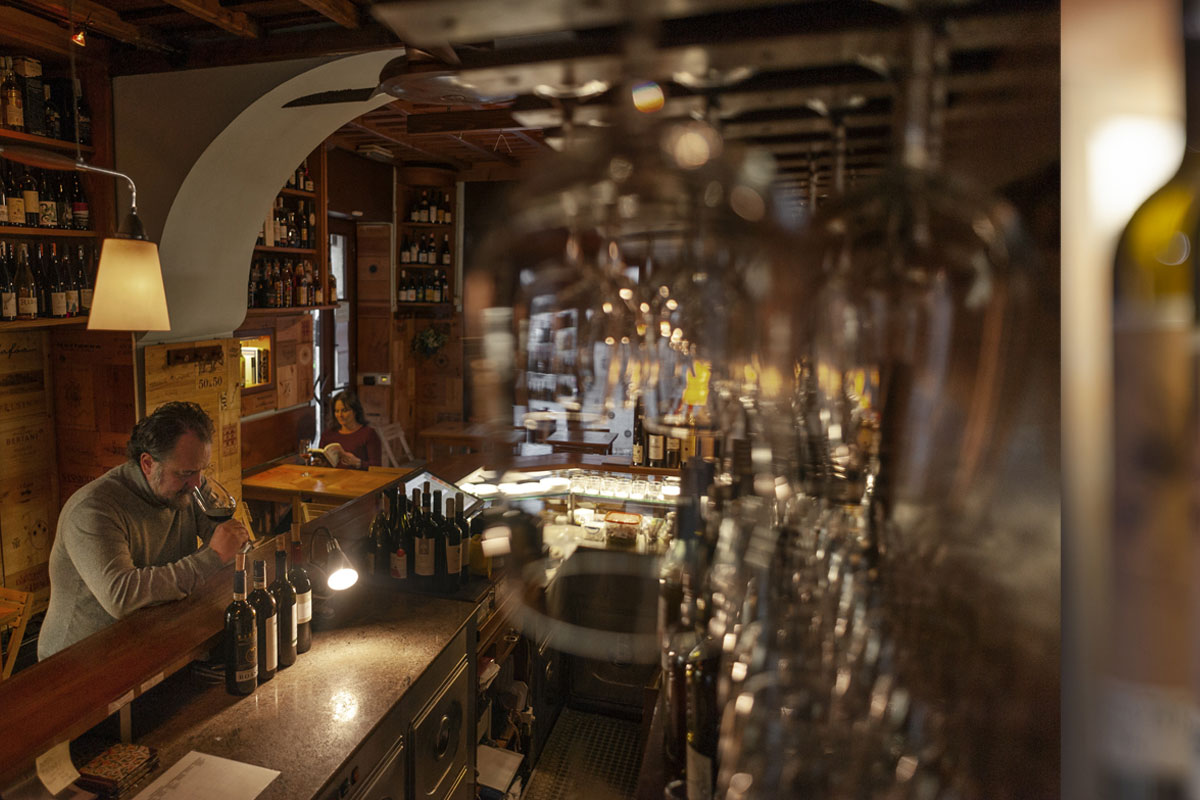
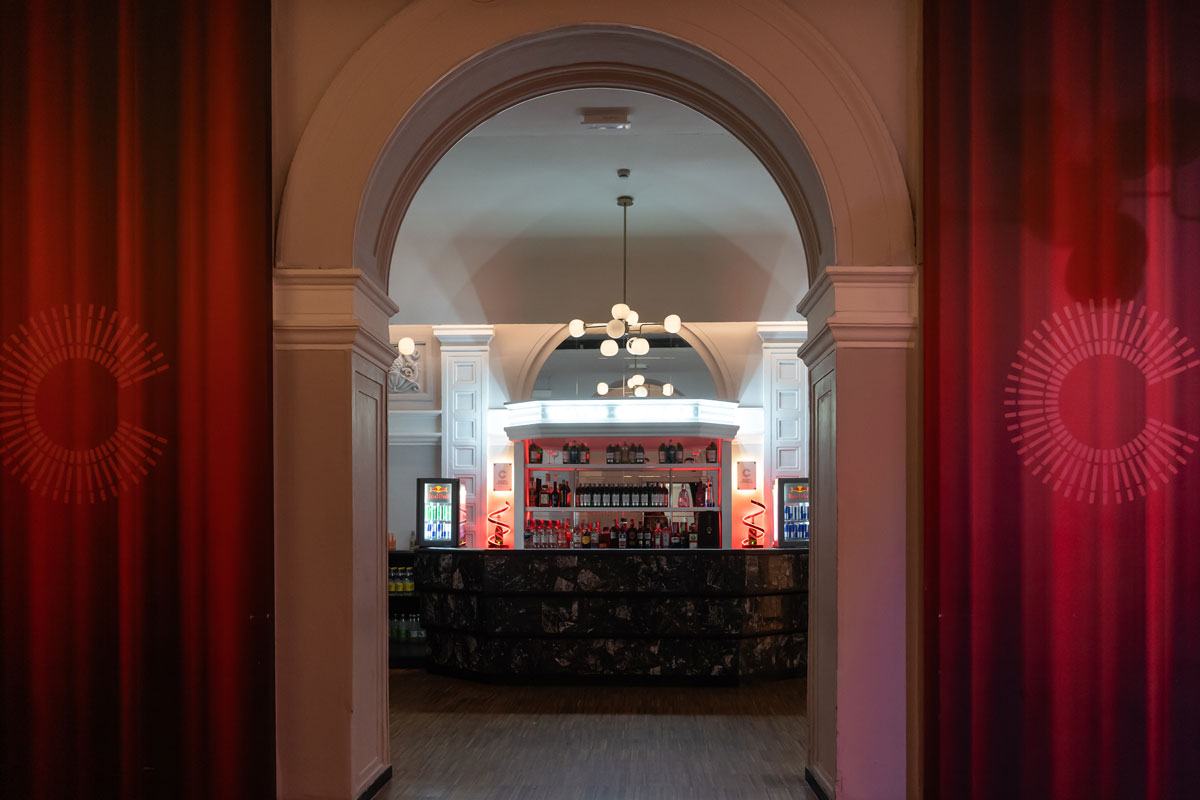
By day a quiet haven for artisanal cheeses and local delicacies, Antica Latteria transforms in the evening into a cozy wine bar where guests gather over natural wines and carefully selected Italian labels. Paired with small plates of cured meats and dairy specialties, the intimate, candlelit setting offers a relaxed and distinctly Roman take on nighttime drinking.


Argot

Via dei Cappellari, 93
Mon-Sun from 10pm-4am
argotspeakeasy.com

argot-speakeasy-rome

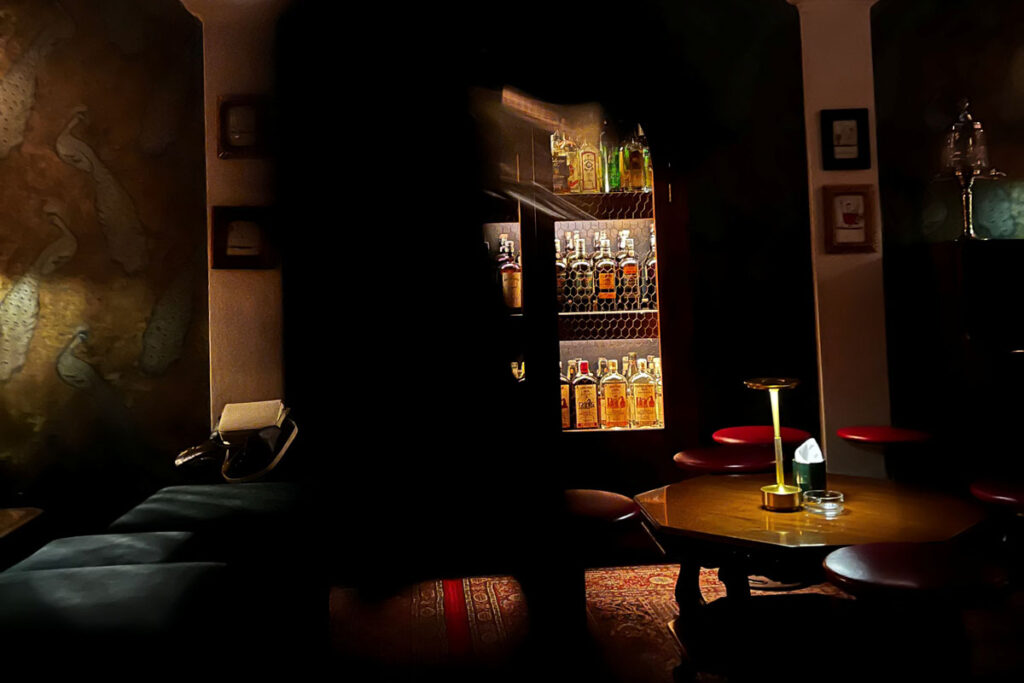
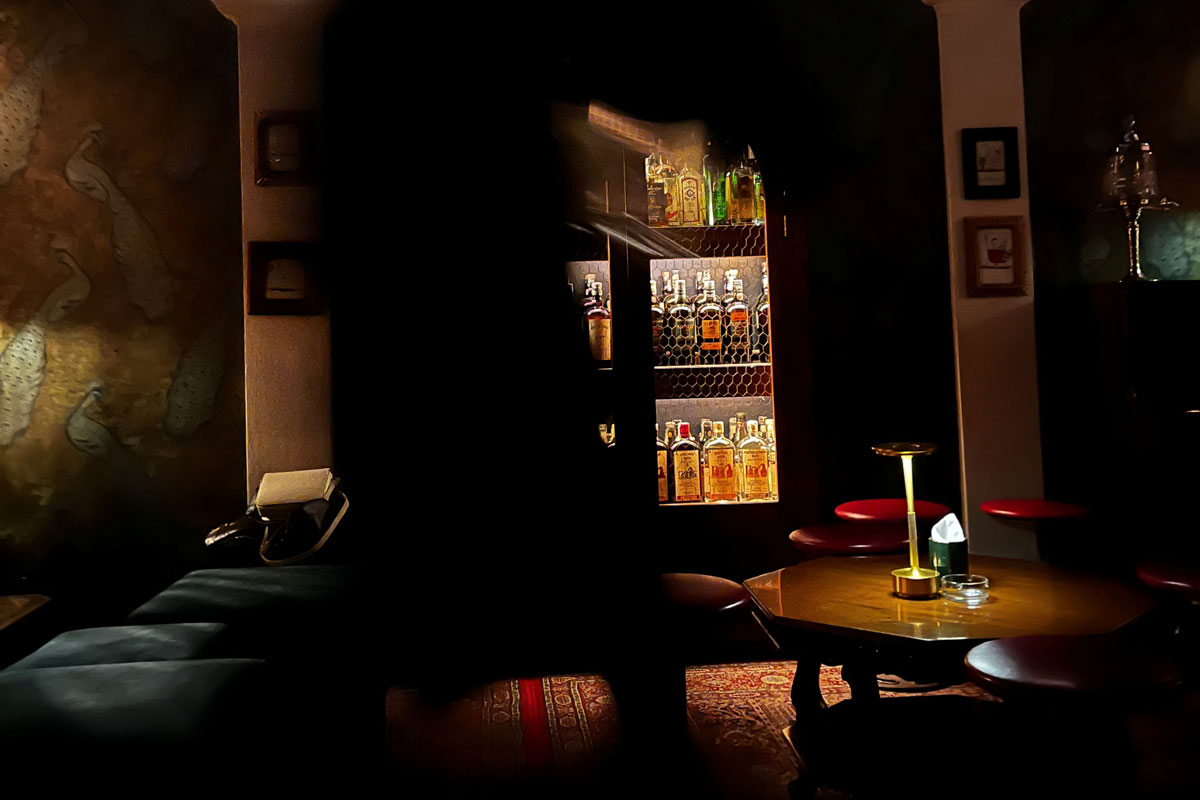
Tucked away in the backstreets near Campo de’ Fiori, Argot takes cocktail lovers back in time. Once home to a theatre, this rustic, inconspicuous venue has been transformed into one of Rome’s most unique cocktail bars. Guests, with a €10 membership fee, can enjoy live music on weekends and soak up its sleek, nostalgic atmosphere. With a Parisian-inspired mood and old-school hospitality, Argot is all about evoking the feeling of an era gone by, while making everyone feel at home.


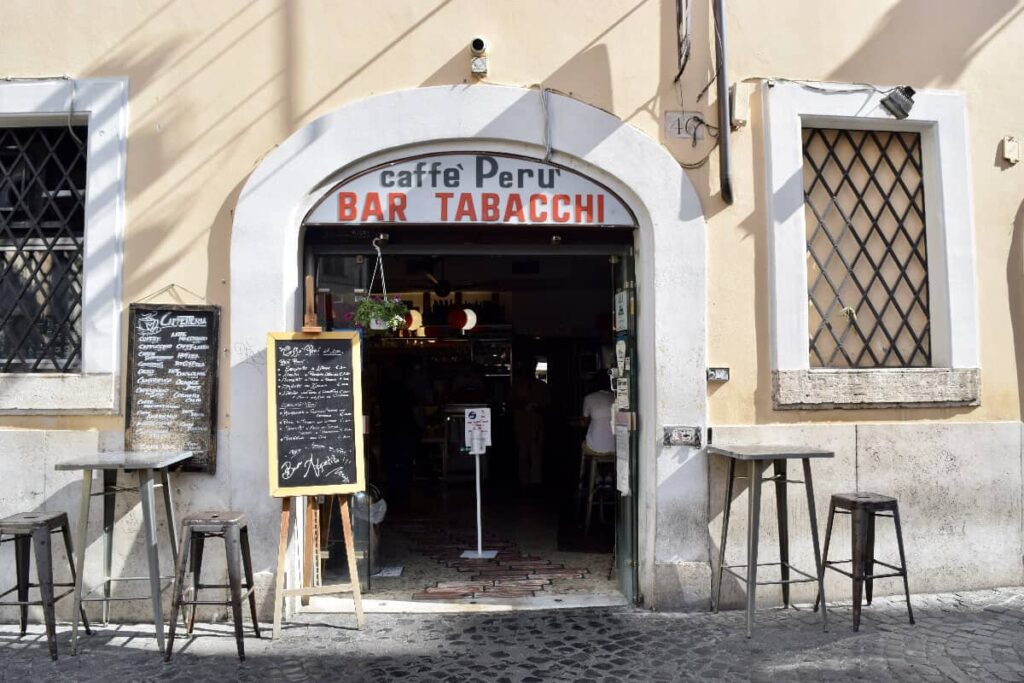
Caffé Perù

Via di Monserrato, 46
Mon-Sat 7.30am-2am; Sun Closed

caffeperu

caffe-peru-via-monserrato

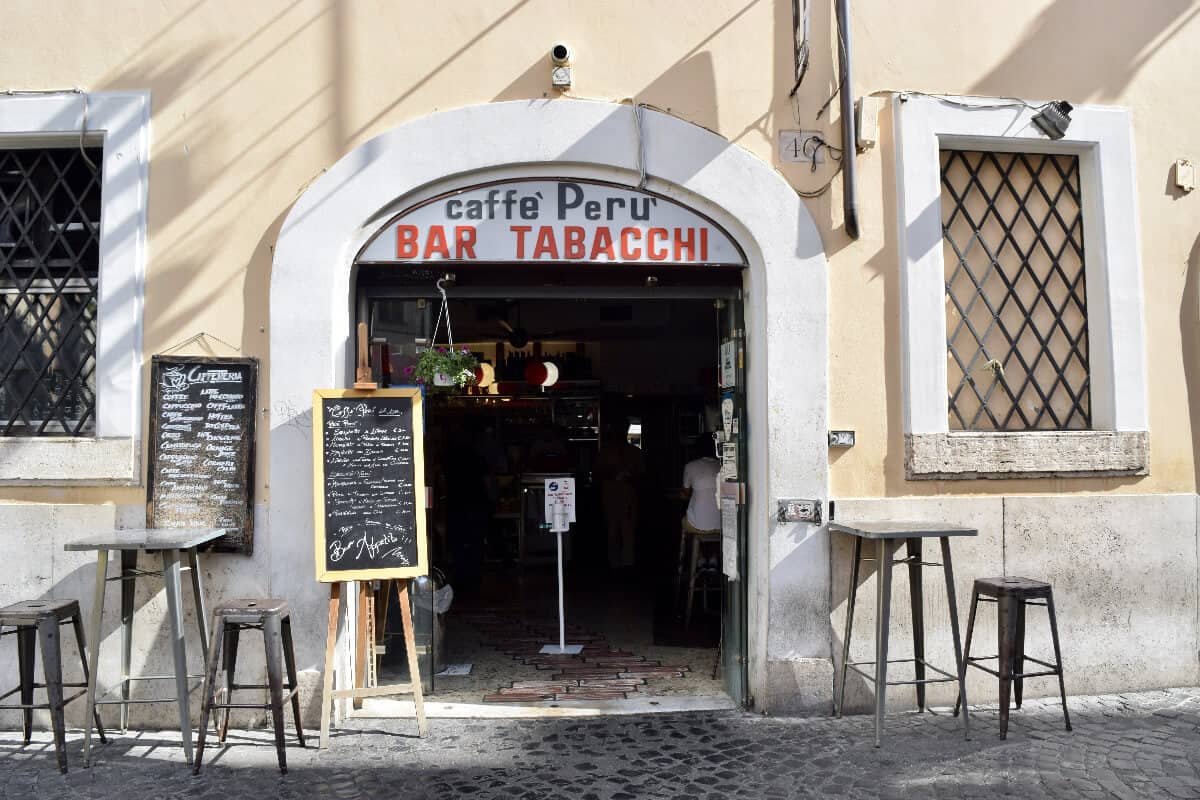
Caffé Perù is a classic haunt located steps away from Campo de’ Fiori, striking a balance between a local institution and international hangout. Come for hearty Roman plates for lunch or dinner, then stay for aperitivo with a generous buffet – best paired with a classic Campari.


Campo Magnetico

Vicolo delle Grotte, 3
Thur – Fri – Sat from 10pm
campomagneticoroma

Best Bars in Rome

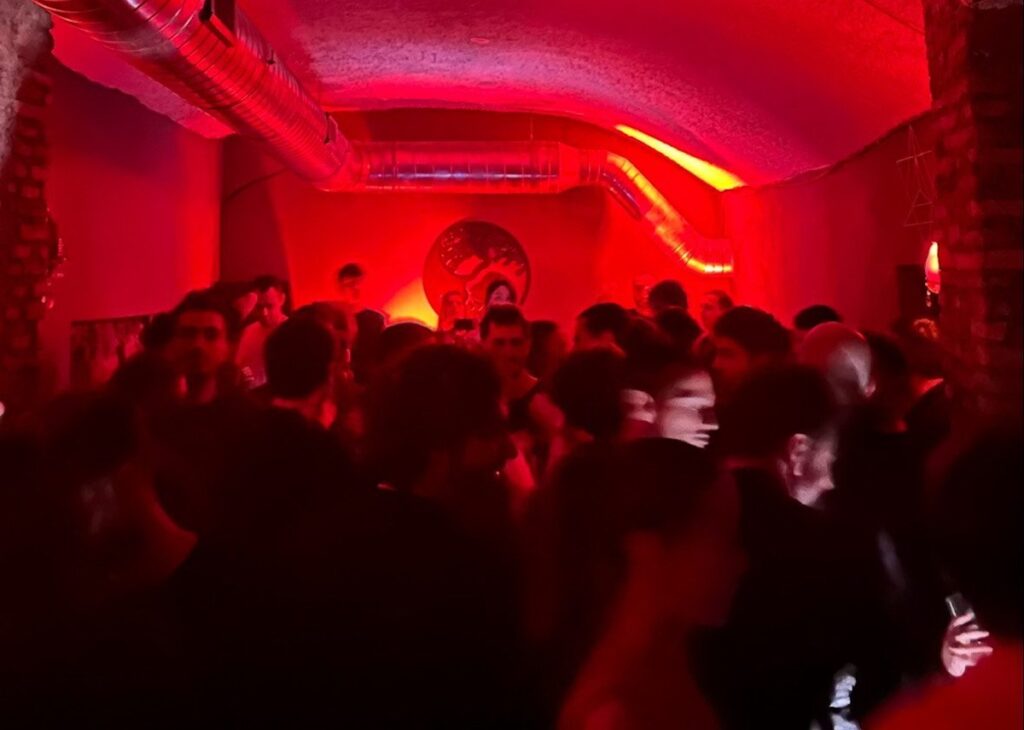
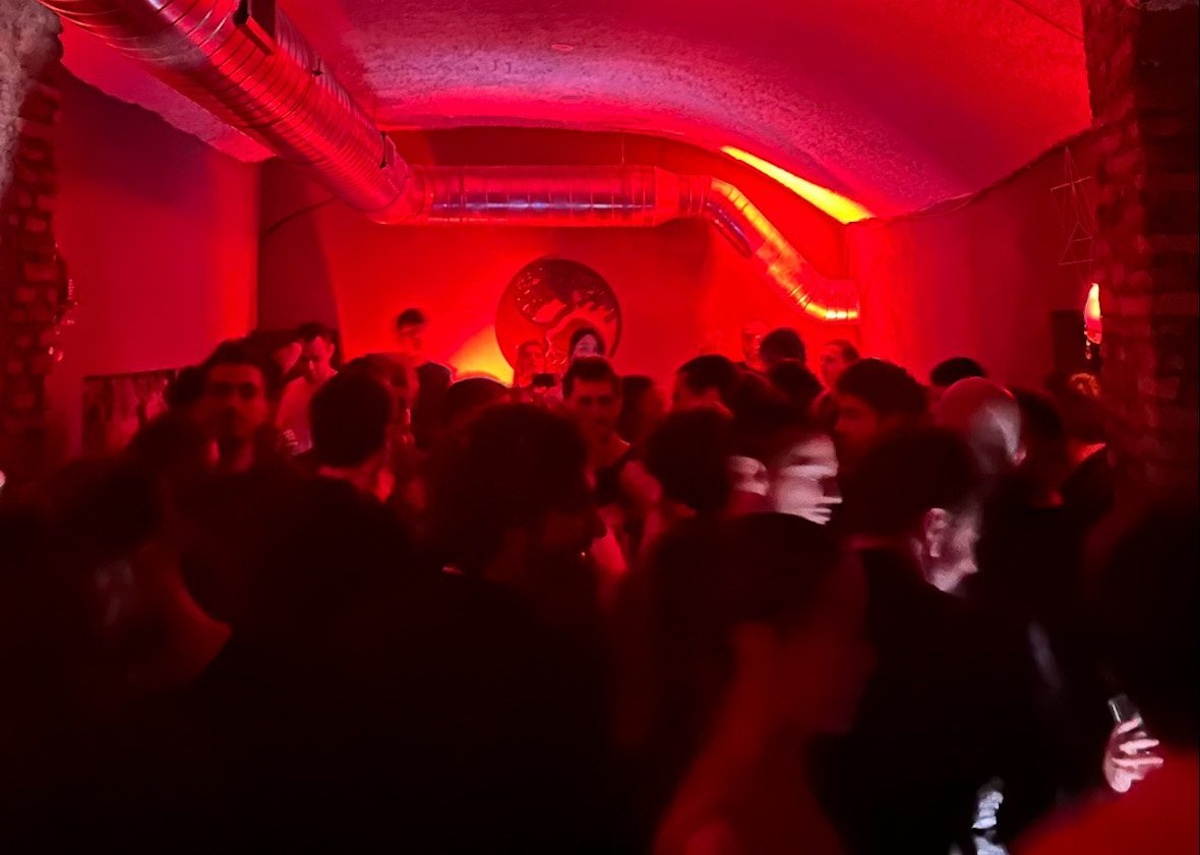
Campo Magnetico is one of those places that changes energy as the night unfolds. Starting as a relaxed bar, it transforms after 11pm into an exclusive members-only club where music, art and experimentation take center stage. Expect DJ sets, jam sessions and live performances in an intimate setting that feels creative, underground and refreshingly unpredictable.


Camponeschi

Piazza Farnese, 52/53
Mon-Sat 7.30pm-12am, Sun Closed

camponeschi

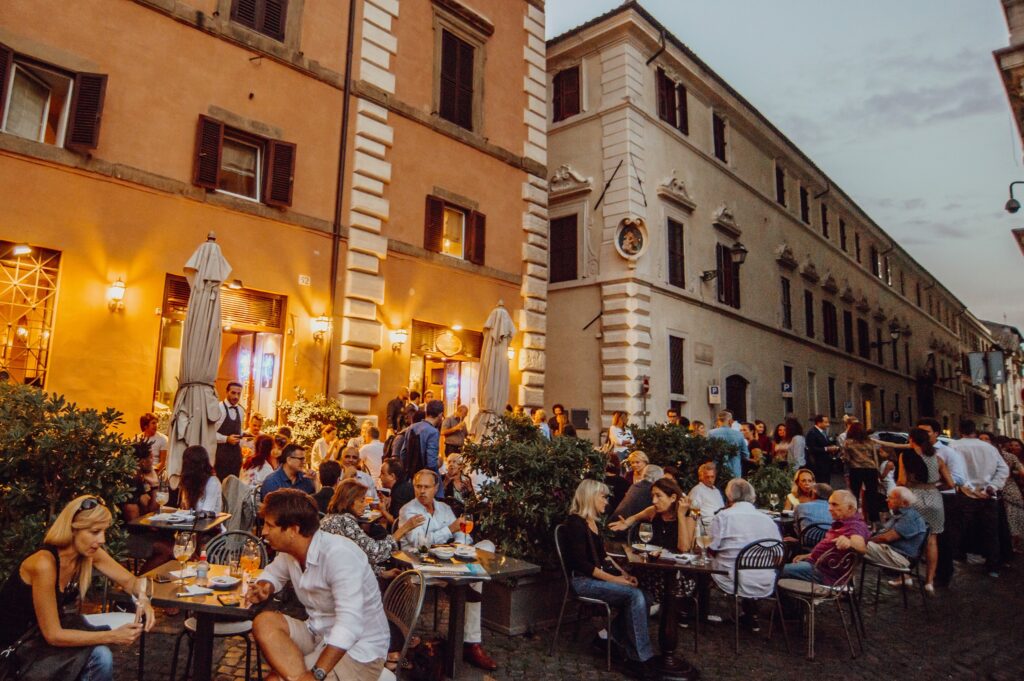
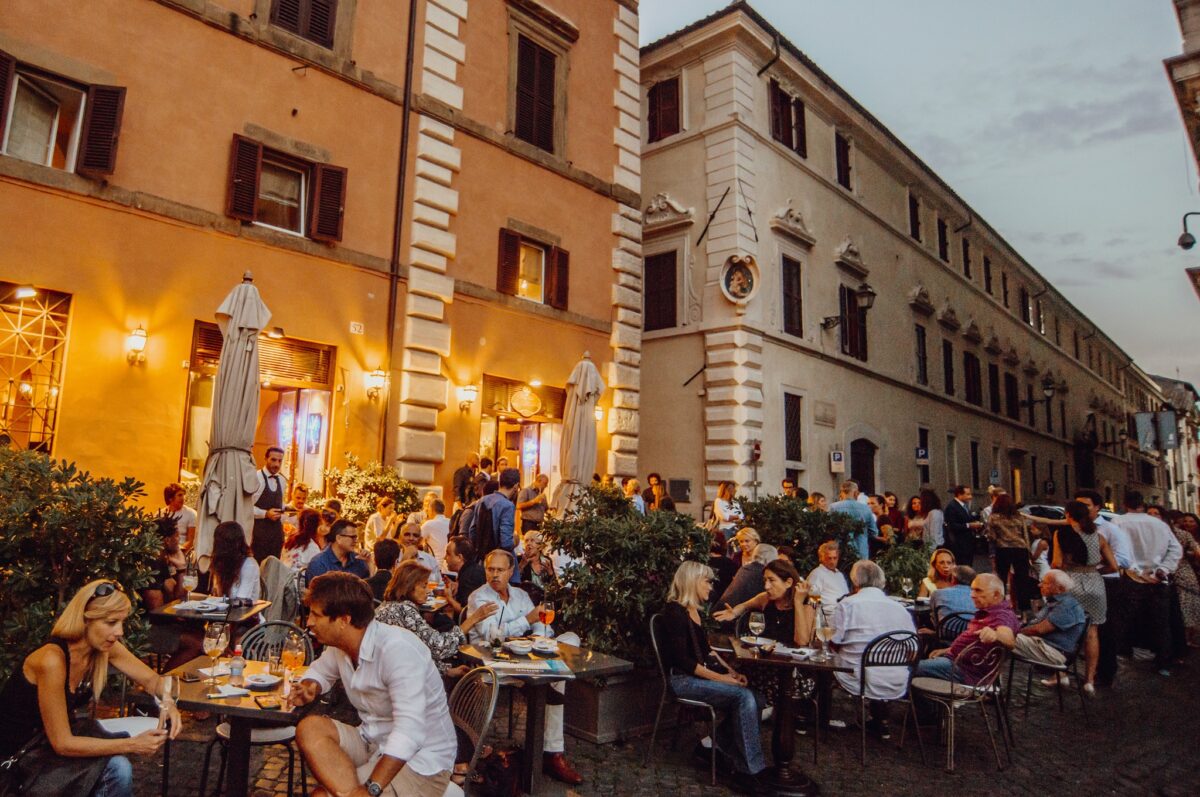
Walk into Camponeschi’s wine bar during happy hour for an aperitivo in Rome in a suggestive atmosphere. Sitting right on Piazza Farnese, in the center of Rome, the Wine Bar Camponeschi, with its independent entrance from the restaurant, will be ready to welcome you for a beautiful aperitivo. Splendid outdoor tables on Piazza Farnese, a very kind staff, great drinks and wine and tasty bites to begin your evening!


The Drunken Ship

Campo de’ Fiori, 20-21
Every day 10am-2am
drunkenship.it

the drunken ship rome

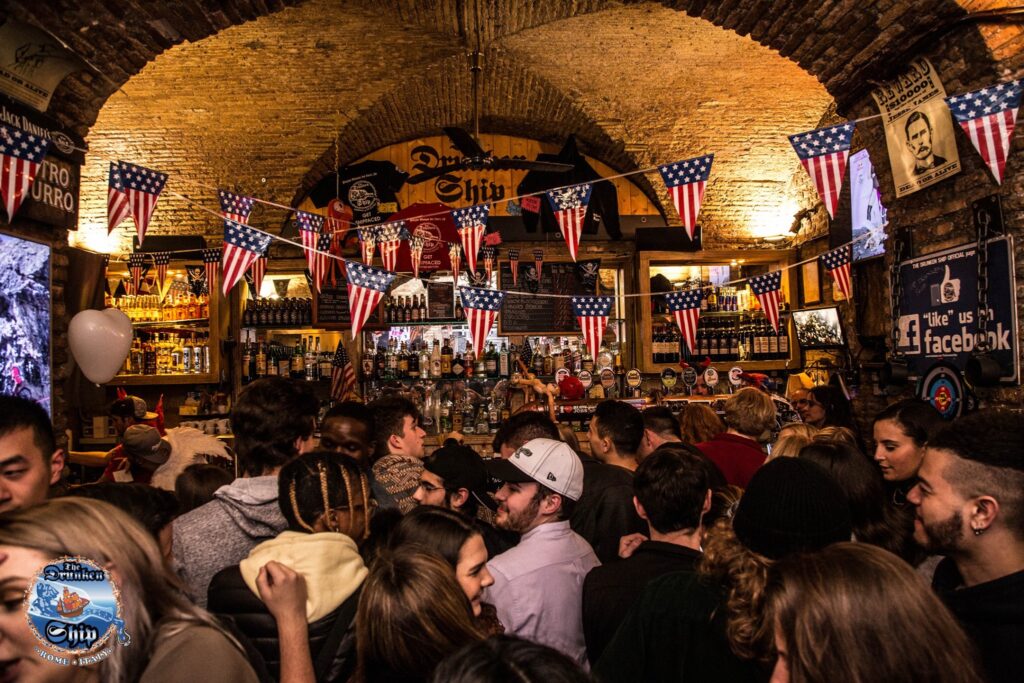
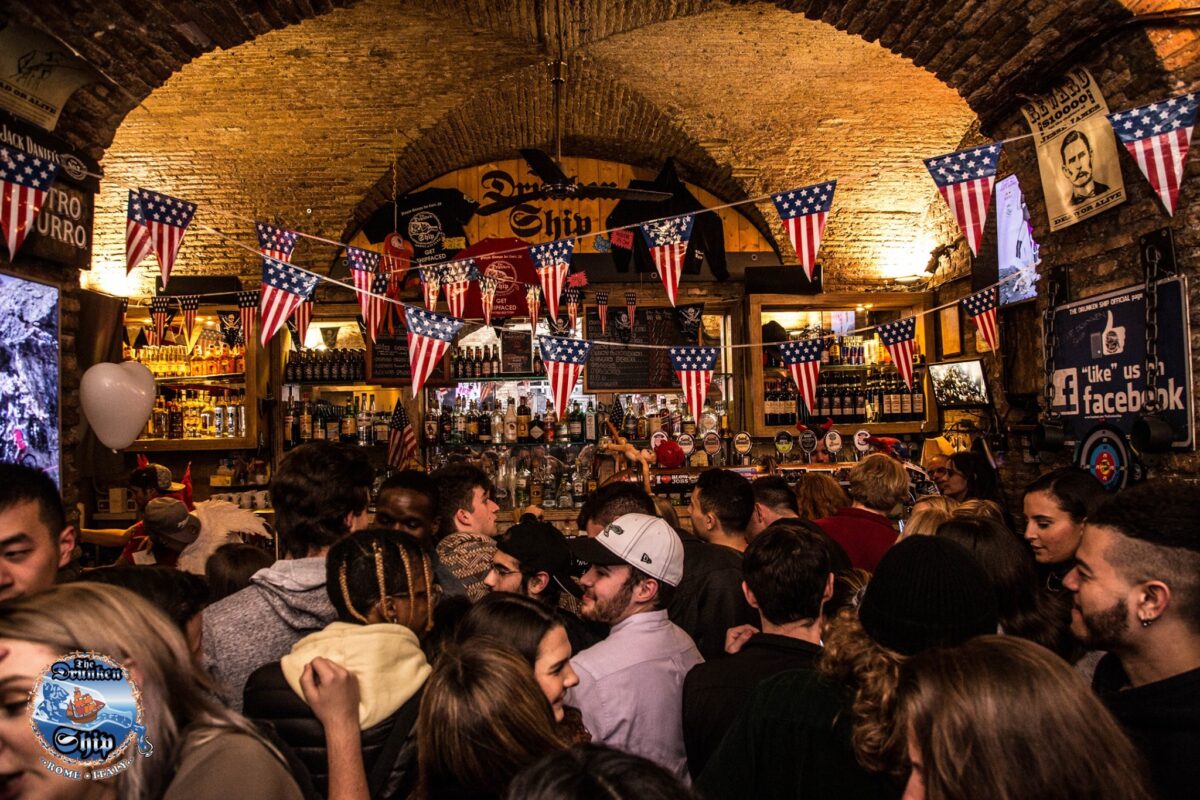
Not your typical Italian bar, The Drunken Ship serves up classic American pub faire, along with weekly international offerings. Just steps from Campo de’ Fiori, the brick-interior a lively, no-frills, and a favorite among American study abroad students. It pairs classic comfort fare with a fun, high-energy atmosphere that makes it easy to settle in and stay awhile. With themed nights and a crowd that’s always ready to mingle, it’s a go-to for an upbeat, social night out.


Enoteca Bortone

Via di Monserrato, 4
Mon 3pm-10.30pm; Tue-Thur 12pm-10.30pm; Fri-Sun 12pm-12am

enotecabortone.it

enoteca-bortone-roma

At Enoteca Bortone, small, locally sourced wines are served in a warm, homey setting that instantly puts you at ease. With a shop that carries her name, Patrizia has created more than just a wine bar—she’s created a space that feels personal and inviting. A true bridge—ponte—between wine and the world, she connects guests to Italy’s rich wine culture through thoughtful tastings and stories. For those who find themselves at her table, the experience is invitation into a life shaped by passion, curiosity, and the courage to begin again.

Read the full review about Enoteca Bortone

Hey Baby Bar – Chapter Roma

Via di Santa Maria de Calderari, 47
Daily 6pm – 1am
chapter-roma.com

hey_baby

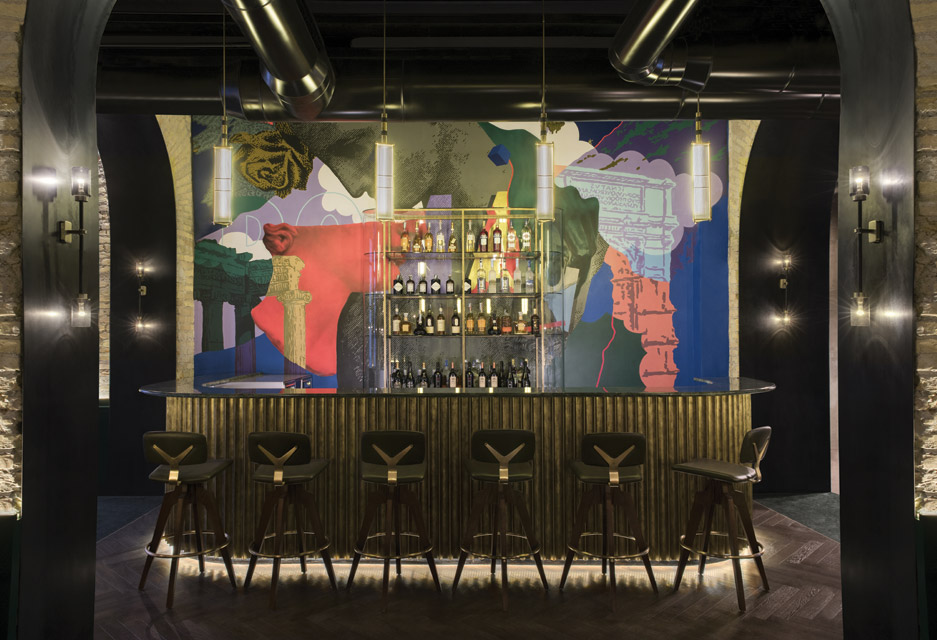
HeyBaby, tucked inside CHAPTER Roma Hotel drops guests straight into a movie set for the senses. Drawing on the enduring legacy of Quentin Tarantino – the bar delivers Hollywood inspired drinks: vibrant in color, packed with personality and punch. The crowd is an easy mix of locals, creatives, and hotel guests, easing guests into a chill aperitivo moment before the energy builds. As the night unfolds, and DJs take over, the atmosphere shifts. While no two nights are the same at HeyBaby, one thing remains constant: dedicated staff and a special creativity that makes you feel as if you’ve stepped right into the director’s chair.


Hey Guey – Chapter Roma

Via di Santa Maria de Calderari, 47
The terrace is open every day during the summer season
chapter-roma.com

HEY-GÜEY-Terrazza-Chapter-Rome

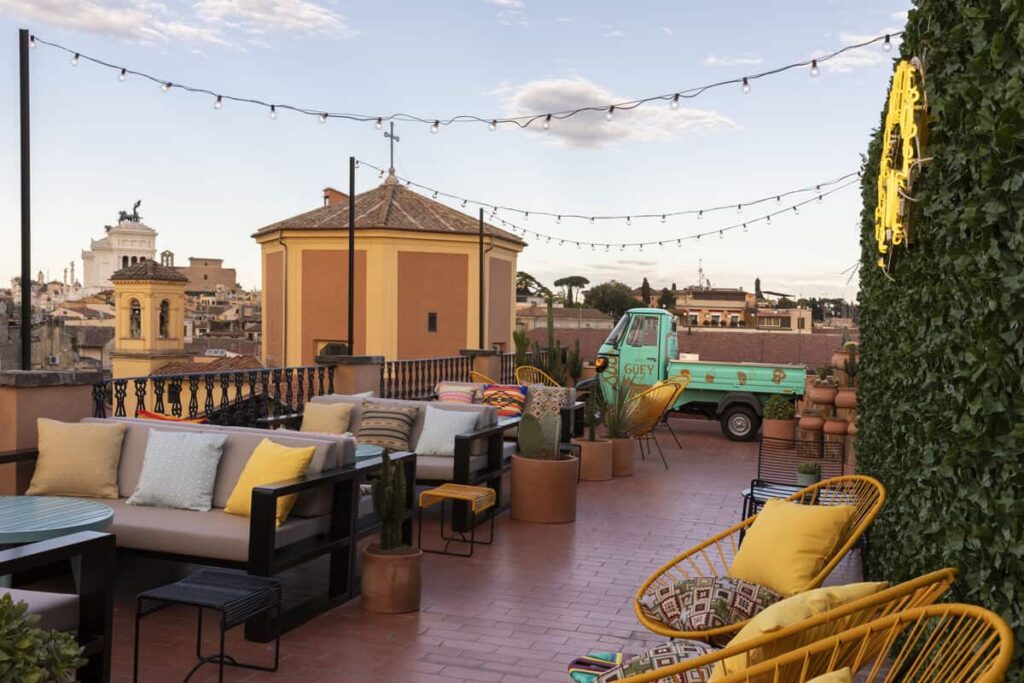
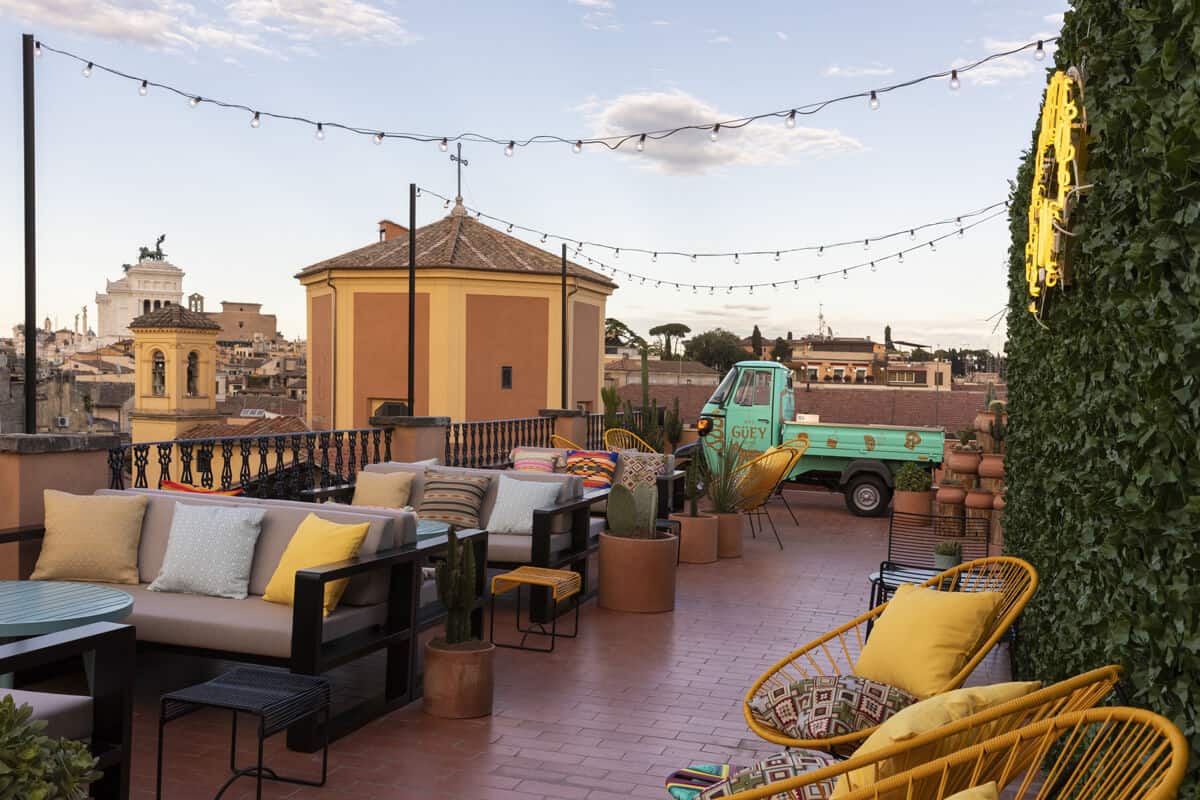
During the summer months, the experience moves upstairs to Hey Güey, Chapter Roma’s rooftop terrace dedicated to Mexico. This colorful spot mixes street art, mezcal cocktails and Mexican-inspired bites served from a bright blue Piaggio Ape turned food truck. With its subtropical vibe and views over Rome’s rooftops, it feels like a little Latin American escape in the heart of the city.


Il Goccetto

Via dei Banchi Vecchi, 14
Tue-Sat 12pm-12am, Sun-Mon Closed

thereal_ilgoccetto

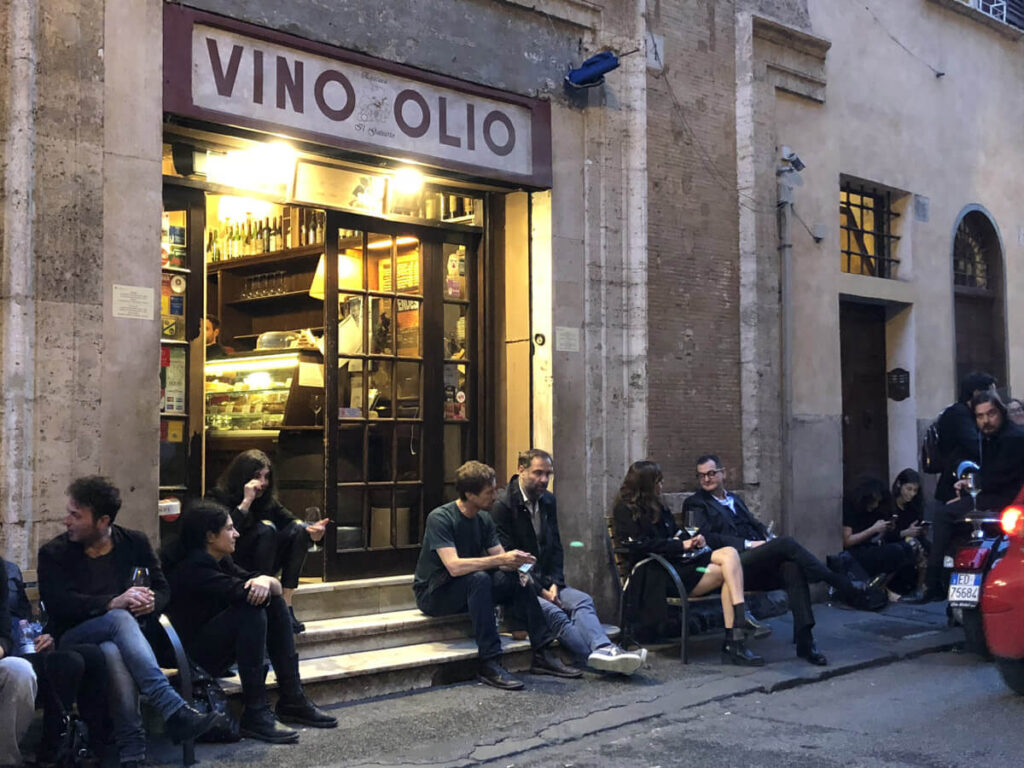
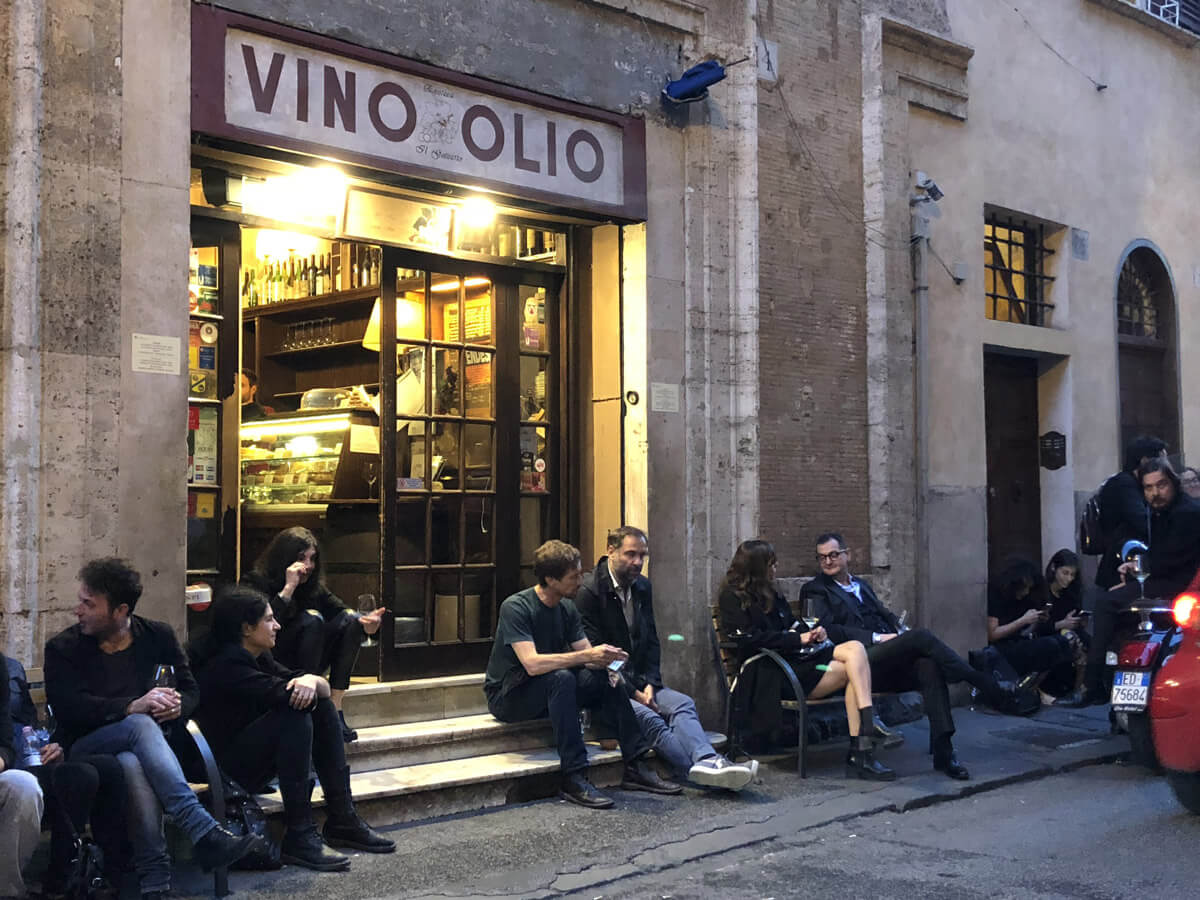
As you walk along Via dei Banchi Vecchi, a grand sign reading Vino Olio welcomes you into this rustic enoteca with a fabulous wine list. Home to labels of popularity and obscurity, staff are quick to pick a pairing tailored to your tastes and interests, accompanied by the highest quality cold cut and cheeses. Perfect after a long day’s stroll between Campo and the Tevere or a chill night with friends, a crisp glass of vino is never a bad idea at Il Goccetto.


Il Vinaietto

Via del Monte della Farina, 38
Mon-Sat 10am-3pm, 5.15pm-11pm Sun- Closed
ilvinaietto

Bars around Campo de' Fiori

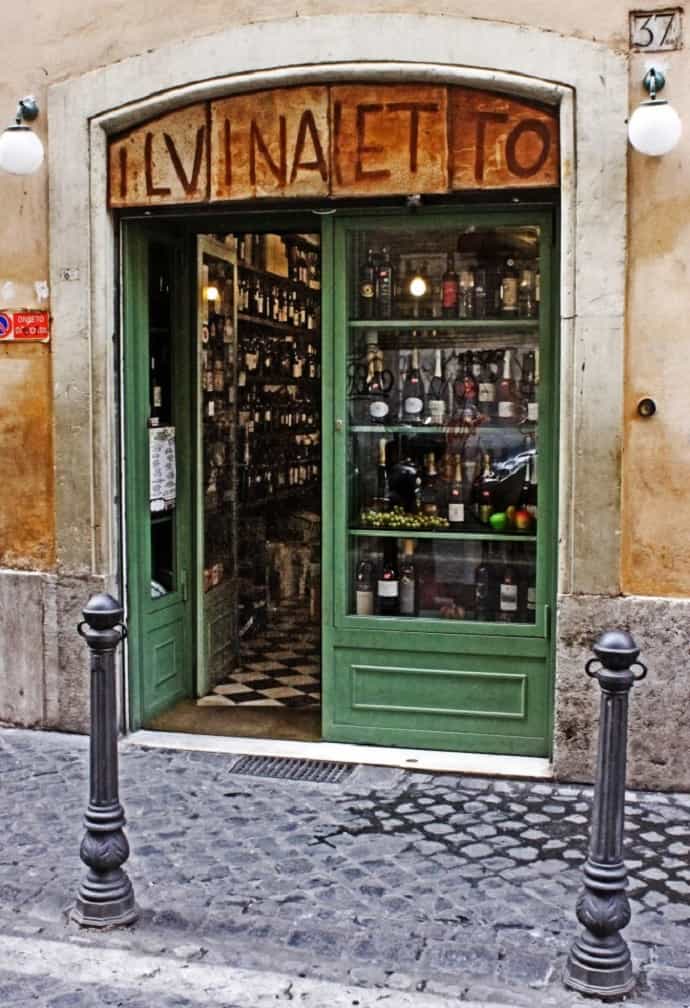
A sweet and authentic surprise amidst all the tourist traffic in the centre of Rome, Il Viniaetto feels like a small slice of local life. Managed by Marco and Giancarlo, the space is lined with vintage plaster of Rome’s ever-changing landscape, adding character to its unassuming exterior. Always flooding with locals outside, the bar offers a warm setting for those who appreciate a good bottle — perhaps the reason it has remained a best kept secret.


Jerry Thomas Speakeasy

Vicolo Cellini, 30
Every day 9pm-4.30am
thejerrythomasproject.it

jerry-thomas-project

Being the first speakeasy in Rome, at Jerry Thomas, you enter a place where cocktails are treated as nothing south of sacred. The Speakeasy – draped in plush velvets and leathers – transports guests back to the Roaring 20s, where jazz fills the intimate space. The drinks are smooth and take a twist on classics, but integrity is never compromised; the Speakeasy is a benchmark in quality, passion, and mixology. Just be sure to check your reservation, where your password back to the 1920s awaits.


L’Angolo Divino

Via dei Balestrari, 12-14
Mon-Thur 11am-3pm, 4.30pm-12:30am; Fri-Sat : 11am-1am; Sun 12pm-12.30am
www.angolodivino.it

angolo-divino

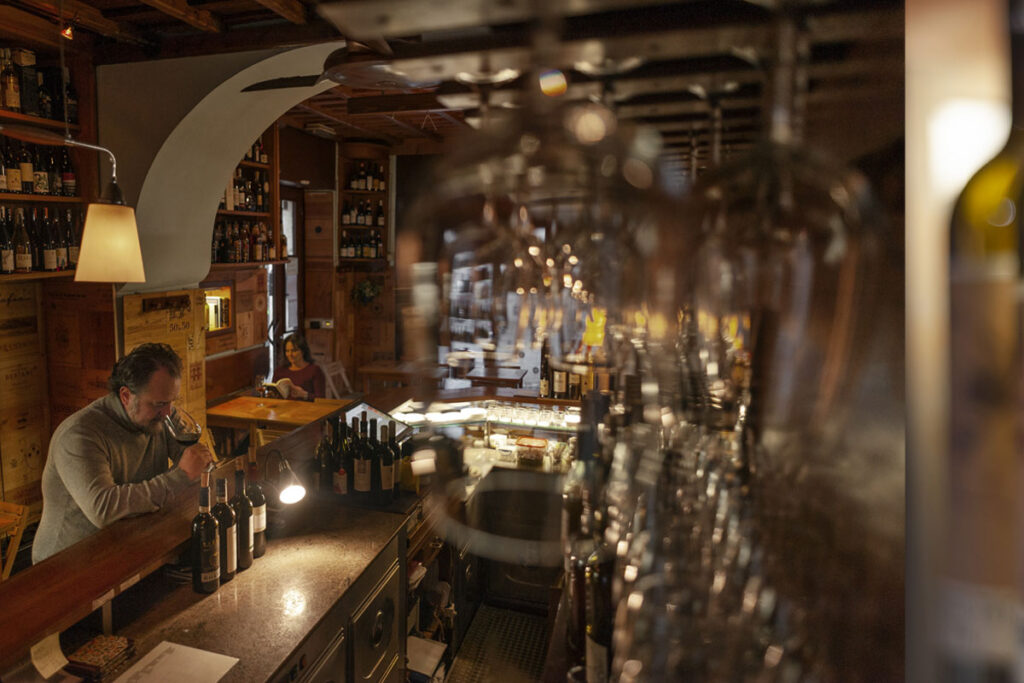
On a small corner not far from Piazza Farnese is where you’ll find the unfussy yet relaxed L’Angolo Divino. For more than 50 years, The small enoteca has welcomed all walks of life into a space where floor-to-celing shelves of foreign and organic, and emerging wines are its decor. The owner, Massimo Crippa, selects wine for guests with delicate care and curiosity for gastronomy. So, whether a wine connoisseur or casual drinker, L’Angolo Divino is the perfect place to expand your palate.


Open Baladin

Via degli Specchi, 6
Daily 12pm – 2am
baladin.it/open-baladin-roma

open-baladin-rome

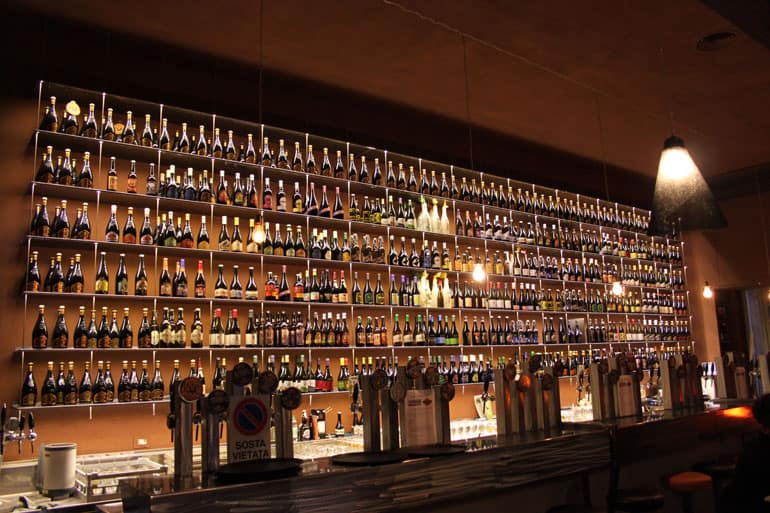
This spot is the place to go if you’re tired of the endless flow of wine and craving something a little hoppier. With an extensive list of craft beers, Open Baladin has brought pub flavors into the Roman cafè scene. These aren’t limited to their drink menu; they serve creative variations on the classic American burger as well.


Santa Cocktail Club

Corso Vittorio Emanuele II (Hotel L’Orologio)
Mon-Wed 4.30pm-12.30am, Thur-Sat 5.30pm-1.30am, Sun 4.30pm-12am
santacocktailclub.com

Santa_cocktailbar-Roma

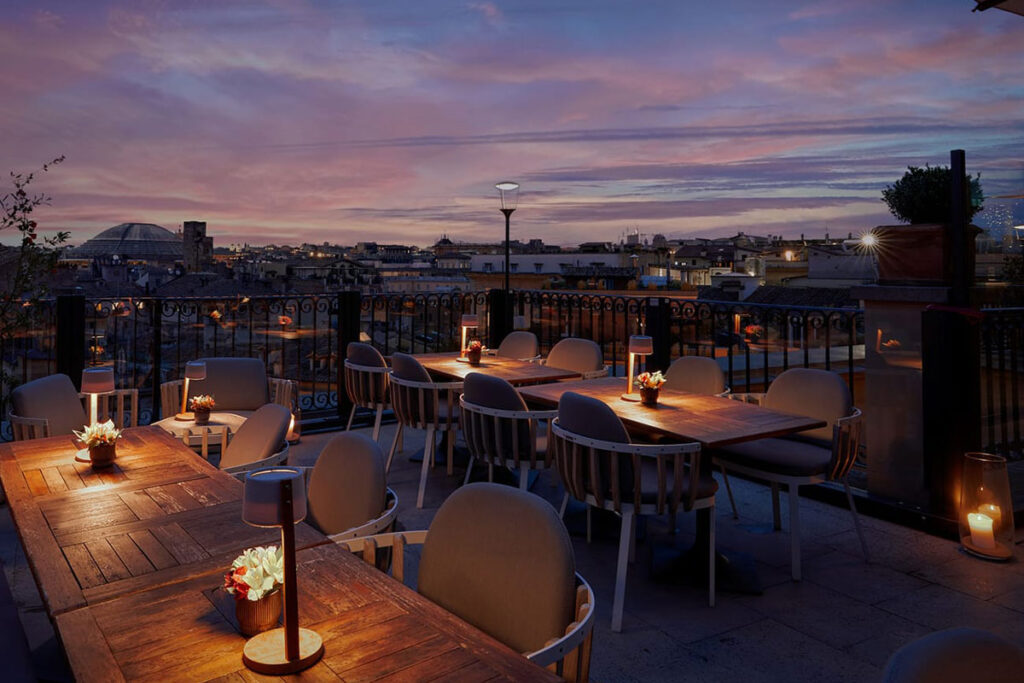
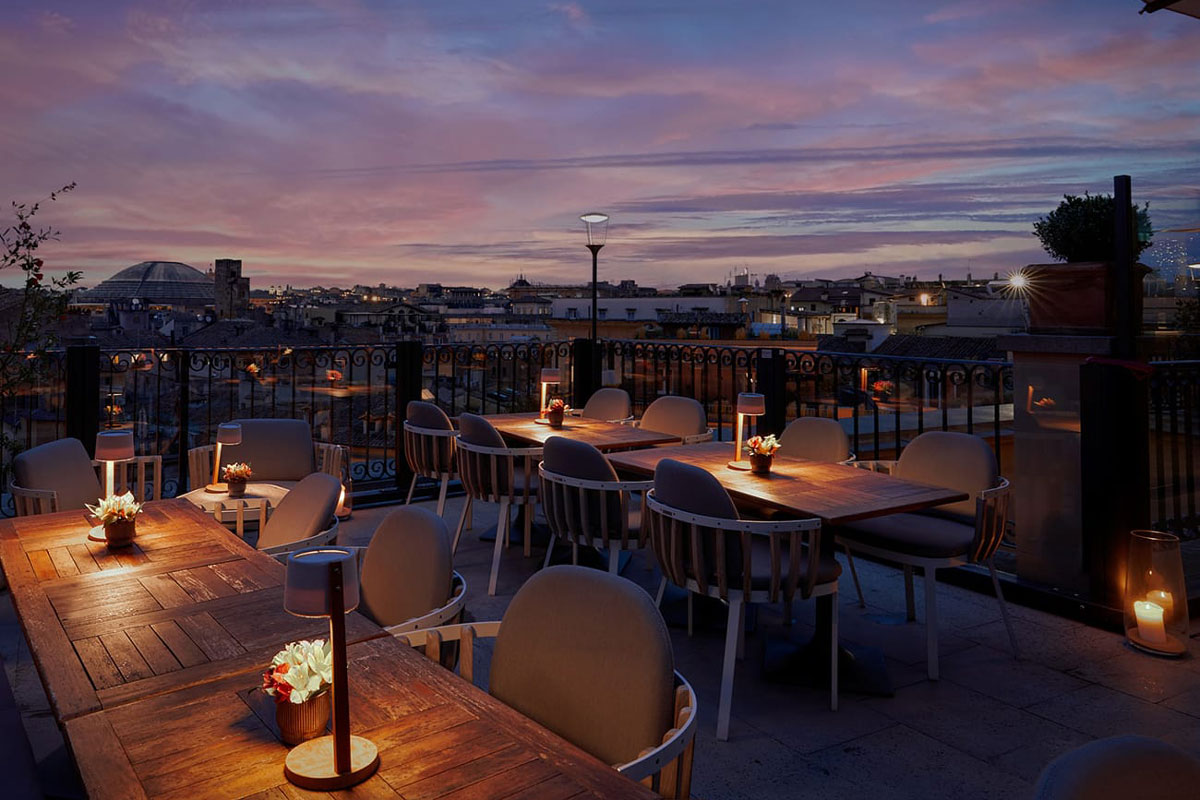
If you’re seeking a sunset view with a glass in your hand, Santa Cocktail Club has got you covered. Overlooking a sweep of Roman rooftops, with the Pantheon and Altare della Patria on the horizon, the setting is just as captivating as the drinks. Cocktails are crafted with expert mixologists and seasonal ingredients, while refined finger foods prepared by chef Dario Battistelli round out the experience – a blend of atmosphere, flavor, and a setting that captures the essence of the Eternal City.


Teatro Centrale

Via Celsa, 6
Wednesday, Thursday, Friday, Saturday, Monday from 11.30pm
Teatro Centrale

teatro-centrale-club-in-rome-centre

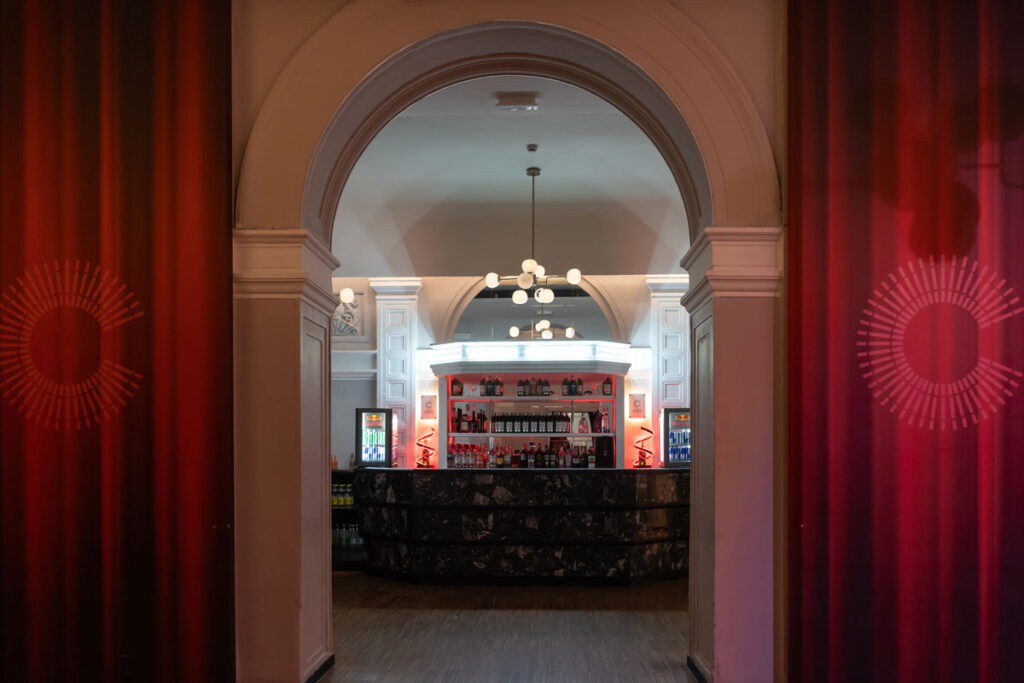
Just steps from Piazza Venezia, Teatro Centrale is one of the few real club venues in Rome’s historic centre. Set inside a former theatre founded in 1900, it hosts live shows, events and big nightlife nights. Fridays are all about University Party, with commercial hits and reggaeton; Saturdays host Don’t Tell Mama, mixing commercial and house music; while Mondays belong to the iconic Any Given Monday.

Read the full review about Teatro Centrale

Vino e Vinili

Via del Pellegrino, 77 (Campo de’ Fiori)
Tue-Sun, 12pm-1am, Mon Closed
 vinoeviniliroma

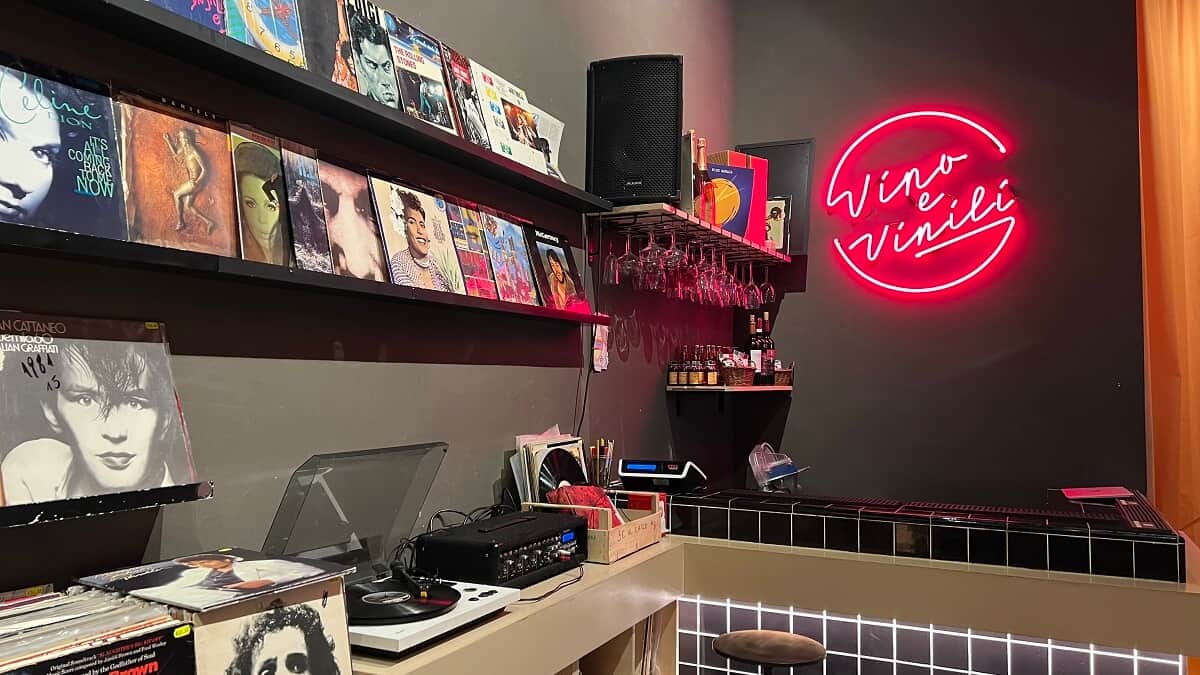
Vino & Vinili: Where wine tasting and iconic music blend into a unique experience

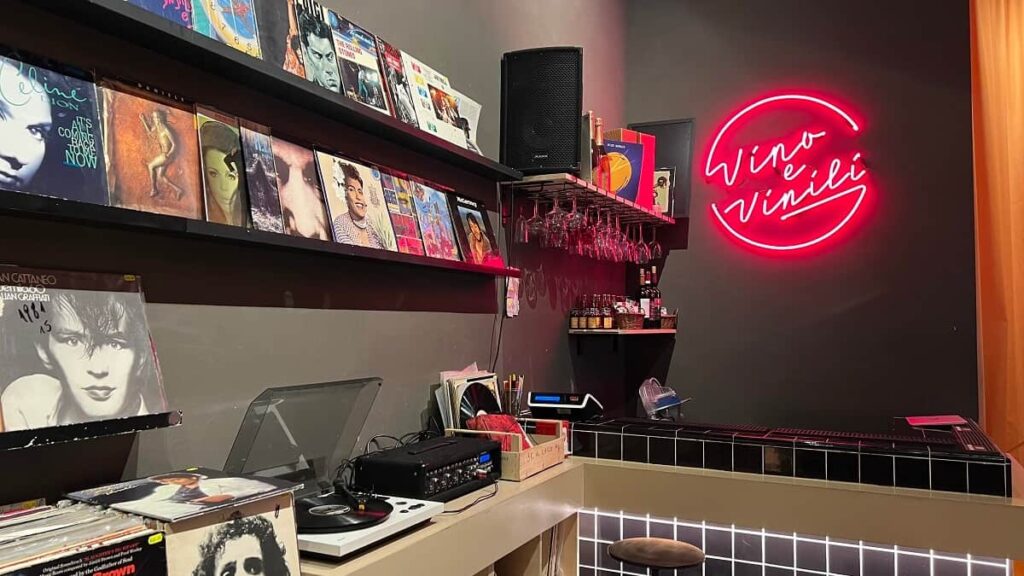
At Vino & Vinili, even the simple act of choosing wine can become an experience. Those who enter Beppe’s wine shop on Via del Pellegrino – with shelves of vinyls – find more than just a bottle. The cosy space allows you to spin your favorite records and learn more about family-run Italian wineries. From classic champagnes to quirky red sparkling wines, Beppe accompanies his guests on a discovery of different types of wines, with a special focus on organic wines from small artisanal producers. At Vino e Vinili, you control the vibe.

Read the full review about Vino e Vinili

Like this? Now read:

Campo de’ Fiori Neighborhood Guide Best Restaurants around Campo de’ Fiori Best Shops around Campo de’ Fiori Things to See around Campo de’ Fiori

The post Bars around Campo de’ Fiori appeared first on Romeing.

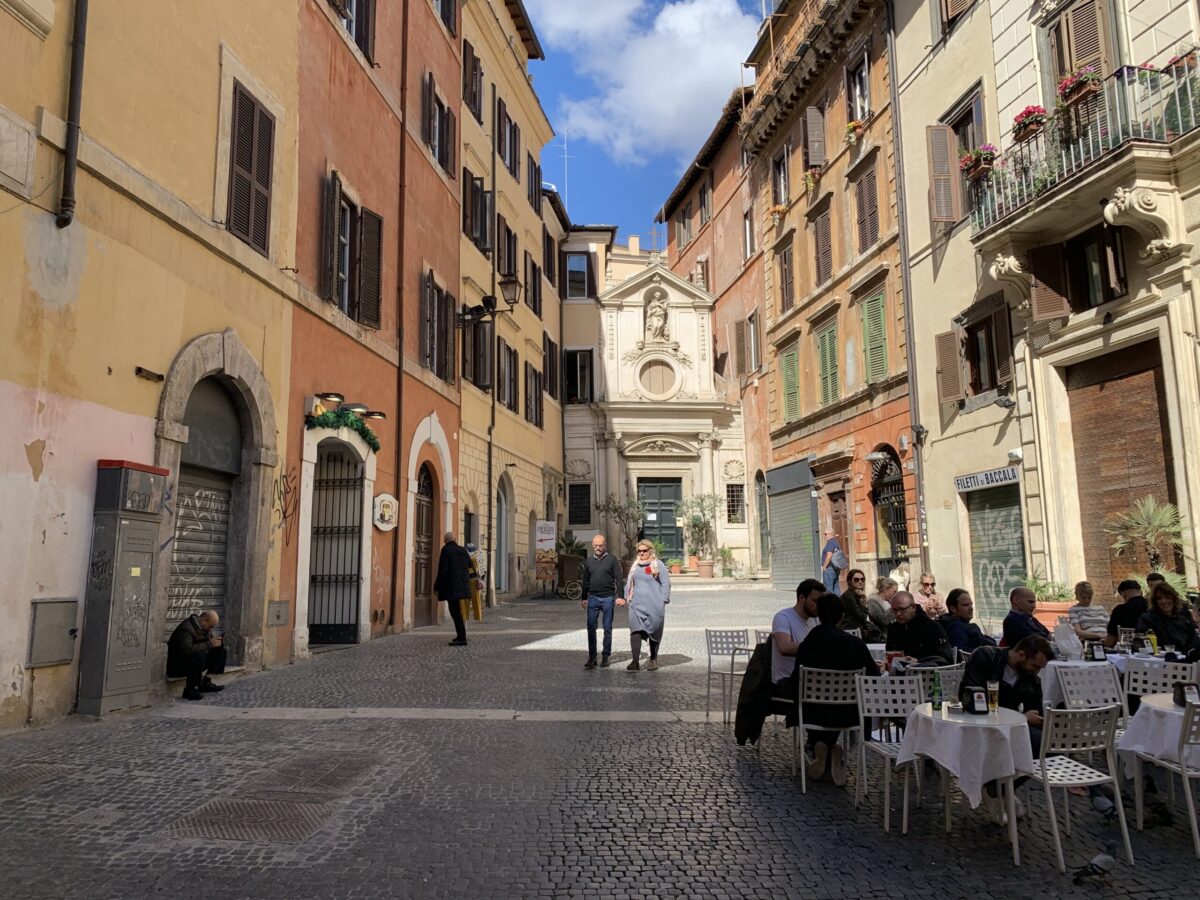
Caffè Perù is one of the most traditional places to visit at this via. Being open from early in the morning to late at night, this is a great place to have coffee or drinks.

Campo de’ Fiori Neighborhood

What to See and Do Around Campo de’ Fiori

Piazzas have always been one of the great delights of the European city. Their layout – replacing the English high street concept – is an enchanting leisure and third space for conversation to flow. Traditionally among the barren square would be a church, as seen in Rome’s famous Piazza di Spagna, Piazza Navona, and Piazza del Popolo. 

Yet Campo de’ Fiori has remained churchless, historically known for trade and commerce. In her center stands Giordano Bruno to make up for her religiouslessness. Giordano Bruno, known for his “anti-clerical” ideals in the 17th century, was burned at the stake for heresy where his bronze statue now resides. 

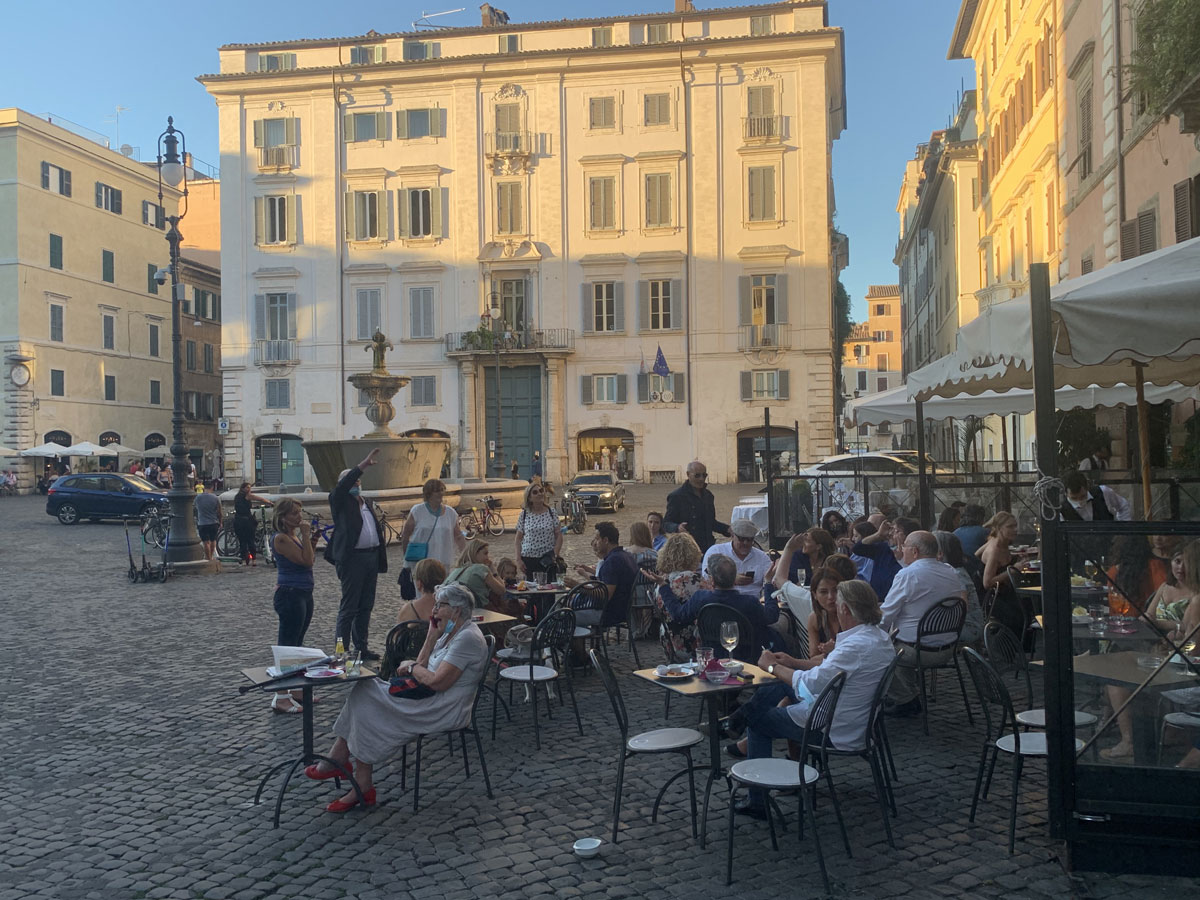
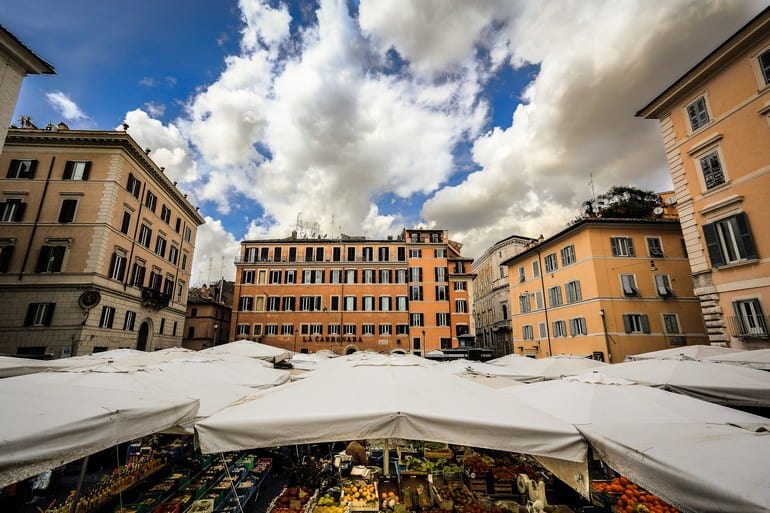
Where once was a sight of heretical burnings now stands a picturesque and characteristic food market in the daytime, adorned with tourists and locals alike. In the evenings, she opens up again for international crowds to gather under the night sky, surrounded by the unique charm of old-century buildings, and an energy of music, laughter and connection.

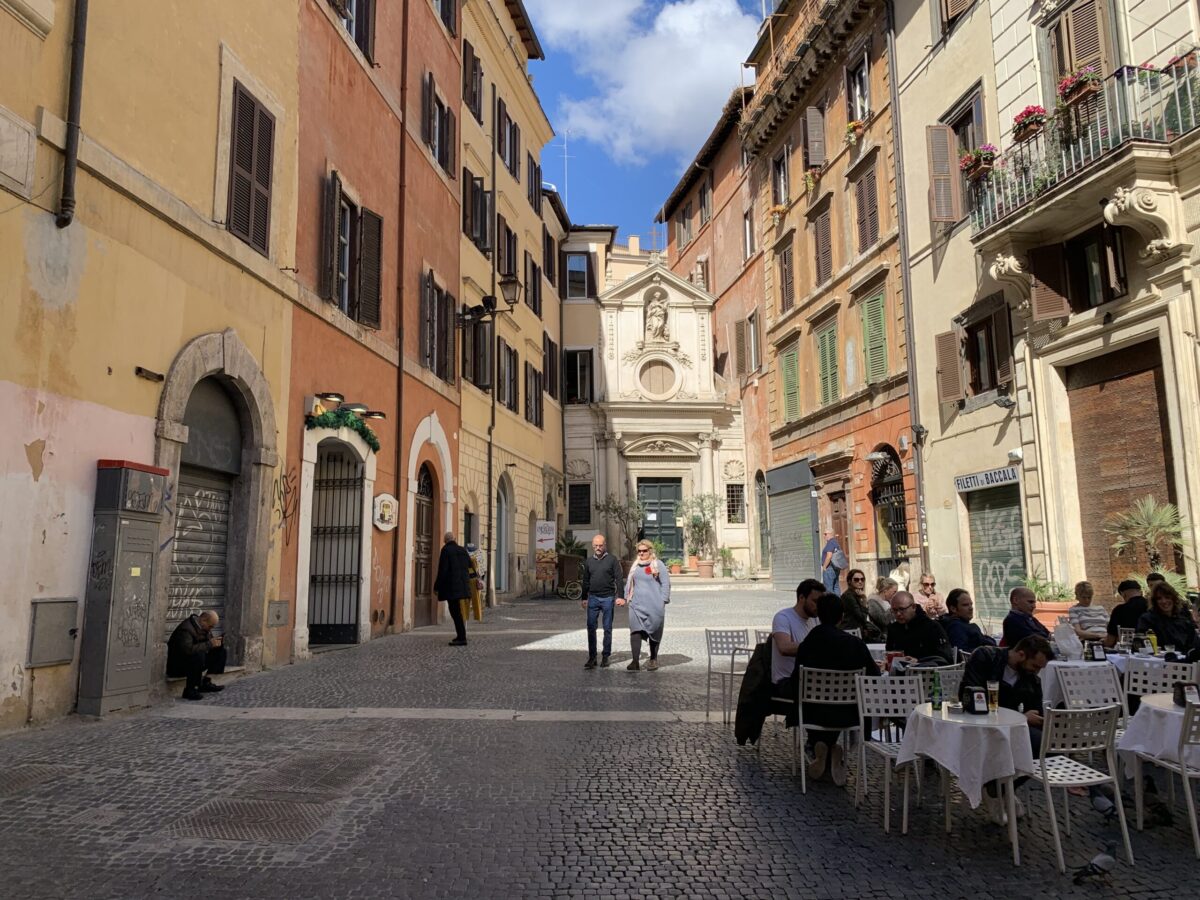
Don’t fancy a piazza, not to worry; medieval streets spider out from the Campo, where artisan shops and bars stand. Some streets are still named for their original trades performed in the area – including: Via dei Cappellari (hat makers), Via dei Chiavari (key makers), and Via dei Giubbonari (coat makers)

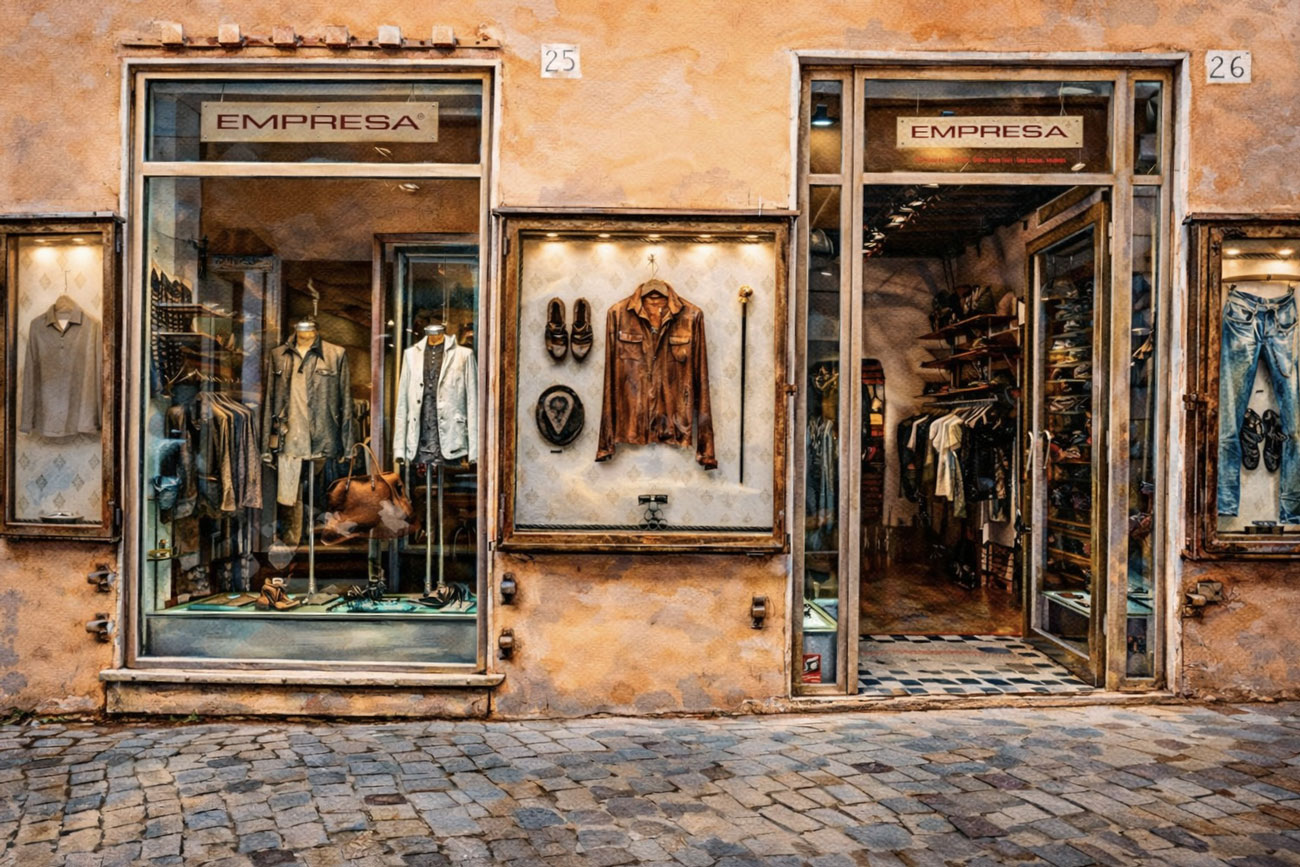
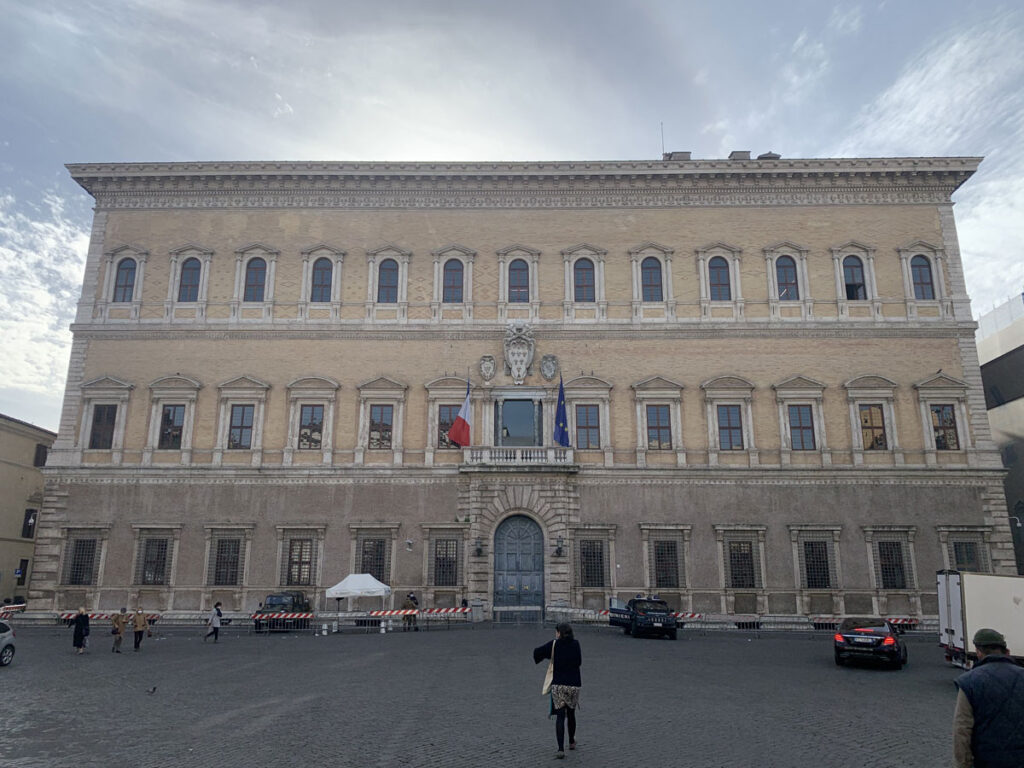
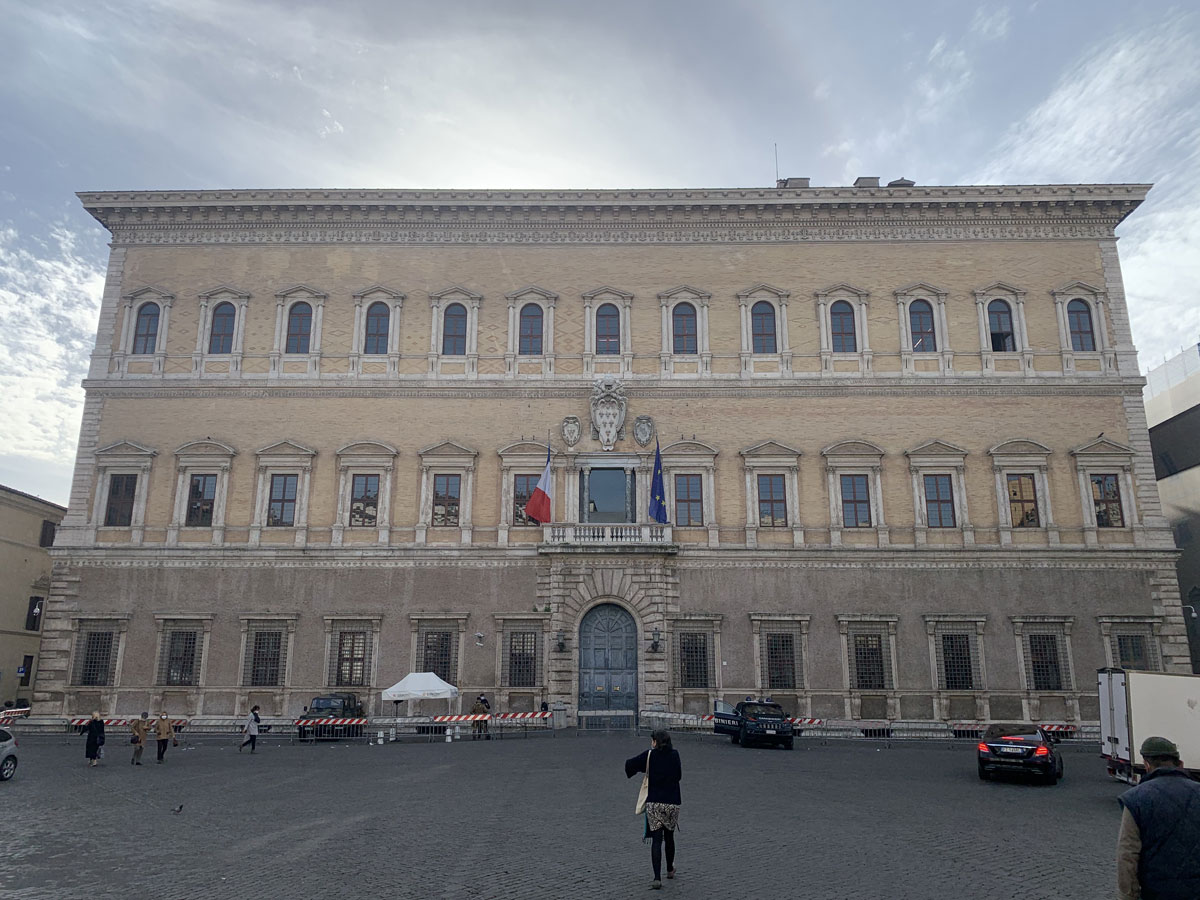
From Campo de’ Fiori, it is well worth taking a stroll along Via Giulia, elegant and full of historic charm, Via di Monserrato, lined with refined boutiques and distinctive storefronts, and Via del Pellegrino, one of the liveliest and most characteristic streets in the neighbourhood, before reaching Piazza Farnese, dominated by the imposing Palazzo Farnese, one of Rome’s most extraordinary Renaissance buildings.

While the area lacks a metro station, there are a plethora of bus stops to bring you to and from Campo de’ Fiori. But given the area’s history, a long stroll is the best way to go. 

The comprehensive guide has been curated to give you the best of shopping, eating, drinking, and frolicking within and around Campo de’ Fiori

RECOMMENDED ACTIVITIES AROUND CAMPO DE’ FIORI

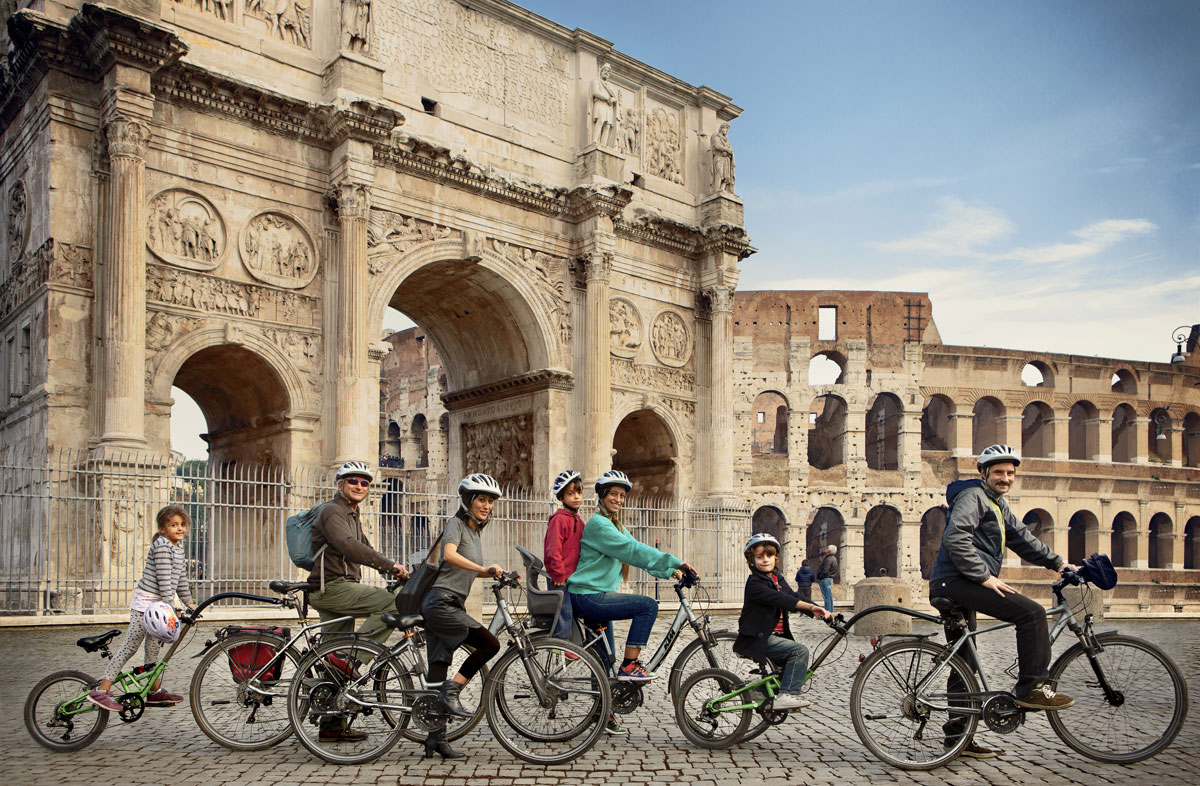
8--TopBike-fotoColosseo.jpg-(alta)-(1)

Explore Rome & Campo de’ Fiori by bike

Via Labicana, 49
Duration: 4 hours

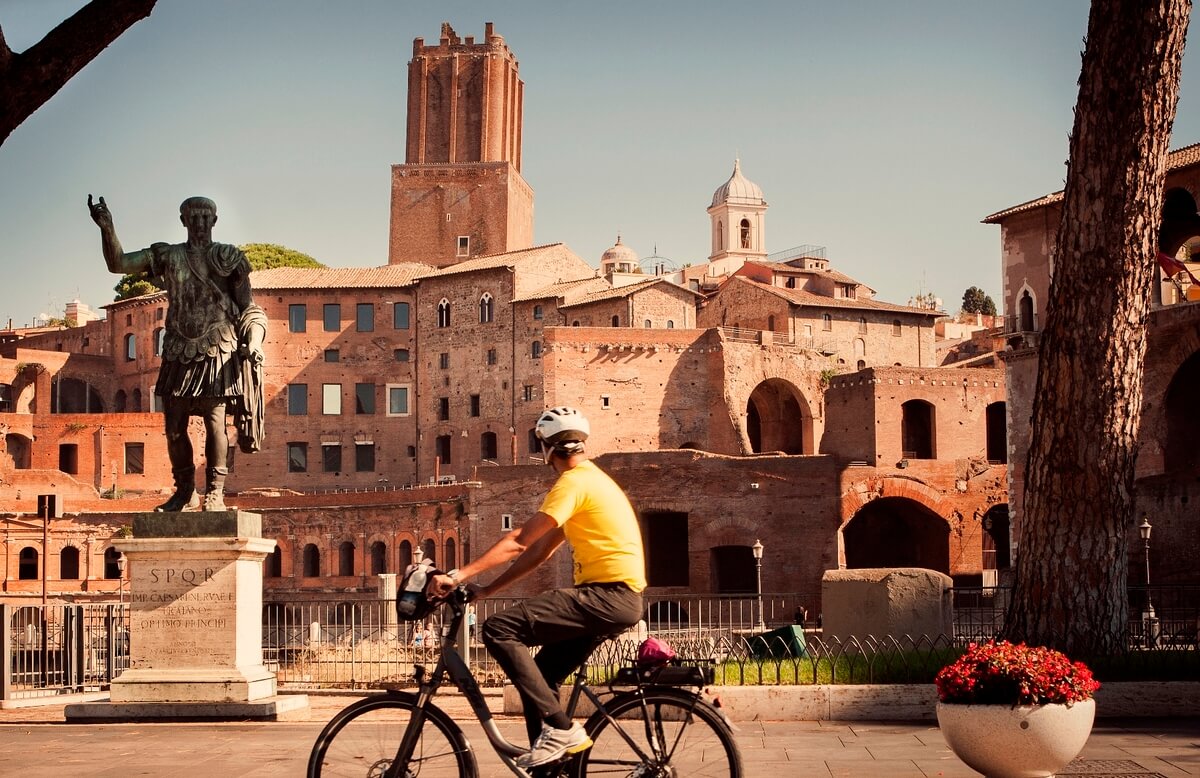
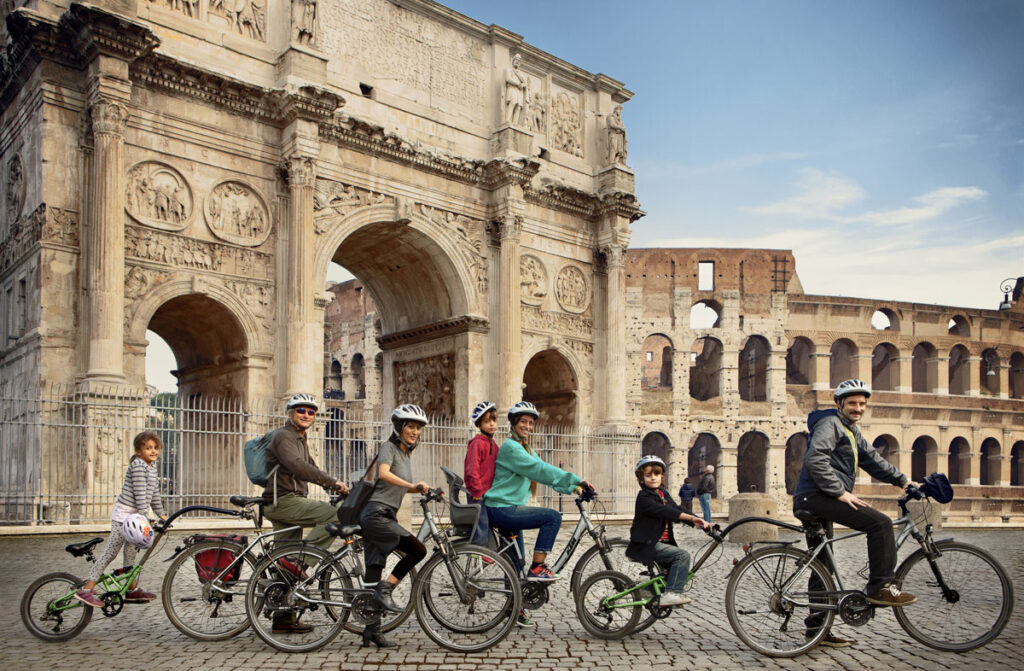
Easily cycle between ancient monuments and elegant shopping streets, Baroque squares and Renaissance palaces, and beautiful fountains and churches housing innumerable masterpieces. This guided bike tour provides the perfect introduction to your stay in Rome. The itinerary touches on Rome’s main attractions without omitting its smaller, local features.

enoteca-bortone-roma

Wine tasting in a charming wine bar

Via Monserrato, 4
Duration: 2 hours

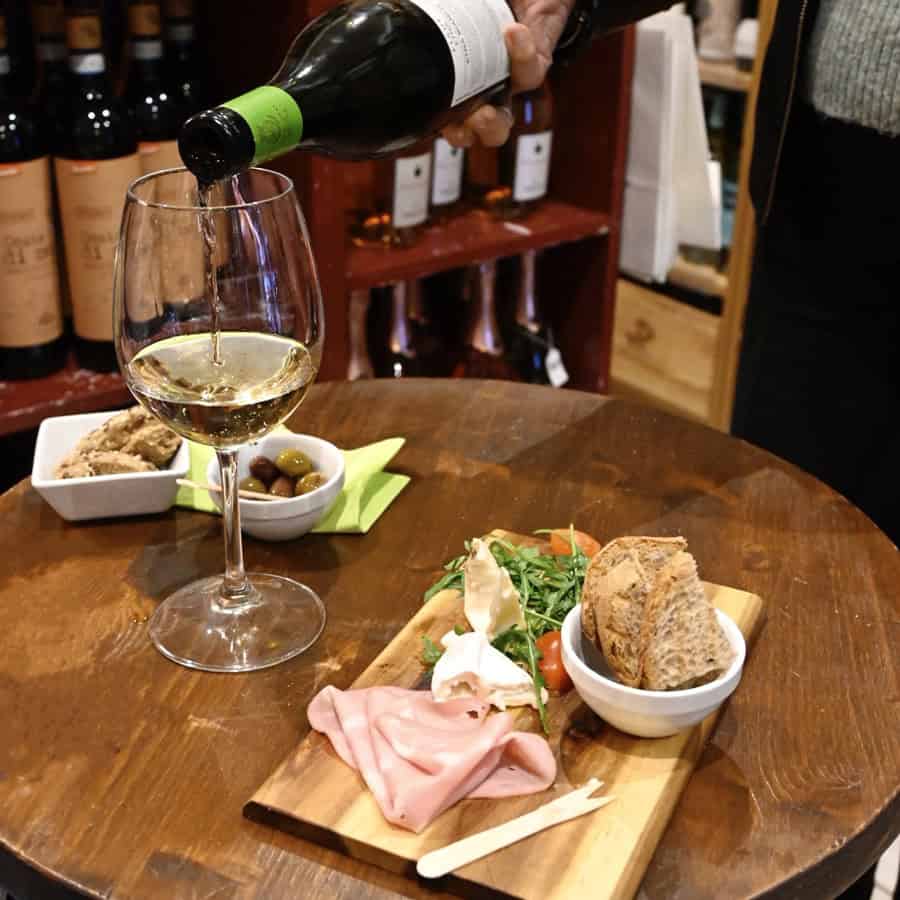
Indulge in the ultimate wine tasting experience in a boutique wine bar footsteps from Campo de’ Fiori. Step inside the boutique enoteca where you will be greeted by your host Patrizia and her sommelier son, Giampaolo.  Listen as the sommelier takes you on a journey around Italy and its wine production through the tastings of 6 premium Italian wines, salami, cured meats, cheeses, bread and olives.

Browse our selection below to discover the coolest places around Campo de’ Fiori.

campo de fiori Restaurants
FOOD

From quick bites to proper sit-down meals, the streets around Campo de’ Fiori are full of great places to eat beyond the touristy square.

best restaurants around campo de fiori
previous arrow
next arrow
campo-de-fiori-market
santa barbara dei librai roma
campo-de-fiori-rome
campo-de-fiori-rome
campo-de-fiori-rome

The post Campo de’ Fiori Neighborhood appeared first on Romeing.

Rome’s vast variety of ancient architecture convinces tourists to trot around the city hoping to capture it all. Here are 7 lesser known sites to visit in Rome.

Eating around Campo de’ Fiori

The best restaurants in Campo de’ Fiori

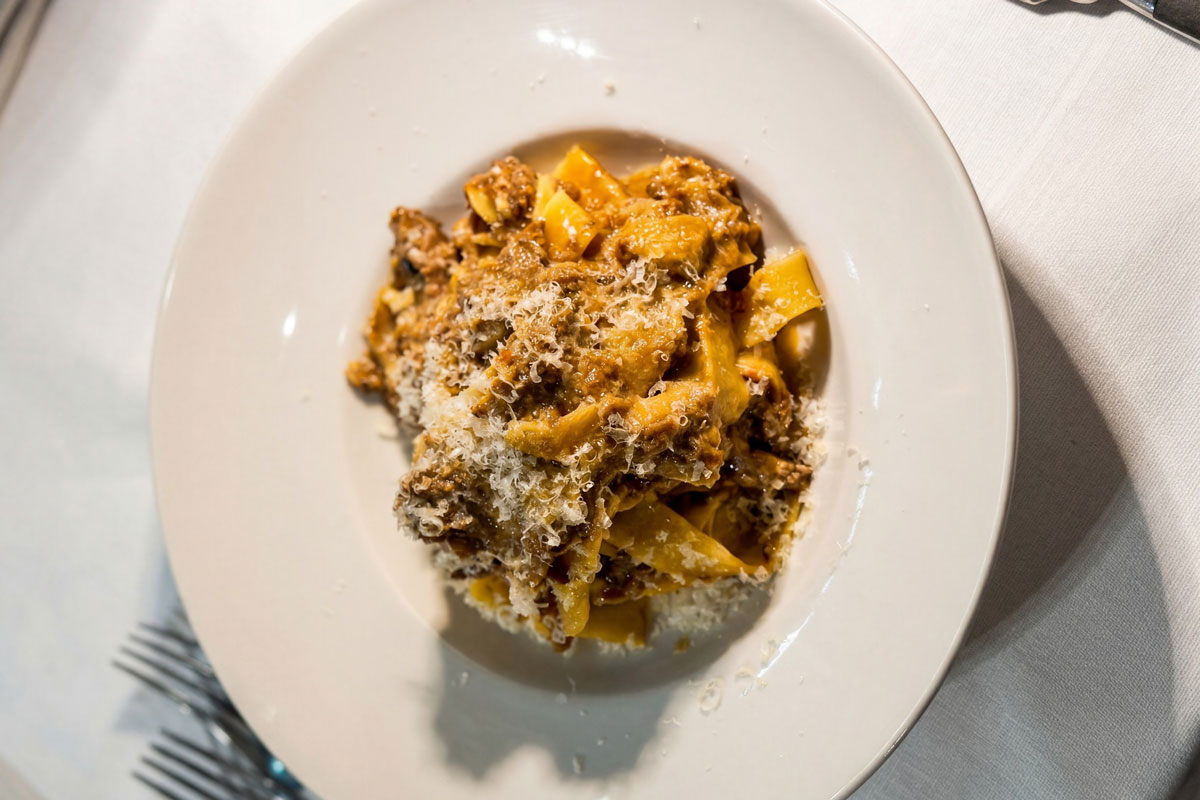
Getting hungry around Campo de’ Fiori is never a problem. While the square itself is best known for takeaway bites, touristy spots and quick stops, the surrounding streets are home to some of the area’s best places to eat. From pizza and tiramisù to proper sit-down restaurants for a full meal, there’s no shortage of good options nearby. Here’s our selection of the best restaurants around Campo de’ Fiori.

Classic

Camponeschi

Piazza Farnese, 50/50a
Mon-Sat 7.30pm-12am
ristorantecamponeschi.it

Eating in Campo de' Fiori

Taste delicious Roman food and seafood specialties in this third generation restaurant sitting right on Piazza Farnese. The six Renaissance style dining rooms are elegant, offering a prestigious meeting point for romantic dinners or special occasions. Relax in this sophisticated atmosphere inside a palazzo from the 1500s.


Clorofilla Cucina e Distillati

Vicolo delle Grotte, 17
facebook.com/clorofillarestaurant/

clorofilla-roma

Italian gourmet cuisine as well as Roman delicacies with a twist are in store for you at this urban jungle footsteps from Campo de’ Fiori. From seasonal tartares to carbonara with truffle shavings, you’re in for a pleasant surprise at Clorofilla. And make sure to come back over and over again, Chef Gianmarco Iorio changes the menu every three months, offering only top quality seasonal produce. And did I mention that everything is homemade – yes even the bread and sauces.


Da Cesare al Pellegrino

Via del Pellegrino, 117
Sun-Tues, Thurs-Sat 12.30-3pm, 6.30-11pm, Wed-Closed
trattoriadacesare.it

da cesare al pellegrino

A cozy joint nestled on a side street of Campo de’Fiori, Da Cesare al Pellegerino is the evolution of their sister trattoria, Cesare al Casaletto. With their small menu, Da Cesare serves up Roman classics, and their infamous Teresa meatballs are an ode to past patrons. 


Emma

Via del Monte della Farina, 28/29
Every day 12.30-3.30pm, 6.30-11.30pm
emmapizzeria.com

pizzeria emma

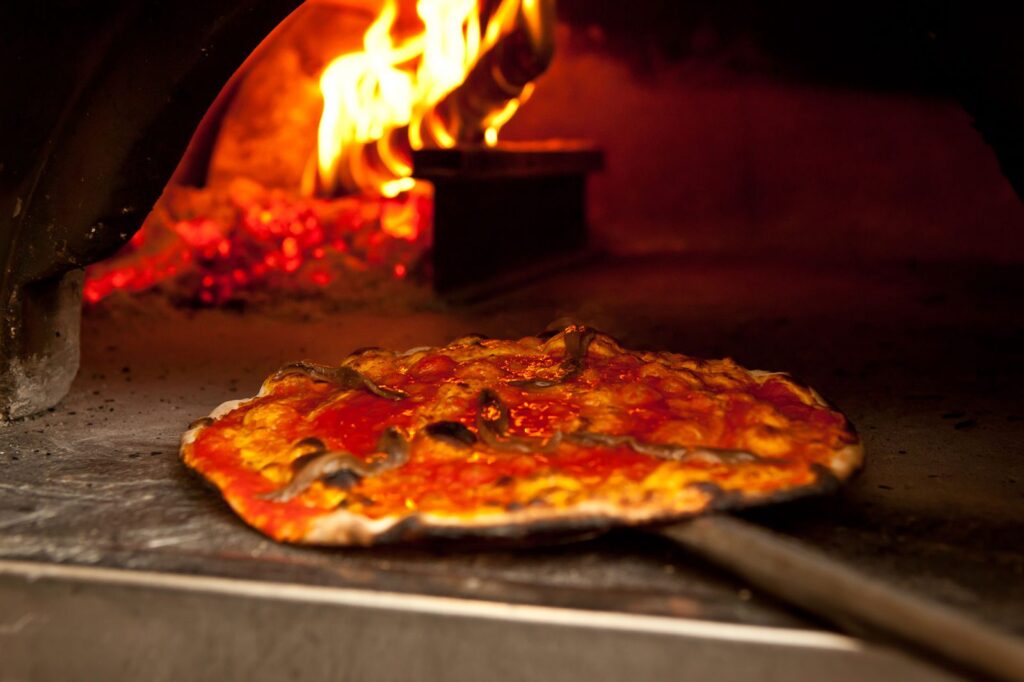
Just near Il Viniaetto is where you’ll find Emma, a pizzeria/restaurant/wine shop hybrid. Against its sleek modern design of blacks and reds, guests will find a menu rooted in timeless Roman tradition – think thin crisp pizza to decadent carbonara paired with elegant wine. At Emma, Rome’s culinary heritage meets bold modernism, yet still remains familiar. 


La Quercia

Piazza della Quercia, 23
Open daily, 12am-4pm, 7pm-11.30pm
osterialaquercia.com

la quercia ristorante roma (1)

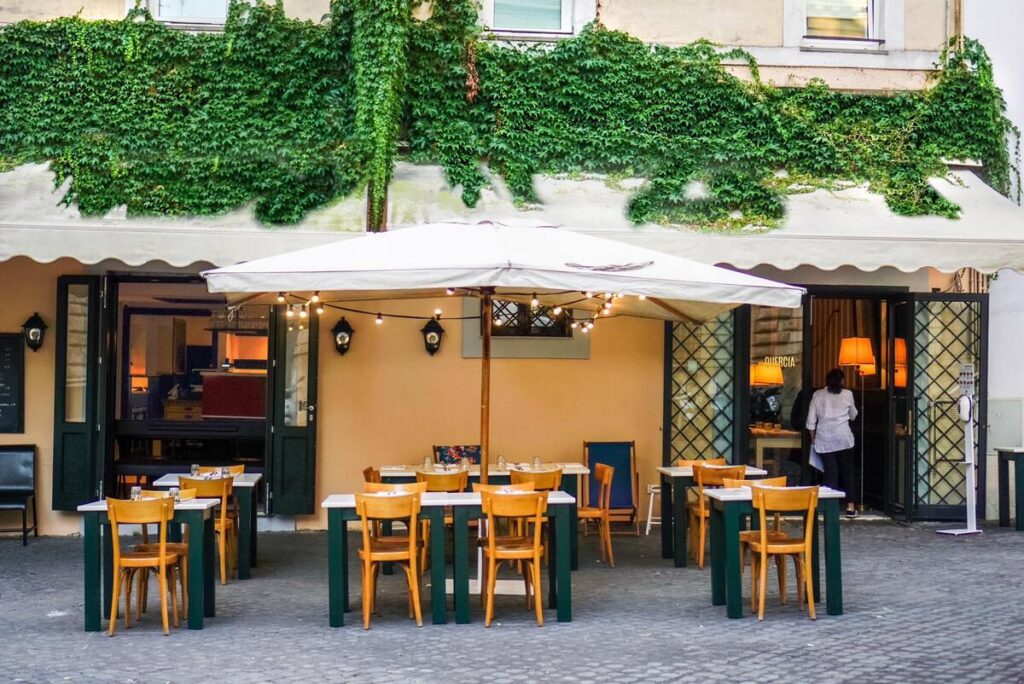
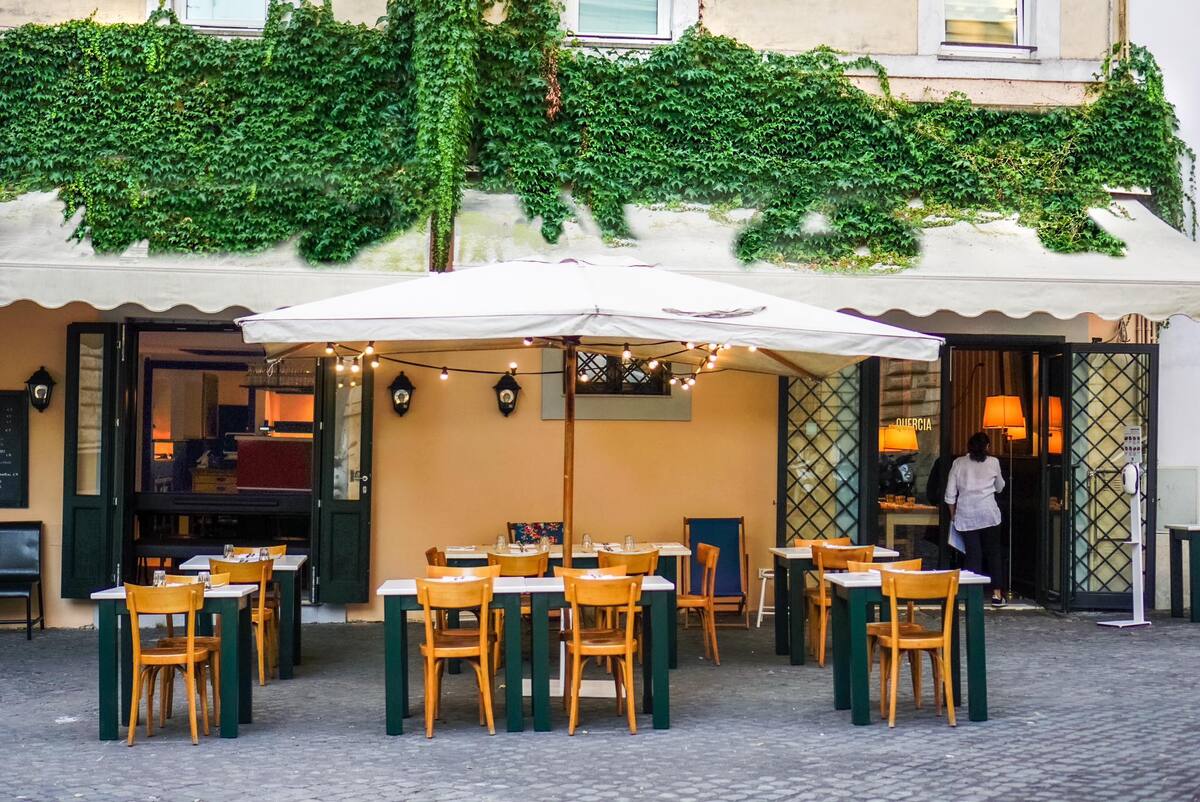
Not overly frilly, yet perfect for a special occasion, La Quercia serves Roman cuisine with finesse.  The restaurant is romantic in its peacefully tucked away location, far from the hubbub of the neighborhood. La Quercia serves many simple but fresh pasta dishes – the pici with asparagus and black truffle is not to be missed.


È Passata la Moretta

Vicolo della Moretta, 6
Every day 12pm-12am
passatalamoretta.it

la-moretta

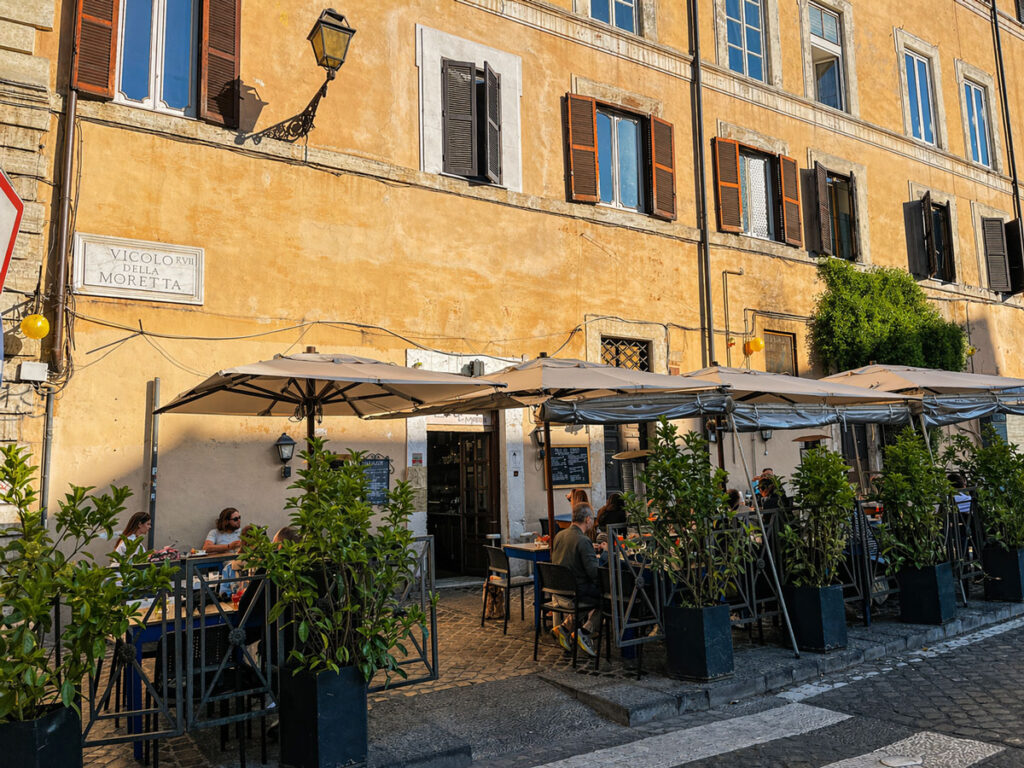
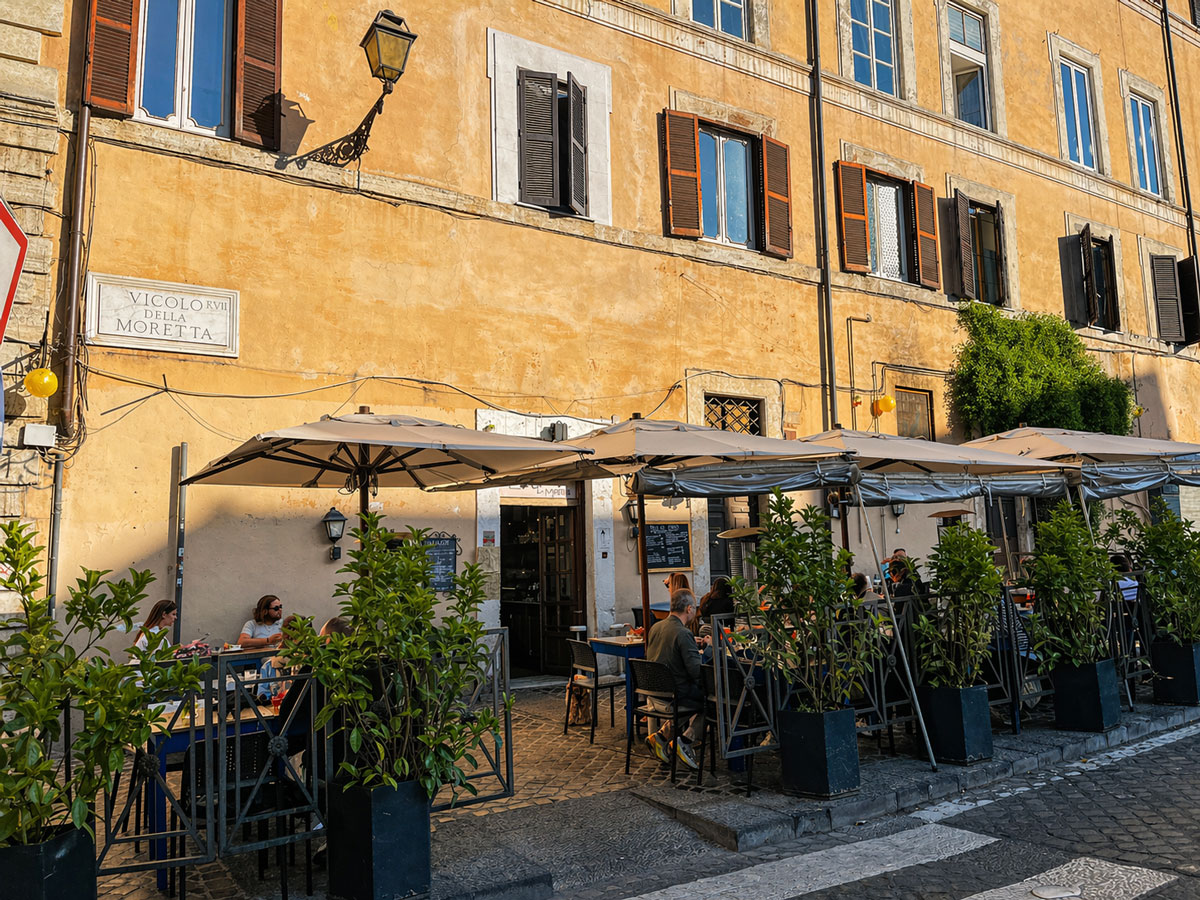
With a chalkboard menu as the mantlepiece, È Passata la Moretta shines brightest with classic Roman comfort dishes. At this family-run trattoria, guests are welcomed with the honest cooking that Rome does best – simple, generous, and full of love.


Fine Dining

Assunta Madre

Via Giulia, 14 (Palazzo Varese)
Sun-Sat 7-11.30pm, Mon Closed
ristoranteassuntamadre.it

assunta madre roma

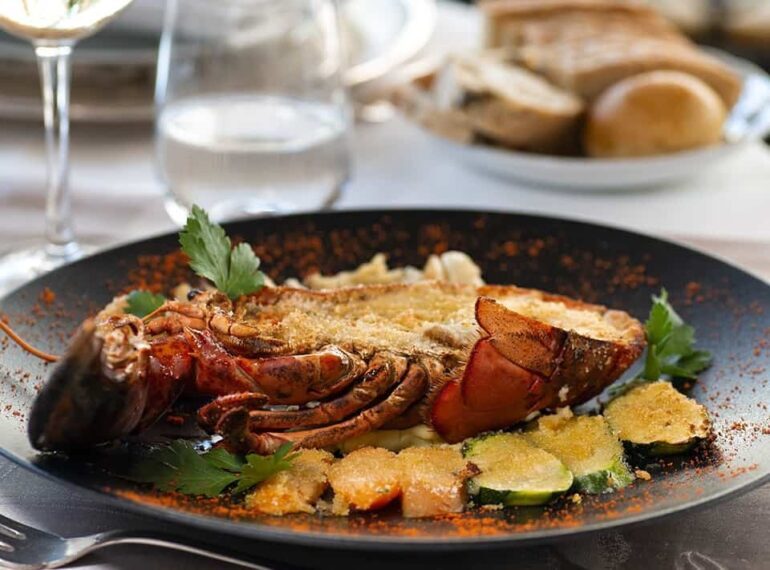
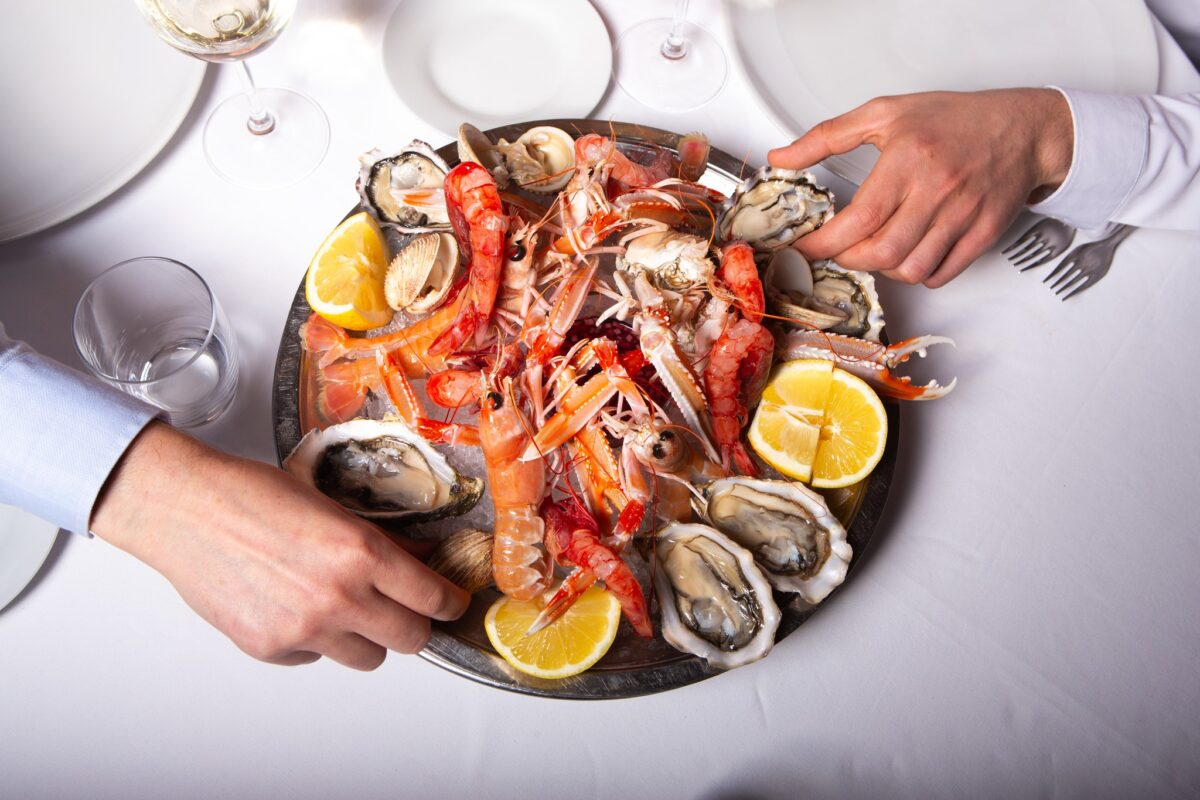
A cornerstone of Rome’s luxury seafood scene, Assunta Madre is celebrated for its pristine fish and shellfish, sourced fresh and prepared with elegant restraint. The menu highlights the purity of Mediterranean flavors, while the sleek, energetic atmosphere attracts a fashionable Roman and international clientele.


Campocori

Via di Santa Maria de’ Calderari, 49
Wed-Sun 7-10.30pm; Mon-Tues Closed
chapter-roma.com

Best restaurants in hotel in Rome

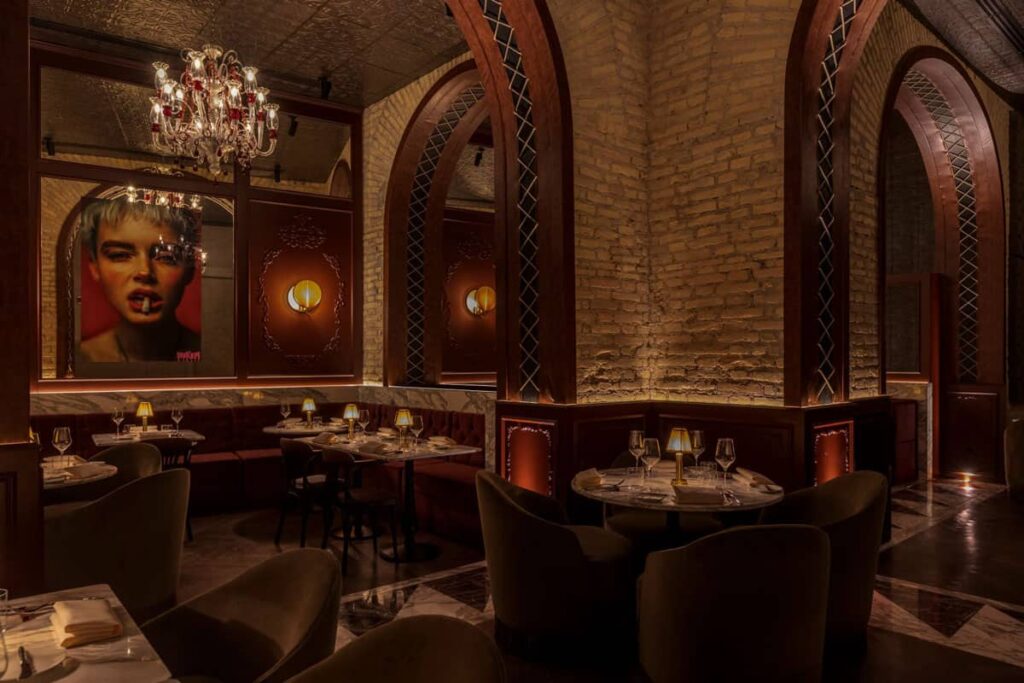
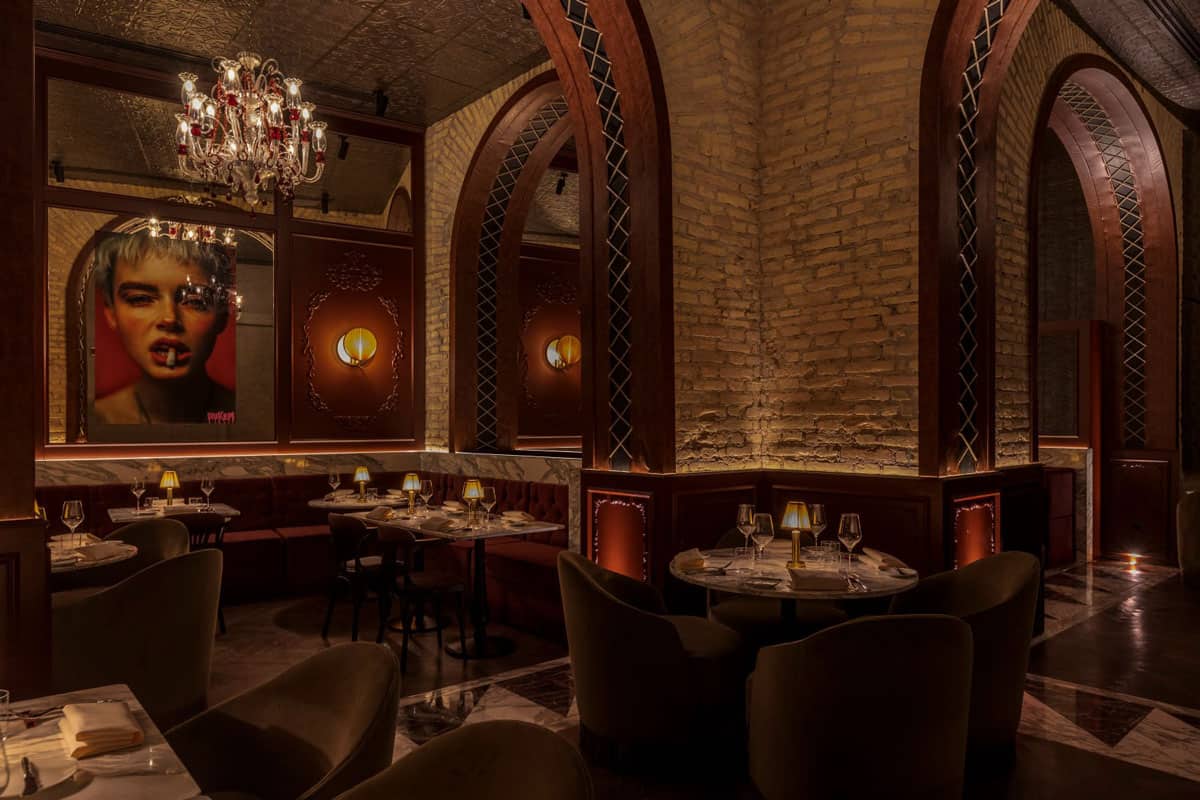
Set inside Chapter Roma, Campocori is a dark, elegant restaurant with a dinner-club feel. Inspired by classic New York Italian restaurants, the space mixes velvet, marble, wood paneling, exposed brick and contemporary art for a bold yet intimate atmosphere. The menu offers refined Italian cuisine with international touches, making it a great choice for a stylish dinner in the heart of Rione Regola.


Il San Lorenzo

Via dei Chiavari 4-5
Tues-Sat 12.30-3pm, 7.30-12am, Mon 7.30-12am, Sun Closed
ilsanlorenzoofficial

san lorenzo rome restaurant

With a Michelin guide recommendation for the “Best Seafood in Rome,” Il San Lorenzo serves up exceptional cuisine in a sleek, Mediterranean setting. Guests are first greeted inside with the fresh fish counter, immediately signaling a commitment to fresh catch produce – setting the tone for a sophisticated experience rooted in classic Italian tradition. From crudo to grilled fish and seafood pasta dishes, Il San Lorenzo makes sure to highlight that simplicity, precision, and quality are the main character.


Il Pagliaccio

Via dei Banchi Vecchi, 129a
Tues-Fri 7.30-10pm; Sat 12.30-2pm, 7.30-10pm; Sun-Mon Closed
ristoranteilpagliaccio.com

il-pagliaccio-restaurant-rome

Boasting two Michelin stars, Il Pagliaccio is one of Rome’s most refined fine dining experiences. Offering a variety of tasting menus, guests will experience a gastronomical experience bridging Italian fare with unique international features. Chef Anthony Genovese and staff deliver on precision, composition, and balance of flavors in a creative, intimate setting.


Per Me – Giulio Terrinoni

Vicolo del Malpasso, 9
Every day 12.30-2pm, 7-10pm

giulioterrinoni.it

per me giulio terrinoni

Awarded one Michelin star, Per Me offers a contemporary interpretation of Italian cuisine rooted in seasonality and precision. Chef Giulio Terrinoni crafts inventive tasting menus that balance creativity with approachability, delivering a refined yet personal dining experience in an intimate, modern setting.

INSPIRATION
Michelin-starred restaurants in Rome


Pierluigi

Piazza de Ricci, 144
Open daily, 12pm-3pm, 7pm-11.30pm
pierluigi.it

ristorante pierluigi roma (1)

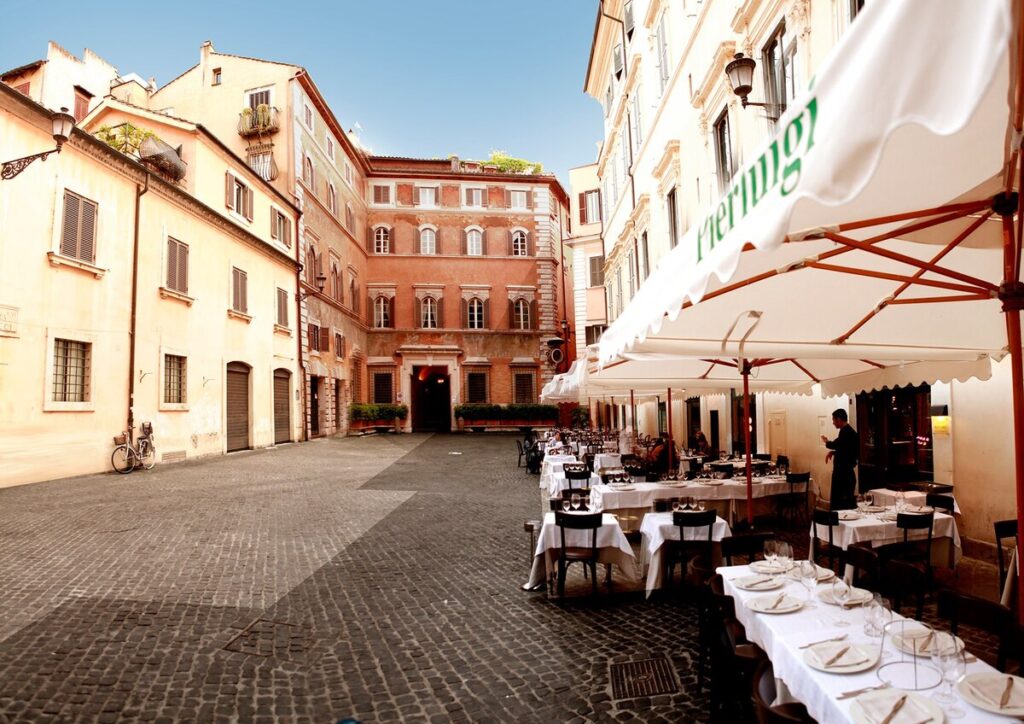
Both a restaurant and cocktail bar, this fine-dining spot focuses its menu on top quality seafood straight from the ports nearest Rome. Pierluigi is a perfect outdoor choice for lunch and dinner on very special occasions. Beautifully dressed diners fill the small jewel-like piazza in the warmer evenings enjoying gorgeously prepared baccala’, octopus and prawns.  


Reserva

Via del Pellegrino, 160-164
Mon-Sat 5pm-12am, Sun 12pm-12am
reserva-restaurante.it

reserva restaurant rome

At Reserva, the best of both worlds collide – Italy’s la dolce vita meets South American flair. Head chef Paulo Aires combines his Brazilian roots with classic Italian training, creating a menu that shifts from pao de queijo to Roman-style artichokes, blending Roman charm with South American heat.


Roscioli (Restaurant)

Via dei Giubbonari, 21/22
Tues-Sun 12.30pm – 3.30pm; 7pm – 11.30pm

salumeriaroscioli.com

ristorante-roscioli

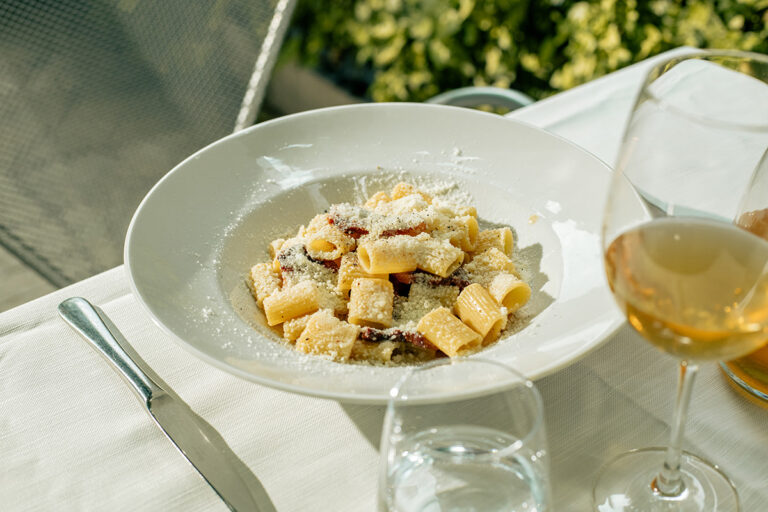
Roscioli’s ristorante is great for a relaxed, sit-down meal: despite its gourmet, somewhat upscale menu, the dining experience is casual due to its shop-like interior lined with jarred goods, bottles of wine and glass cheese display case. Their carbonara is a must-try: rich, creamy and perfectly balanced, made with top-quality guanciale, eggs, pecorino and black pepper. A great spot for anyone looking to experience Rome’s food culture at its most authentic and indulgent.


STREET FOOD

Supplizio

Via dei Banchi Vecchi, 143
Mon-Sat 12–3:30 pm, 5–9:30 pm; Sun Closed

supplizioroma.it

supplizio-roma

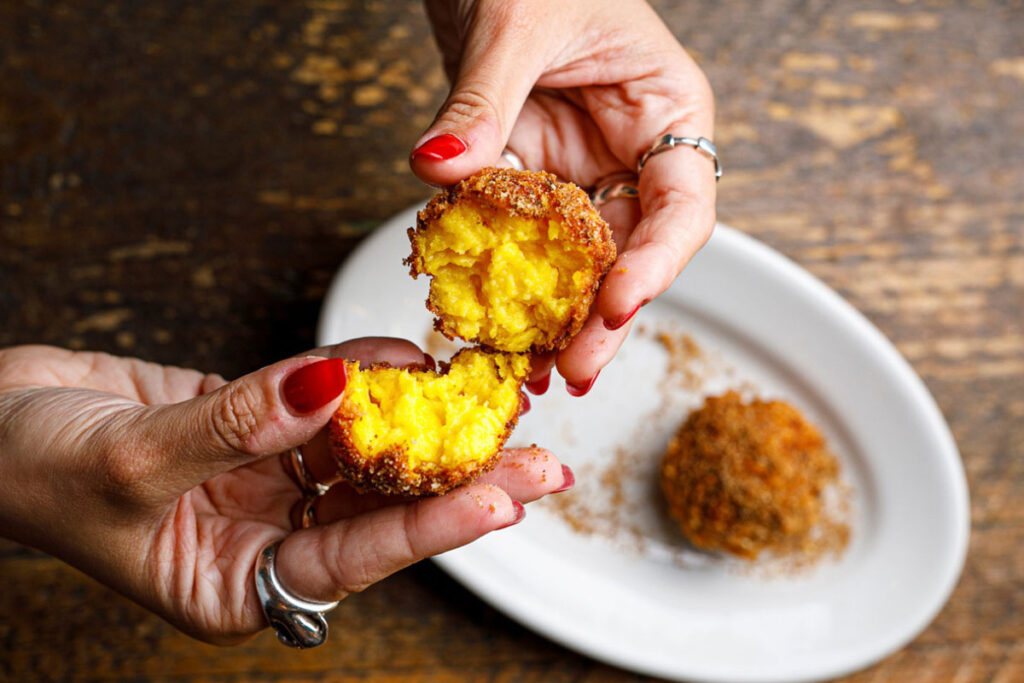
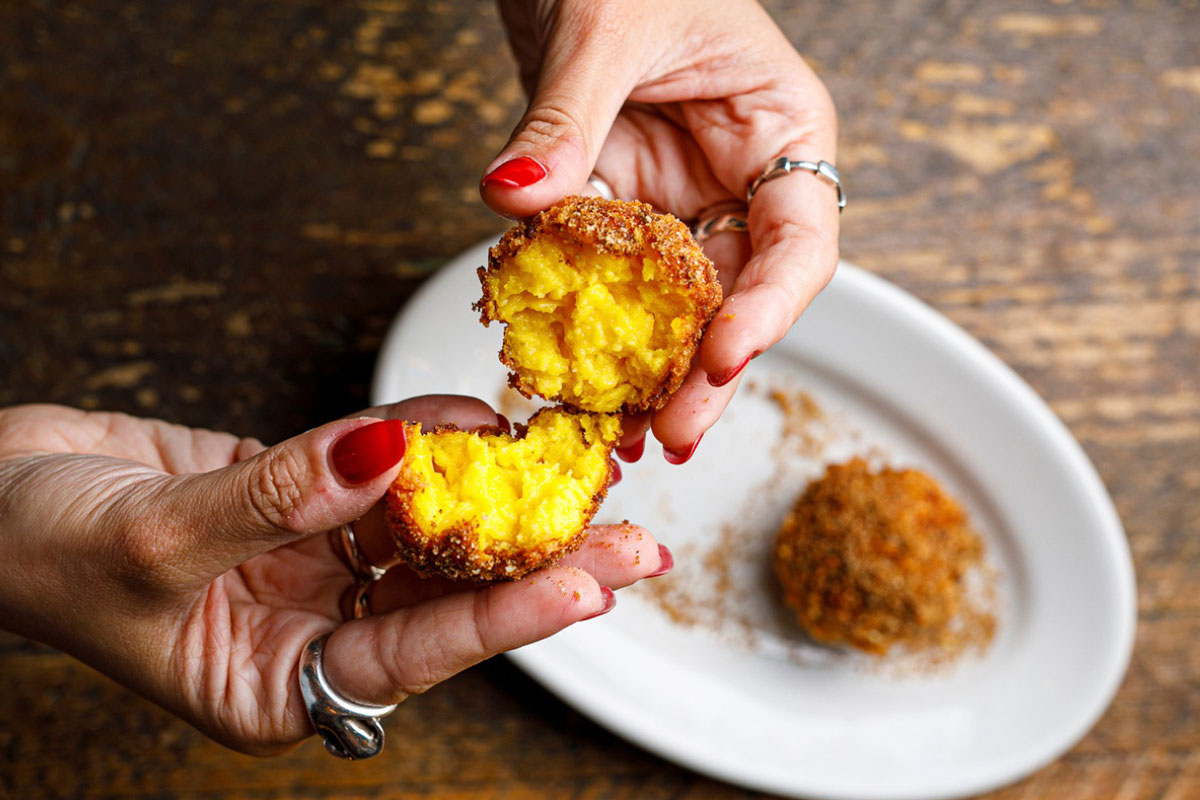
Those looking for a quick taste of Roman tradition will have no problem finding it at Supplizio. The street food corner, from the mind of Arcangelo Dandini, serves up the Roman classic suppli al telefono – rice croquettes filled with tomato and mozzarella cheese – and unique variations. Guests are welcomed into the salotto (living room), experiencing the Italian tradition of convivialità, where food is enjoyed in a space that feels like home. 

INSPIRATION
The Best Street Food Spots in Rome


Forno Campo de’ Fiori

Campo de’ Fiori, 22
Open Mon-Sat, 7.30am-8pm
fornocampodefiori

forno campo de fiori

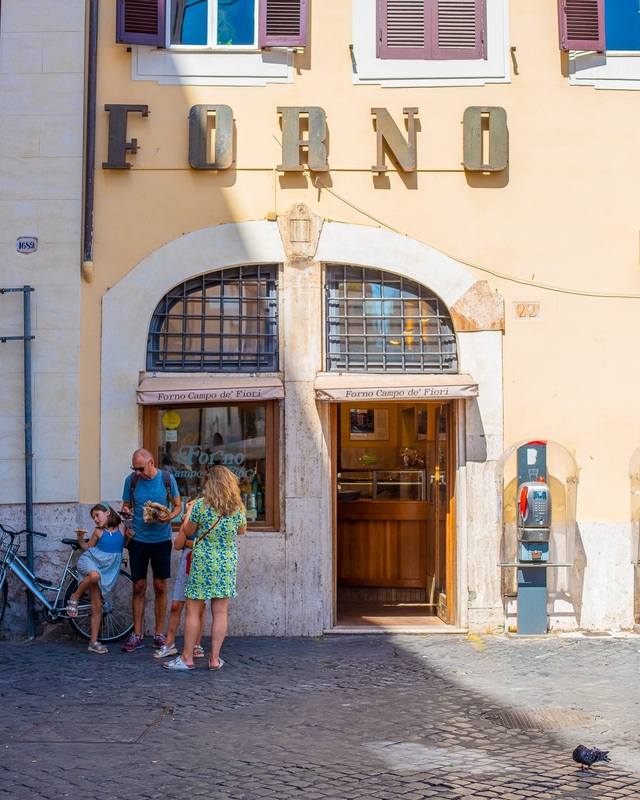
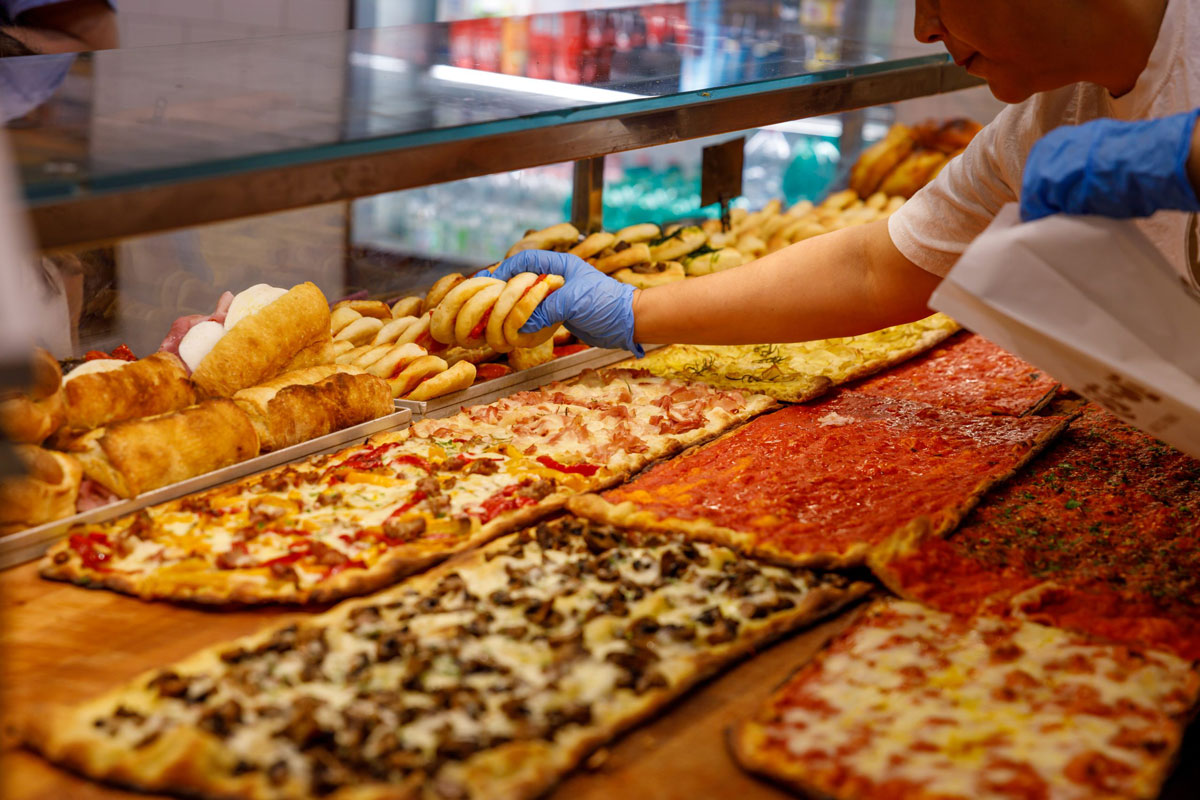
This famous bakery, right on the piazza, has earned its popularity perfectly executing the Roman street food classics. The forno turns out fresh and delicately seasoned pizza bianca in abundance daily and many gather to grab a slice, stuffed with mortadella or bresaola, perfect for munching while perched upon the base of the Giordano Bruno statue.


Antico Forno Roscioli

Via dei Chiavari, 34
Every day 7.30am – 8pm

anticofornoroscioli.it

antico-forno-roscioli

Active since 1972, Antico Forno Roscioli is one of Rome’s most beloved historic bakeries, set just steps from Campo de’ Fiori. What began as a neighborhood forno has become a true gastronomic landmark, famous for its freshly baked bread, Roman-style pizza, pastries and takeaway specialties. Stop by for a slice of pizza bianca, pizza rossa or something sweet, and you’ll understand why the scent of Roscioli has become part of the area’s daily rhythm.


Forno Monteforte 

Via del Pellegrino, 129
Every day 7.30am-9pm

fornomonteforte.com

esterno-forno-monteforte-1400x933

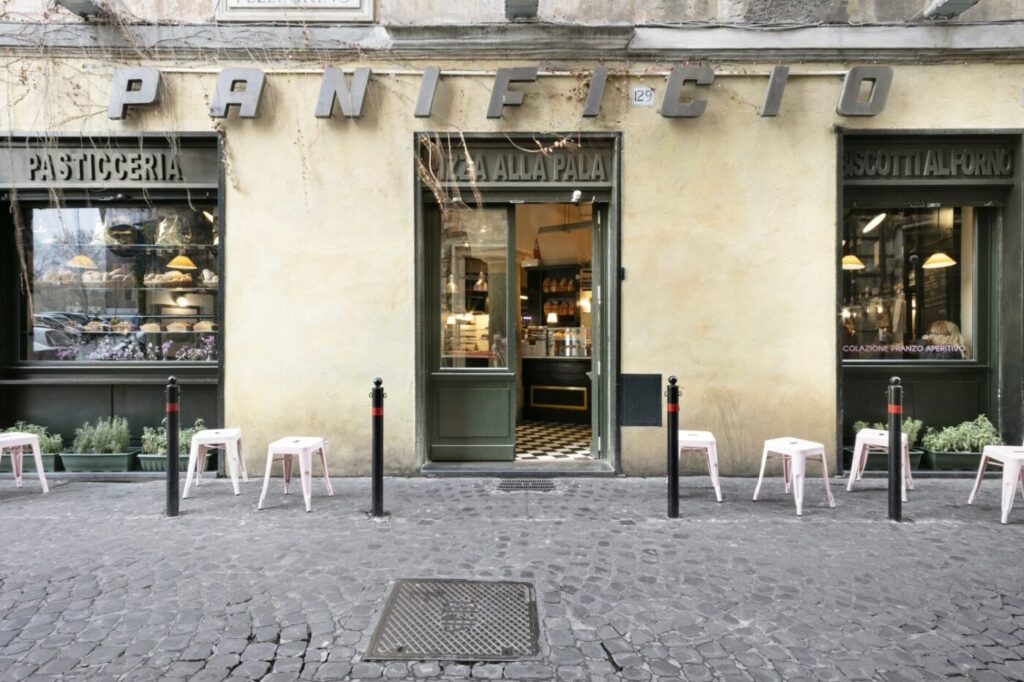
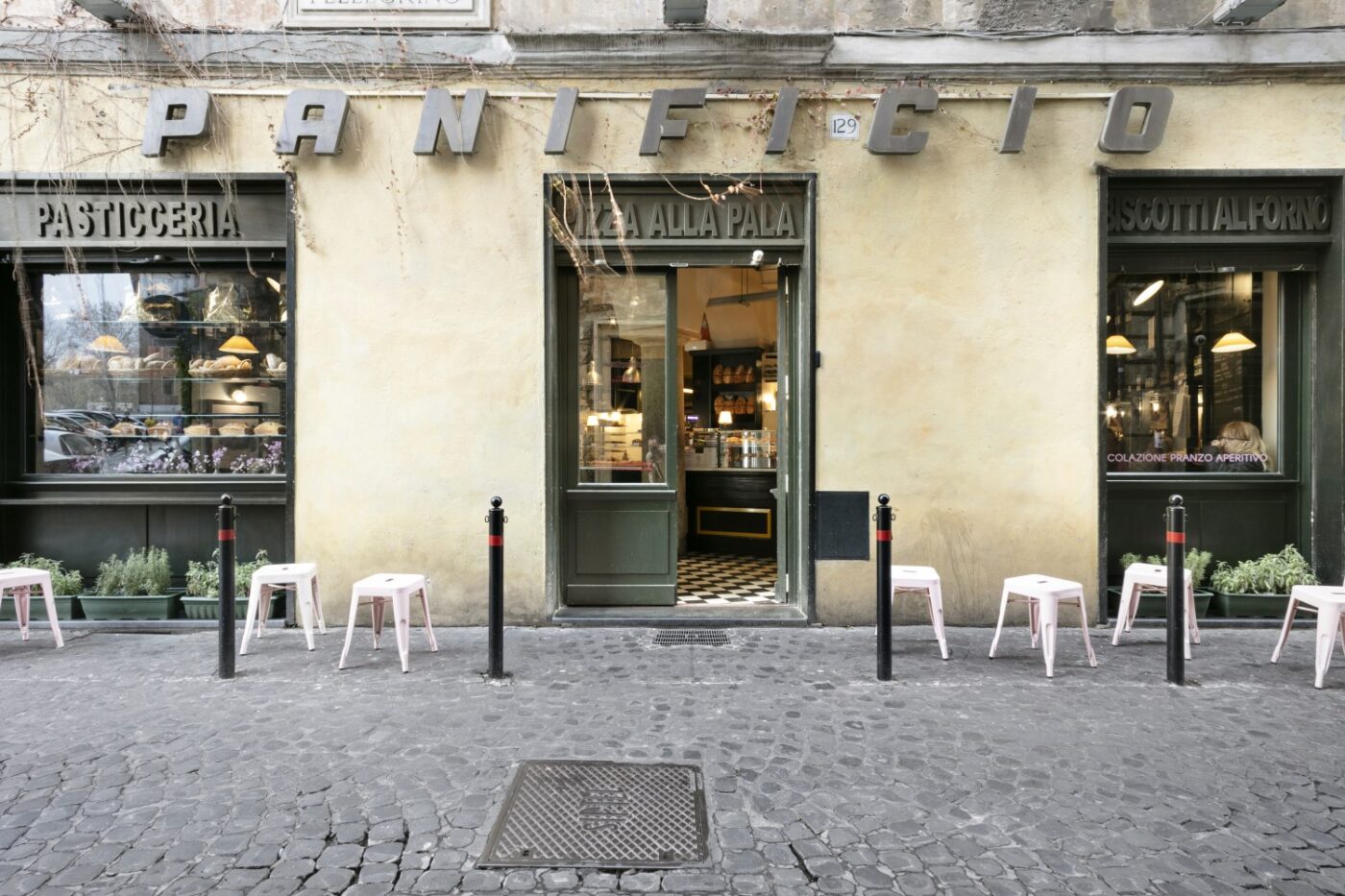
At the crossroads of Via del Pellegrino and Via di Monserrato is where visitors can find Forno Montefiore. With bread as the forno’s centerpiece, the warm scent of 20 varieties draws you in before you can reach the counter. Expect crisp pizza al taglio, smooth maritozzo, and soft plumcakes and croissants. Take a seat inside the sleek interior or enjoy the passersby of Roman architecture on colorful stools outside. (Side note – musician Harry Styles has frequented the joint!)


Tulipane

Via del Pavone, 28
Sun-Fri 8.30am-3.30pm, Mon 9am-4pm

tulipane.it

tulipane-roma

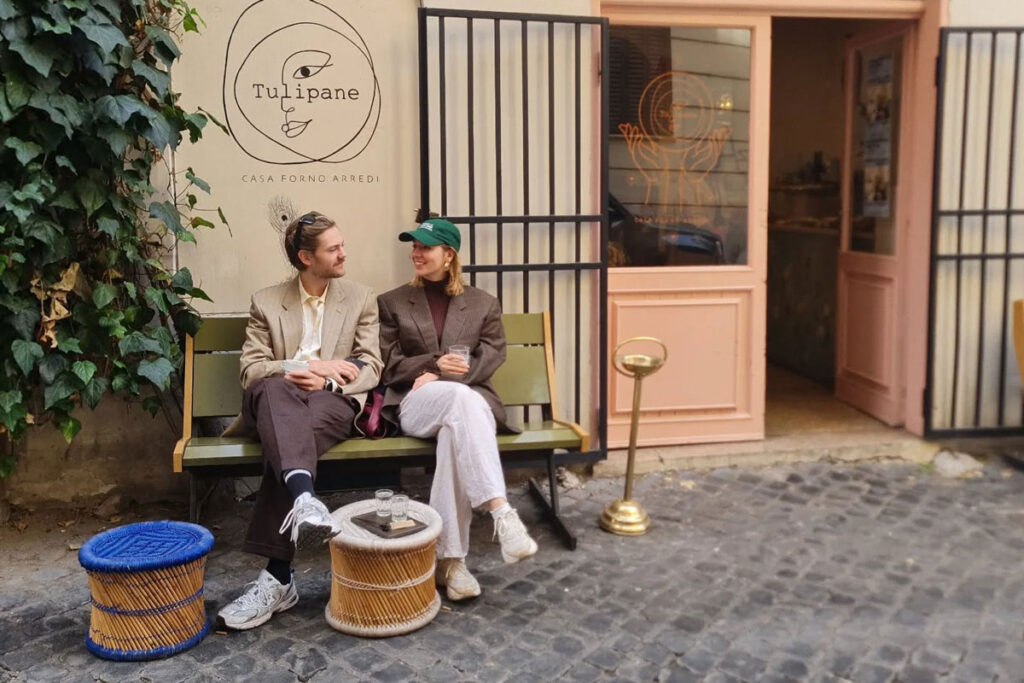
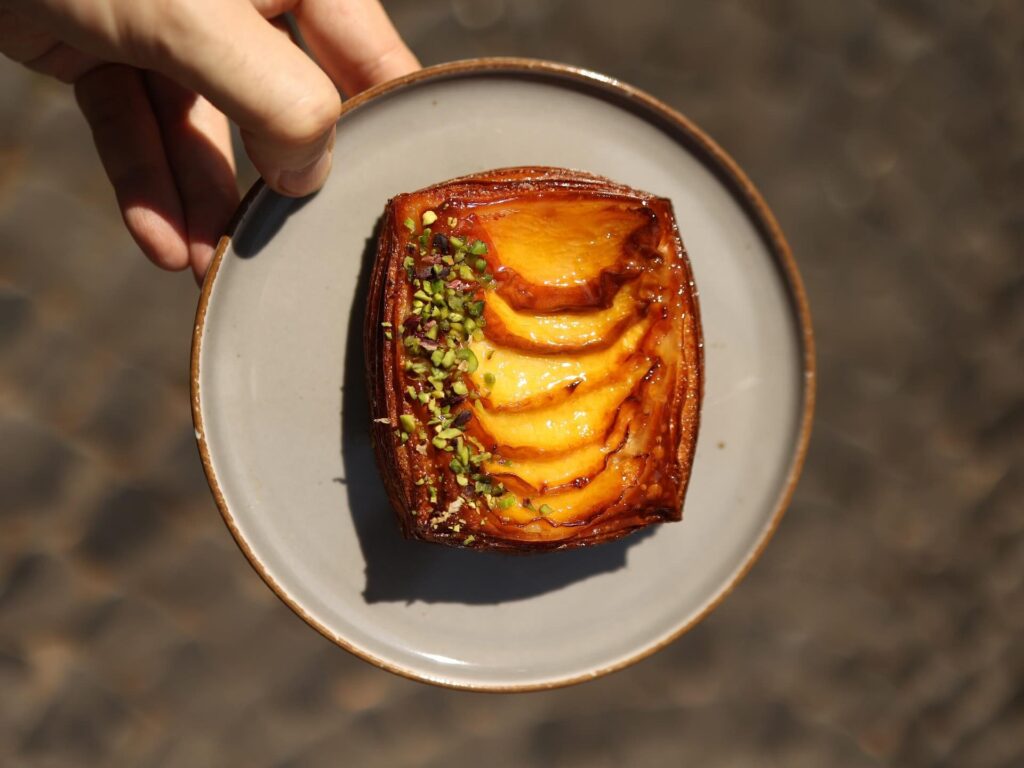
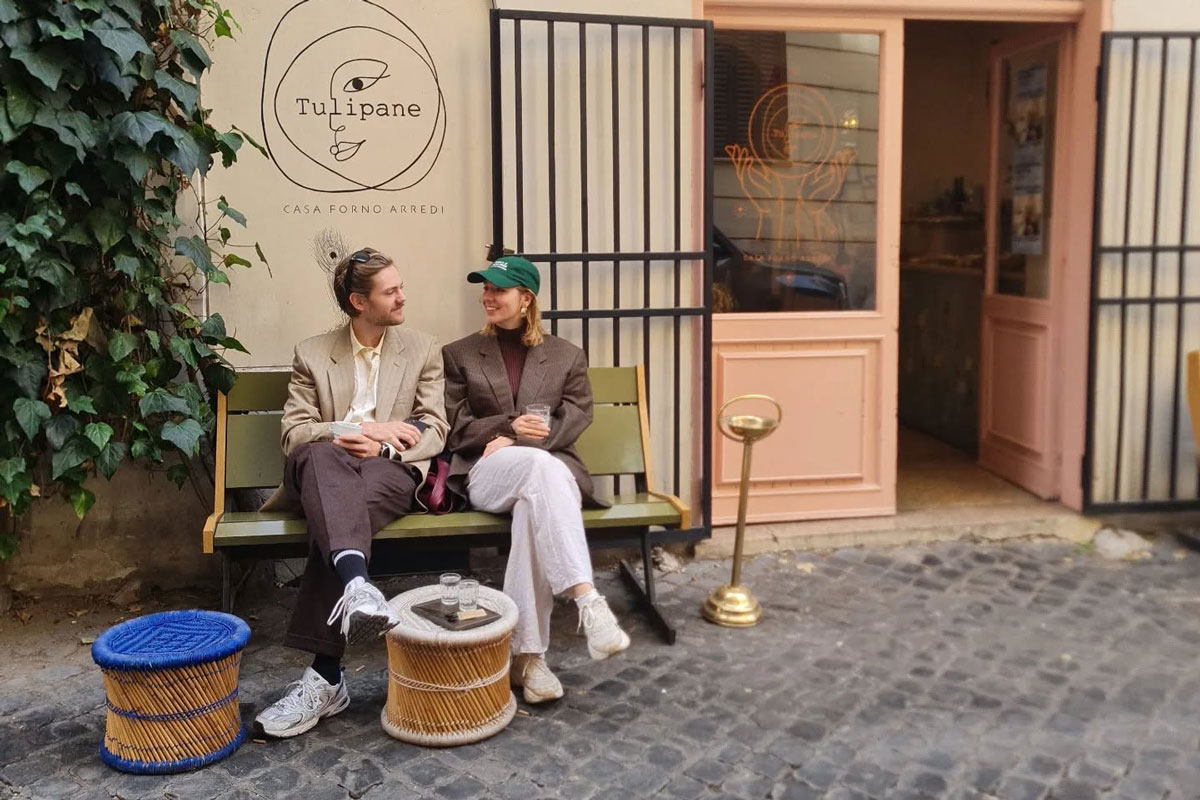
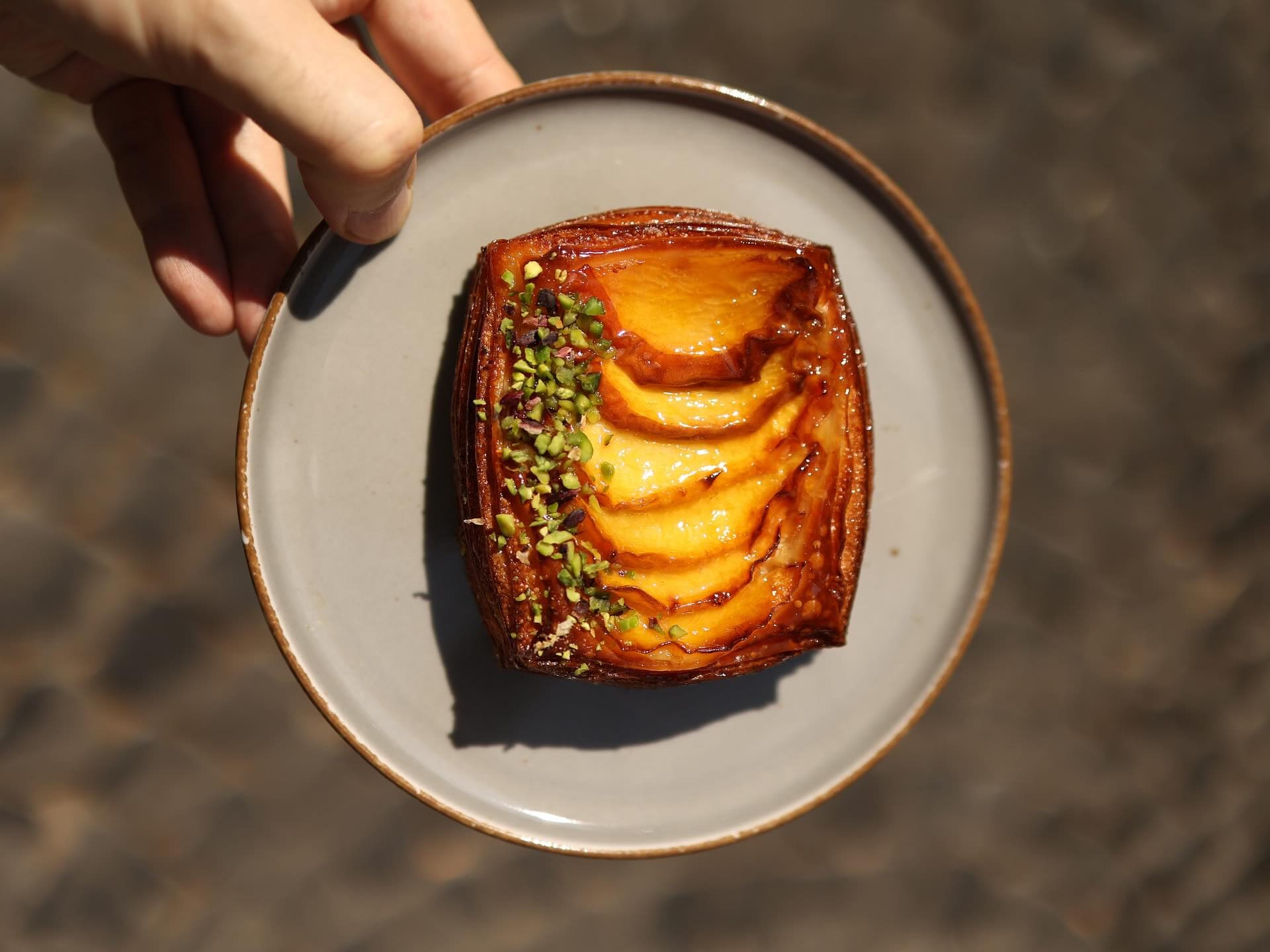
A charming neighborhood bakery and brunch spot, Tulipane pairs artisanal pastries with a curated selection of local products, celebrating the flavors of the region. With its pastel hues, careful symmetry, and storybook ambiance, the space feels straight out of a Wes Anderson film—offering a whimsical yet refined escape in the heart of Rome.


Barnum Cafe

Via del Pellegrino, 87
Every day 8am-3.30pm

barnumroma.com

barnum roma brunch

Barnum Cafe is a trendy breakfast and brunch spot minutes from Campo de’’ Fiori. Offering homemade baked goods and even American classics like bacon and eggs, the cafe is a cozy place to catch up with friends or work with a specialty coffee by your side. While lines may run long, take away options still capture the Barnum spirit. 


Dar Filletaro a Santa Barbara

Largo dei Librari, 88
Mon-Sat 5-10.30pm, Sun Closed
facebook.com/FilettiDiBaccala

filettaro

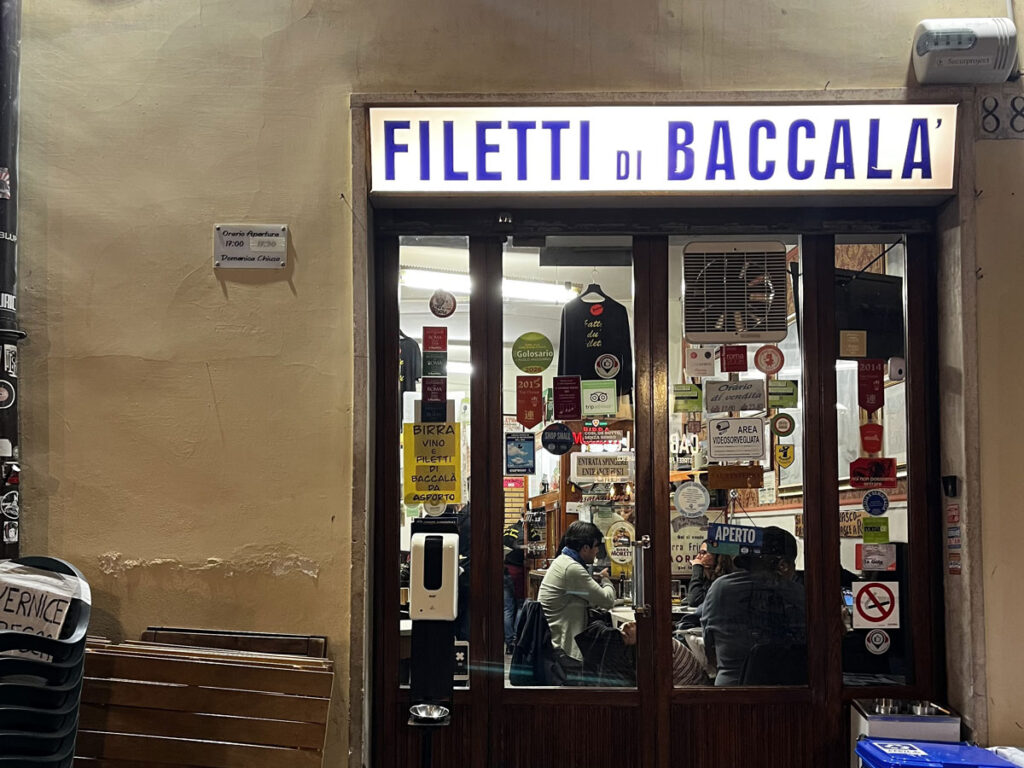
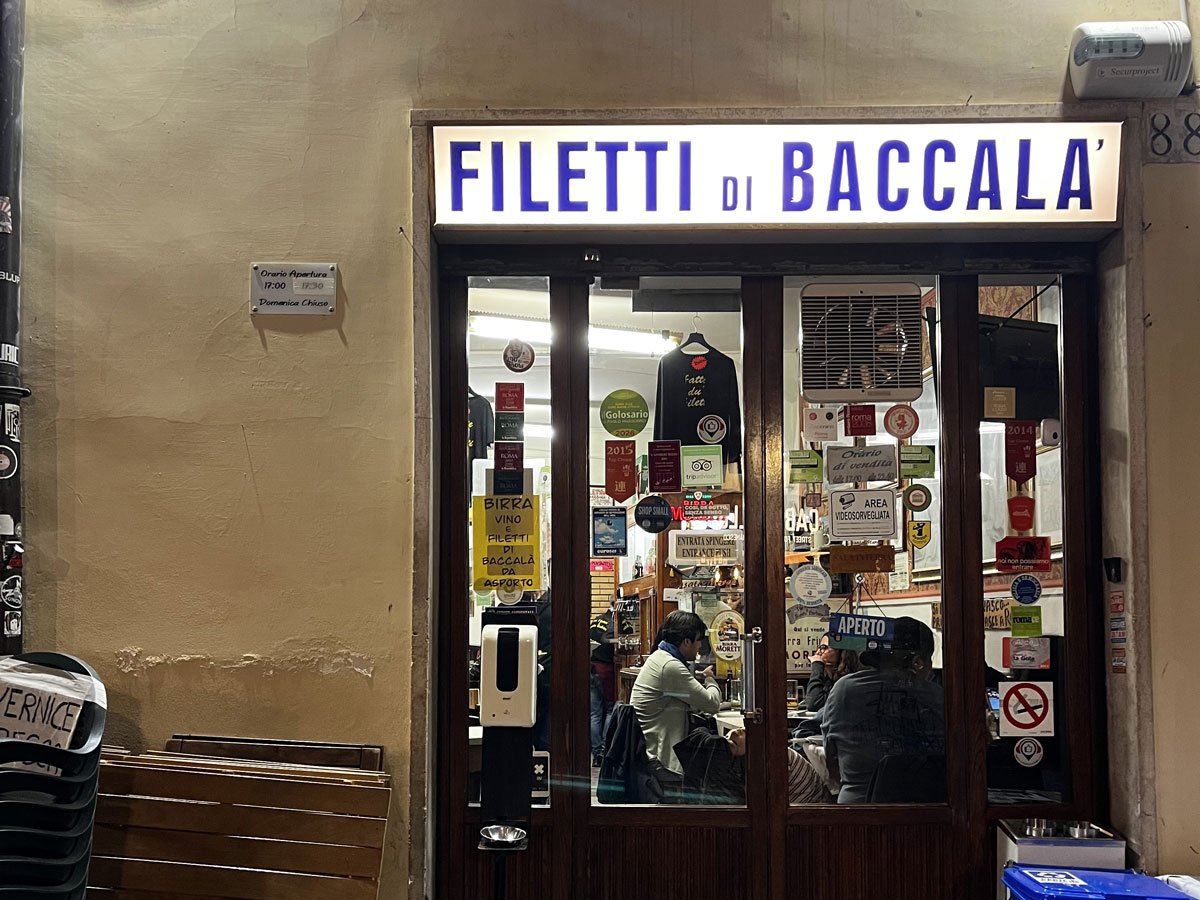
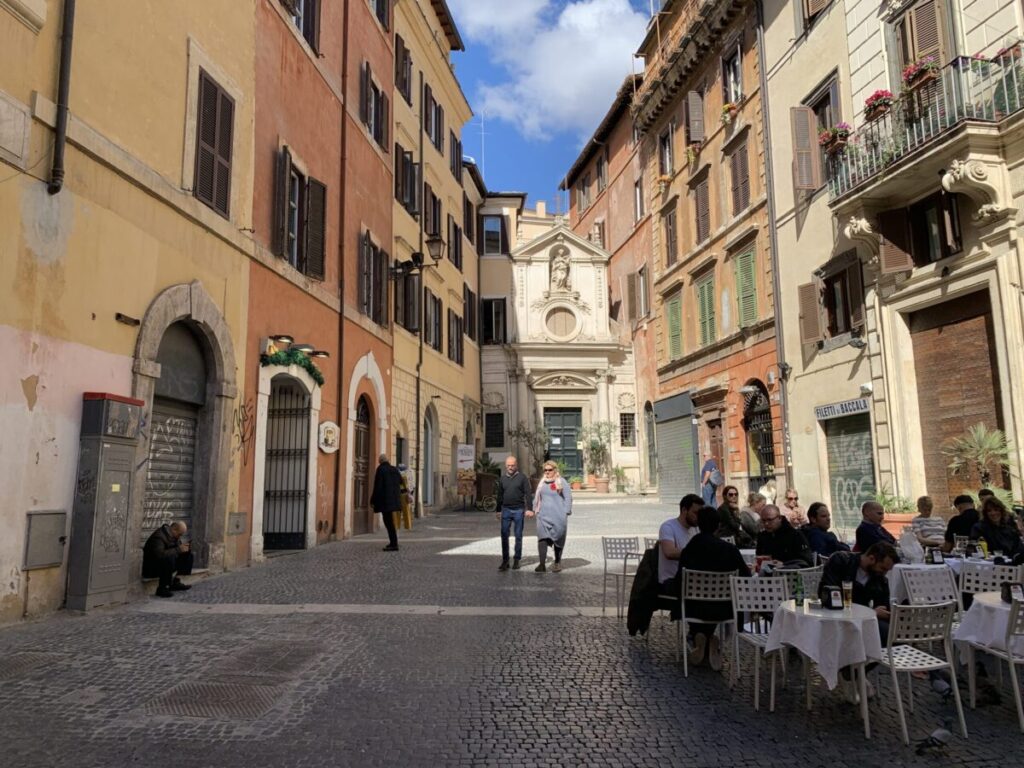
Dar Filettaro a Santa Barbara is a classic Roman friggitoria tucked near Campo de’ Fiori, famous for its crispy fried cod (filetti di baccalà) and other no-frills street food staples. The vibe is casual and old-school, with paper tablecloths and a menu focused on perfectly executed fried bites. It’s a go-to spot if you want an authentic, quick taste of traditional Roman comfort food.


Like this? Now read:

Campo de’ Fiori Neighborhood Guide Best Bars around Campo de’ Fiori Best Shops around Campo de’ Fiori Things to See around Campo de’ Fiori

The post Eating around Campo de’ Fiori appeared first on Romeing.

Best Things to See Around Campo de’ Fiori

Hidden Gems Around Campo de’ Fiori

Campo de’ Fiori may be one of Rome’s most famous squares, but there’s much more to discover just beyond its market stalls and lively cafés. The surrounding streets are filled with elegant palaces, quiet churches, Renaissance architecture, artisan boutiques, and hidden courtyards that reveal the true character of this historic neighborhood. Here are some of the best things to see around Campo de’ Fiori.

Arco degli Acetari

Via del Pellegrino, 19

arco-degli-acetari

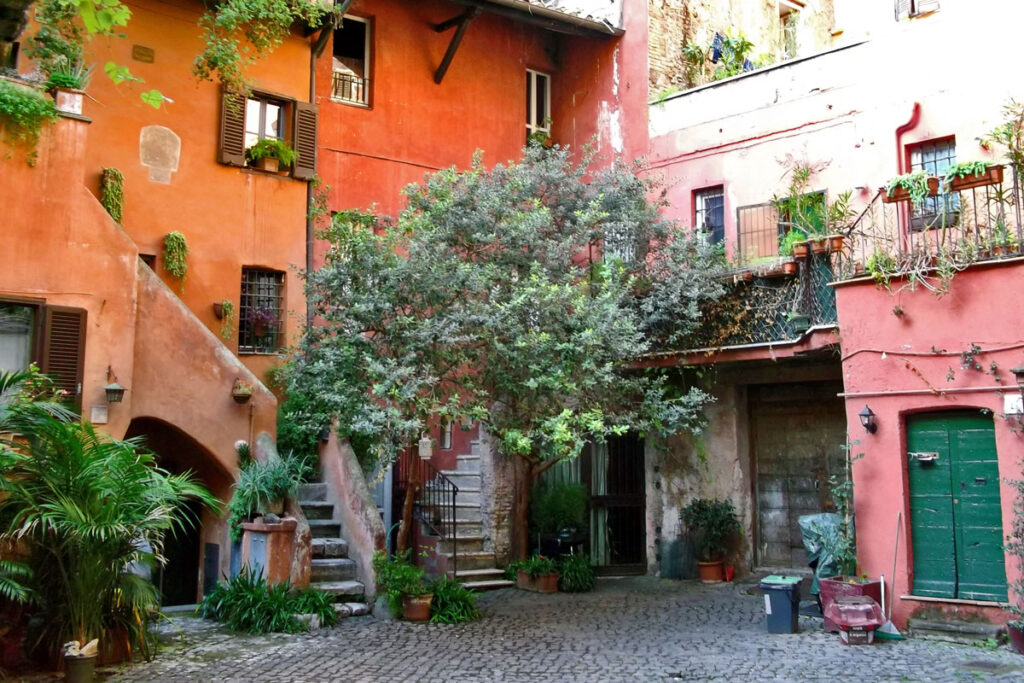
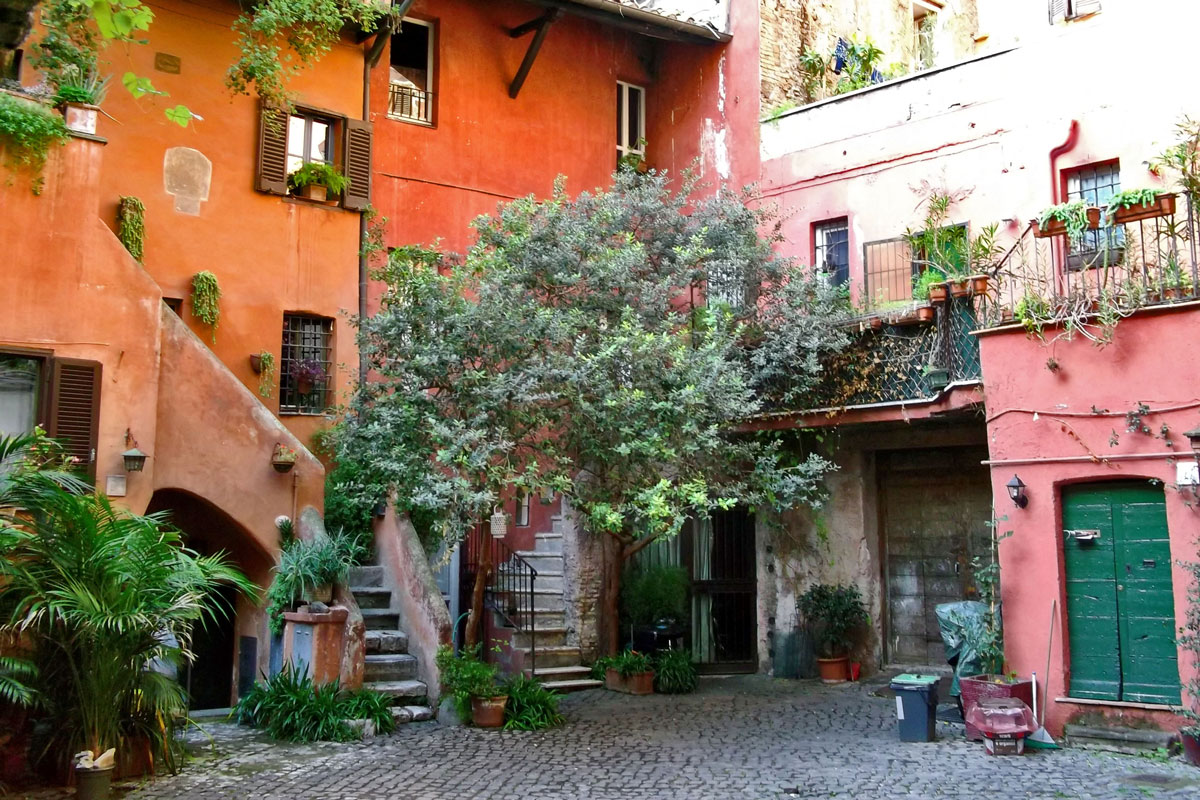
Within this tiny courtyard steps away from the bustling Campo, time seems to stand still. Arco degli Acetari is a peek into the medieval period of Rome, where external staircases and warm ochres fill the senses of a time long forgotten. Underneath laundry on clotheslines and blooming trees, the arco is a quiet place of refuge for those who seek it (but beware, residents still live within the buildings!)


Cappella Orsini

Via di Grotta Pinta, 21
Every day, 12pm-12am
cappellaorsini.net

cappella_orsini_home

Set in the former Chiesa di Santa Maria di Grotta Pinta, the Cappella Orsini is a cultural production center that supports independent creative projects through exhibitions, installations, and more. The aim of the Living Museum is to foster cross-cultural exchange and create a space where new ideas can blossom freely.


Chiesa Santa Barbara dei Librai

Largo dei Librari, 85
Open daily, 9am-12pm, 4pm-6pm

santa-barbara-dei-librai-roma

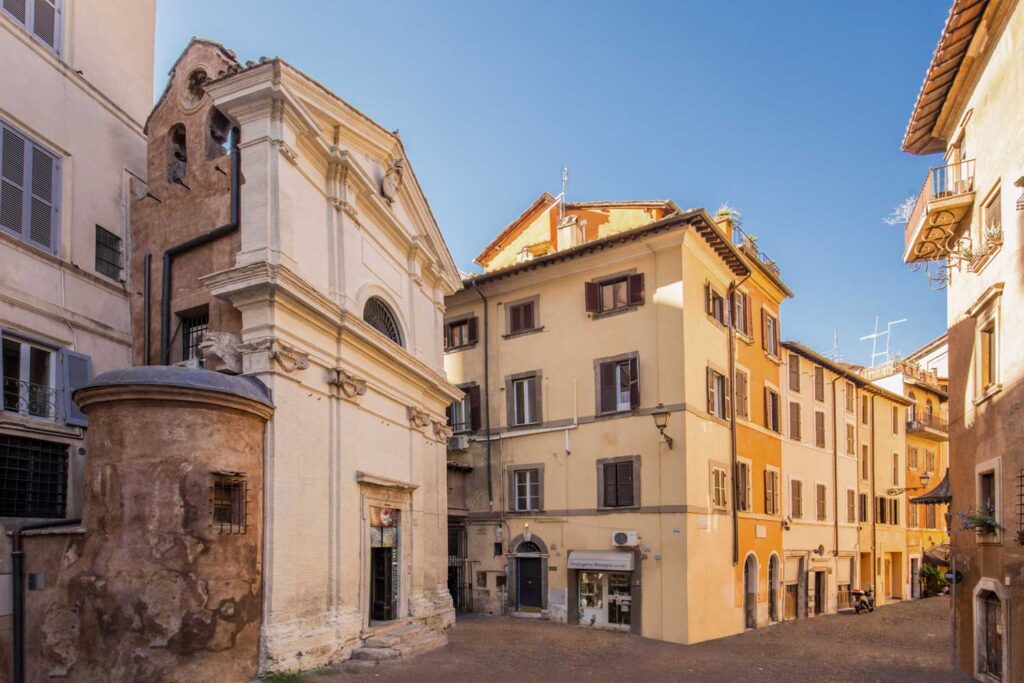
Nestled at the back of a small piazza off Via dei Giubbonari lies this little gem of a chiesa. Though it was consecrated in the 14th century, some believe the church may have been built centuries earlier. Once part of the ruins of the ancient Teatro Pompeo, Chiesa Santa Barbara is home to a 15th century triptych by Leonardo da Roma.


Mercato Campo de’ Fiori

Piazza Campo De’ Fiori
Open Mon-Sat, 7am-2pm

campo-de-fiori-rome

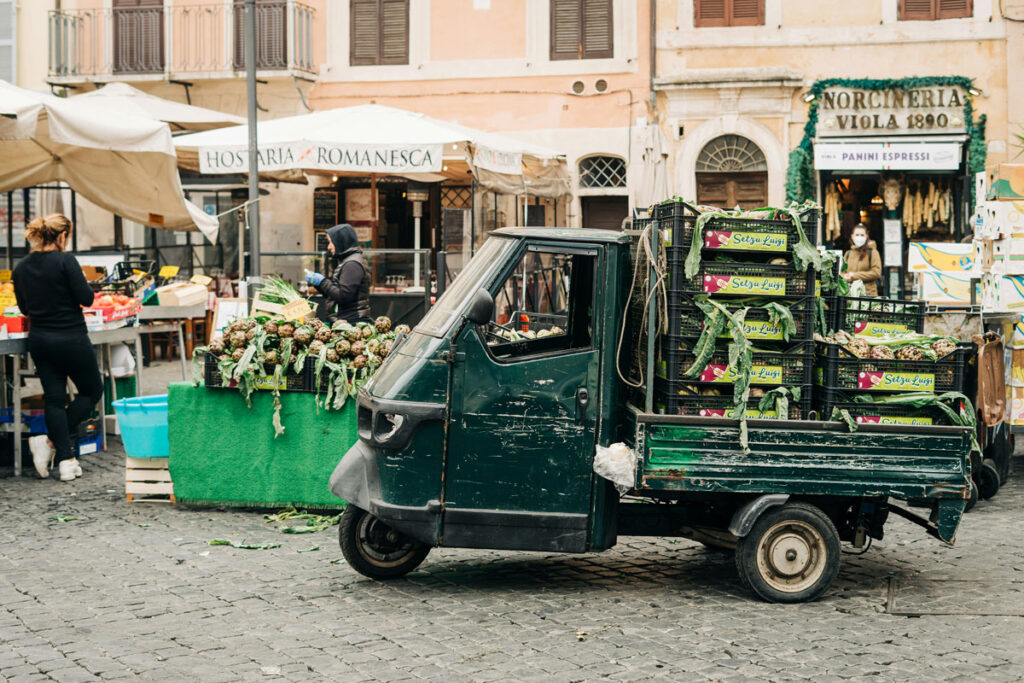
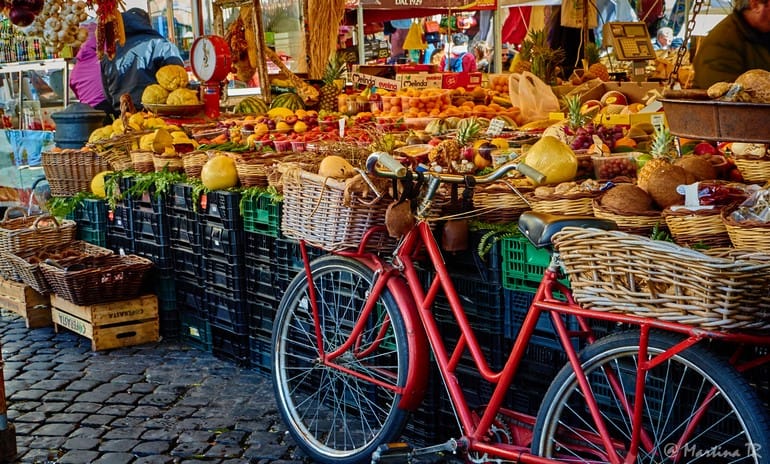
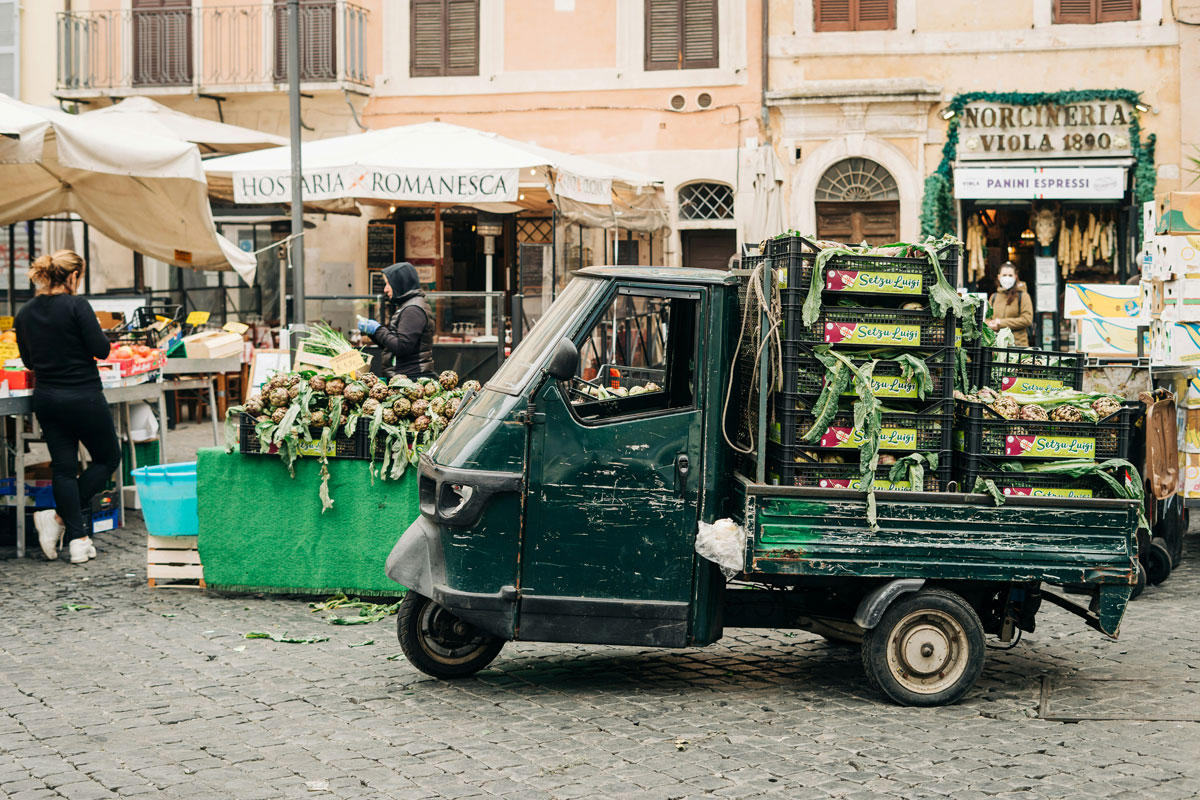
A staple since 1869, the iconic Campo market opens its canopies every morning to welcome visitors in search of local produce – think puntarelle, scarole and broccoletti –, meats and cheeses, and fresh flowers. Set in one of Rome’s most recognizable piazzas, the mercato offers a colorful snapshot of everyday Roman life; it is just as much about the spectacle as it is the shopping, with vendors calling out and locals haggling over prices.

INSPIRATION
Food markets in Rome


Palazzo Farnese

Piazza Farnese, 67
visite-palazzofarnese.it

palazzo-farnese-rome

The Palazzo Farnese, now the French Embassy in Rome, is an example of high Renaissance architecture. Alessandro Farnese – the Cardinal at the time – commissioned its construction in 1514, with later expansion upon his papacy as Pope Paul III. The inside, with frescoed ceilings by Carracci and Zuccari, can be visited by guided tour purchased exclusively through their website.

Read more here: www.romeing.it/visit-palazzo-farnese/

Palazzo & Galleria Spada

Piazza Capo di Ferro, 13
Mon-Sun 8.30am-7.30pm; Tues Closed
Entry fee €6

Forced-perspective-gallery-by-Francesco-Borromini-Galleria-Spada-e1605028224446

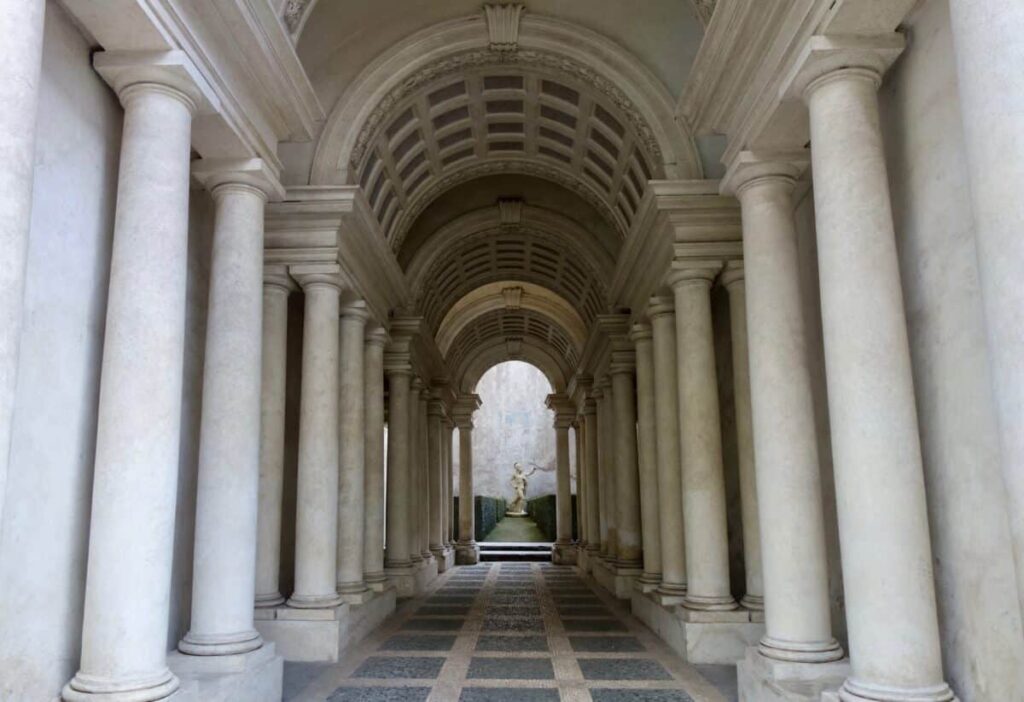
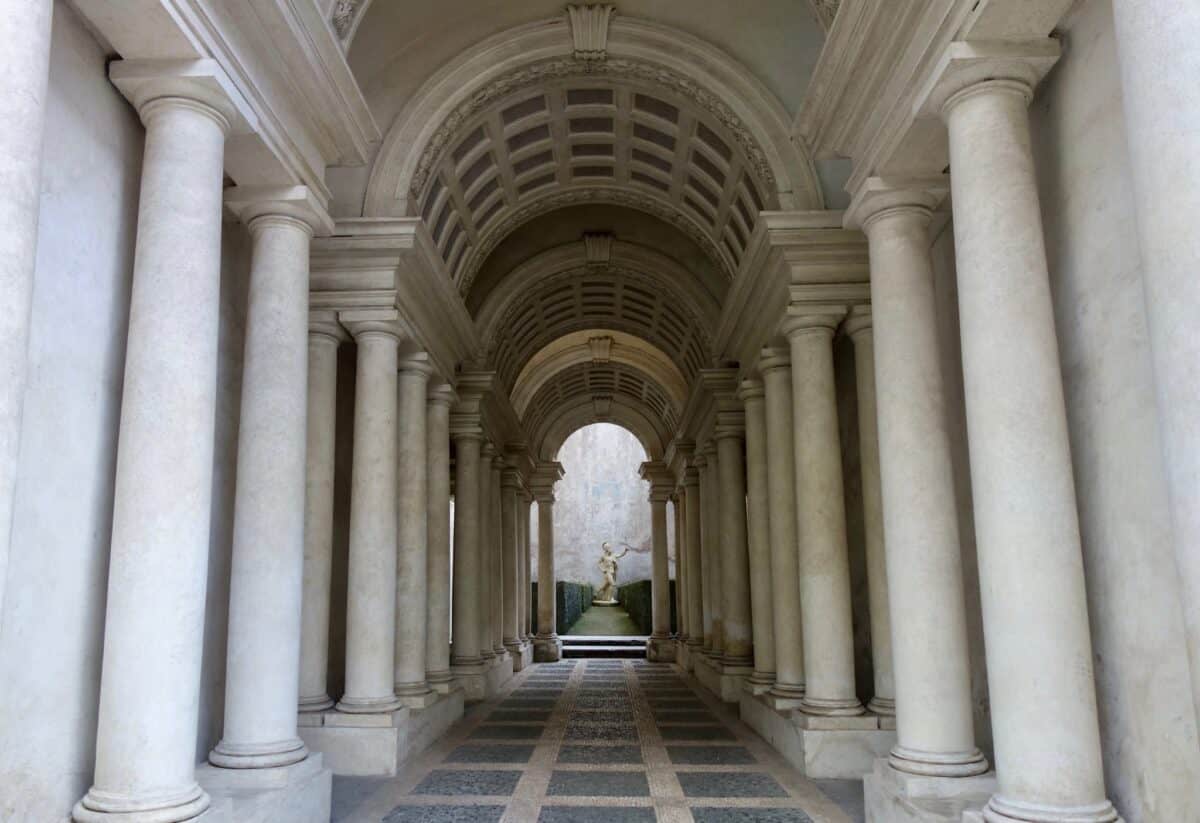
The palazzo, purchased by Cardinal Bernardino Spada (1594-1661) in 1632 is perhaps best known for Francesco Borromini’s infamous trompe l’oeil (forced perspective) near the courtyard’s entrance. The artistic collection houses 16th and 17th century pieces by artists such as Reni, Gentileschi, Baccicio, and the Caravaggisti.

Read more here: www.romeing.it/palazzo-spada-rome/

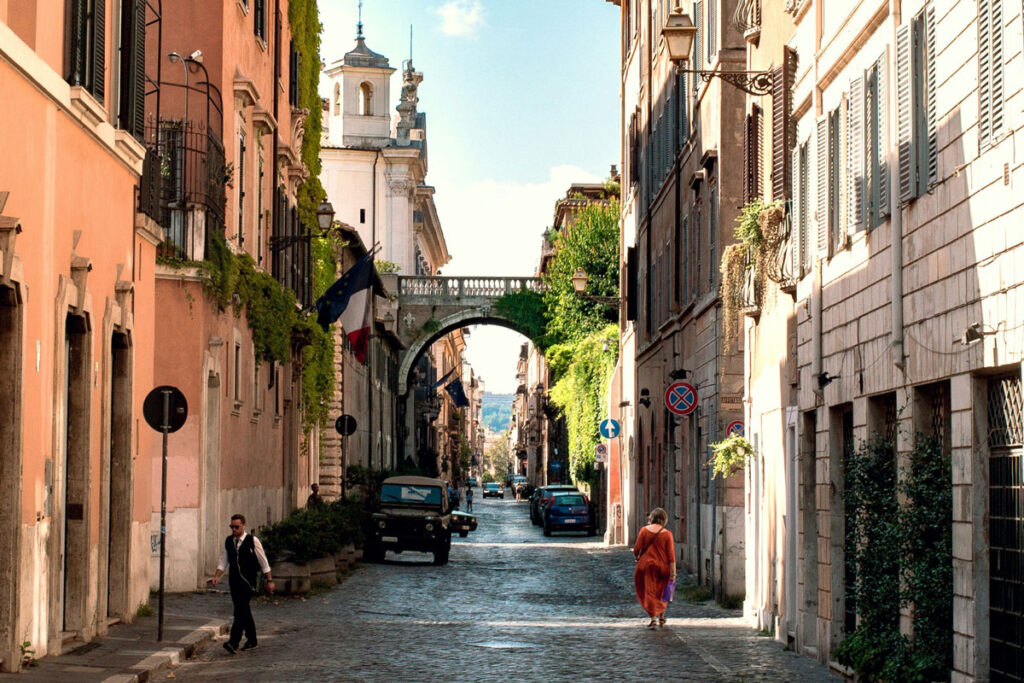
Via Giulia

via-giulia

Commissioned by Pope Julius II and executed by Bramante, this long street runs from Ponte Sisto to the church of San Giovanni dei Fiorentini. Built during the reorganization of Rome’s older medieval plan. Via Giulia today is lined with artisan shops and vintage boutiques. Quiet and shadowy, it is the perfect place for a romantic stroll, no matter the season. 

Read more here: www.romeing.it/via-giulia/

INSPIRATION
The most beautiful streets of Rome


Santa Maria dell’Orazione e Morte Church

Via Giulia, 262
Open by appointment only
For the visits please contact the Amici del Tevere association

Orazione-e-morte-a-Via-Giulia-church

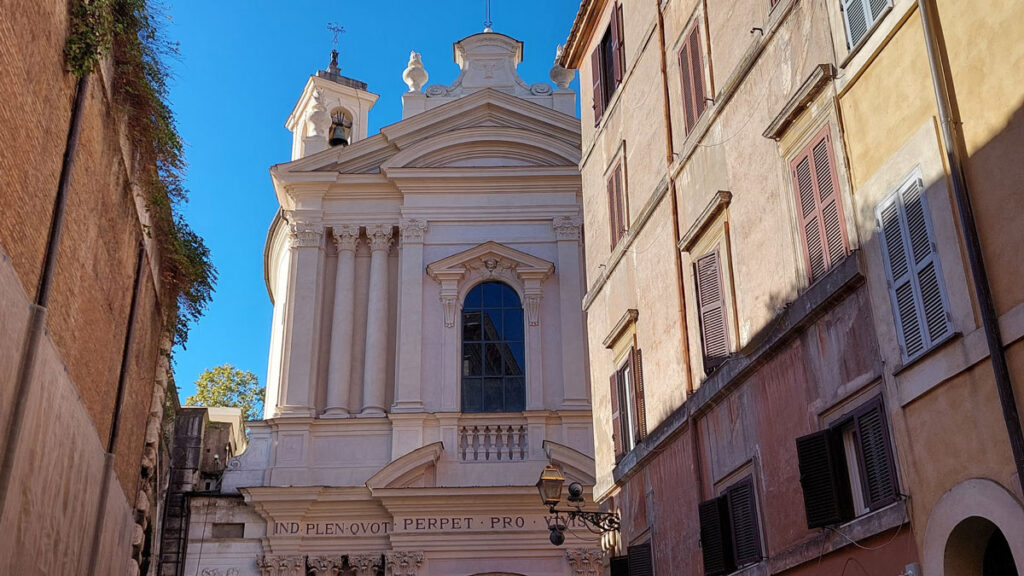
Santa Maria dell’Orazione e Morte is one of Via Giulia’s most unusual churches, a Baroque monument to mortality once linked to a confraternity that buried Rome’s abandoned dead. Its skull-decorated façade and haunting underground ossuary make it one of the city’s most fascinating hidden sights.


Like this? Now read:

Campo de’ Fiori Neighborhood Guide Best Bars around Campo de’ Fiori Best Restaurants around Campo de’ Fiori Best Shops around Campo de’ Fiori

The post Best Things to See Around Campo de’ Fiori appeared first on Romeing.

Inside Enoteca Bortone, Where Wine Becomes Connection

For over 10 years, Enoteca Bortone has been serving wine and small bites, but it is the distinct passion of its owner, Patrizia, that makes this small-but-mighty wine bar so singular.

A knock lands softly on the already open door of the small wine shop. In the middle of our conversation, a neighbour appears at Enoteca Bortone, asking for a bottle. Before the request is even fully made, Patrizia, the owner, is already reaching for the shelf behind her. No list, no overly complicated questions, just quiet intuition. The moment, brief as it is, reveals everything: wine at Enoteca Bortone is not simply poured, but understood.

For Patrizia Bortone, gastronomy has always been part of her life journey. After working as a chef in Spain for twenty years, she became familiar with cramped kitchens, intense service, and the pressure of working under demanding chefs. Yet she managed to find peace in the chaos, thanks in part to the camaraderie she shared with the unsung heroes of the dining room: the sommeliers.

Enoteca_Bortone

Whether a dish was acidic, umami, or sweet and sour, the sommeliers always seemed to know, often in quick exchanges during service, which wine would work best, down to the grape variety and region. Patrizia was eager to understand how. That curiosity sparked what would eventually become her turning point, from wine enthusiast to full-fledged expert.

As the years went by in Spain, Patrizia found herself increasingly drawn beyond the kitchen. Her curiosity led her into conversations about the world of wine, often late after service or over shared glasses, and gradually lit a new fire within her. Growing older, and feeling the desire to return to Italy and settle into a smaller, more intentional life, she made the leap. In January 2016, she opened her own shop on Via di Monserrato.

After opening the enoteca, Patrizia chose to deepen her knowledge even further by enrolling in sommelier school. For her, it was never just about selling wine. It was about understanding the work behind each bottle: the vineyards, the producers, the choices, the intention. She wanted to translate all of this into a meaningful experience for her guests. If she was going to do it, she was going all in.

Enoteca_Bortone

The shop is lined from floor to ceiling with bottles of red, white, and sparkling wine, their glass reflecting the dim glow of the lights. Rustic, eclectic décor fills the remaining space, while thick, misshapen candles sit throughout, their melted colours layered together like memories of evenings past. Everything feels lived in. Everything seems to rest in its rightful place.

The wines come from all 20 regions of Italy, with a focus on small, family-owned vineyards and wineries. For Patrizia, it is essential to offer guests a taste of an authentic Italian experience, where every sip and every grape variety carries intention, care, and a story. Tastings at the enoteca are individually curated for each guest, with six wines thoughtfully selected after Patrizia contacts each group in advance to understand what they are looking for. Prefer sparkling whites? Only reds from the North? Patrizia knows exactly what to choose.

enoteca-bortone-roma

Each tasting unfolds slowly, more like a conversation than a structured experience, where guests are guided through six wines that reflect not only Italy’s diverse regions, but their own personal tastes. There is no rigid formula — only a thoughtful progression shaped by Patrizia’s intuition and careful listening. In this way, every tasting becomes entirely its own, a quiet dialogue between guests and the glass.

Once more during our conversation, another friend eagerly arrives, quickly asking for his usual table at 7pm for an aperitivo. Via di Monserrato, she explains, feels like a small town even though it stands in the heartbeat of Rome. Everyone looks out for one another. Everyone supporting one another. And by her small smile as her friend leaves, it is very telling that her community is everything to her.

Enoteca_Bortone

It is not her wine prowess or friendly demeanor that sets Patrizia apart from the rest, but the pure, unadulterated joy she exudes when guests enter her shop. She understands, better than anyone, that the experience is not so much about her as it is for her guests. Her purpose is to be in service to others through her love of gastronomy. Being at her shop seven days a week is not a job to her, it is simply her living her life, her dream. And when you’re living a dream, it no longer feels like something you do, but something you are.

“I have customers from years past who reserve tables on their first nights back in Rome. It brings me much pleasure they feel at home here,” says Patrizia. 

Home.

With the shop bearing her last name, it appears apparent Patrizia has always intended for her work to feel just like home. She is a bridge, or ponte in Italian, between wine and the world. And for those who find themselves seated at her table, glass in hand, her tastings become more than an introduction to Italian wine—they are an invitation into a life shaped by passion, curiosity, and the courage to begin again.

The post Inside Enoteca Bortone, Where Wine Becomes Connection appeared first on Romeing.

L’Ara Si Rivela: Multimedia Spectacle Breathes New Life into Ancient Rome

Light, Sound, and History Converge to Reawaken Rome’s Ancient Past

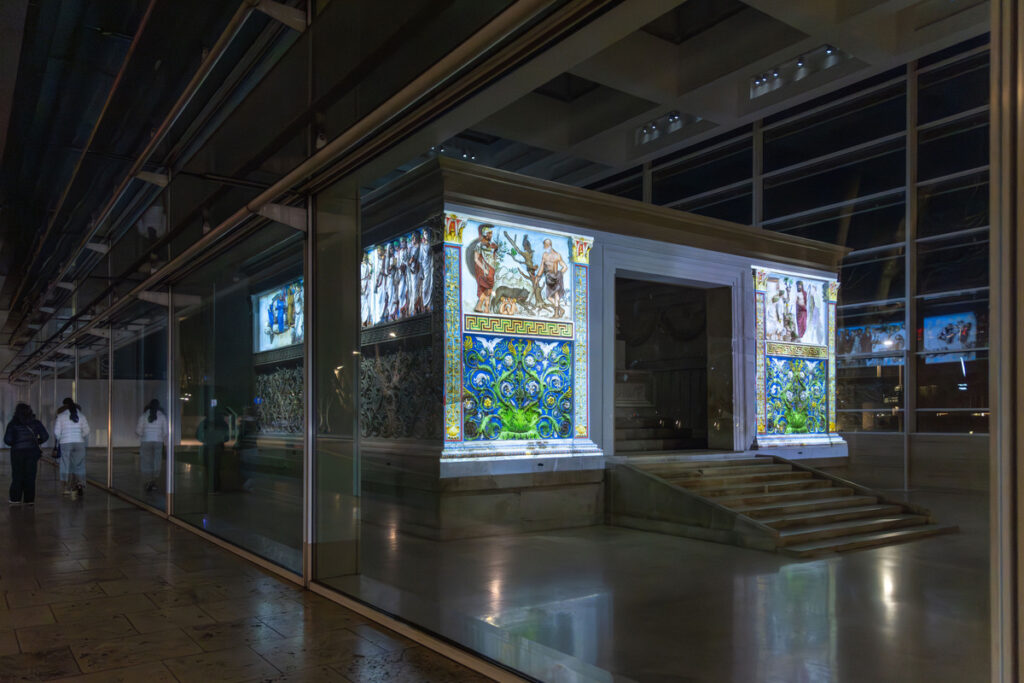
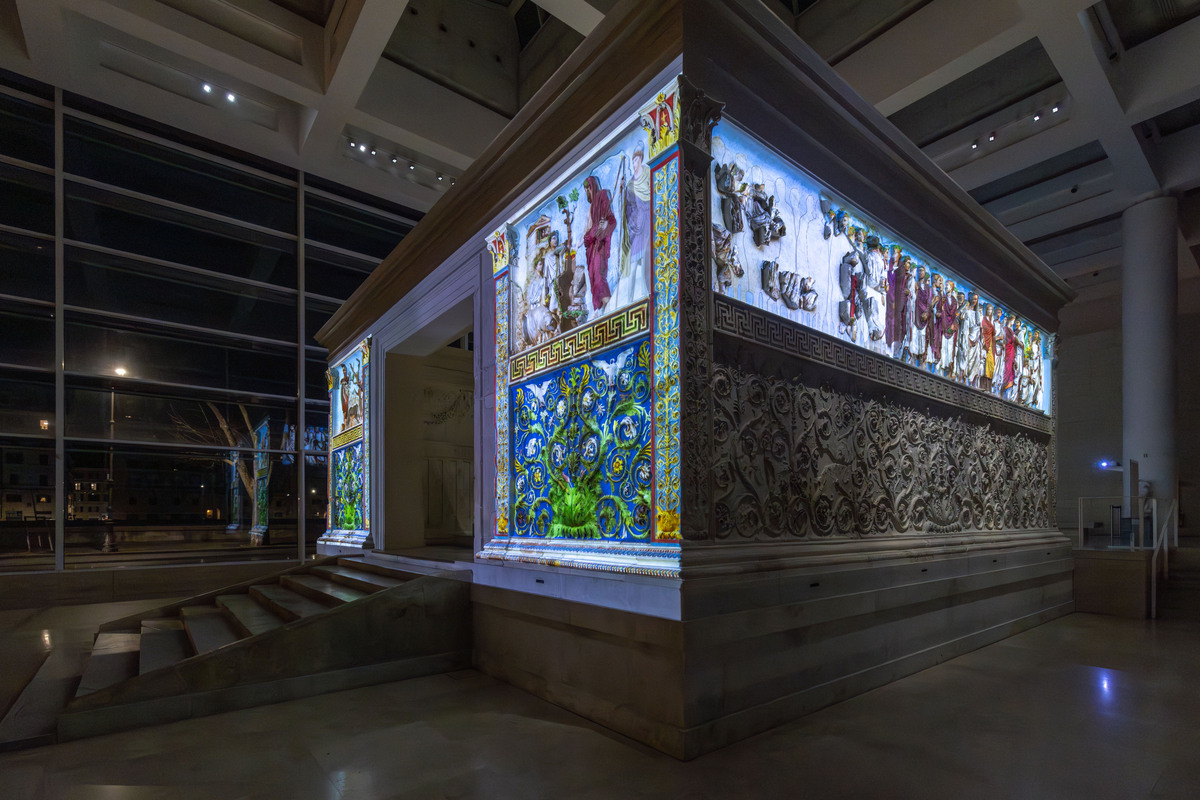
The gallery lights dim. The soft hum of projectors fills the vaulted ceiling. Suddenly, beams of color sweep across ancient marble, bringing the bas-reliefs to life as the lights flicker and glow. For a brief moment, time seems suspended, modern Rome falls silent, and its ancient past, now brought to life for the modern age. 

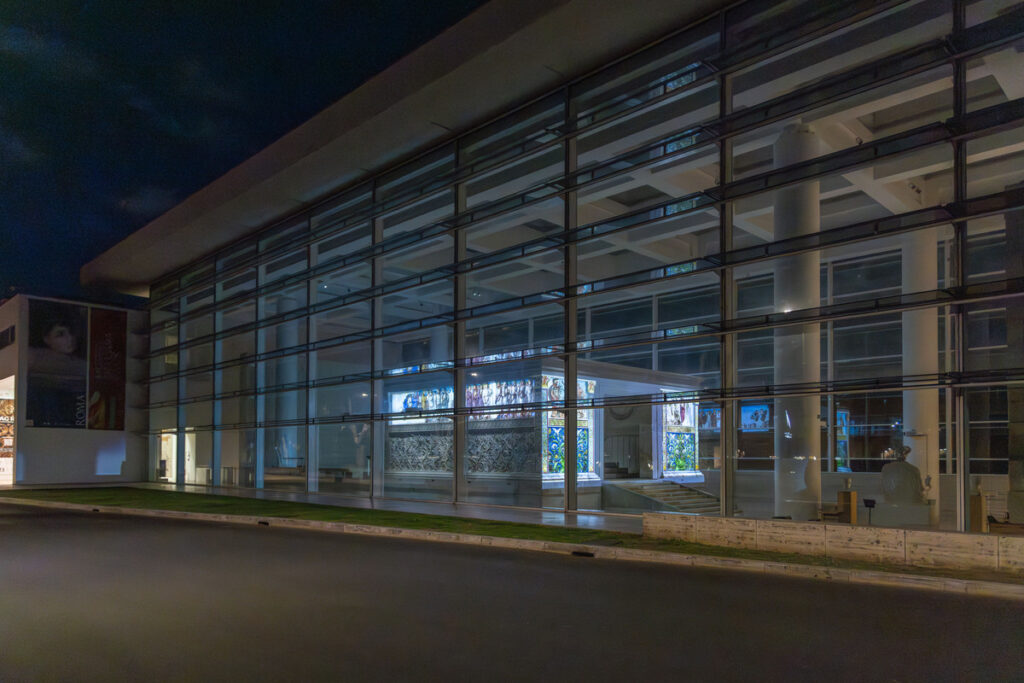
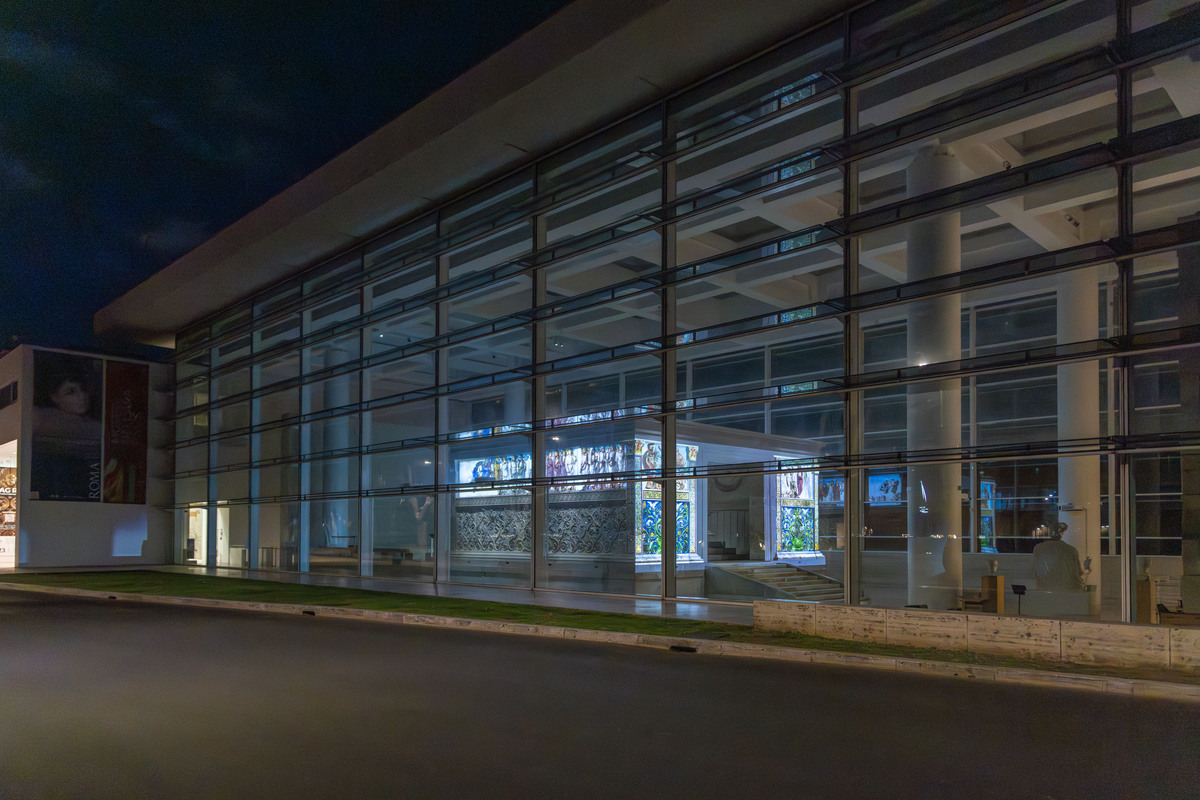
Experiencing Ancient Rome in meticulous detail is now possible. Beginning 27 March, the Ara Pacis Museum on the Lungotevere offers visitors the chance to see the city’s monuments as the Romans once did, radiant, vibrant, and alive with history.

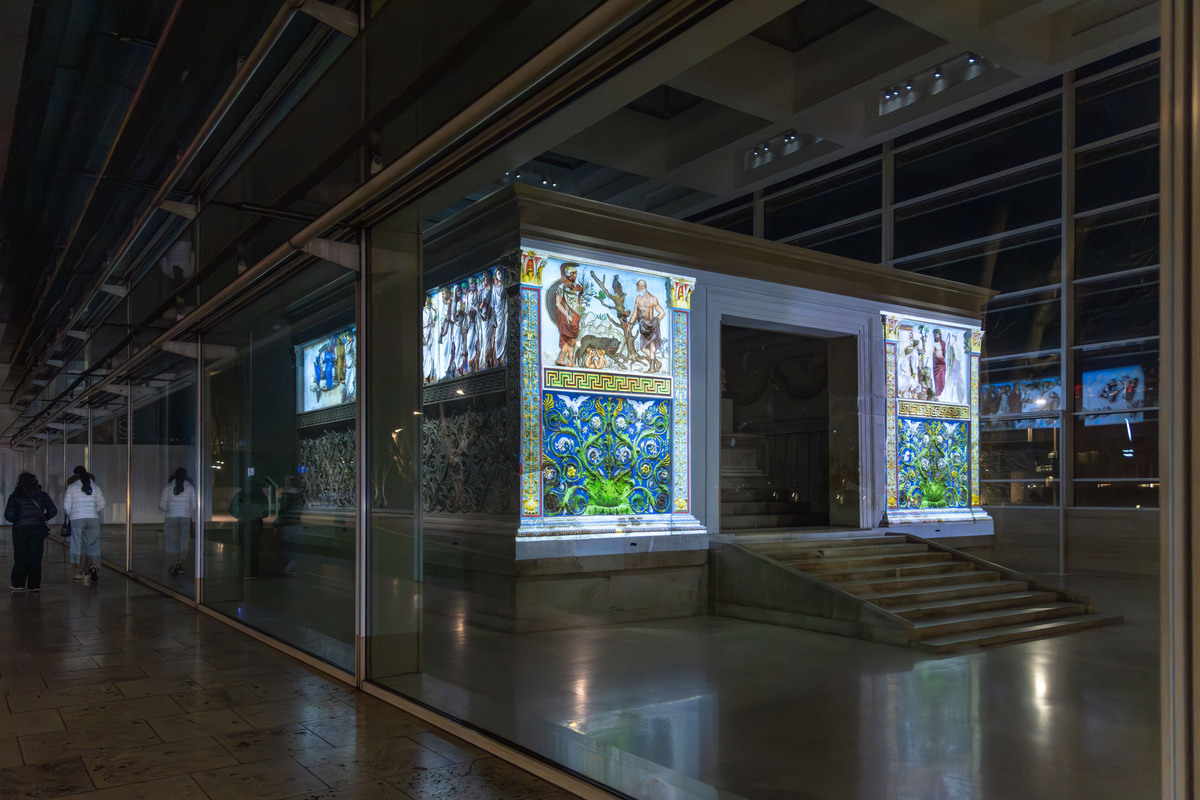
L’Ara Si Rivela (The Ara Reveals Itself) is a multimedia project designed to bring the ancient world to life. Using cutting-edge projectors, dynamic lighting, and immersive soundscapes, the initiative transports visitors into the heart of one of Rome’s most celebrated monuments: the Ara Pacis.

INSPIRATION
Things to do and see in Rome

L'Ara si rivela

Commissioned in 9 BC to celebrate the Pax Romana, it was intended to honour Augustus for his successes in conquering the North and his military stabilisation efforts. As Christianity became Rome’s focus, the monument’s significance faded, and its magnificence would soon be swallowed by the Earth’s soil. For centuries, she lay forgotten, until her rediscovery in the Renaissance offered an opportunity to reconnect with the artistry and grandeur of ancient Rome. 

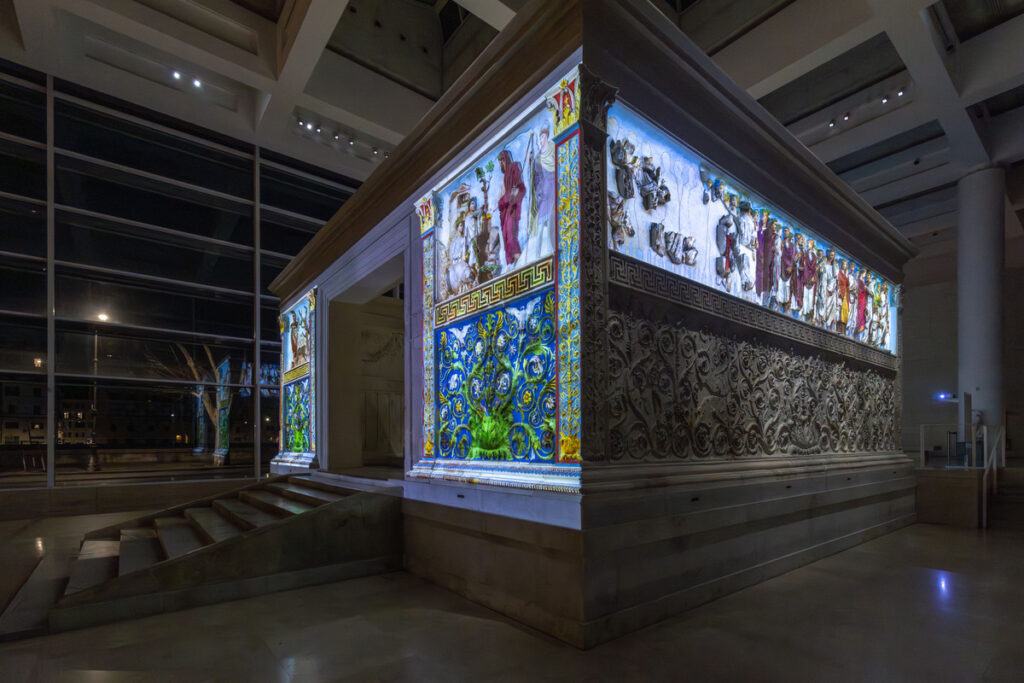
The multimedia narrative is rich with sweeping 4K laser projectors that illuminate the Pacis’ four facades, reviving the glory of Pax Romana. The western front tells of Romulus and Remus and of Aeneas’s sacrifice. The side processions depict high priests and imperial family members in bas-relief, while the eastern facade is debated to be either a showcase of Mother Earth (Tellus) or of Venus and the goddess Roma. 

Since the monument’s original colors remain a mystery, historians have used laboratory analysis and collaborative research to hypothesize how it once appeared. Their findings inspired the projection series—designed to emulate the Ara Pacis’s original polychromy and reveal details lost to time.

L'Ara si rivela
L'Ara si rivela

Visitors follow designated paths, guided to each facade. Audio guides narrate the Ara Pacis’s story — its rise, fall, and renewal — through the voices of collectors, restorers, and archaeologists. As soft music swells and projections ripple across the marble, the altar’s history unfolds in light and shadow. Many pause in awe, immersed in a spectacle where history becomes tangible — revealing details hidden for centuries.

Mayor of Rome, Roberto Gualtieri, notes that the “project enhances the city’s cultural heritage and strengthens the role of civic museums as places capable of bringing history closer to an ever-growing audience.”

Powered by GetYourGuide

L’Ara Si Rivela welcomes ticketed visitors every Friday, Saturday, and Sunday from 8 to 11 pm, with times changing in the summer months. Tours, which are guided, can accompany 25 guests and will last a duration of 45 minutes.

This immersive experience invites guests to rediscover the Ara Pacis’s original beauty through modern technology, where splendor and innovation meet beneath the Roman sky. 

Tickets can be pre-purchased online at www.arapacis.it or, if available, on-site at Tourist Infopoints, at all civic museum ticket offices, and at the bookshops/ticket offices of the Mausoleum of Augustus, Clivus Acilio, and Casina Vignola Boccapaduli.

The post L’Ara Si Rivela: Multimedia Spectacle Breathes New Life into Ancient Rome appeared first on Romeing.
Asian Film Festival 2026

Everything to know about the 23rd Edition of the Asian Film Festival

Since 2003, the Asian Film Festival has brought together some of the finest talents in Far Eastern cinema. It offers a unique opportunity to explore the history and cultures of East Asian countries through an artistic lens, with personal stories of intimacy, trauma, friendship, and love. This year, the festival is expected to take place at Cinema Farnese Arthouse in Rome from April 7 to April 15, 2026.

Directed by Antonio Termenini, the festival will feature 36 films — 18 in competition, 9 in the Newcomers section, and 9 out of competition — as well as 10 short films. More than 12 Asian countries will be represented throughout the festival.

asian film festival rome

The directorial debut of Shu Qi, Girl (2025), will open the festival. First premiered in competition at the 2025 Venice Film Festival and nominated for the Golden Lion, Girl follows the life of a young Taiwanese girl trying to escape her painful past. Loosely based on Qi’s childhood, the film is a delicate portrayal of female adolescence amid the changes of contemporary Asian society.

Other anticipated titles include Morte Cucina and Human Resource from Thailand; Siapa Dia and Whisper in the Dabbas from Indonesia; and Magellan and Moonglow from the Philippines. South Korea sets a festival record with eight films, ranging from gripping thrillers to more intimate and introspective works. Japan joins the lineup with two highly anticipated titles: Love on Trial by Fukada Koji and Sham by Miike Takashi.

The festival closes on April 15 with the awards ceremony and screenings of two major titles: She Has No Name by Hong Kong master Peter Chan and The Ugly by Yeon Sang-ho, bringing to an end an edition marked by variety, research, and quality.

International guests will include Koji Fukada, Garin Nugroho, Isabel Sandoval, and Lee Kwang-kuk, among the most interesting voices in contemporary Asian cinema.

The festival will also host the Italian premiere of Love on Trial (2025), directed by Fukada Koji, at the Japanese Institute of Culture on April 10. The screening will be followed by a special Q&A with the director.

The jury will present five awards: Best Film, Best Director, Best Actor, Best Actress, and Most Original Film. All films will be screened in their original language with Italian subtitles.

The post Asian Film Festival 2026 appeared first on Romeing.

The Art of Becoming: L’Ultimo Matisse in Rome

New exhibition in Rome documents Henri Matisse’s final and most transformative years through artist books, cut-paper, and drawings.

Rome’s newest art exhibition at Museo Storico della Fanteria trunks its focus to the final, radical period of Henri Matisse’s career, and is a sure experience to captivate both art-world enthusiasts and casual surveyors.

L’Ultimo Matisse: Morfologie di Carta (The Last Matisse: Paper Morphologies), curated by contemporary art curator Vittoria Mainoldi, traces the French artist’s final years with precision and sensitivity. Defined by bold experimentation with découpé, collage, and publishing, this late period is not an epilogue, but a reinvention. 

Henri Matisse (1869-1954) stands as one of the most reverent artists of twentieth century modernism. A leading force in Fauvism – an artistic style which prioritized bold coloring and styling over the realism of the Impressionist era – Matisse was a tour de force in reinventing. From luminous paintings and sculptures to illustrated books and cut-paper découpés, his art was pursuant of radical simplicity, imbuing form and color into works that once seemed deeply deliberate.

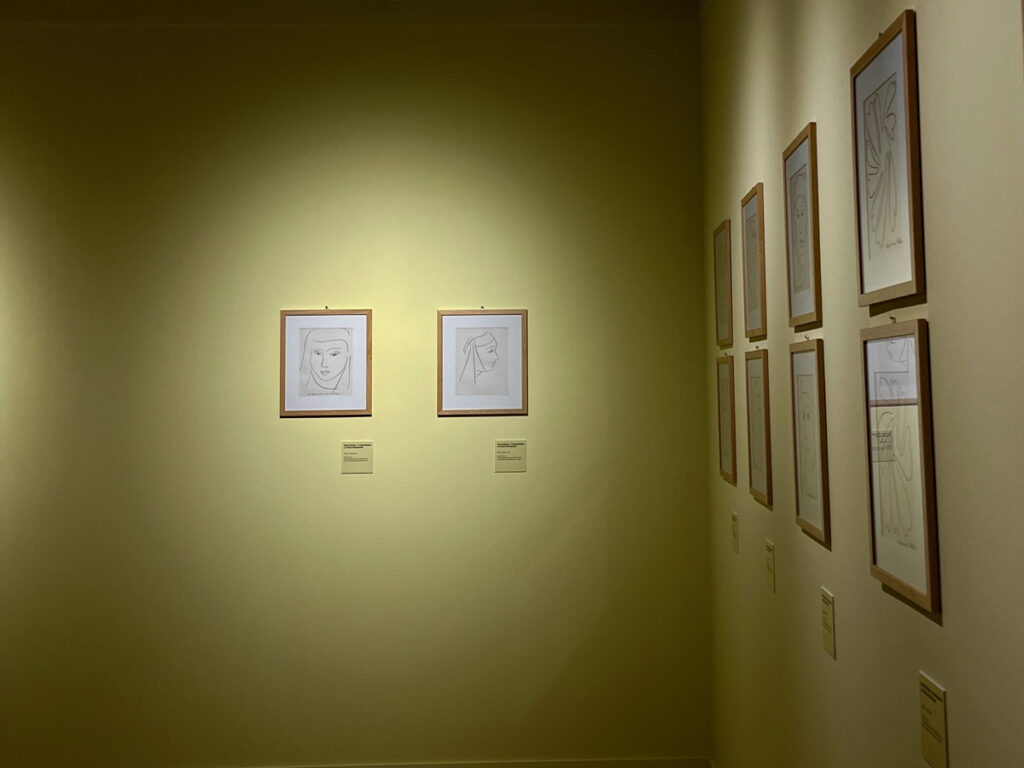
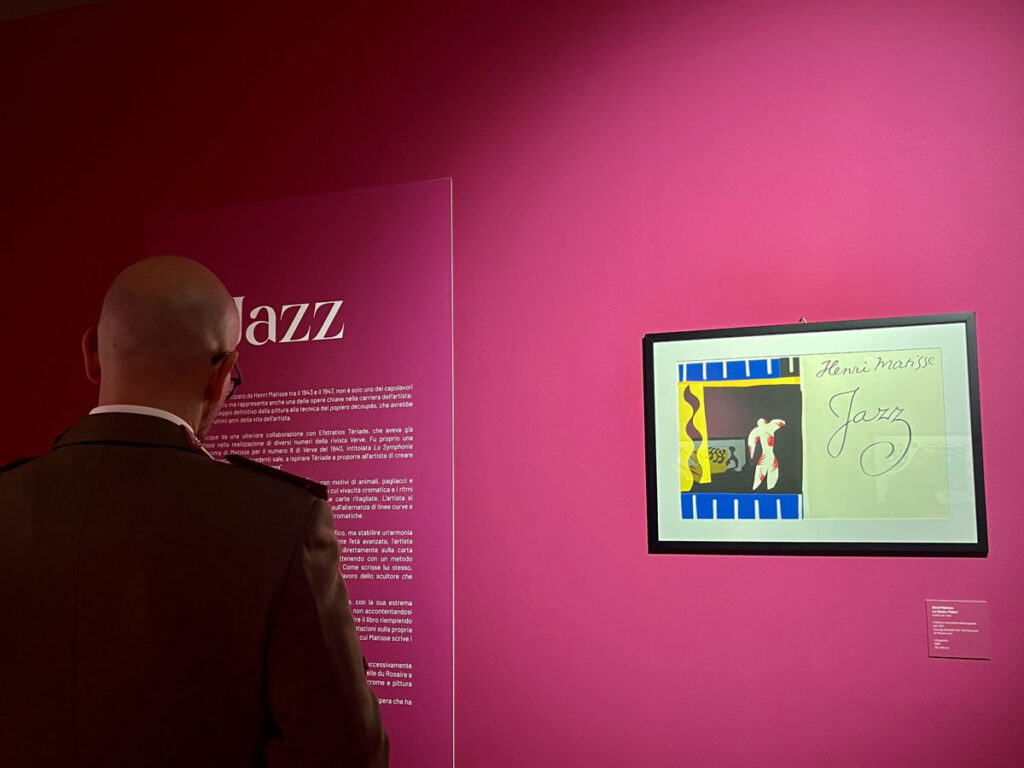
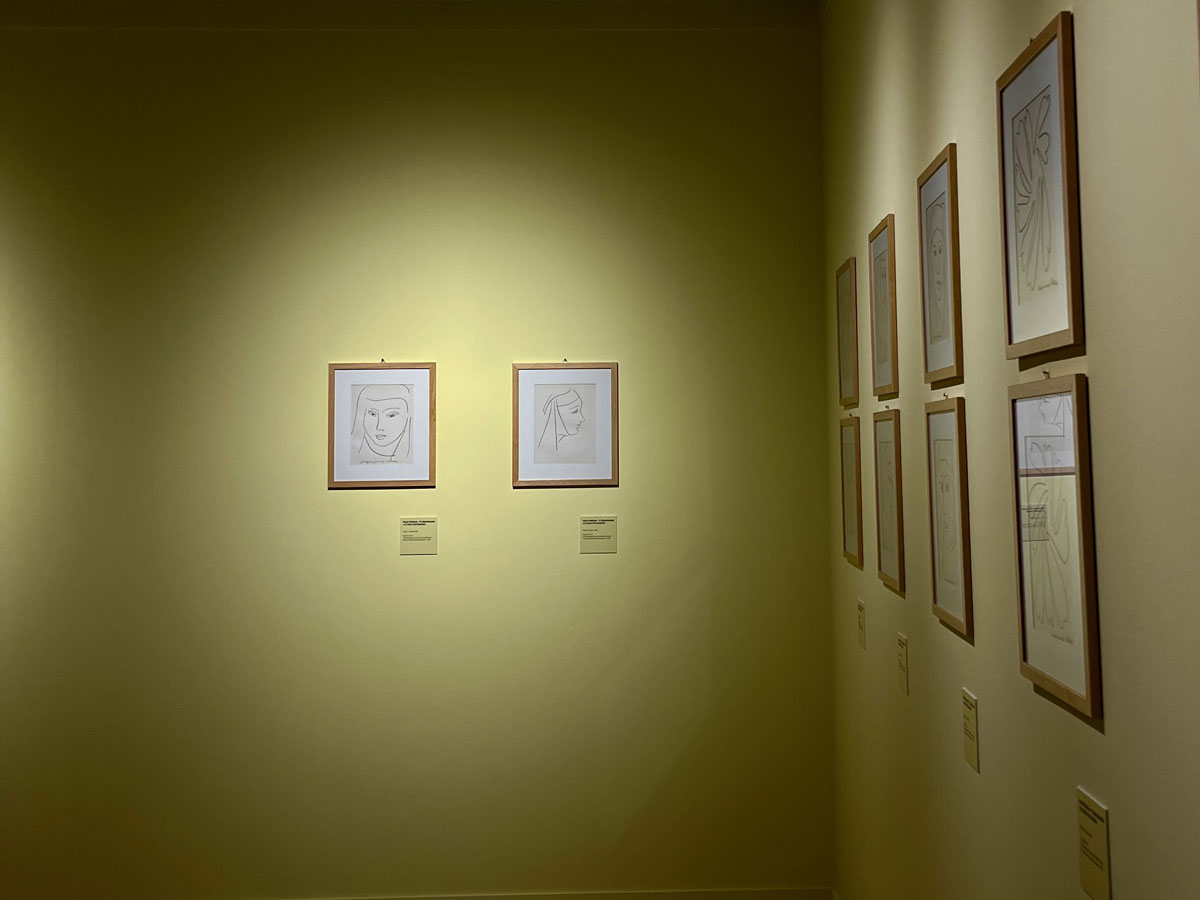
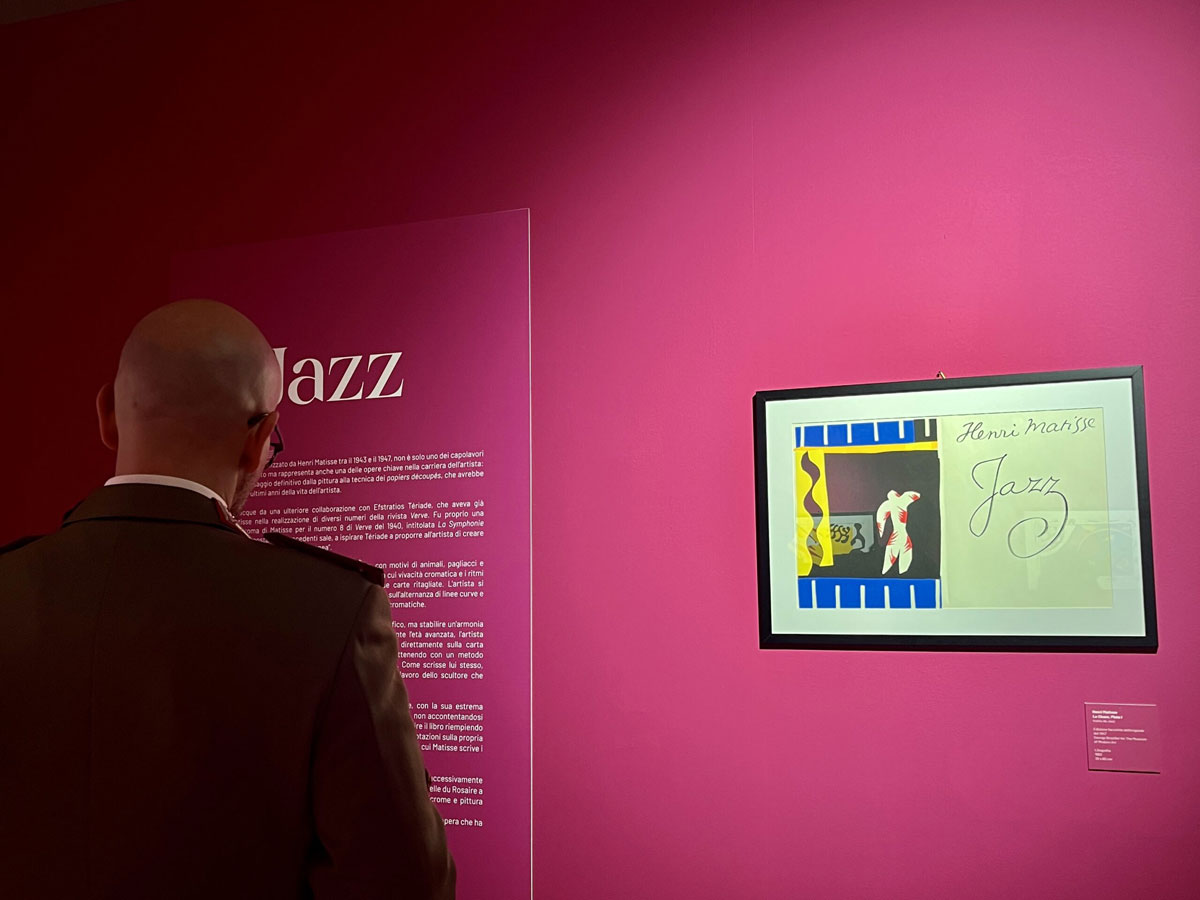
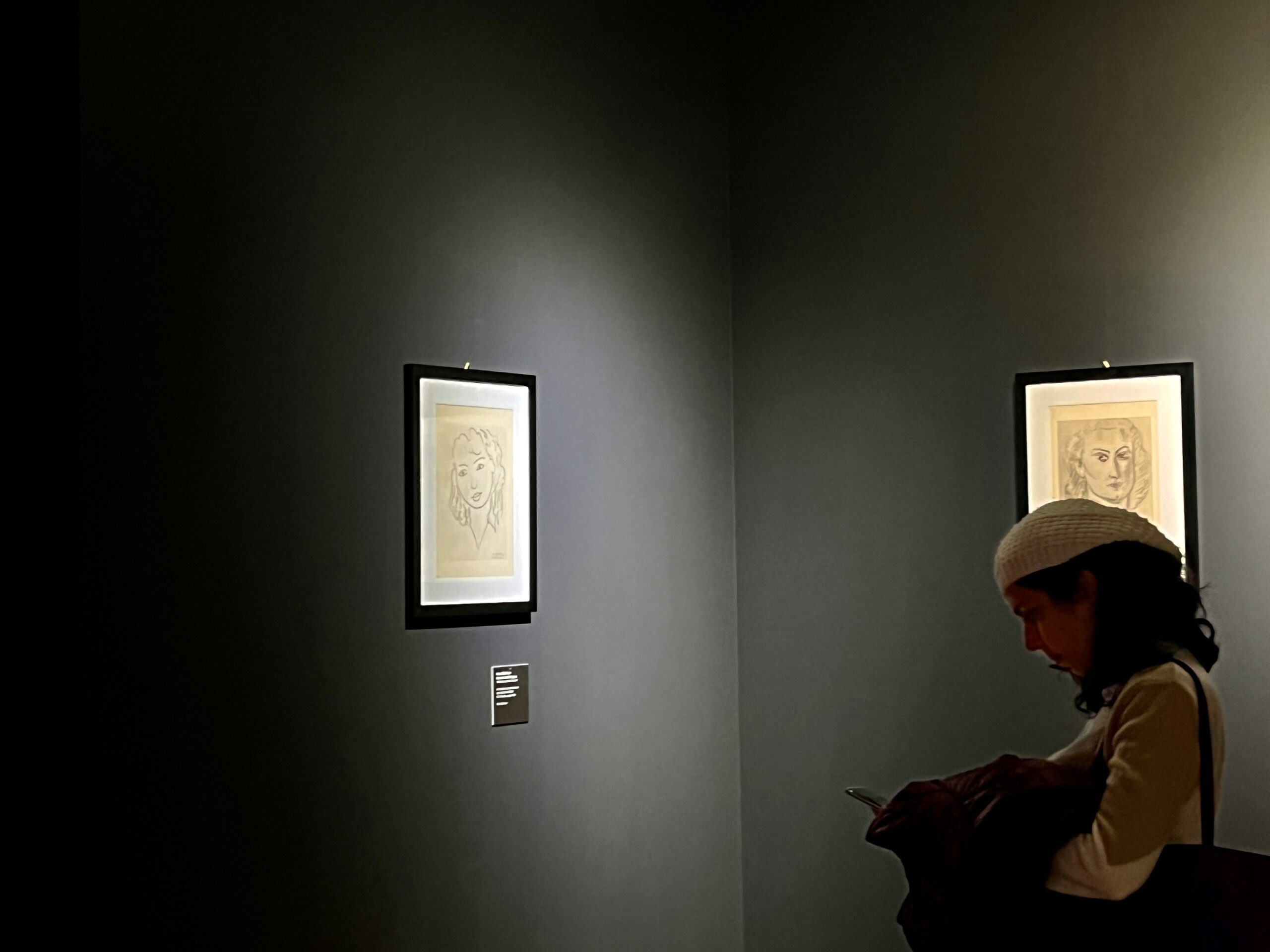
Mainoldi structures the exhibit as though it were a book, unfolding across four vibrants chapters of blue (Verve), yellow (Libri d’artista e libri illustrati), magenta (Jazz), and black (Disegno). Each room is an oasis of intimacy, immersing visitors in the artist’s metamorphosis of the mid-twentieth century – a period marked by physical ailments yet extraordinary creative freedom. 

ultimomatisse-exhibition-rome-(4)

Verve features works produced for the eponymous postwar magazine, a staple of visual experimentation. Here, Matisse found freedom in vibrant lithographs and democratising the artistic process, channeling immediacy through color and simple forms. 

In Libri d’artista e libri illustrati, focus shifts to Matisse’s endeavor of illustrations for artist’s books, ranging from Stéphane Mallarmé’s Poésies to James Joyce’s Ulysses. His signature continuous lines – often known now as the “Matissean line” – bring vitality to written text. The drawings move beyond illustrations and textual collaborations, and propose instead a reimagination of books as shared space for the visual and literary. 

ultimomatisse-exhibition-rome-(4)

Jazz takes the shape of the artist’s book of the same name, marking a decisive shift from painting to découpés. Here, Experimentation came in the harmony of saturated colors, bold silhouettes and biographical text. These elements exist in rhythm, depicting Matisse’s belief that art is a visual language. 

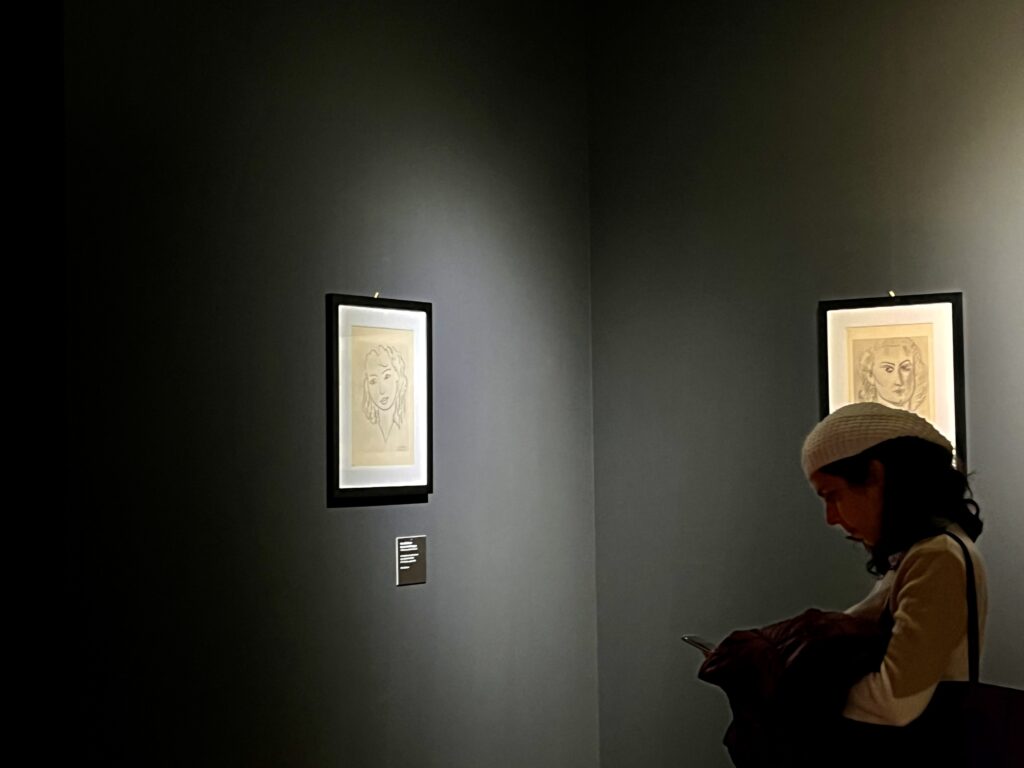
Lastly, Disegno carries Matisse’s work at their most bare and intimate. Charcoal on white paper, line and void work in tandem express a distilled intimacy. For Matisse, drawings – whether nudes, still lives or faces – were the final result, a final expression of memory in its rawest form.

Taken together, Matisse’s final works represent art as sites of dialogue rather than decoration. In assembling these final pieces, L’Ultimo Matisse reveals limitation became liberation, and how reinvention, even in waning years, defines an enduring legacy. 

L’Ultimo Matisse will run from 28 February to 28 June at the Museo Storico della Fanteria.

Don’t miss Caravaggio and the Masters of Light at the same venue

At the same venue, visitors can also discover Caravaggio and the Masters of Light,” an exhibition exploring the influence of Caravaggio and the Caravaggesque movement, on view at the museum during the same period.

The post The Art of Becoming: L’Ultimo Matisse in Rome appeared first on Romeing.
❌