Vue lecture

Il y a de nouveaux articles disponibles, cliquez pour rafraîchir la page.

FENDI x Karl Lagerfeld at Rome’s National Gallery

A Historic Homecoming

Karl Lagerfeld is best known for his decades at Chanel and his early days assisting Pierre Balmain, yet the German-born designer bound his creative soul to Fendi for more than half a century. This July, all eyes turned to Rome during Haute Couture Week, as the Galleria Nazionale d’Arte Moderna e Contemporanea (GNAMC) became the runway for Maria Grazia Chiuri’s first couture collection for Fendi.

Now those same halls host a monumental exhibition: After – Steps Through Work. Fendi / Karl Lagerfeld 1985, on view from 10 July to 25 October 2026.

Fendi Karl Lagerfeld 1985 exhibition at Galleria Nazionale, Rome

The Greatest Fashion Partnership

What’s on display retraces the longest creative partnership in fashion history, between Karl Lagerfeld and the Fendi family. Hired in 1965 by the five Fendi sisters to reinvent the family’s traditional fur and leather house, Lagerfeld revolutionised the very idea of luxury outerwear, a collaboration that lasted until his death in 2019.

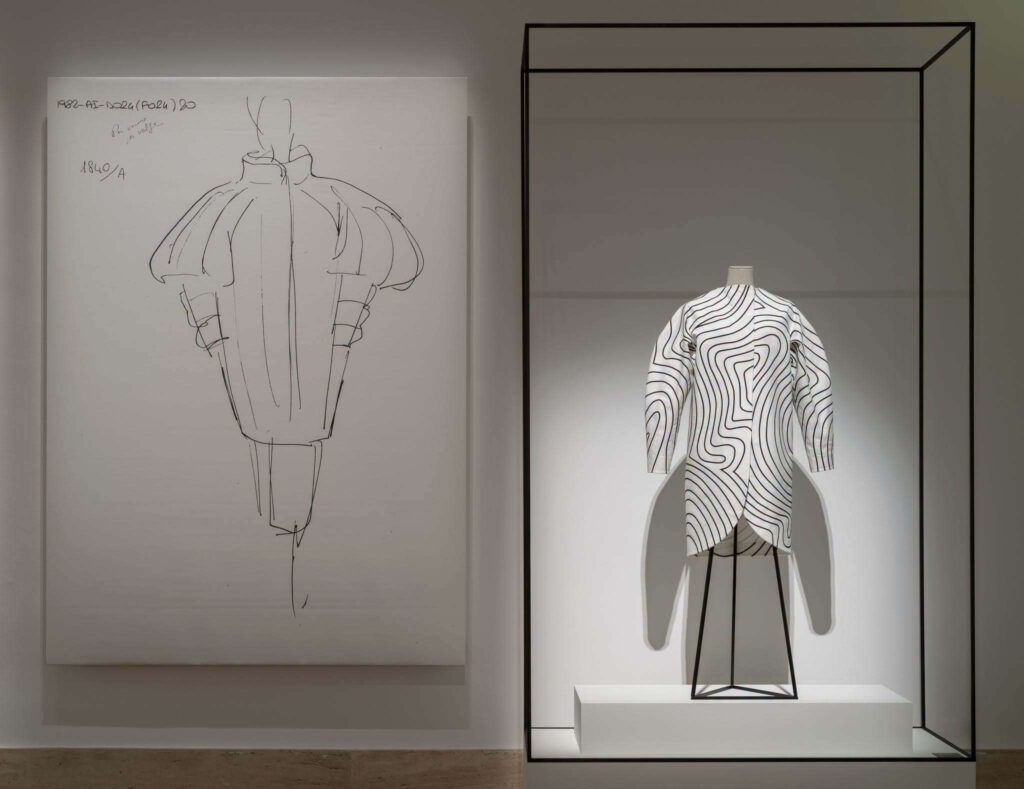
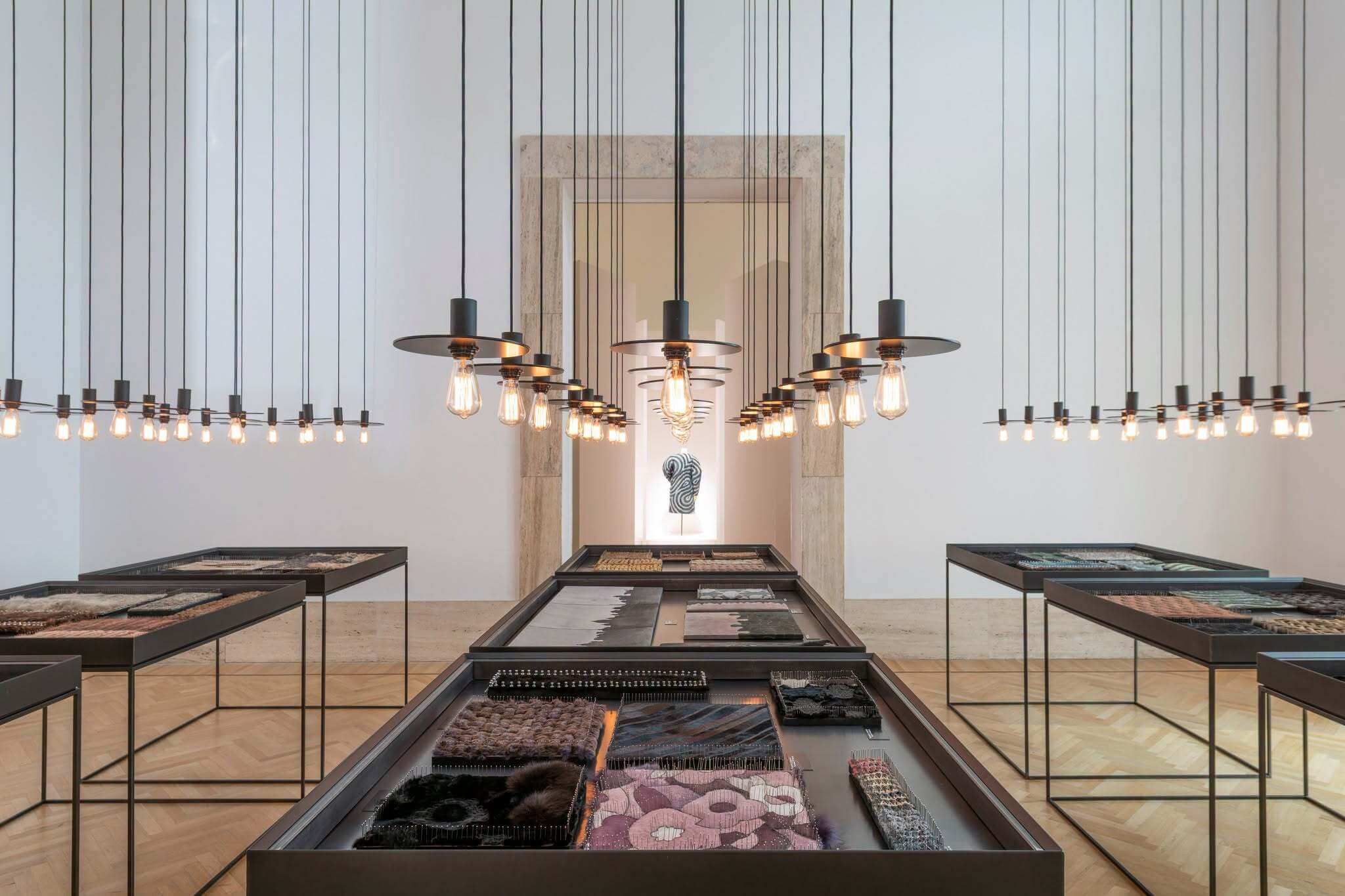
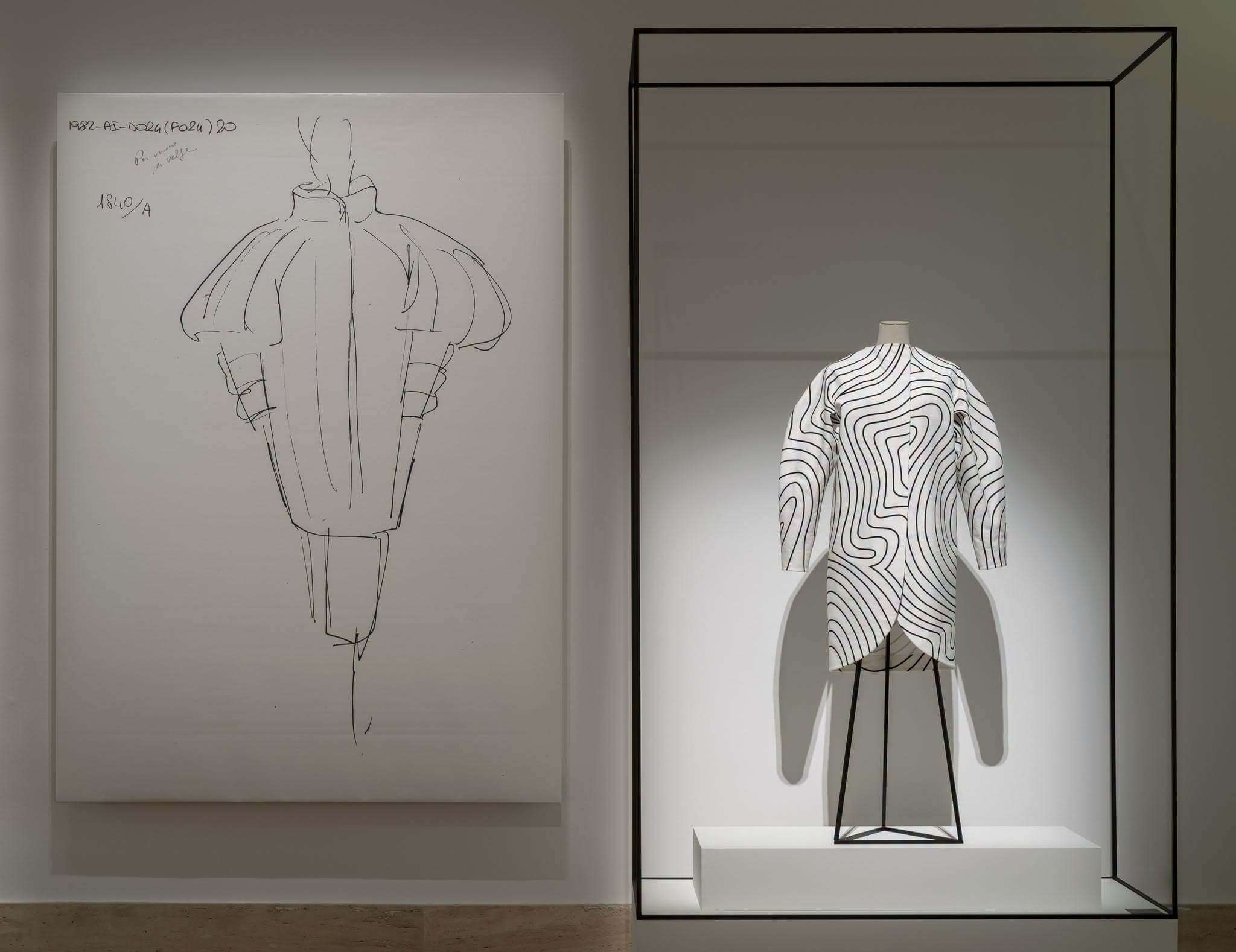
This is not a typical parade of red-carpet gowns. Instead, it faithfully rebuilds the pioneering 1985 show, originally curated by Ida Panicelli with an installation conceived by Lagerfeld himself, one of the first times fashion entered an Italian museum. It subverts expectations of the “finished product,” offering an intimate look at how Lagerfeld actually worked: how his raw sketches and the iconic double-F motif stepped off the page and came to life in the hands of master artisans.

Fendi Karl Lagerfeld 1985 exhibition at Galleria Nazionale, Rome

Inside the Creative Process

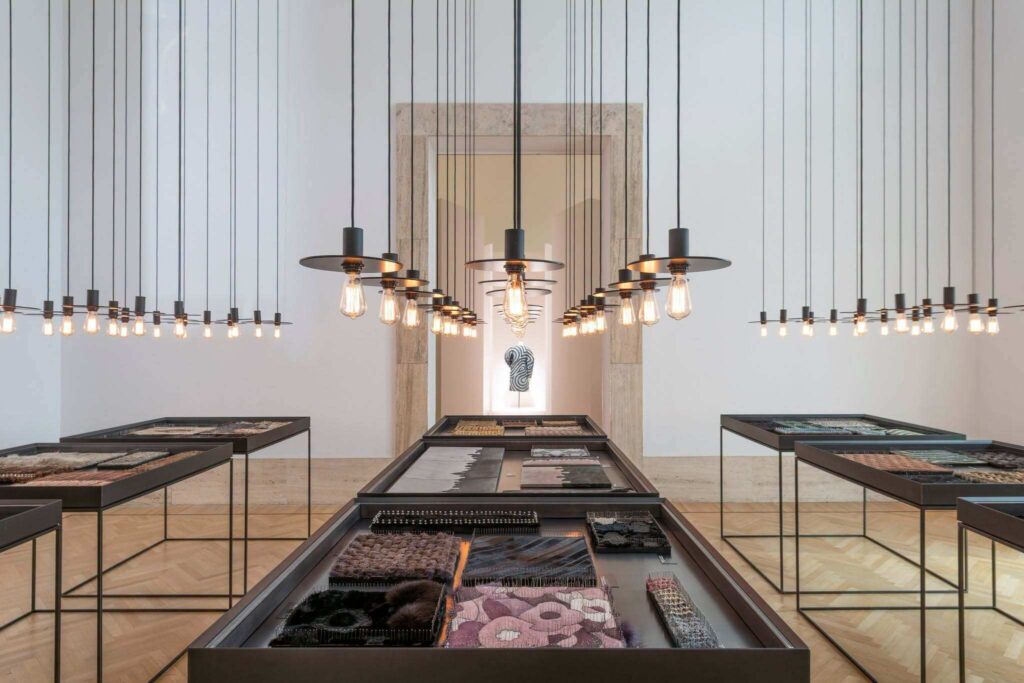
Drawing on the Fendi and GNAMC archives, the exhibition brings together around 180 original drawings, 22 paper patterns, 50 sample boards, preparatory canvases and 25 furs, tracing every stage from idea to finished garment. The sketches reveal how Lagerfeld’s hand evolved over time, from soft, naturalistic female forms to bold, expressive marker lines. Look closely at the margins and you’ll find handwritten notes, references and even French words transcribed into Italian, a quiet reminder of the bilingual, real-time dialogue with a Roman atelier.

Fendi Karl Lagerfeld 1985 exhibition at Galleria Nazionale, Rome

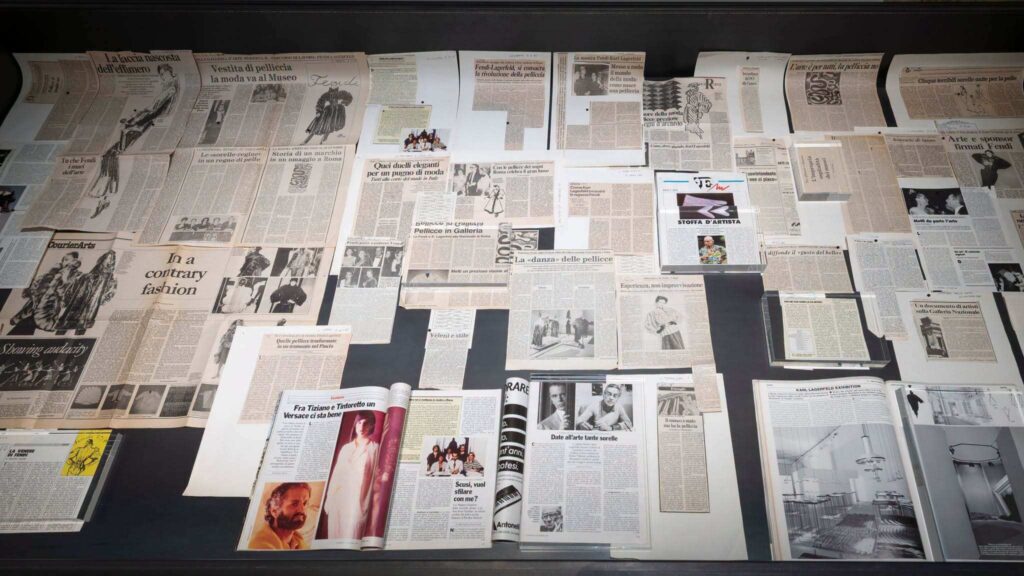
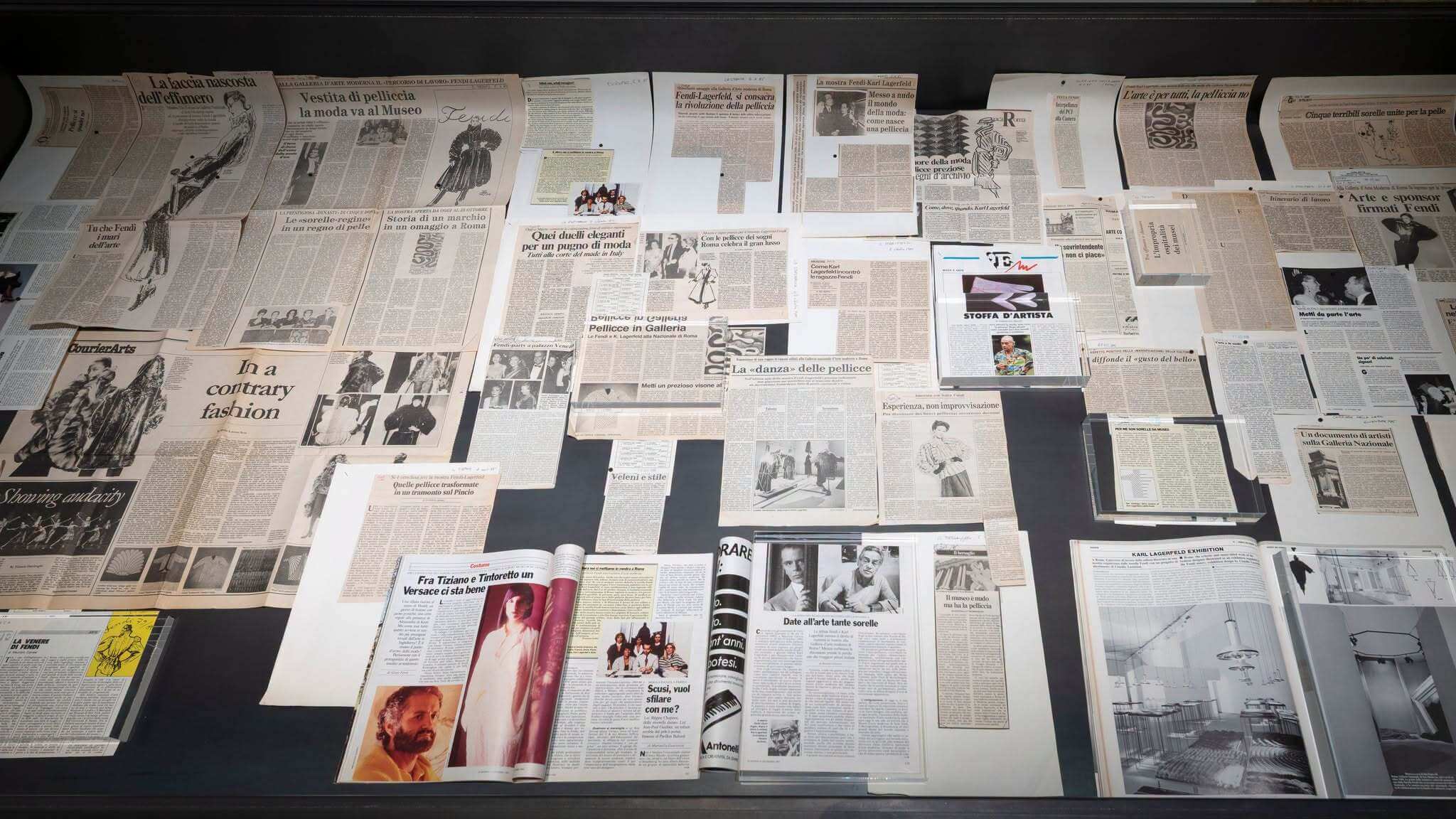
The show guides visitors through the architecture of couture, from paper patterns and canvas prototypes (toiles) to archival footage of Fendi’s deep Roman roots, including Jacques de Bascher’s 1977 film Histoire d’Eau. At its centre, a cluster of coats suspended in mid-air recreates Lagerfeld’s 1985 “Theatre” installation, once famously called the “dance of the furs.” The exhibition closes with a selection of the vast 1985 press coverage, a rare chance to trace how fashion found its place inside the museum.

For anyone drawn to the enduring legacy of Lagerfeld’s genius inside one of Italy’s most storied fashion houses, this is a must-see. Set on Viale delle Belle Arti, a short walk from the Borghese Gallery, it’s one of several major shows in the city this summer. Planning your visit between now and October? See our guide to Rome in August for more to pair with it.

The post FENDI x Karl Lagerfeld at Rome’s National Gallery appeared first on Romeing.

The Boat by Gregory’s: Exclusive Events on the Tiber

Celebrate a special occasion on a historic riverboat

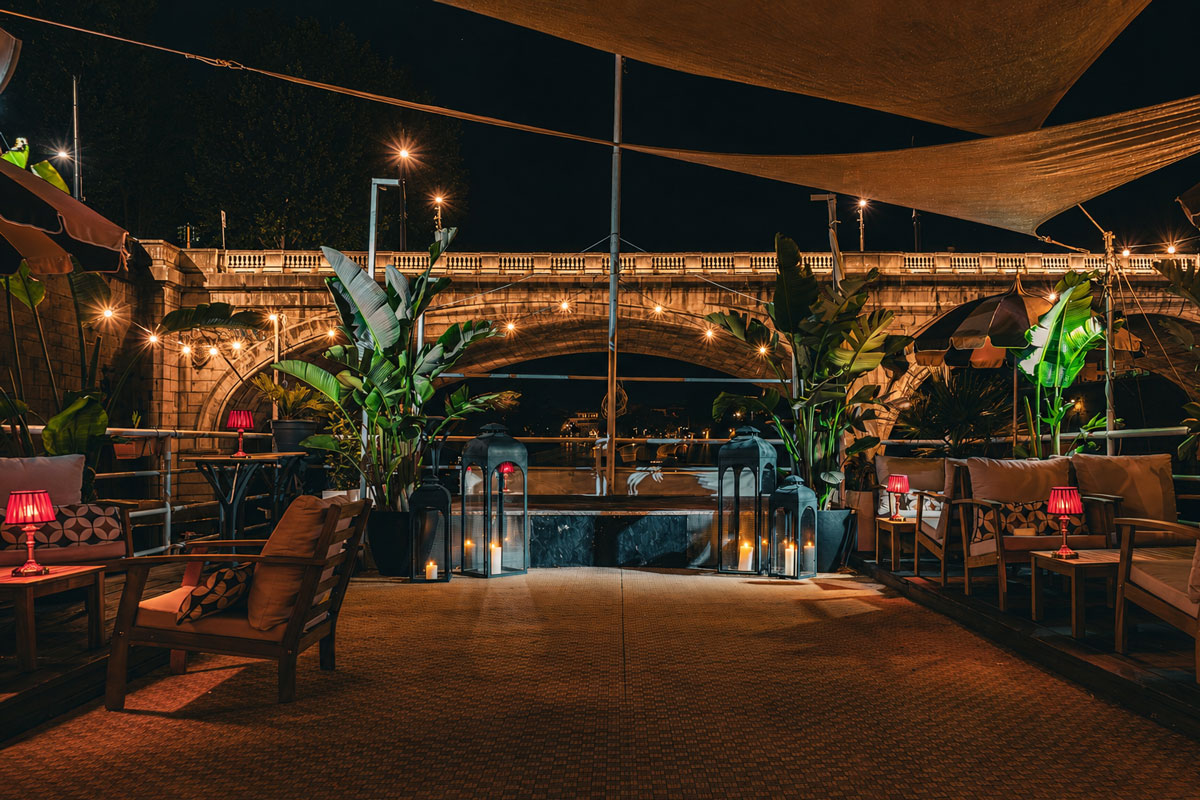
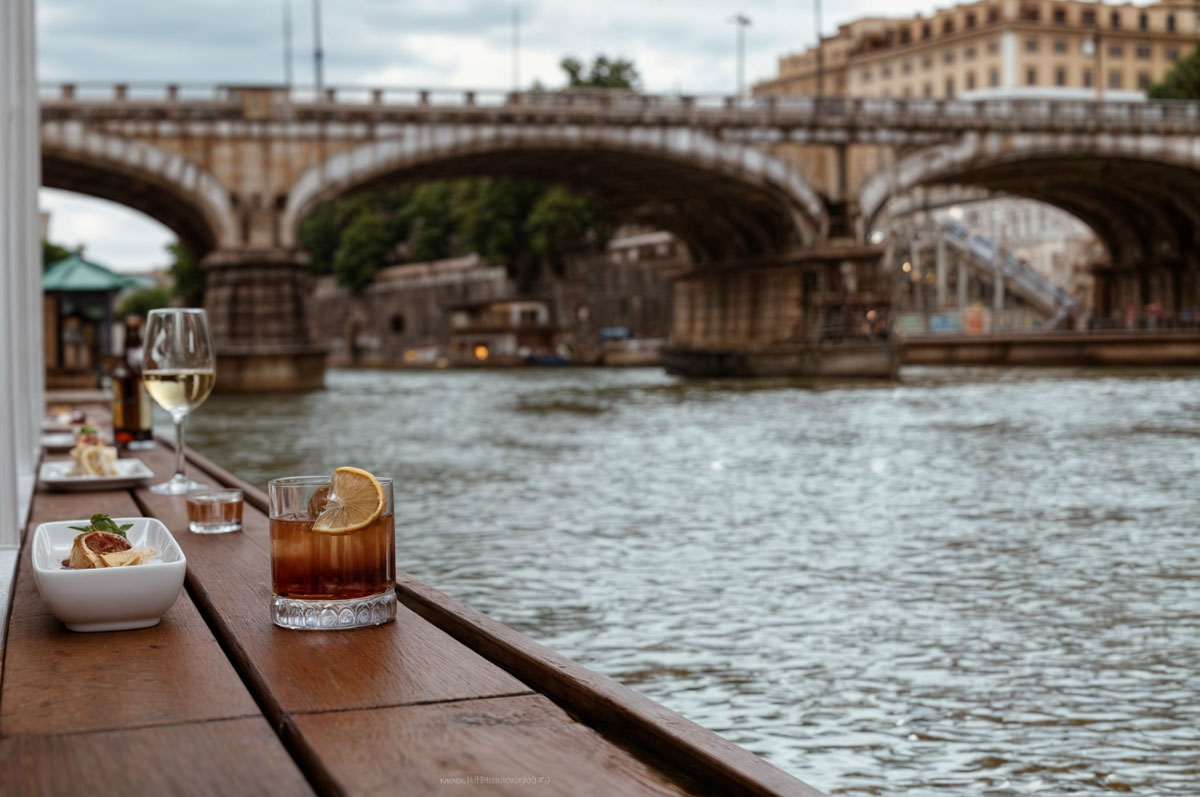
Toasting and dancing on the banks of the Tiber is no longer a dream but a real possibility, thanks to The Boat by Gregory’s, a historic Roman riverboat that transforms into the perfect setting for celebrating a special occasion. If you’re looking for a private event venue in Rome that breaks the mold, this is something no villa or rooftop can offer: a party on the water, in the heart of the city.

The Boat by Gregory’s is not open to the public, but can be booked exclusively for private events of all kinds, becoming an authentic floating lounge and ballroom on Lungotevere Arnaldo da Brescia, just steps from Piazza del Popolo and the city center. The venue hosts a wide range of occasions: birthdays, graduation parties, anniversaries, marriage proposals and wedding receptions, as well as corporate events such as company dinners, brand presentations, networking and incentive events for both Italian and international companies.

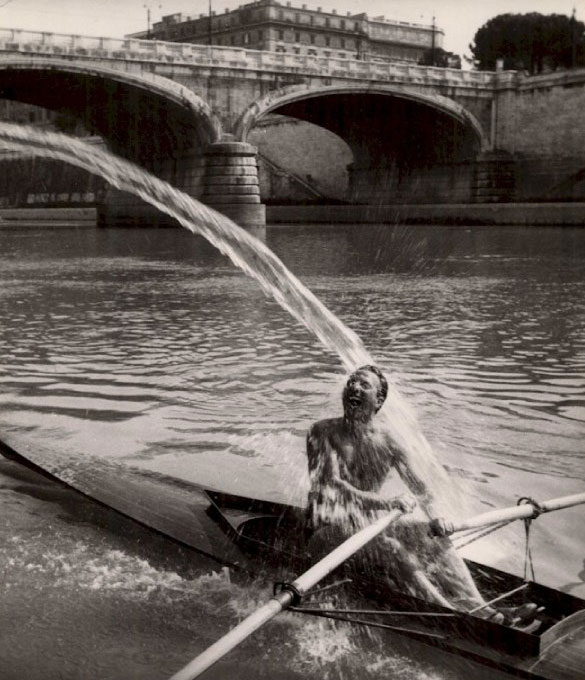
The-Boat-by-Gregory-foto-storica

A venue steeped in history and culture

The riverboat that today hosts The Boat by Gregory’s is the oldest on the Tiber: the structure dates back to 1890, when it was built as the home of a swimming society, the Rari Nantes. In 1920 it was inaugurated as the headquarters of the Dopolavoro Ferroviario, the railway workers’ recreational club, a role it still holds today: not just a mooring point on the river, but a true floating gym dedicated to swimming, diving, rowing and social gatherings. In those years, the bond between Romans and the Tiber was far closer and more part of everyday life than it is today: the riverbanks were a place to meet and unwind, not just a backdrop to be admired from the bridges and photographed for Instagram.

Over the decades, the structure has lived several lives without ever losing its connection to the water where it was born. The latest is The Boat by Gregory’s, born about ten years ago, which has added a new vocation for hospitality and private events to its sporting and social dimension. The riverboat also remains tied to cultural activities, first and foremost jazz, with an occasional program of concerts that every now and then brings the riverside evenings to life.

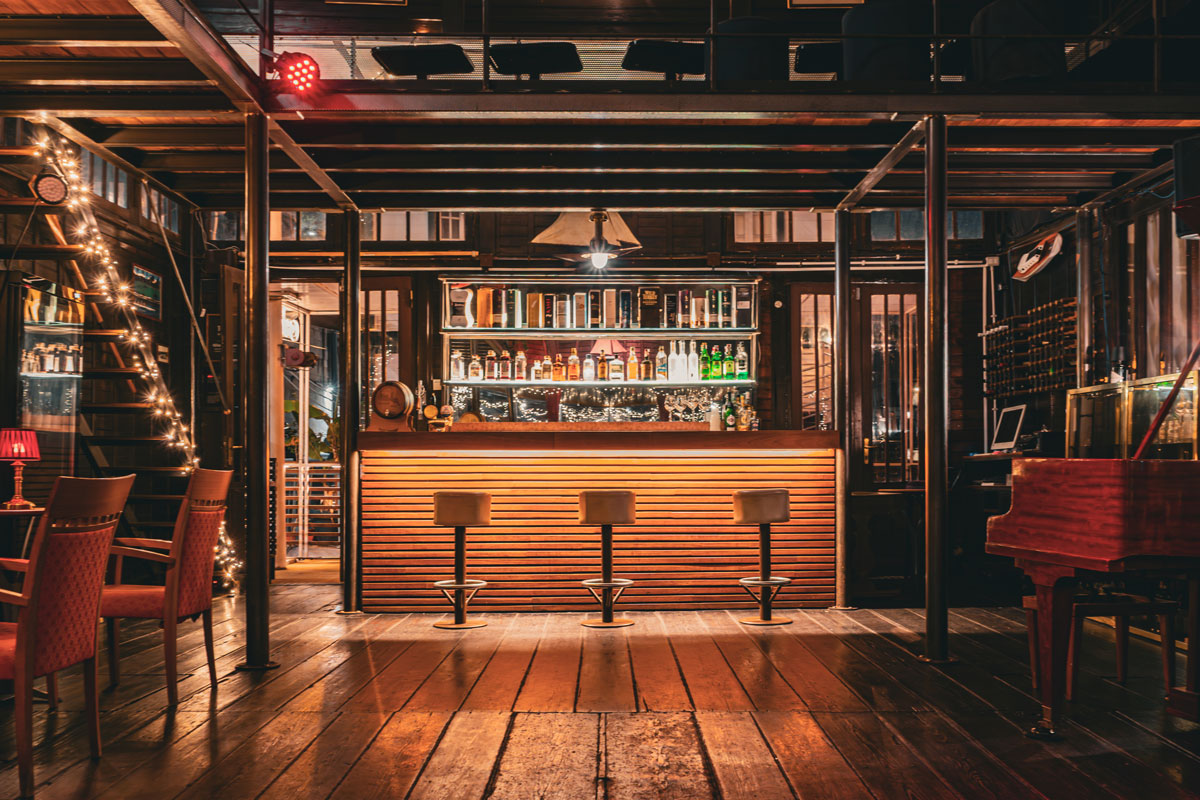
This musical connection stems from its link to the famous Gregory’s Jazz Club on Via Gregoriana, one of the historic venues of the Roman music scene, which gives the location a distinctive sound identity: piano bar, DJ sets, saxophone and live performances can all be woven into the evening’s program, always tailored to the tastes and needs of the event, without ever turning the space into a themed venue.

the-boat-by-gregory-sul-tevere

The spaces: indoor rooms and a panoramic terrace over the Tiber

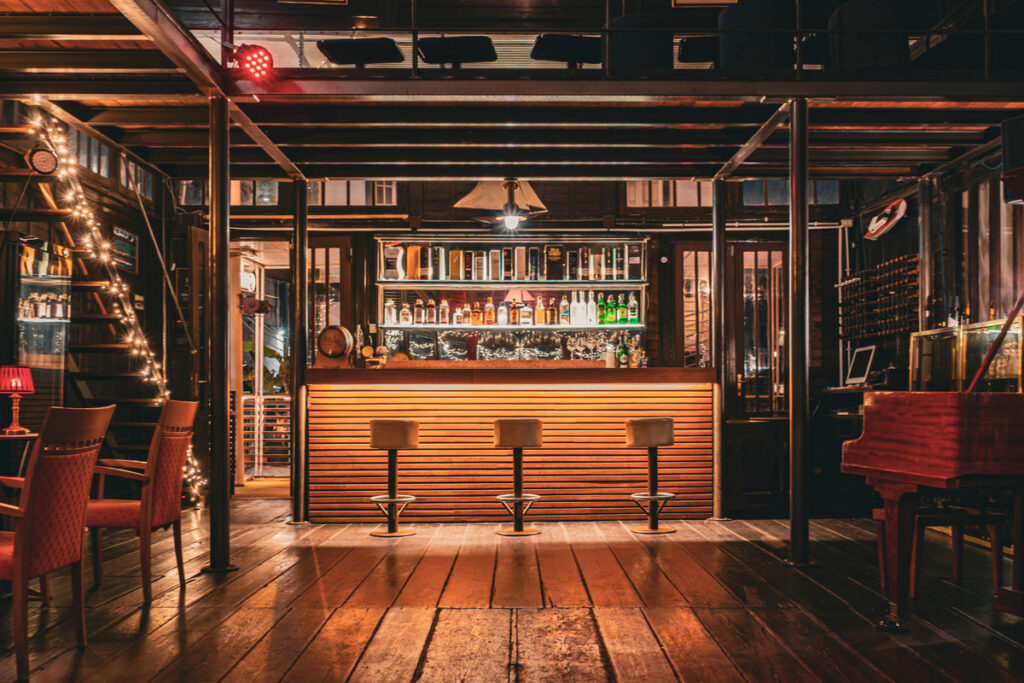
The boat is divided into distinct spaces, each with its own function and atmosphere, designed to suit very different occasions. The Jazz Room is the most intimate and welcoming soul of the venue, perfect for dinners, cocktails, presentations or small private events where a cozier indoor atmosphere is preferred. The Marina Room, on the other hand, lends itself to more convivial moments such as buffets, aperitivos and corporate events, while maintaining a constant visual dialogue with the river even under cover.

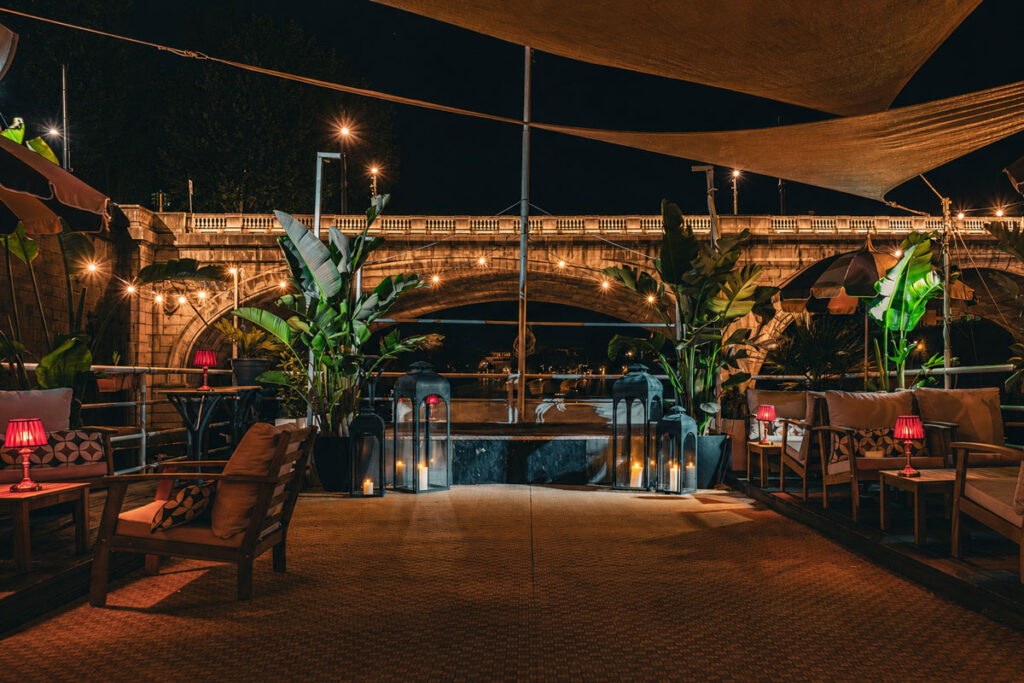
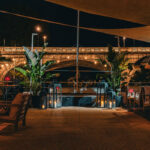
The true standout feature, however, is the panoramic Terrace, overlooking the Tiber directly, offering an unusual perspective on the city and the adjacent bridge. It’s the ideal spot for sunset aperitivos, toasts, cake cuttings or small moments of entertainment with a view of the water. The combination of indoor and outdoor spaces makes it possible to plan events all year round, always guaranteeing a sheltered alternative in case of bad weather or cooler temperatures, without sacrificing the charm of the location.

The-Boat-by-Gregorys-roma

Private parties, but corporate events too

For the business world, The Boat by Gregory’s offers an unconventional alternative to the usual meeting rooms: a central, easily accessible position with plenty of parking nearby, combined with a secluded and distinctive atmosphere. Over the course of a single evening, different moments can follow one another, from the welcome drink to dinner and on to the DJ set, making it the ideal format for company dinners, product launches and networking events.

On the wedding front, it stands as an alternative to villas, rooftops and traditional reception halls, ideal for intimate receptions, welcome dinners or post-ceremony parties, where the Tiber becomes an integral part of the story rather than a simple backdrop. The offer is further enhanced by the possibility of adding private cruises and mini tours on the river, turning the venue not just into a place to host events, but into a true starting point for discovering Rome from an unusual perspective: that of its river history.

One final detail worth mentioning: the boat remains moored at all times, so there’s no risk of finding yourself stuck on the river with nosy colleagues or relatives. You can always step off and head back into the city whenever you like.

The post The Boat by Gregory’s: Exclusive Events on the Tiber appeared first on Romeing.

Teatro Ostia Antica Festival 2026

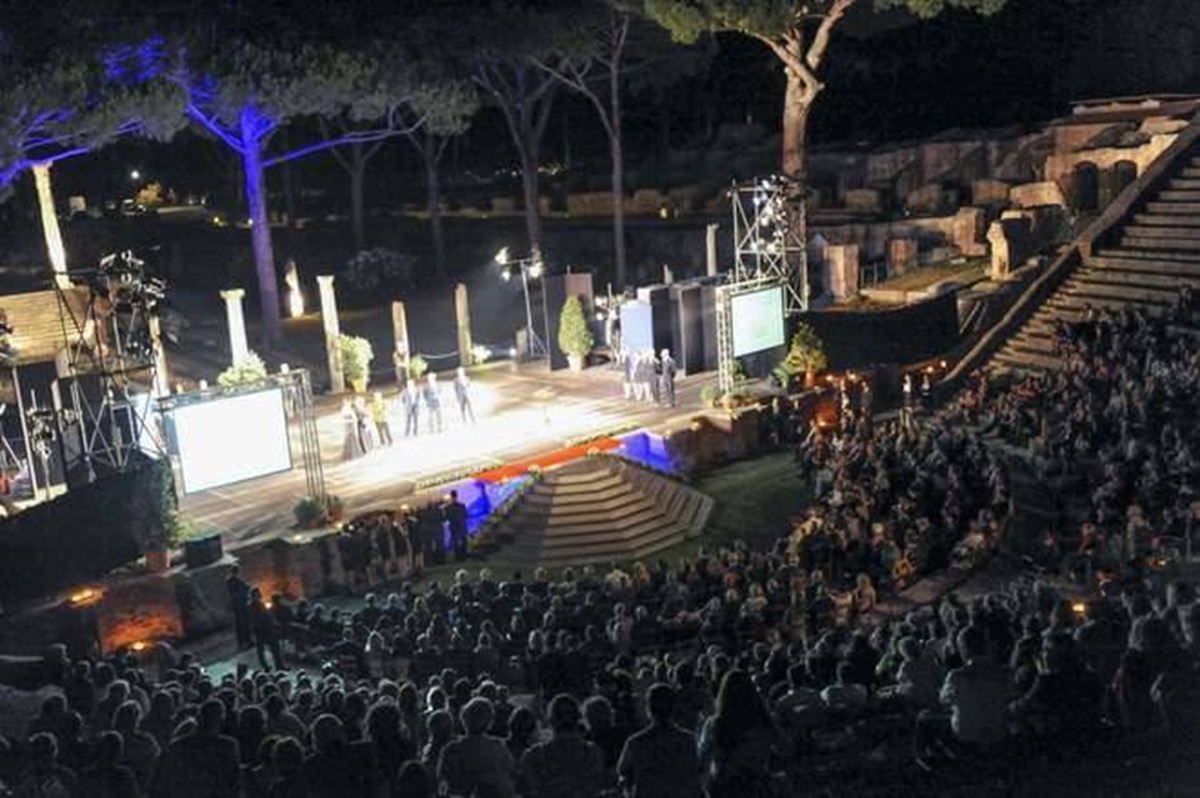
In the evocative setting of the Roman Theatre of Ostia, a series of performances interweaving classical myth with contemporary language

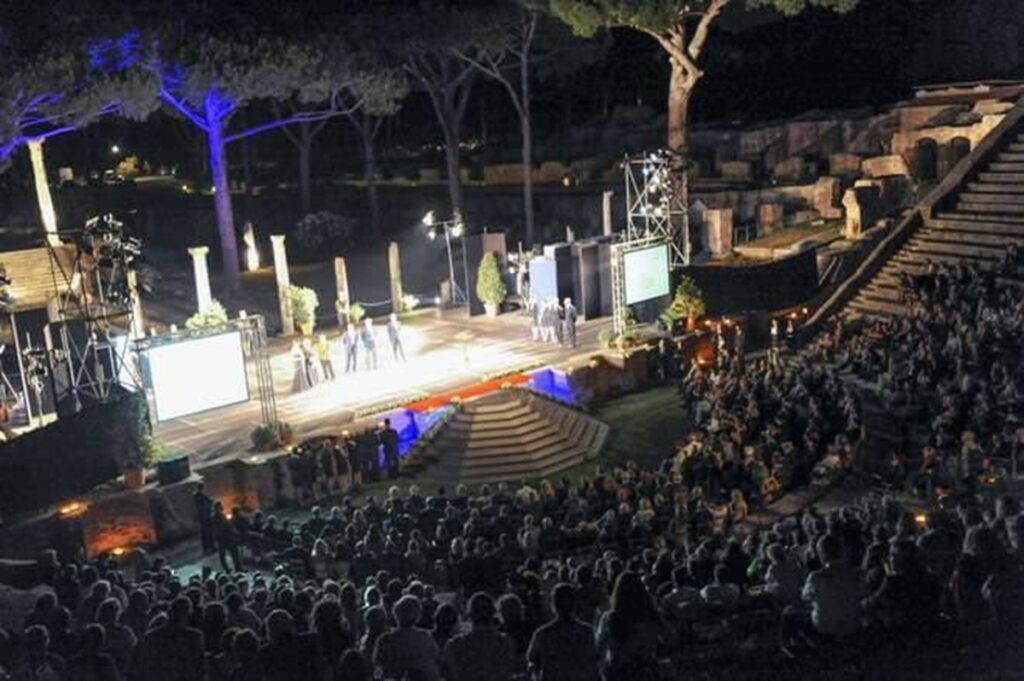
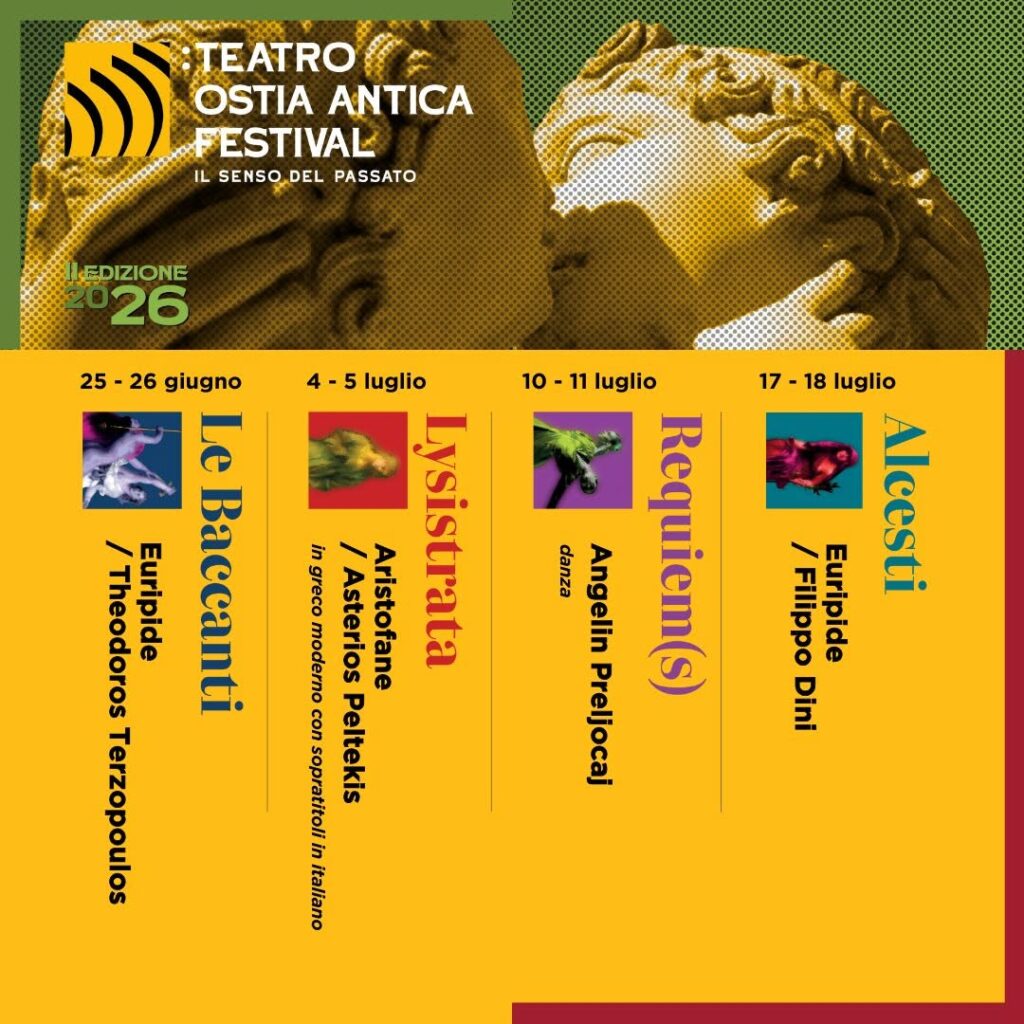
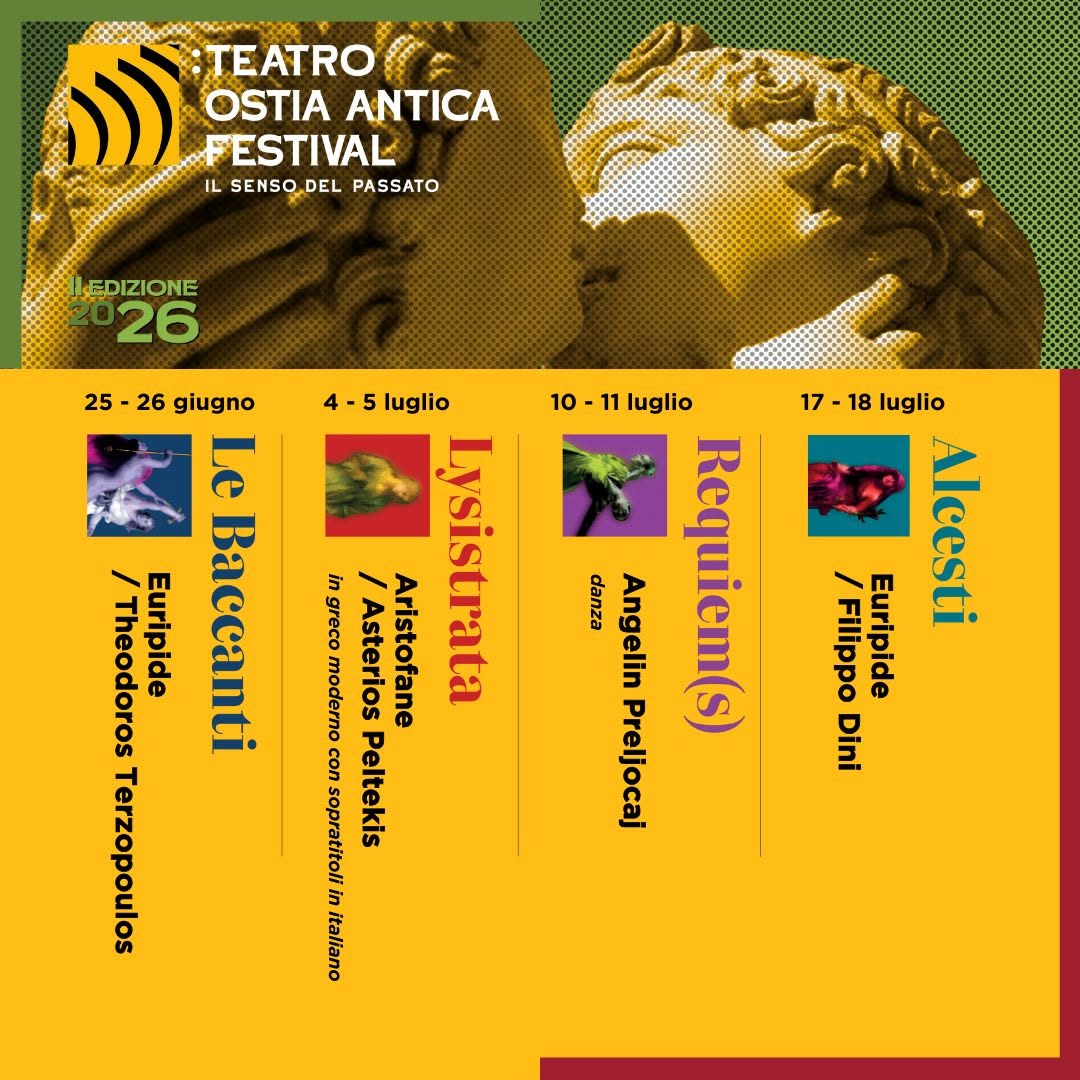
From June 25 to July 18, 2026, the second edition of the Teatro Ostia Antica Festival 2026, entitled The Sense of the Past, will take place. In the extraordinary setting of the Roman Theatre of Ostia, the festival presents an international programme that intertwines the power of classical myth with the languages of the contemporary world, offering a reflection on the challenges of the present.

From Greek tragedy to avant-garde dance, the Festival stands out for the encounter between tradition and the innovation of the contemporary scene, through the creations of four masters of the national and international stage: Theodoros Terzopoulos, Asterios Peltekis, Angelin Preljocaj and Filippo Dini.

For all Festival performances, a shuttle service is available from the Roman Theatre of Ostia to Rome Piramide, in collaboration with Come Back Home, at a cost of €15.

INSPIRATION
Ostia Antica Guided Half-Day Trip

Teatro Ostia Antica Festival 2026

The Programme

The Festival opens on June 25 and 26 with The Bacchae by Euripides, directed for the seventh time by the great Greek master Theodoros Terzopoulos, who comments on the tragedy as follows:

“The Bacchae is an emblematic tragedy for my theatrical vision. It is extremely important to present it at this moment, where Dionysus embodies the archetype of the refugee: having set out from Tmolos three thousand years ago, he travelled through the war zones of the Middle East and ends up today in the Mediterranean Sea, on the shores of Crete or Lampedusa. He returns to us as a stranger and invites us to sacrifice our body on the altar of the Unknown and the Transcendent.”

Theodoros Terzopoulos

On July 4 and 5, Lysistrata by Aristophanes will take the stage: a deeply political and human work centred on the moment when a society, exhausted by suffering, urgently seeks a new way of organising itself. The archetypal figure of the heroine does not propose reforms, nor does she introduce new institutional arrangements. On the contrary, Lysistrata proposes something entirely different: the restoration of the body, desire, care and collective responsibility as political action.

On July 10 and 11, the spotlight turns to dance with Requiem(s), directed by Angelin Preljocaj: an intense reflection on memory, loss and the profound relationship between life and death. A series of choreographies brings to the stage a procession of bodies, seeking to place into perspective the mosaic of emotions experienced after a loss.

The programme closes on July 18 with Alcestis by Euripides, directed by Filippo Dini, which tells the story of an unacceptable death, that of a sacrificial victim.

“Alcestis is frightening because it is the story of a woman who, driven only by the blessed fury of her love for her husband, chooses to die in his place. And it is frightening because she returns from Hades. Four centuries before Christ, an extraordinary woman sacrifices herself for love and returns from death. The woman who comes back from down there is not the same one who left: this Alcestis has now seen and experienced horror and despair beyond all limits. It makes me think of the journey of women through history, from the beginning of time to the present day, of their evolution, their tragic daily deaths, and their possibility of returning from horror to finally confront the object of their infinite love.”

Filippo Dini

teatro ostia antica festival

The post Teatro Ostia Antica Festival 2026 appeared first on Romeing.

Outdoor Movie Theater in Rome: Il Cinema in Piazza 2026

Summer 2026: Rome’s piazzas are once again transformed into movie theaters thanks to the Ragazzi del Cinema America

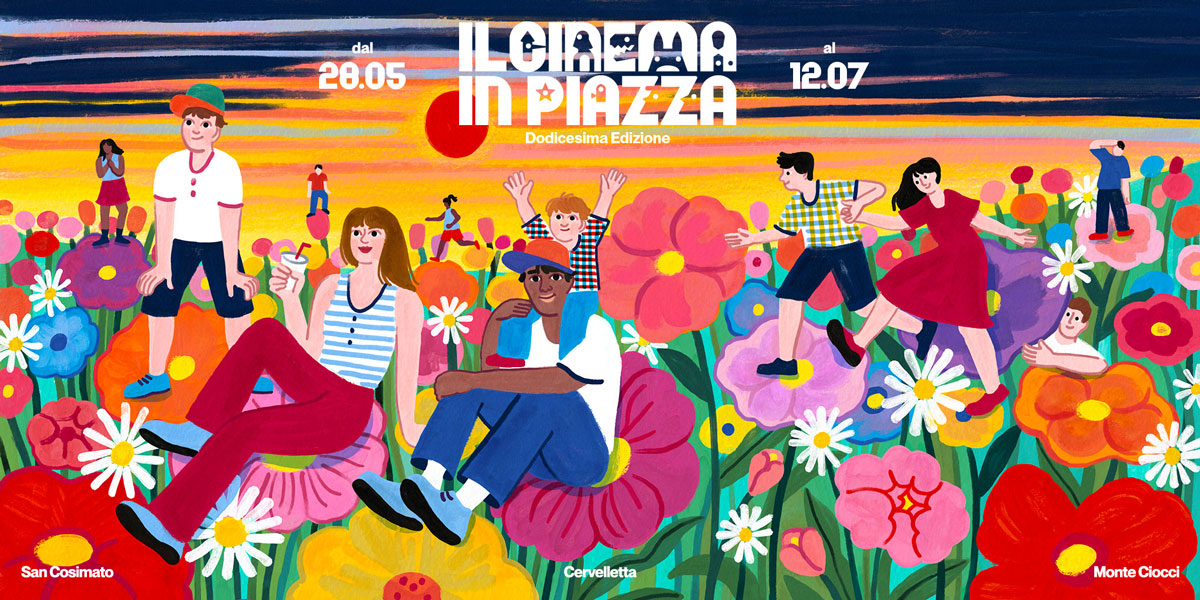
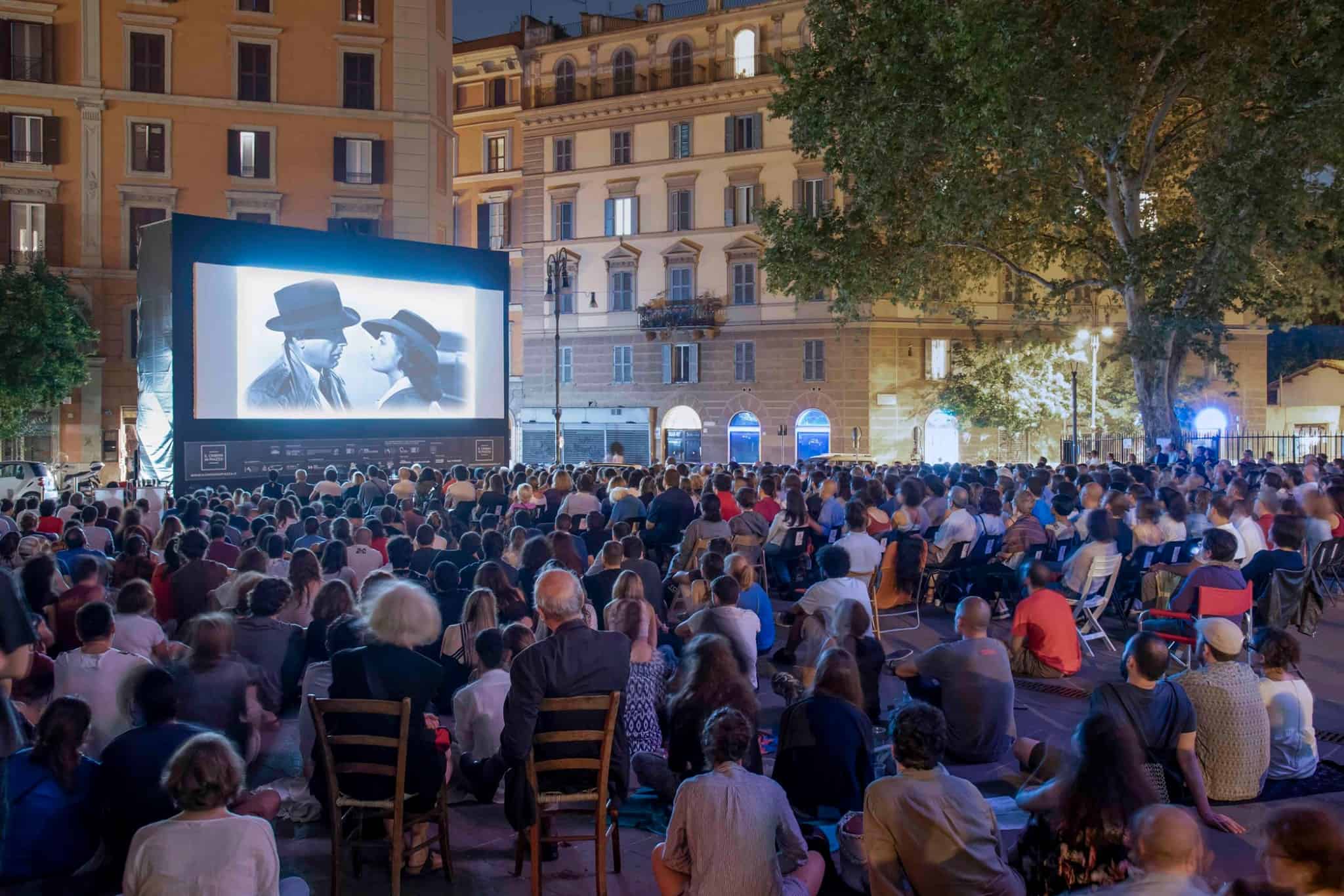
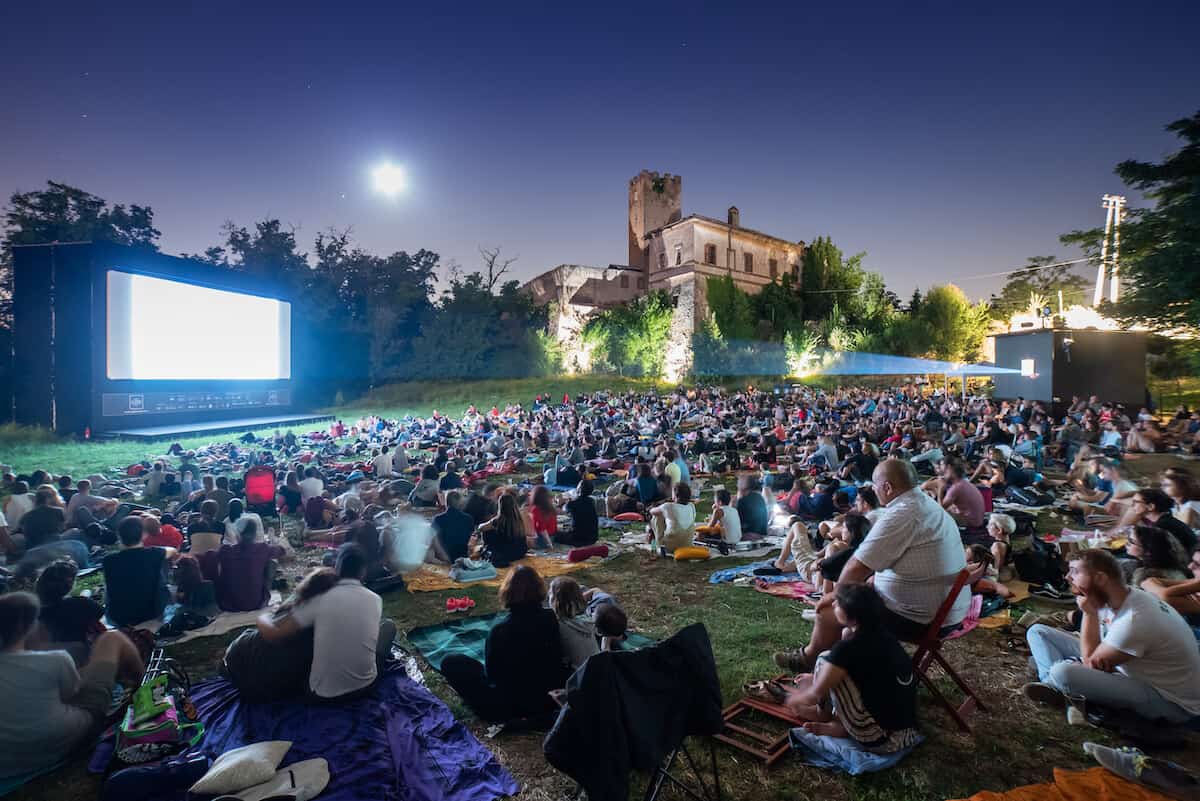
The outdoor film festival Il Cinema in Piazza returns this summer, transforming some of Rome’s most beautiful squares and parks into open-air cinemas from May 28 to July 12.

From Wednesday to Sunday, every evening at 9.15pm, Il Cinema in Piazza presents free screenings in original language with subtitles, as well as Italian classics with English subtitles, making the programme accessible to Rome’s international audience. This year’s edition features 95 screenings, 34 special encounters and several retrospectives across three locations: Piazza San Cosimato in Trastevere, Parco della Cervelletta in Tor Sapienza and Parco di Monte Ciocci in Valle Aurelia.

After the success of last year’s edition, which welcomed over 120,000 attendees, the event, organized by Fondazione Piccolo America, celebrates its twelfth anniversary with a programme that revisits great cinema from the past while also showcasing new independent works from Italy and around the world.

Il-Cinema-in-Piazza-2026---illustrazione-orizzontale

The 2026 edition also welcomes a rich line-up of national and international guests, including Marco Bellocchio, Stefano Nazzi, M¥SS KETA, Fabrizio Gifuni, Barbora Bobulova, Carlotta Gamba, Romana Maggiora Vergano, Bruce LaBruce, Paweł Pawlikowski, David Lowery, Isabella Rossellini, Elettra Rossellini Wiedemann, Ben Russell, Josh O’Connor, Gabriele Muccino, Ian McKellen, Saverio Costanzo, Oliver Stone, Jacques Audiard, Jane Campion, Pablo Larraín, Carlo Verdone, Léa Seydoux, Thom Yorke, Bruce Goldstein, Matteo Garrone, Nicolas Winding Refn, Olivier Assayas, Luca Marinelli and many more.

The programme brings together a rich series of retrospectives dedicated to some of the most influential voices in Italian and international cinema. At Piazza San Cosimato, the focus is on Elio Petri, Josh and Benny Safdie, Hayao Miyazaki and Studio Ghibli, and Gabriele Muccino.

At Parco della Cervelletta, the programme shifts to Alice Rohrwacher, Kenneth Anger, David Lynch’s Twin Peaks and Steven Spielberg, with screenings for both cinephiles and younger audiences.

At Monte Ciocci, the festival explores New York and Rome through Film Forum, alongside retrospectives on Takashi Miike and Edgar Wright, plus a family-friendly selection of DreamWorks Animation classics.


The 2026 program of “Il Cinema in Piazza”

cinema in piazza san cosimato

SAN COSIMATO PROGRAMME (28 May – 12 July) 

  • May 28 – Marco Bellocchio and Stefano Nazzi present Portobello episodes 1-2-3, moderated by M¥SS KETA. With a reading by Fabrizio Gifuni.
  • May 29 – Barbora Bobulova, Carlotta Gamba and Romana Maggiora Vergano present Portobello episodes 4-5-6, moderated by Lisa Ginzburg.
  • May 30Laputa – Castello nel cielo by Hayao Miyazaki
  • May 31Ecco fatto by Gabriele Muccino
  • June 3La decima vittima by Elio Petri
  • June 4The Pleasure of Being Robbed by Josh Safdie
  • June 5 – Paweł Pawlikowski presents My Summer of Love, moderated by Martina Barone
  • June 6Il mio vicino Totoro by Hayao Miyazaki
  • June 7Come te nessuno mai by Gabriele Muccino
  • June 10A ciascuno il suo by Elio Petri
  • June 11Lenny Cooke by Josh and Benny Safdie
  • June 12 – FR*CINEMA Gran Finale: Karma B, Porpora Marcasciano, La Tarantina and Loredana Rossi present Ballata Femmenella
  • June 13La città incantata by Hayao Miyazaki
  • June 14 – Gabriele Muccino presents L’ultimo bacio, moderated by Mariella Lazzarin
  • June 17Indagine su un cittadino al di sopra di ogni sospetto by Elio Petri
  • June 18 – Jacques Audiard presents Emilia Pérez, moderated by Enrico Maria Artale
  • June 19La classe operaia va in paradiso by Elio Petri
  • June 20Ponyo sulla scogliera by Hayao Miyazaki
  • June 21Ricordati di me by Gabriele Muccino
  • June 24 – Saverio Costanzo presents Private
  • June 25Heaven Knows What by Josh and Benny Safdie
  • June 26 – Pablo Larraín presents Jackie
  • June 27I giorni contati by Elio Petri
  • June 28 – Léa Seydoux presents a surprise carte blanche
  • July 1La proprietà non è più un furto by Elio Petri
  • July 2Good Time by Josh and Benny Safdie
  • July 3 – Matteo Garrone presents Io Capitano
  • July 4La storia della Principessa Splendente by Isao Takahata
  • July 5A casa tutti bene by Gabriele Muccino
  • July 8 – Olivier Assayas presents Irma Vep
  • July 9Uncut Gems / Diamanti grezzi by Josh and Benny Safdie
  • July 10Il ragazzo e l’airone by Hayao Miyazaki
  • July 11 – Gregorio Sassoli and Alejandro Cifuentes present San Damiano
  • July 12Gli anni più belli by Gabriele Muccino
Cinema in Piazza 2021

CERVELLETTA PROGRAMME (4 June – 12 July)

  • June 4Blue Velvet / Velluto blu by David Lynch
  • June 5 – Bruce LaBruce presents short films by Kenneth Anger
  • June 6Corpo celeste by Alice Rohrwacher
  • June 7 – Isabella Rossellini and Elettra Rossellini Wiedemann present Casablanca
  • June 10 – Kenneth Anger programme: Lucifer Rising, Don’t Smoke That Cigarette!, Mouse Heaven, Foreplay and The Spells of Kenneth Anger
  • June 11 – Alice and Alba Rohrwacher present Le meraviglie
  • June 12Twin Peaks – Northwest Passage by David Lynch and Mark Frost
  • June 13 – Josh O’Connor presents Accattone
  • June 14Hook – Capitan Uncino by Steven Spielberg
  • June 17 – Oliver Stone presents Any Given Sunday / Ogni maledetta domenica
  • June 18Incontri ravvicinati del terzo tipo by Steven Spielberg
  • June 19Twin Peaks episodes 2-3
  • June 20Lazzaro felice by Alice Rohrwacher
  • June 21L’impero del sole by Steven Spielberg
  • June 24 – Kenneth Anger programme: Inauguration of the Pleasure Dome, Kustom Kar Kommandos, Invocation of My Demon Brother, The Man We Want to Hang and Elliott’s Suicide
  • June 25 – Eterobasiche and Tahir Hussain present Twilight
  • June 26Twin Peaks episodes 4-5
  • June 27Futura by Alice Rohrwacher, Pietro Marcello and Francesco Munzi
  • June 28E.T. l’extra-terrestre by Steven Spielberg
  • July 1A Philological Quandary, Kenneth Anger’s ¡Que Viva Mexico! by Bruce Posner and The Loveless by Kathryn Bigelow and Monty Montgomery
  • July 2 – Thom Yorke presents Children of Men / I figli degli uomini
  • July 3Twin Peaks episodes 6-7
  • July 4La chimera by Alice Rohrwacher
  • July 5 – Nicolas Winding Refn presents The Hunger / Miriam si sveglia a mezzanotte
  • July 8Jurassic Park by Steven Spielberg
  • July 9 – Camilla Salvatore presents Il Capitone
  • July 10Twin Peaks episode 8 and Fire Walk with Me / Fuoco cammina con me + Missing Pieces
  • July 11 – Alice Rohrwacher shorts and works, including Un piccolo spettacolo, Una canzone, Quattro strade, Ad una mela, Le pupille, Omelia contadina and Allégorie Citadine
  • July 12Il GGG by Steven Spielberg
cinema-in-piazza-roma

MONTE CIOCCI PROGRAMME (6 June – 12 July)

  • June 6 – David Lowery presents A Ghost Story
  • June 7Audition by Takashi Miike
  • June 10Shaun of the Dead / L’alba dei morti dementi by Edgar Wright
  • June 11Speedy / A rotta di collo by Ted Wilde
  • June 12Spirit – Cavallo selvaggio by Kelly Asbury and Lorna Cook
  • June 13Visitor Q by Takashi Miike
  • June 14 – Ian McKellen presents Les Vacances de M. Hulot / Le vacanze del signor Hulot
  • June 17Hot Fuzz by Edgar Wright
  • June 18Risate di gioia by Mario Monicelli
  • June 19 – Jane Campion presents Il giardino dei Finzi Contini by Vittorio De Sica
  • June 20 – Laura Samani and Celeste Cescutti present Piccolo corpo
  • June 21Sukiyaki Western Django by Takashi Miike
  • June 24The World’s End / La fine del mondo by Edgar Wright
  • June 25The Naked City / La città nuda by Jules Dassin
  • June 26Kung Fu Panda by Mark Osborne and John Stevenson
  • June 27 – Carlo Verdone presents Una giornata particolare by Ettore Scola
  • June 28Il robot selvaggio by Chris Sanders
  • July 113 Assassins / 13 assassini by Takashi Miike
  • July 2 – Bruce Goldstein presents The Taking of Pelham One Two Three / Il colpo della metropolitana
  • July 3Baby Boss by Tom McGrath
  • July 4 – Cine-concert: Häxan / La stregoneria attraverso i secoli
  • July 5Over Your Dead Body by Takashi Miike
  • July 8 – Cine-concert: Stachka / Sciopero!
  • July 9Lo sceicco bianco by Federico Fellini
  • July 10 – Alissa Jung, Luca Marinelli, Juli Grabenhenrich and Cristina Bartoletti present Paternal Leave
  • July 11Last Night in Soho / Ultima notte a Soho by Edgar Wright + Àcanto by Collettivo MMMH
  • July 12First Love / L’ultimo yakuza by Takashi Miike

CINEMA TROISI PROGRAMME

  • June 3, 9.30pm – Bruce LaBruce presents The Visitor by Bruce LaBruce, moderated by Mariella Lazzarin
  • June 10, 9.30pm – Ben Russell presents A Spell to Ward Off the Darkness by Ben Rivers and Ben Russell, moderated by Pier Giovanni Adamo
  • June 13, 5pm – Rosario Dawson and Gabriele Muccino present Seven Pounds / Sette Anime by Gabriele Muccino
  • June 28, 9.30pmScott Pilgrim vs. The World by Edgar Wright
  • July 5, 5.30pm – Nicolas Winding Refn presents Her Private Hell
  • July 5, 9.30pmThe Running Man by Edgar Wright
  • July 10, 9.30pmThe Smashing Machine by Benny Safdie
  • July 11, 9.30pmMarty Supreme by Josh Safdie

All films will be shown in the original language with Italian subtitles. 

cinema in piazza roma

Cinema in Piazza is organized by “Fondazione Piccolo America,” a group dedicated to promoting culture and film. They say the goal of “Il Cinema in Piazza” is in “the contemporary involvement of the center and the suburbs” which seeks to uniquely “rebuild a sense of community, promoting a knowledge accessible to all with free and shared projections.” Additionally, Cinema In Piazza promotes the cultural importance of the event, saying “the projection does not end in the mere vision of the show, but becomes an experience of intense civil and social value.”

The event had previously been held in Piazza San Cosimato under the name “Festival Trastevere Rione del Cinema,” but faced a dispute with Rome’s deputy mayor and culture councilor, Luca Bergamo. Instead of limiting the hours, like Bergamo wanted, the event grew after being supported by well-known figures in film, such as Martin Scorsese and “Pif” Pierfrancesco Diliberto.

Now, Cinema In Piazza’s project is continuing in an even more concrete direction, seeking to unite all of Rome through film by “connecting three nerve centers [in the city] through the construction of three contemporary arenas.”


FROM 28 MAY TO 12 JULY 2026

Locations:

Piazza San Cosimato – Trastevere

Monte Ciocci – Via Domizia Lucilla, 76

Casale della Cervelletta – Parco della Cervelletta in Tor Sapienza

Movie screenings at 9:15pm

Free entry, no reservation required

ilcinemainpiazza.it

The post Outdoor Movie Theater in Rome: Il Cinema in Piazza 2026 appeared first on Romeing.

Mostò: the Wine Bar That Changed Flaminio

A go-to address for wine lovers in Rome

There is a before and after in the Flaminio neighborhood, and Mostò stands right in the middle.

When it first opened, natural wine was not yet a trend. In fact, in Rome, few people were really talking about it. Mostò was one of the first wine bars in the city to truly believe in it, focusing on small producers, short supply chains, and a more authentic way of drinking. At the time, Flaminio was still a fairly quiet neighborhood, with only a handful of interesting addresses. Mostò quickly became a point of reference: a place that attracted people, brought them together, and helped change the face of the area.

Behind the project are three partners: Ciro, Alessia, and Valerio. Their idea was to create a place that could be a wine bar, a neighborhood shop, and a convivial space all at once. Somewhere to drop by, stop for a chat, enjoy a glass of wine, have an aperitivo, or stay for a proper dinner.

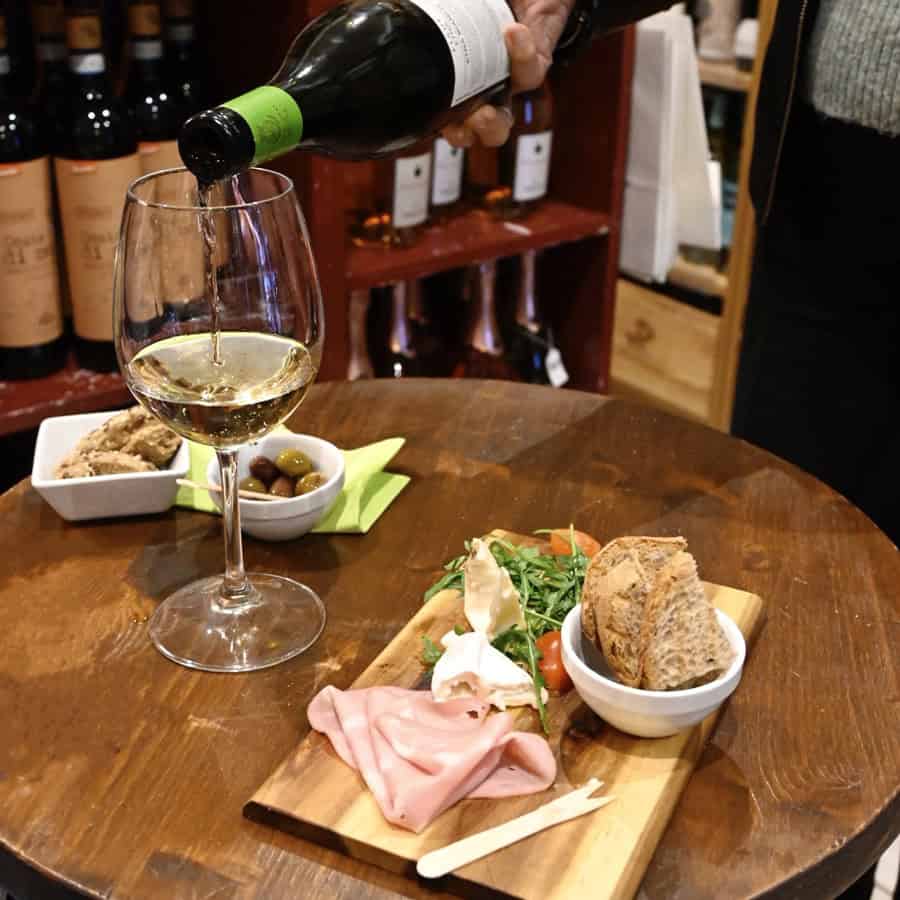
Wine is at the heart of everything. The list features around 350 to 400 labels, with a strong focus on Italian wines but also interesting selections from France, Spain, and other European countries. Ciro personally knows many of the producers and suppliers, and the selection has been built over time through direct relationships and thoughtful choices. By the glass, there are around 15 options, perfect for exploring.

The same attention goes into the ingredients. The cured meats come from quality producers such as Re Norcino, with the coppa and mortadella not to be missed, while the cheeses are selected from small local producers, including Ammano.

mosto winebar in rome's flaminio

In the kitchen is the third partner, Valerio Romani, a chef and pastry chef with over 25 years of experience and an impressive background that includes time at Troiani and Terrinoni. The menu changes often, following the seasons and the chef’s inspiration, but always keeps a clear identity: generous, satisfying dishes that are never predictable.

Among the current dishes are flavorful panelle with creamed salt cod, as well as green falafel with fava beans, served with pecorino sauce. One of the signature dishes is the Daje de Taco, daje de punta, a taco filled with veal brisket, broccoli guacamole, and lentil chili. Also very tempting is the hot dog with Re Norcino würstel, friarielli, and potatoes.

Desserts are part of the experience too, such as the sesame cream with mango and sesame brittle, a balanced way to end the meal.

INSPIRATION
Rome Wine Bar Guide

mosto winebar in rome's flaminio

Mostò is a neighborhood wine bar in the truest sense of the term: a lively, informal yet carefully curated place, the kind of place you want to return to. Not just to drink well, but to feel part of something.

Mostò is open Monday to Saturday from 5:30pm to 11:30pm, and on Sunday from 12:00pm to 6:00pm.

In a changing Rome, Mostò remains a point of reference. Not because it follows trends, but because it anticipated them.

The post Mostò: the Wine Bar That Changed Flaminio appeared first on Romeing.

Bernini and the Barberinis at Palazzo Barberini

Bernini & Pope Urban VIII: Patronage and the Baroque Revolution (Feb 12 – Jun 14, 2026)

After the huge success of the exhibition dedicated to Caravaggio, Palazzo Barberini pays tribute to another great 17th-century master: Gian Lorenzo Bernini.

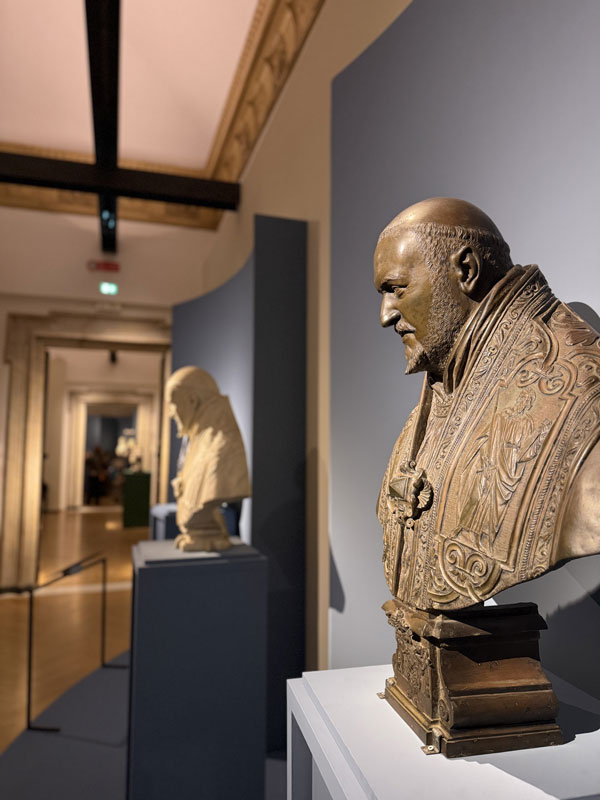
The exhibition Bernini and the Barberini, curated by Andrea Bacchi and Maurizia Cicconi, opened its doors just a few days ago, coinciding with the 400th anniversary of the consecration of the new St Peter’s Basilica, one of the places where Bernini’s genius had the chance to develop projects and ideas, commissioned by Maffeo Barberini, better known as Pope Urban VIII.

The exhibition focuses precisely on these two key figures of the Roman Baroque and on the patron-artist relationship that grew between them. It was the so-called mirabil congiuntura, mentioned in ancient sources, that gave rise to one of the most fascinating artistic and intellectual partnerships in art history.

It was Pope Barberini who immediately recognised the young artist’s incredible potential, taking him under his protective wing and entrusting him with numerous commissions.

INSPIRATION
Where to see Bernini’s Masterpieces in Rome

Exhibition route

Bernini and the Barberini is arranged in six sections tracing Gian Lorenzo Bernini’s journey from his early years in his father’s workshop to full artistic maturity, while highlighting the decisive role of Maffeo Barberini (later Pope Urban VIII) in shaping a visual language that would become a model for the European Baroque.

Bernini e i Barberini
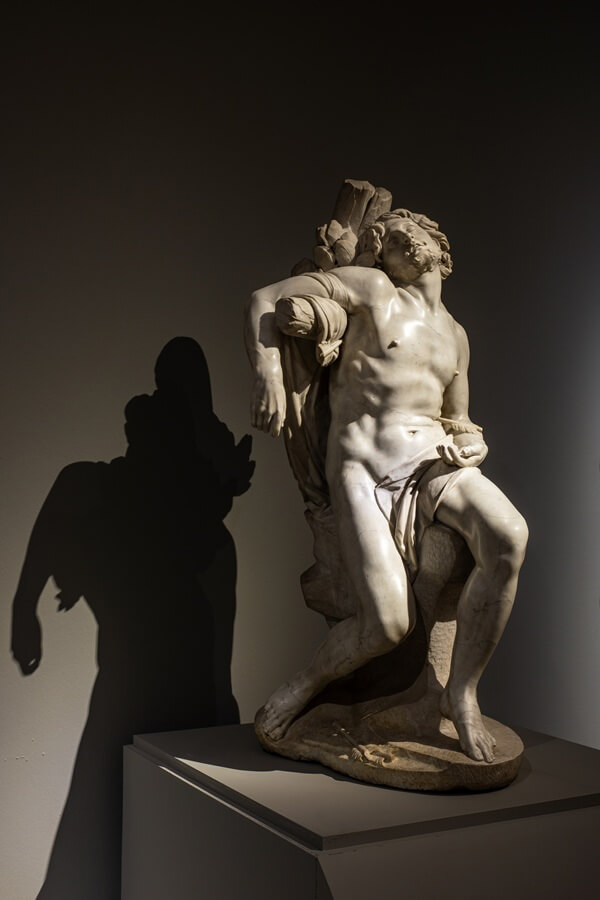
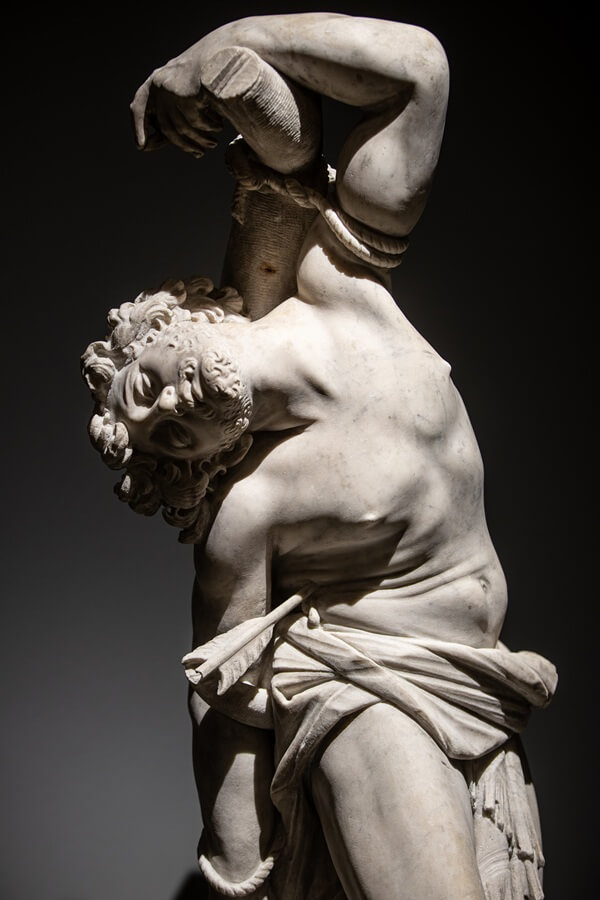
Gian Lorenzo Bernini, San Sebastiano, 1617, Marmo, Collezione privata
Bernini e i Barberini
Gian Lorenzo Bernini (attribuito). San Sebastiano, 1617 -1618, Marmo, Jouy en Josas (Yvelines), chiesa di San Martino

1) Claiming Him as His Own: Maffeo “discovers” Bernini
The opening section reconstructs the moment Barberini recognises the young prodigy and helps him step out from Pietro Bernini’s shadow. Works by father and son appear alongside key early masterpieces by Gian Lorenzo, already marked by lifelike movement, sensuous surfaces and direct emotional impact, foreshadowing the Baroque.

bernini-and-the-barberinis-palazzo-barberini-rome-(2)

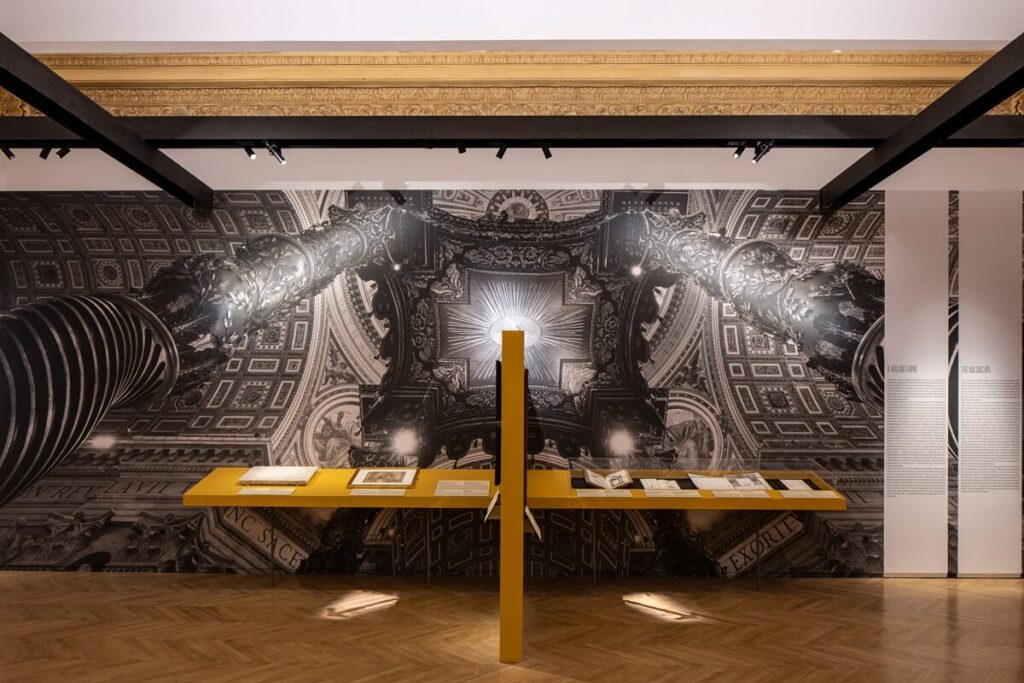
2) Ne plus ultra: The New Saint Peter’s
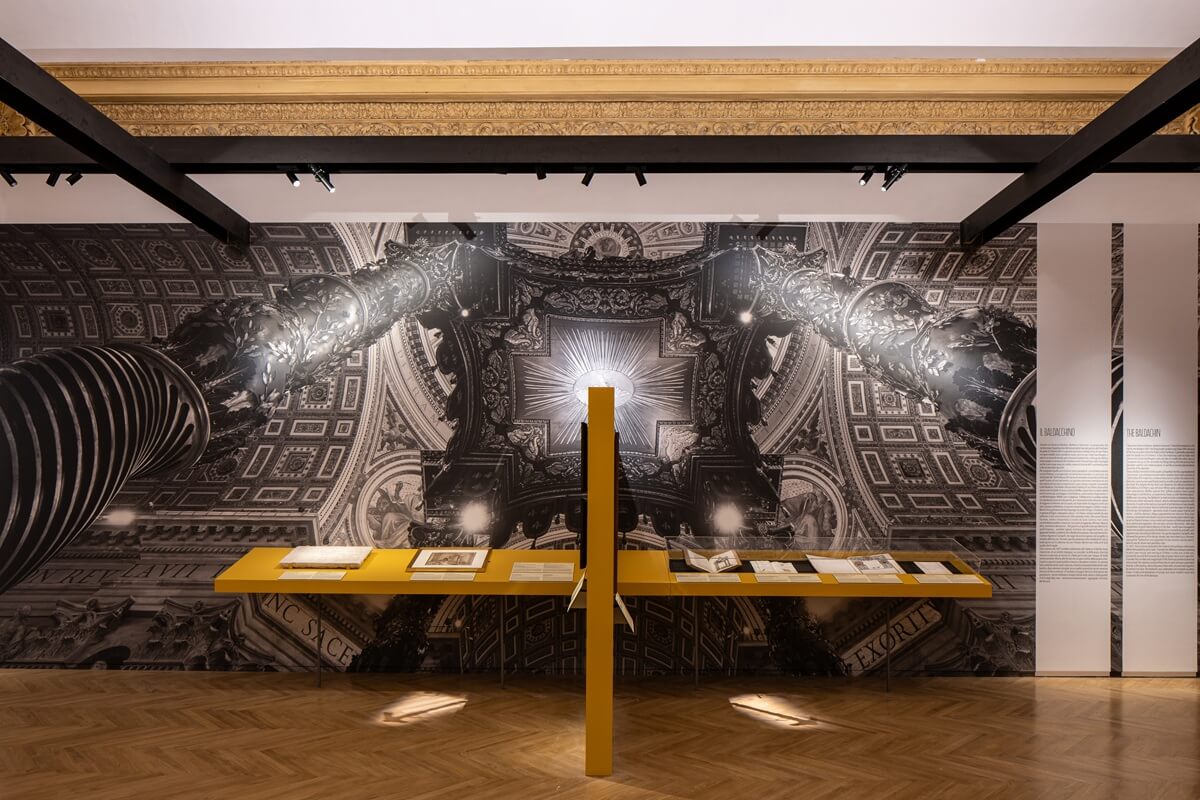
Dedicated to Bernini’s work in St Peter’s Basilica after its consecration in 1626, this section centres on the Baldacchino, commissioned when he was just over twenty-five. Drawings and models reveal how Bernini fused architecture, sculpture and decoration into a single theatrical statement, conceived in dialogue with the basilica’s surrounding elements.

bernini-and-the-barberinis-palazzo-barberini-rome-(1)

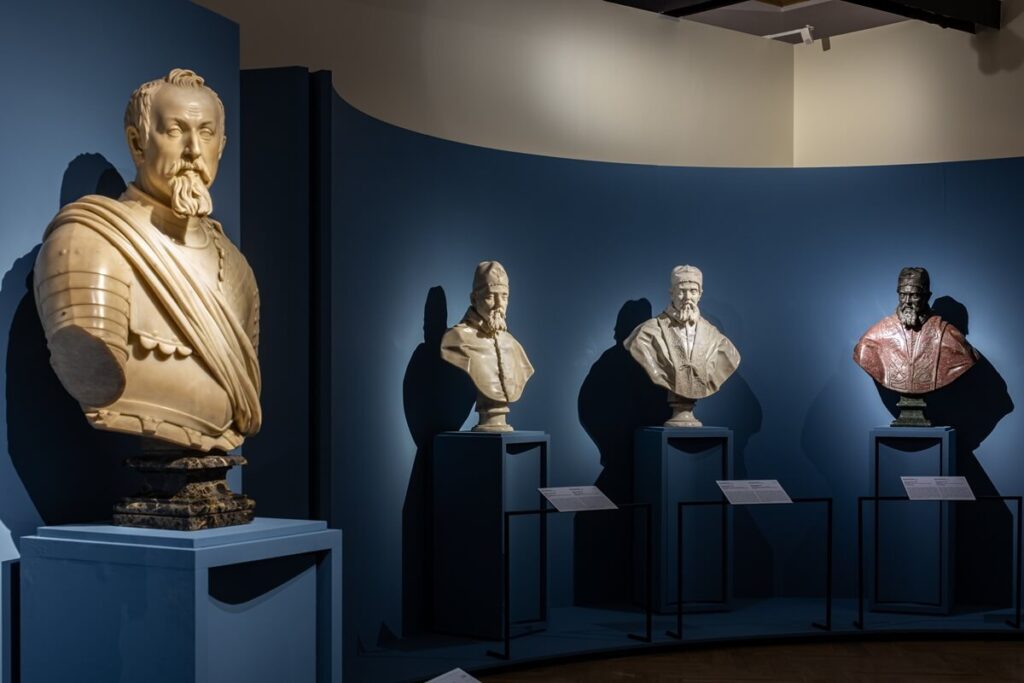
3) The Pope’s Image: Bernini as Portraitist
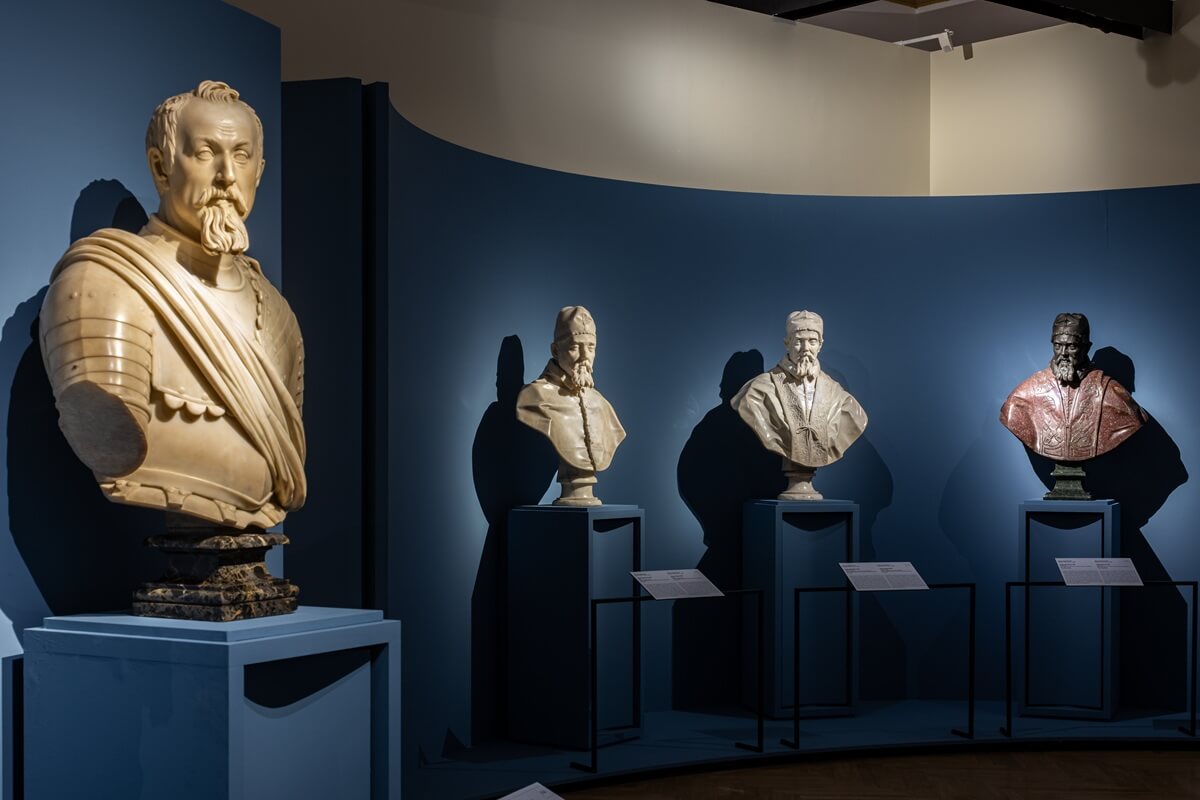
Here the focus shifts to Bernini’s papal portraiture, from his early busts of Paolo V and Gregorio XV to the extraordinary series of portraits of Urban VIII. Shown together, these busts chart the evolution of a portrait formula that combines psychological intensity with a powerful image of spiritual and temporal authority.

bernini-and-the-barberinis-palazzo-barberini-rome-(1)
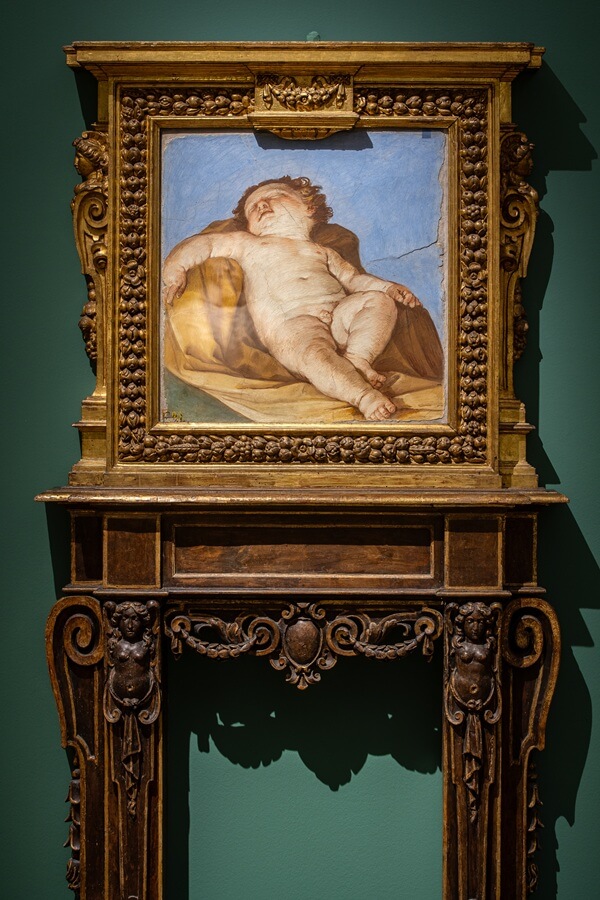
Guido Reni, Putto dormiente, 1627
Affresco strappato,
Roma, Galleria Nazionale di Arte Antica, Palazzo Barberini

4) Palazzo Barberini: A Choral Masterpiece
This section highlights the exhibition’s setting, Palazzo Barberini, presented as a collaborative Baroque achievement shaped by Bernini, Borromini and Pietro da Cortona. Drawings, models and artworks reveal Bernini’s role beyond sculpture, from architectural ideas to furnishings and decorative design, alongside masterpieces from the Barberini collection, including works by Guido Reni.

bernini-and-the-barberinis-palazzo-barberini-rome-(1)

5) Apes Urbana: The Faces of Barberini Rome
An anthology of portraits from Urban VIII’s Rome brings together cardinals, intellectuals, courtesans and eccentric figures orbiting the court. Bernini’s busts are shown alongside Algardi, Duquesnoy and Finelli, in a lively comparison of styles. Standouts include Finelli’s razor-sharp Bust of Michelangelo Buonarroti the Younger and Duquesnoy’s striking portrait of Michel Magnan, capturing the court’s complexity beyond official stereotypes.

Bernini e i Barberini
Gian Lorenzo Bernini (Napoli, 1598

Roma, 1680)
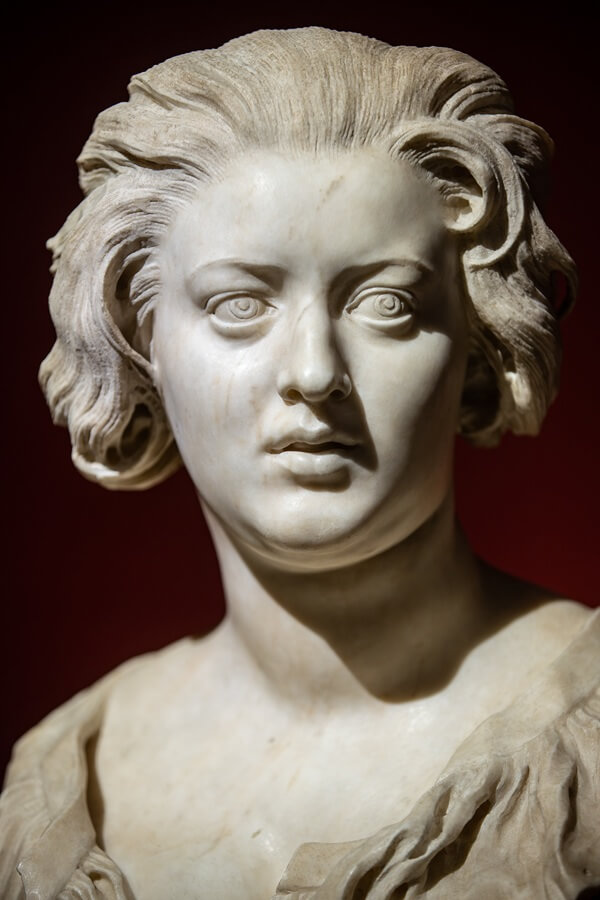
Busto di Costanza Piccolomini Bonarelli, 1636 -1637 circa, Marmo, Firenze, Museo Nazionale del Bargello

6) Bernini’s Freedom, Urban VIII’s Power
The final section explores the more intimate and tension-filled side of their bond, focusing on artistic freedom, protection and control. It includes rarely displayed works and paintings attributed to Bernini, created outside major public commissions. At its heart is the celebrated, uncommissioned Bust of Costanza Bonarelli (Bargello, Florence), one of the peaks of Baroque portraiture. The section closes with a more private portrait of Urban VIII attributed to Bernini, hinting at a relationship shaped by complicity, power and human emotion.

The post Bernini and the Barberinis at Palazzo Barberini appeared first on Romeing.

Rome, Made by Hand: A Sandal-Making Workshop

A hands-on shoemaking experience with Francesca, in a real Roman atelier, where you craft a pair you can actually wear

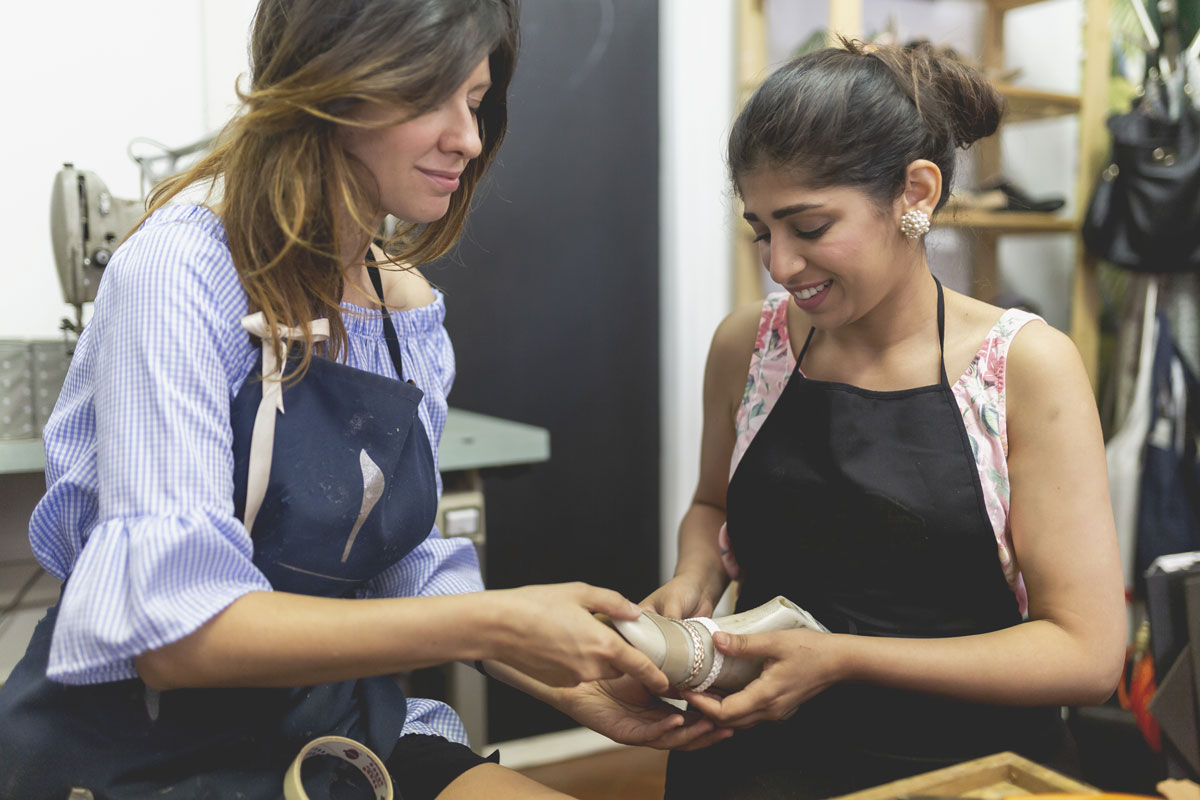
Rome is a city shaped by craftsmanship. Beyond its monuments and museums, the city lives through the hands of artisans who continue traditions passed down for generations. One of these traditions is shoemaking – and now, visitors can experience it firsthand thanks to a sandal-making workshop by Le Mastro.

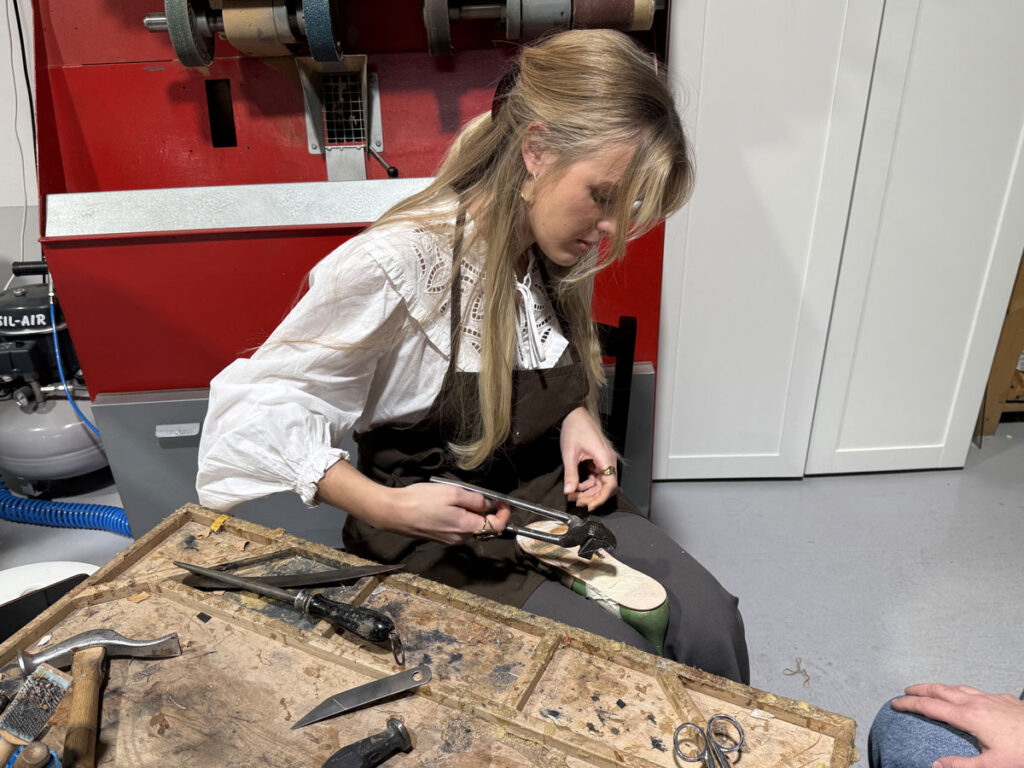
Located in a working artisan atelier, this experience invites participants to slow down, step away from sightseeing, and spend a few hours learning how something personal is made: a pair of handmade leather sandals.

@romeing_magazine Ever thought about making your own leather sandals in Rome? ⤵⁠ ⁠ In this hands-on sandal-making workshop, you’ll step inside a real artisan studio and create your own pair of 100% Made in Italy leather sandals, from start to finish.⁠ ⁠ You’ll choose the style, colors, and details, then sit around the workbench using professional shoemaking tools while being guided step by step through traditional techniques.⁠ ⁠ The workshop is led by a master artisan who previously worked for the Rome Opera House, bringing years of craftsmanship into every detail.⁠ ⁠ You’ll leave not only with a unique pair of sandals, but with the experience of having made them yourself.⁠ ⁠ 👉 Tap the link in bio to discover more⁠ ⁠ ⁠ ⁠ ⁠ #visitrome #italiancraftmanship #sandals ♬ audio originale – Romeing Magazine

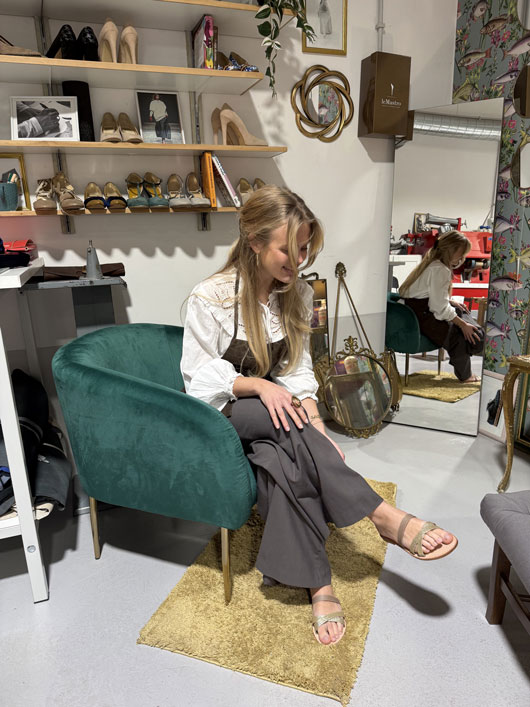
Behind Le Mastro is Francesca, a professional shoemaker. Her journey began at the Teatro dell’Opera di Roma, where she worked in the costume department designing shoes for dancers.

francesca-le-mastro-roma

The name Le Mastro itself reflects her position in the craft: mastro traditionally refers to a male master artisan. Adding the feminine article is a quiet statement — one that acknowledges both tradition and change.

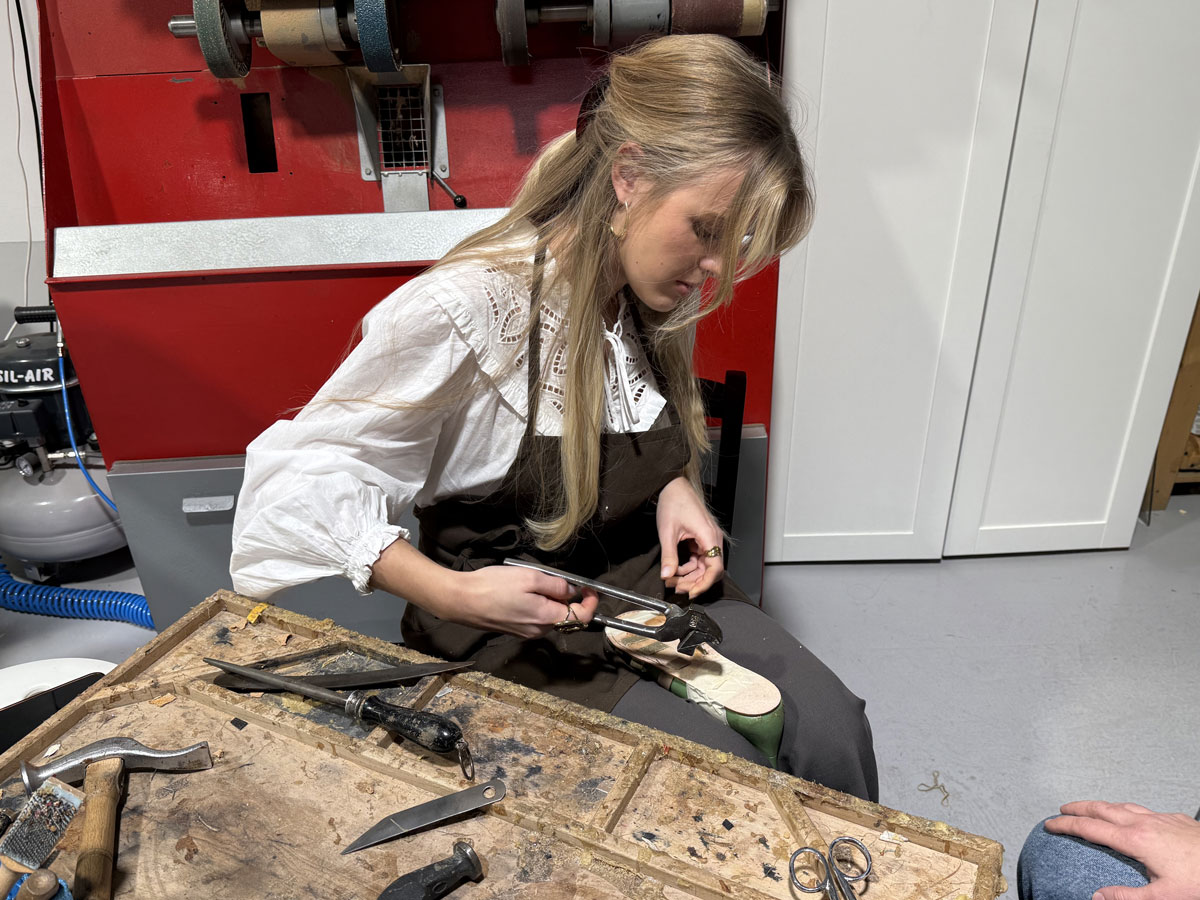
The sandal-making workshop translates this philosophy directly to participants. Rather than customising an item made by someone else, visitors sit at the artisan’s bench and actively take part in the process

sandal-making-workshop-rome

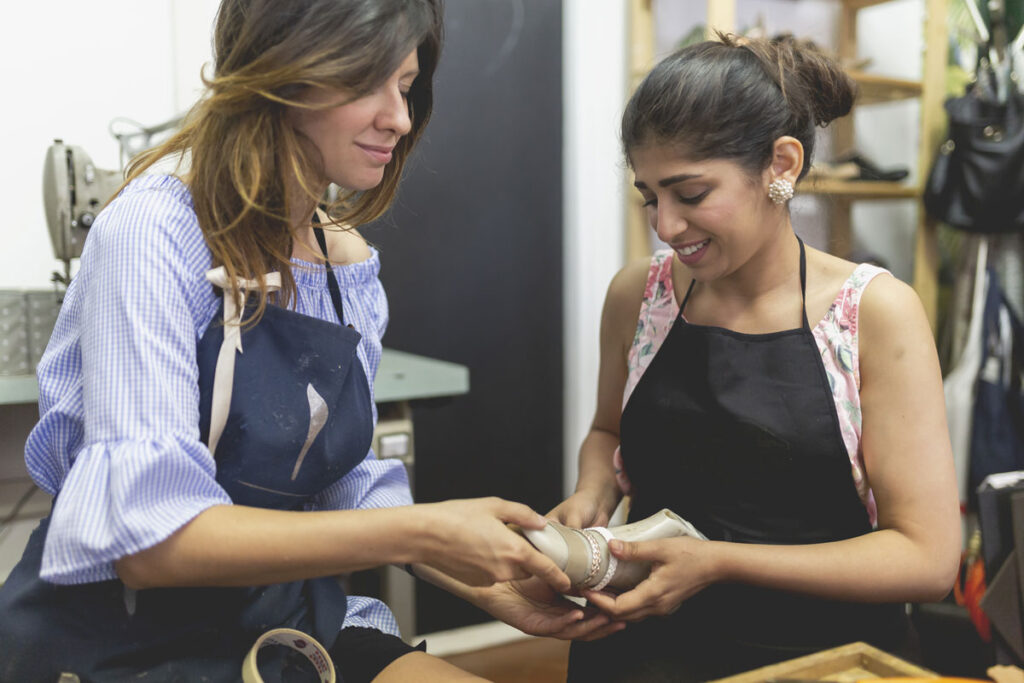
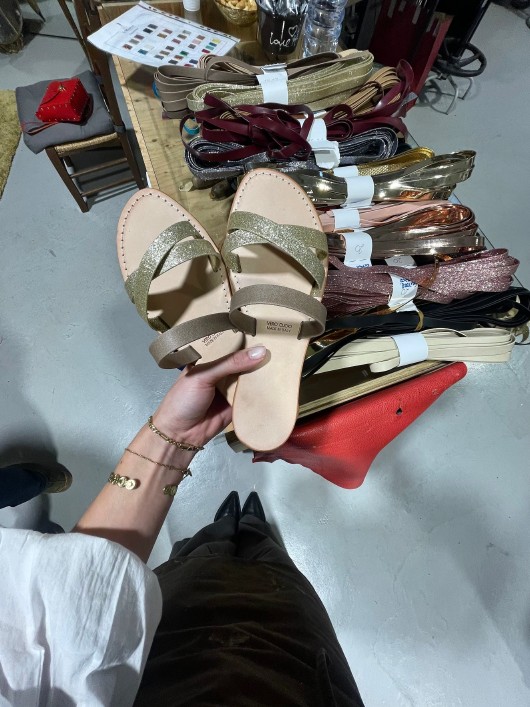
Over the course of about two hours, participants choose from three sandal model options and a range of leather colours. With guidance from the Francesca, they work with real tools — cutting, assembling, and finishing their sandals step by step. No previous experience is required, and the small group size (maximum five people) ensures a calm, personal atmosphere.

What makes this workshop stand out is its simplicity and authenticity: it takes place in a real working studio, using the same materials and techniques employed for professional commissions. The result is not just a souvenir, but a wearable object shaped by your own hands. Now bookable via Romeing, the Sandal Making Workshop offers a rare opportunity to experience Rome through making rather than observing.

sandal-making-workshop-rome
create your sandal in rome

The post Rome, Made by Hand: A Sandal-Making Workshop appeared first on Romeing.

Rome will charge €2 for close-up access to the Trevi Fountain from 1 February 2026 – here’s what changes

Discover the new Trevi Fountain access rules, and which museums are now free for Rome residents

From 1 February 2026, Rome will introduce a €2 ticket for tourists and non-residents who want to step into the Trevi Fountain’s inner perimeter (“catino”) – basically the close-up area by the water and steps where everyone lines up for the classic coin toss and selfie.

The key point: the Trevi Fountain remains free to see from the piazza. The new fee only applies if you want the front-row, right-by-the-water spot.

INSPIRATION
10 Things You Didn’t Know about the Trevi Fountain

Trevi Fountain ticket: what you pay for (and what stays free)

Paid (€2):

  • Access to the Trevi Fountain’s “catino” / basin / inner perimeter (the closest area by the water/steps).

Still free:

  • Viewing the fountain from Piazza di Trevi (the standard viewpoint most people use).

Hours the ticket applies:

  • Daily, 9am–10pm, including the first Sunday of the month.

Who pays and who is exempt

€2 ticket applies to:

  • Tourists / non-residents who want to enter the inner perimeter.

Free access remains for:

  • Residents of Rome / the Metropolitan City of Rome (with valid ID)
  • Children up to 5
  • People with disabilities + companion/carer

Why Rome is doing this

City officials have framed the move as a way to:

  • Manage overcrowding and make the experience less chaotic at one of Rome’s most congested “micro-sites”
  • Create a dedicated stream for maintenance and heritage protection

This builds on crowd-control measures already tested at Trevi (controlled entry/exit flows and a limited number of people inside the close-up area at one time)

How to buy Trevi Fountain tickets

Tickets are expected to be available:

  • At 10 on-site SmartPOS stations at the entrance
  • Online via the official site listed as fontanaditrevi.roma.it (not yet active)
  • Via Sistema Musei ticket offices
  • At Tourist Infopoints
  • Through affiliated/partner sales points

Planning tips (so you don’t waste time)

  • If you just want the iconic view: skip the ticket and enjoy the piazza.
  • If you want the “coin-toss spot” photo: go early (right after 9:00) or aim for later in the evening.
  • Expect the inner area to operate with regulated flows/capacity, meaning you may queue even with the €2 fee.

What’s changing for Rome’s civic museums

The Trevi ticket is part of a broader reform affecting museums and monuments managed by Roma Capitale.

Big change for locals

From 1 February 2026, residents of the Metropolitan City of Rome will get free admission to the city-run museums and archaeological areas (including major ones like the Capitoline Museums, Ara Pacis, Trajan’s Markets, Centrale Montemartini, and more).

What remains paid (even for residents)

Free admission doesn’t automatically include:

What changes for tourists/non-residents (beyond Trevi)

For tourists/non-residents, a ticket will be introduced for five sites that were previously free, including:

  • Museo Carlo Bilotti
  • Museo Giovanni Barracco
  • Museo Pietro Canonica
  • Museo Napoleonico
  • Villa di Massenzio

Still free for everyone

Some smaller museums are expected to remain free of charge for all visitors.

INSPIRATION
Free Museums in Rome

The post Rome will charge €2 for close-up access to the Trevi Fountain from 1 February 2026 – here’s what changes appeared first on Romeing.

Palazzo Ducale, Palazzo Salvador Allende

The Ducal Palace, now Palazzo Salvador Allende, is located at Corso Giuseppe Garibaldi, 55-59, in Reggio Emilia.

Historical Notes

The Palazzo Ducale overlooks the heart of Reggio Emilia’s historic center, along the elegant Corso Garibaldi. The building stands opposite the monumental Basilica of the Blessed Virgin of Ghiara, in an area once characterized by the Convent of San Pietro Martire and a cluster of medieval buildings.


Read more

The palace is one of the urban elements that best illustrates the city transition from a medieval and religious structure to the modern form of the Renaissance and late-18th-century city. The palace assumed its current form at the end of the 18th century: in 1783, by decree of Duke Francesco III d’Este, it was decided to demolish the monastery of San Pietro Martire and build a new Palazzo di Governo for the city. The project was entrusted to architect Pietro Armani. By 1786, the building was substantially complete and soon after began its institutional function. Subsequently, in 1814, the city offered it to Duke Francesco IV of Habsburg-Este as his residence in Reggio. During the 19th and 20th centuries, the building was used as public offices (Prefecture, Province) and underwent various external and internal renovations, eventually incorporating pre-existing structures such as the Oratory of Santa Liberata

Read less

Architecture

The building features a sober and imposing neoclassical facade that extends along Corso Garibaldi. The large volume was conceived as a palace of representation and government: three internal courtyards, a complex series of rooms spanning multiple floors, and a layout that emphasizes solemnity but also clarity of architectural axes

Read more

In 1911, work was carried out that modified the interior and exterior layout, including the incorporation of the Oratory of Santa Liberata into the main body of the palace. The facade, the rhythm of the windows, and the regularity of the decorative elements reflect the style and proportion of public buildings in the late 18th century, when neoclassical taste was also taking hold in ducal residences

Read less

Interior

After crossing the entrance and past the courtyards, the interior of the Palace features state rooms with impressive painted and tempera decorations. Of particular note are the decorations by Vincenzo Carnevali and Prospero Minghetti, who worked on some rooms on the main floor. 

Leggi tutto

Inside the Palace, the state apartment features four allegorical scenes: Venus and Cupid, Music, Spring, and Psyche, created by Domenico Marchelli (1763-1832). Other rooms retain Carnevali’s decorations.

These spaces are not simply rooms: they are stages for the ducal representation, intended for ceremonies, audiences, and meetings with the city and administrators. The pictorial, allegorical, and mythological decorations emphasize the symbolic function of power: beauty serves to confer authority and communicate an ideal of enlightened governance.

Interiorly, the spatial distribution favors a succession of rooms with passages leading from the state staircase to the halls, connected to the offices and command rooms. The three internal courtyards also act as a filter between the external city spaces and the centrality of the residence

Riduci

Palazzo Franchetti

Palazzo Franchetti overlooks Via Emilia S. Stefano, at number 33, with a secondary entrance on Via Raimondo Franchetti.

Historical notes

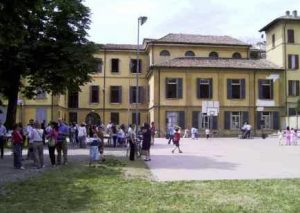
Palazzo Franchetti is an elegant noble residence along Via Emilia, in a refined urban setting, it today houses the “A. Manzoni” Middle School. The building reflects the late 19th-century taste, with a sober yet dignified façade.

Read more

The palace was purchased in 1885 by Baron Raimondo Franchetti, a member of one of the most influential families of the 19th-century Italian Jewish bourgeoisie. After his death, the building passed to his nephews Raimondo and Guido, sons of Alberto Franchetti. In 1921, the palace was sold to the Municipality of Reggio Emilia, which divided up the surrounding park and converted the building into a school, now home to the “A. Manzoni” Lower Secondary School.


Palazzo Franchetti, Scuola "A. Manzoni"
Palazzo Franchetti, today, “A. Manzoni” School

Read less

The Architecture

The palace, spread over four floors and composed of fifty-nine rooms, is an example of late Baroque architecture with neoclassical influences. During the renovation, approximately 200 workers were employed, many of whom were artisans from Venice, who contributed to the creation of valuable interior decorations.


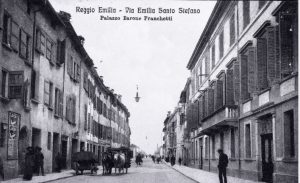
Palazzo Barone Franchetti,  Emilia Santo Stefano Street, photo from the 20th century.

The Palace interior

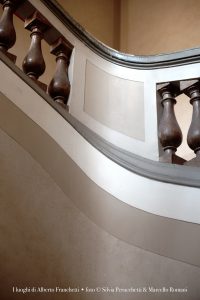
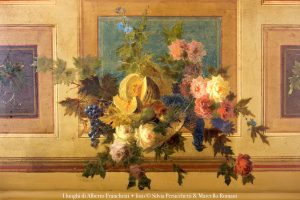
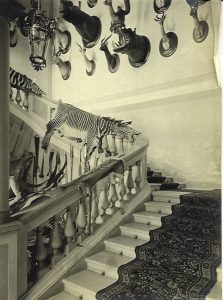
Inside, the palace retains original decorative elements, including frescoes, gilded stucco, carved wood paneling, and marble floors. The monumental staircase, with a wrought-iron balustrade, connects the main floors and is one of the most significant architectural elements of the building.

Leggi tutto

Guido Tirelli created the Grand Hall in an eclectic style, with stucco, molding, and paintings in Art Nouveau style by the artist Giuseppe Tirelli.

Palazzo Franchetti, detail of the staircase


In 1925, the new owner, Eugenio Terrachini, called Guido Tirelli back to complete the project that had been interrupted by the outbreak of the First World War.

Riduci

The collection

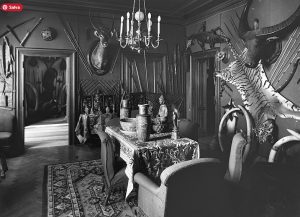
Baron Raimondo Franchetti Jr. (1889–1935), a well-known explorer and collector, enriched the palace with numerous objects collected during his travels in Africa and Asia. 

Palazzo Franchetti, interno con collezioni
Palazzo Franchetti, interior with collections

Leggi tutto

Among the collections were hunting trophies, ethnographic objects, weapons, clothing and musical instruments from regions such as Malaysia, Vietnam, Java, Borneo, Celebes and New Guinea. In 1911, returning from an adventurous journey, he donated a significant part of these finds to the Chierici Museum in Reggio Emilia. Many of these objects are currently preserved at the Civic Museums of Reggio Emilia, particularly in the ethnography and zoology sections.


Palazzo Franchetti, interno con collezioni
Palazzo Franchetti, interior with collections.

Many of these objects are currently preserved at the Civic Museums of Reggio Emilia, particularly in the ethnography and zoology sections.

Riduci

Where to Eat in Puglia

Today’s post is by Sophie:

Puglia holds a special place in my heart. Since my father is from Bari, that city is almost like my second home. And in the summers we headed further south, on the coast down near Ugento. Then, in my twenties I started going down on my own, becoming close friends with people from the small village of Cutrofiano. I even spent two months working at a butcher there, so I literally got to know everyone in town.

I know Bari very well, since my father is from there. It’s the biggest city and the capital of Puglia. But since the region is long and narrow, the southern part, Salento, is completely different. These days I’m lucky enough to be able to spend a lot of time leading tours here. You’d think that when it comes to vacation I’d like to head somewhere else. But I’ll be spending a week there in August and I can’t wait.

The most common question I get is when is the best time to visit. March to June is one of the nicest times, in terms of weather. If you’re more beach-inclined obviously May/June is better beach weather. But March and April are perfect for seeing everything, especially if you want to avoid the heat and tourists. During our March and April tours we are often the only people in town, which I love.

GETTING YOUR BEARINGS: Puglia is actually a pretty big region, and exploring the whole region in just one week is close to impossible. However, if you manage to embrace the slow lifestyle of the locals and focus only on one or two specific areas without rushing through them, you are going to fall in love with this wonderful part of southern Italy and will want to come back for more. Think of Puglia as being divided into three parts: Northern, Central and Southern. Depending on how much time you have, pick a couple bases and take small day trips from there. It’s a good idea to pick a masseria as one of your bases: working farms that have managed to switch to the hospitality side of things as well, giving people a chance to experience (and eat) the local Apulian life

FOOD: The food in Puglia is some of the most diverse in the country, and for this reason it has become one of the biggest food destinations in Italy. The ideal weather conditions make Puglia one of the country’s biggest producers or fruits and vegetables, olive oil, wheat and seafood.

My Favorite Places to Eat

This really isn’t a guide to the entire region, but just some of my favorite spots  that you might otherwise miss during your time in Puglia. And if there is any place you’ve discovered on your travels, I’d love to hear about it in the comments below.

Pasticceria Andrea Ascalone
Galatina
This is said to be the place where pasticciotto was invented. The cream filled pastries come piping hot out of the oven. The 19th century interior is like stepping back in time and the owners incredibly sweet.

400 Gradi
Lecce
Pizza is not really a thing in this part of Italy, so finding an authentic Neapolitan pizzeria is a treat. Very high end ingredients, so it’s pricier than most, but so worth it. This is the place to head when you need a pizza fix.

Caffe Alvino
Lecce Piazza Sant’Oranzo
The most famous coffee bar in the center of Lecce. Make sure to try their caffe leccese, made with almond syrup; pasticciotto (breakfast pastry filled with custard); and my all time favorite: rustico leccese. This savoury puff pastry is filed with bechamel and tomato and is a flavor bomb!

Vardaceli
Castiglione
I love it when I come across and old fashioned family run trattoria. This one is at the most southern tip of Puglia and has traditional simple food.

Le Stanzie
Supersano
This old masseria (farm) is now run by the youngest generation of the family. Tables are spread throughout different rooms, some have fire places, others have strands of tomatoes hanging from the rafters. It’s incredibly beautiful in a very rustic way. Delicious regional food, most of which they grow themselves.

Osteria da Giuseppe
Ceglie Messapica
Very cute and simple restaurant in one of my favorite towns, Ceglie Messapica. Don’t miss the antipasti. After dinner I like going to the main square to people watch.

Quanto Basta
Lecce
Favorite cocktail bar in Lecce and one of the best in Puglia.

L’Orecchietta
Guagnano, Puglia
Set in a tiny town just north of Lecce, it looks more like a take away food place than a restaurant (and it is filled with locals either taking their lunch home or sitting and enjoying the food on their lunch break) They are also open for dinner, but it really comes to life for lunch, when the place really does fill up with locals. The whole family cooks in the back and takes great care in making you feel at home by taking extra good care of you, giving you advice on the surrounding area, chatting about recipes and ingredients. The menu changes daily, but there is always an abundance of local seasonal vegetables and fresh home-made pasta options

Le Macare (Alezio)
This place is a real gem. Don’t be put off by the location (on the side of a major road), away from any major city/town, because the food is amazing! The owners put an enormous amount of care in selecting the best possible ingredients for classic dishes from Puglia with a little twist. Try their mixed starters (they vary based on the season), and then enjoy one of their fresh pastas with seafood (these also change based on the catch of the day from nearby port town of Gallipoli)

Taverna del Porto (Tricase)
Set right on the seafront of the small port town of Tricase, this restaurant is on the higher side when it comes to prices, but the food and decor is on a higher level compared to many other places in the area, which explains the higher prices.  Start with a mixed raw seafood platter (make sure to have a look at their fish counter as soon as you walk in too see what the catch of the day is). Their linguine aglio, olio e peperoncino di mare is exactly what I dream of when I crave a plate of pasta by the sea. As a main, try their mixed fried seafood platter, or perfectly cooked octopus with potatoes and bitter greens

Trattoria Iolanda (Lucugnano)
This place makes you feel like you are eating in your nonna’s kitchen. This is the place to try traditional dishes from southern Puglia like horse meat, ciceri e tria, seasonal vegetables and fried starters. In the summer, make sure to book a table outdoors to really get a feeling of Italian summer in a small town, where all the local families get together for long meals after a day at the beach. Make sure to get their mixed starters, and take a peak inside to see the owner roll out all the pasta by hand

La Puritate (Gallipoli)
These days it’s hard to find a traditional non-touristy restaurant in the center of Gallipoli, but this restaurant has managed to maintain it’s high quality food and traditional feeling over the years. La puritate is specialized in seafood (not a great choice if you are vegetarian), make sure to get their mixed starters, which change daily but may include mixed seafood salad, raw shrimps (a specialty in this part of the region), sauteèd mussels..etc and also make sure to ask for a portion of their prawns cooked in salt (gamberoni al sale) to add to the starters. They are cooked to perfection, and the waiter serves them table-side, flipping the prawns in a delicious olive oil-salt bath

Le Zie (Lecce)
These days it can be hard to find traditional restaurants that serve good food in Lecce, but this one is a must! They serve all the classic dishes like ciceri e tria, and horse polpette or involtini, in a homey environment (striped tablecloths, wooden chairs and tables, and a doorbell that rings every time a new customer comes in) which makes you forget you are in a restaurant, more like eating in somebody’s home.

Osteria del Tempo Perso (Ostuni)
If you only have one meal in Ostuni, it should be here. Set inside a cave, you can’t help but say ‘wow’ as soon as you step in. The ceramic plates are made by local artists, the service is impeccable, and the wine list is impressive. The food of course is the star of the show with an extensive menu which features a mix of both meat and seafood dishes. Try a few of their starters (a favorite is their wheat berries cooked in a cheese and truffle sauce, or their eggplant parmigiana), and a pasta dish (scialatielli with clams and zucchini blossoms or their Orecchiette con cime di rapa e mollica)

Al Pescatore (Bari)
Bari is known for its raw seafood feasts, and this is the place to try it out. It fills up with locals every single day of the week. Start with an antipasto misto (they will bring you an endless amount of raw + cooked seafood starters), and if you have room afterwards, head over to the fish counter with one of the waiters and have him help you choose something special to be cooked (they will tell you what options you have based on the fish you choose)

Bere Vecchie (Cisternino)
Cisternino is known for its small butcher shops that over the years have transformed into restaurants (you pick your meat at the counter and they cook it for you). Some of the most typical cuts of meat you can choose at the counter are the ‘bombette’: pork rolls stuffed with different cheeses, vegetables and cured meats, then put on a spit and roasted until crunchy on the outside and perfectly tender on the inside. Make sure to also order a side of fresh salad and whole potatoes cooked in coals. If you are into offal, try their ‘gnumaridd’: lamb innards rolled into little nuggets and grilled, they are a specialty of the area!

Mostofiore (Bari)
People in the city of Bari were incredibly excited when this place first opened, because there was a lack of natural wine bars in Puglia. They have an incredible selection from all over Italy, and their food menu changes all the time based on the season and what’s available. Some dishes on the menu may include crostini topped with different cheeses and cured meats, stewed Octopus, fresh oysters, Tuna tartare..etc  Great place to have a lighter meal or pre-dinner aperitivo (The owner also owns BiancoFiore which is a fantastic restaurant nearby)

Il Cortiletto (Speziale)
When you get here, don’t be put off by the area (set on a main road outside the town center) or the very unassuming front, step inside and enjoy a meal in one of the best restaurants in Puglia. If the weather is nice, make sure to book a table in this restaurant’s inner courtyard, with its wooden tables, white-washed walls, and potted citrus plants, it makes the dining experience magical. The service is polite and knowledgeable, and the food is outstanding, with a focus on local dishes from central Puglia. Some of the standouts are their mixed antipasti to start (careful they are abundant!), and their home made pasta with ragù di braciole e polpette (meat sauce)

Al Gatto Rosso (Taranto)

Taranto is one of those gritty port towns that people ignore, but it is actually one of Puglia’s best kept secrets, filled with beauty, great food and incredible history (and one of the best archeological museums in Italy). Use this restaurant as an excuse to visit Taranto, and you will find yourself coming back time after time. Incredibly fresh and creative seafood dishes, which change daily based on the catch of the day. Some past dishes have been Spaghetti cacio e pepe con Gamberi rossi, Salad with poached prawns and peaches, raw seafood platter (raw mussels are a specialty in the area), all made with love by Agostino the owner, who you will see cooking in the kitchen

Ricciolandia (Savelletri)
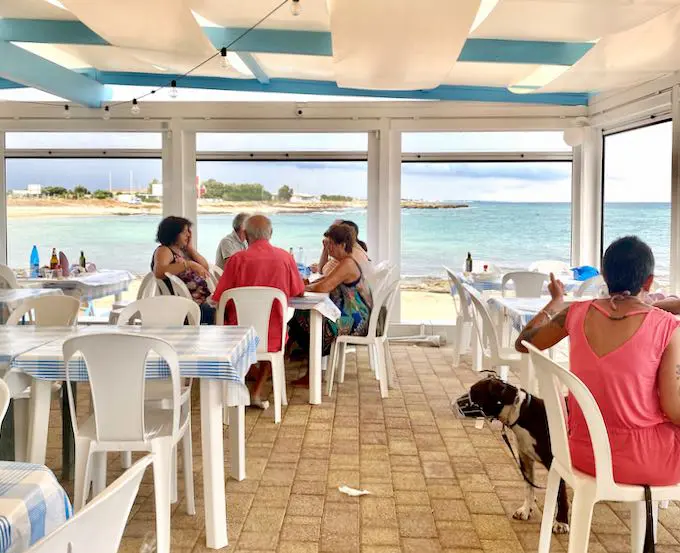
If you only have one meal in Puglia, and want to eat by the sea, with locals, this is the place. More like a shack on the beach than a ‘real’ restaurant, it’ss set right on the seafront, plastic chairs and tables, with open walls which allow the fresh sea breeze to cool you down.This is where most locals come to have lunch on the weekends, they are known for their huge platters of sea urchins, it’s a magical experience being able to sit right on the sea on a sunny day while sipping on chilled wine, scooping out sea urchins with crunchy bread,  and slurping on spaghetti with fresh clams and mussels

Antichi Sapori (Montegrosso)
You can either order a la carte or choose the highly recommended tasting menu (16 courses for 45 euros). Dish after dish comes out of the kitchen, each one better then the first. You will have an array of starters, a few pasta dishes, some meat, and lots of vegetables. The tiramisù and Cassata for dessert will be some of the best you have ever tasted. This is some of the most flavourful and colorful food in Puglia, with all of the products being sourced from local producers/farmers. Since it’s located in the very northern part of the region it might seem a little out of the way for most, but it’s a great place to stop for a lunch break while driving to/from Puglia and is always worth the trip if staying somewhere in the Northern part of the region.

Masseria Barbera (Minervino Murge)
Masseria Barbera is a hidden gem set in the middle of olive and wine groves, when you come here for a meal be prepared to completely forget about the rest of the world for a few hours. They grow most of their vegetables and make their own bread, olive oil and wine. Meat and cheese are sourced from local farmers. Order a few of their starters to share (menu changes almost daily, but you will most likely get some home-made focaccia, cheeses, vegetables), and then continue with one of their pasta dishes or slow cooked meats. Save room for dessert and their own home made digestifs (the chocolate and chamomile were memorable)

Baby DiCecca (Foresta Mercadante)
Vito and Roberta, a young couple from Puglia,  recently opened up this ‘cheese bar’ set in the middle of a protected nature reserve in northern Puglia (Foresta di Mercadante). Vito’s family owns one of the best cheese shops in Puglia, so all the cheese comes from the shop in nearby Altamura (Caseificio di Cecca). You can either order a la carte or have their tasting menu which is an amazing option to experience a true cheese feast. Freshly baked and crunchy focaccia accompanies creamy burrata, mozzarella, scamorza, and then goes on to some more aged cheeses and tomato salad (if in season). For 180 euros you can also set up a cheese tour with the owner Vito. Starting the morning at his shop making cheese, and ending at Baby di Cecca for a cheese tasting lunch
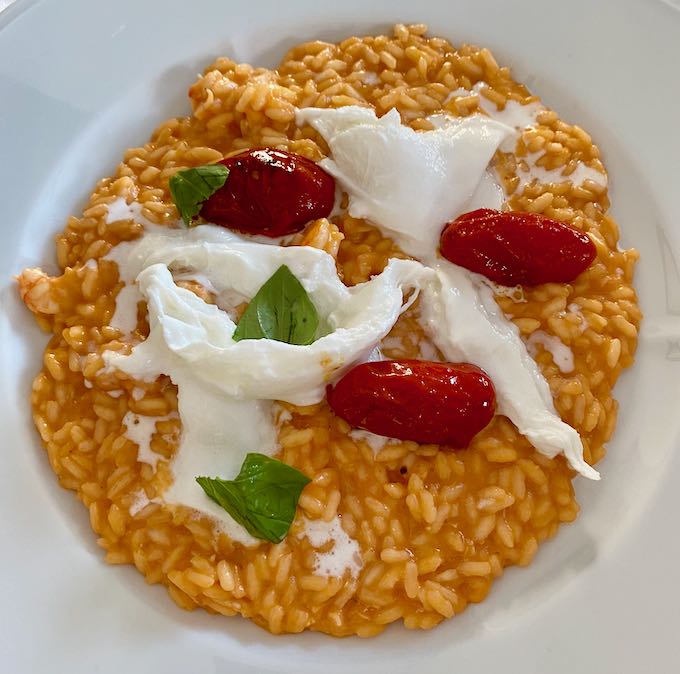
Tomato Risotto with Burrata at Gatto Rosso in Taranto
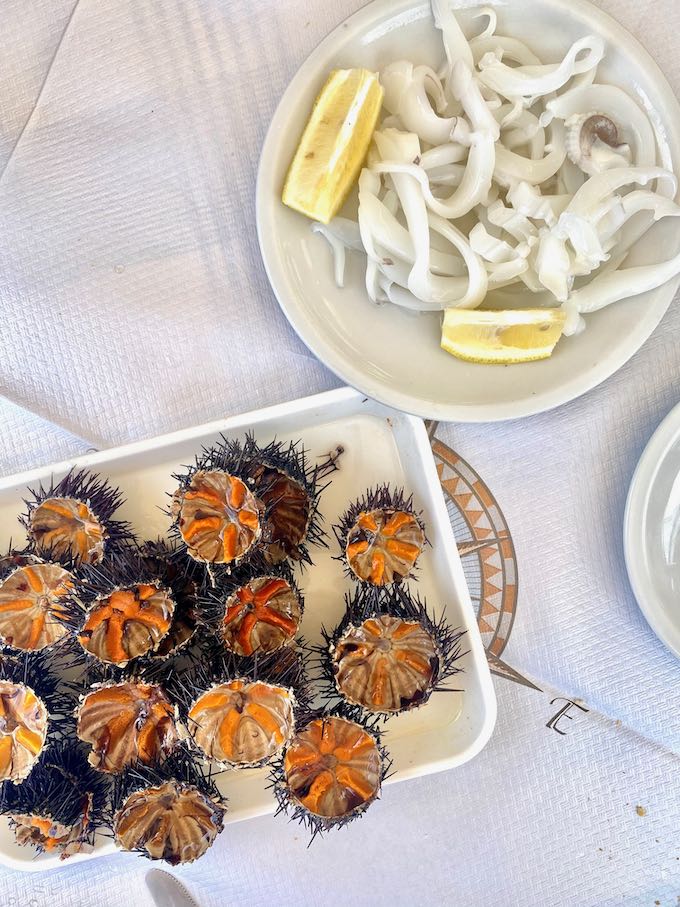
Raw Seafood at Ricciolandia
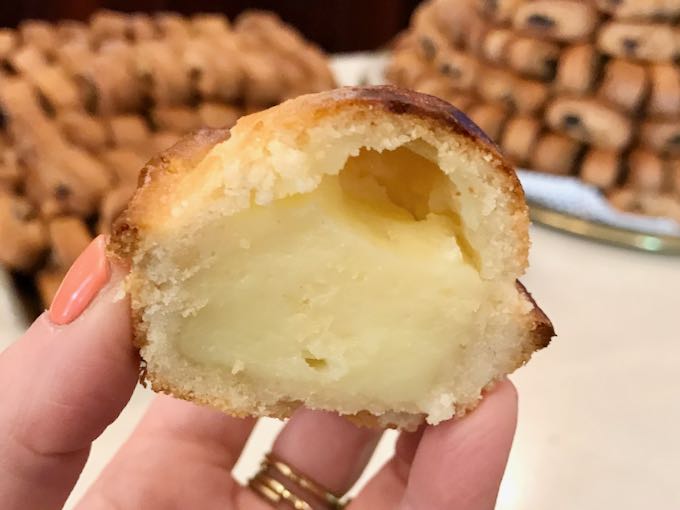
Pasticiotto at Ascolane in Galatina
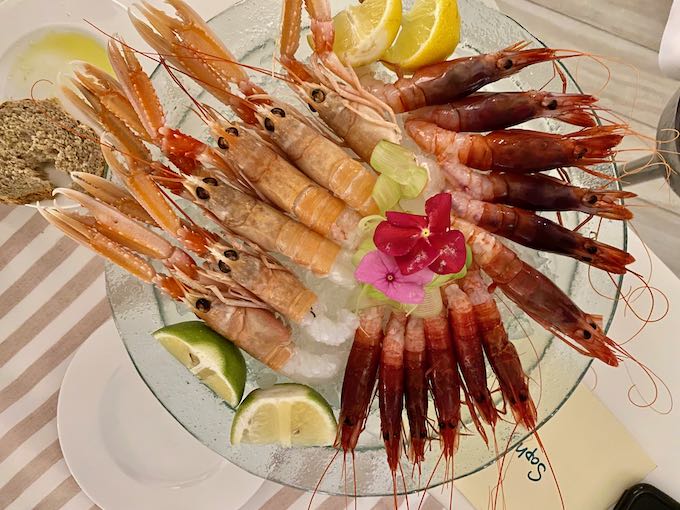
Seafood at Pescatore in Bari
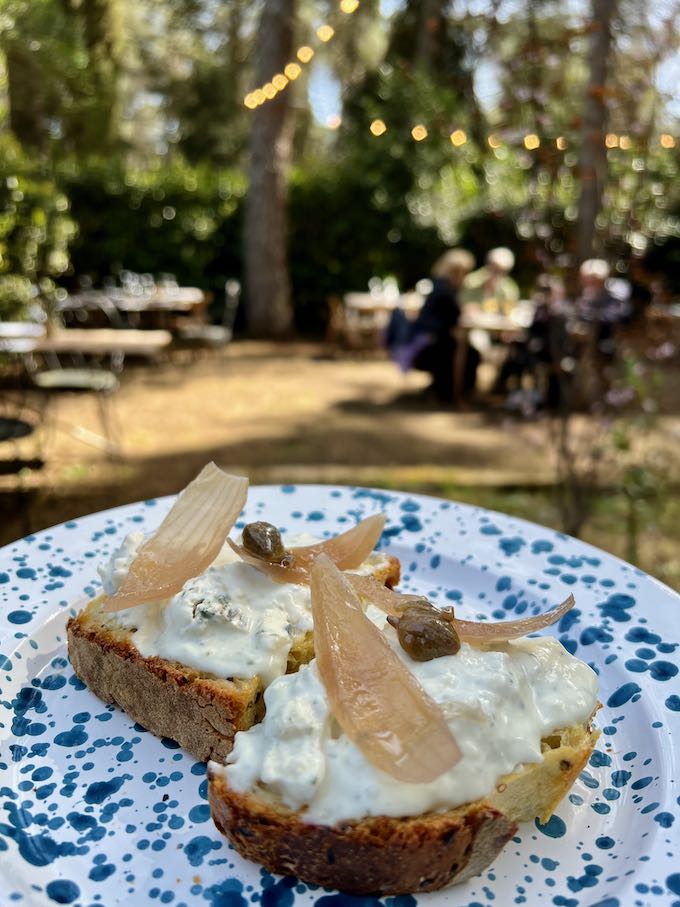
Cheese tasting in the forest at Baby DiCecca

___________________________

If you’d like to join Sophie on one of her week long trips to Puglia, she’d love it! She leads tours to both the Central part of Puglia (Lecce and Monopoli) and to the Northern part, based in Bari. You can find the full schedule here or else send us or else just send us an email and we will be happy to send you the brochures.

(if the email link to receive a brochure doesn’t work, just email minchillitours@gmail.com )


The post Where to Eat in Puglia appeared first on Elizabeth Minchilli.

❌